



Somewhere around 1970, North American skies started getting quieter. Not all at once — that’s the thing that makes it so easy to miss. Just a little emptier each year, until the math finally caught up and someone counted: 2.9 billion birds, gone.
Not from a single disaster. Not from one bad decade. And here’s what caught me off guard when I first fell into this — it’s not even primarily about the birds. The birds are just the part we can see. What’s actually collapsing is something smaller, older, and almost completely invisible to most of us. And it’s happening inside the places we specifically built to stop exactly this kind of thing.
Bird Population Decline Nobody Saw Coming
In 2019, researcher Kenneth Rosenberg at Cornell Lab of Ornithology published a study in Science that basically forced the conversation into the open. Drawing on decades of bird counts, weather radar data, and population surveys across North America, the team landed on a number that didn’t feel real: 2.9 billion birds lost since 1970. Roughly 29% of the entire breeding bird population on the continent. These weren’t projections or model outputs. They were a count of what used to be there and isn’t anymore.
Grassland birds lost 53% of their population. Shorebirds dropped around 37%. Common backyard species — the ones you’d hear through an open window on any summer morning — quietly thinning out year after year, in ranges nobody was watching closely enough to notice in real time.
So what’s actually doing it?
Insects Vanish From Protected Sanctuaries Too
This is where the story gets genuinely strange. A 27-year study tracking flying insects inside protected nature reserves in Germany found that total insect biomass had dropped by more than 75%. Not farmland. Not suburban sprawl. Protected reserves. Places designed specifically to keep pesticides and development away from wildlife. And the insects were still disappearing — steadily, every single year, for nearly three decades. That last fact kept me reading for another hour. If insects are vanishing even where we tried to protect them, then the problem isn’t just about where we build things.
For more on how interconnected ecosystems unravel in ways that are only now being tracked, there’s more at this-amazing-world.com.
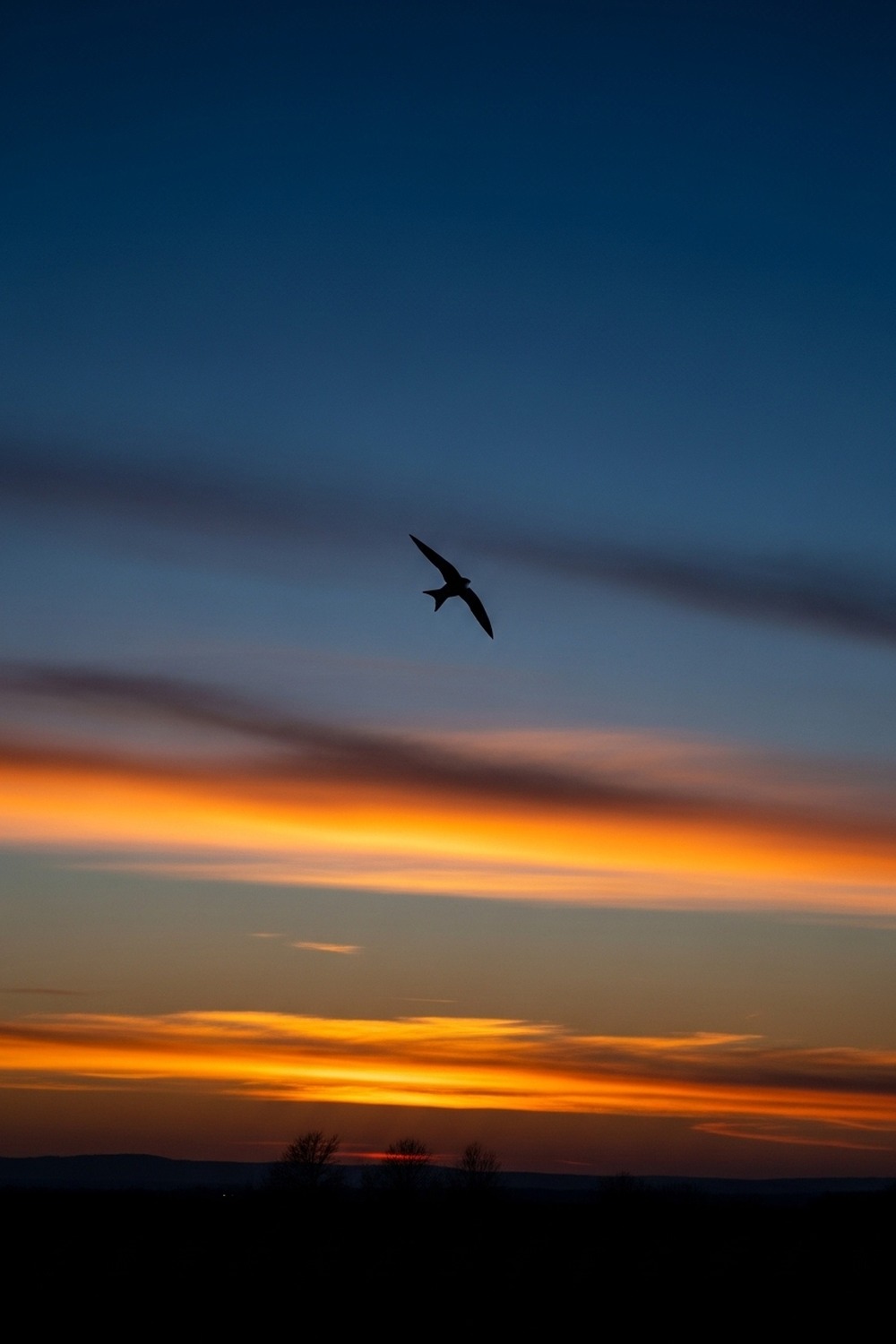
Birds that hunt insects mid-air — swifts, swallows, nightjars — can’t adapt their way out of this. They didn’t evolve to switch food sources. They evolved for one thing specifically, and that one thing is disappearing beneath them.
Aerial Hunters Are Running Out of Prey
The Chimney Swift is down roughly 72% since 1970. The Eastern Whip-poor-will — a nighttime insect hunter whose call used to fill summer evenings across the eastern United States — has dropped 69%. These weren’t rare birds. They were background noise. The kind you’d hear without registering, the way you don’t notice traffic until it stops.
The bird population decline among aerial insectivores is now steep enough that whole regions of North America have gone acoustically quiet in ways that would have been hard to imagine fifty years ago.
Timing makes it worse. During breeding season, parent birds need massive amounts of insects — caterpillars especially, soft-bodied larvae — to keep their chicks alive through the first critical weeks. Fewer insects means fewer chicks survive. Species don’t collapse overnight. They thin out one failed breeding season at a time, slowly enough that nobody quite sounds the alarm until the math becomes undeniable.
The Collapse Hiding Inside a Bigger Collapse
Here’s the thing: this stopped being a bird story a while ago.
Insects pollinate roughly 75% of the world’s flowering plants. They break down dead matter and cycle nutrients back into soil. They keep pest populations in check in ways that would otherwise require far more chemical intervention than we currently use. Lose enough of them, and you don’t just lose the birds that eat them — you start unraveling the whole web of relationships that keeps an ecosystem functional. The bird population decline is a visible symptom of something happening at a scale that’s much harder to observe directly.
Why insects are declining even inside protected areas is still not fully understood. Climate shifts play a role. Light pollution scrambles navigation and mating signals. Pesticides drift far beyond the fields they’re applied to — sometimes very far. Something in the broader environment has turned hostile in ways that reserve boundaries simply can’t block.

Protected Areas Aren’t Actually Protecting Anything
The assumption that setting land aside creates a safe zone always had a structural flaw in it. Insects don’t stay inside reserve boundaries. Neither do the chemicals applied just outside them.
Neonicotinoid insecticides — now the most widely used class of pesticides on Earth — persist in soil and water long after the original application. They don’t just kill the target pests. They impair navigation in bees, reduce reproduction in aquatic insects, and accumulate through food chains in ways researchers are still mapping. A protected reserve surrounded by treated agricultural land is, functionally, an island under siege from all sides.
Then there’s light. Artificial light at night disrupts firefly mating signals, disorients moths, and pulls insects into lethal congregations around streetlights and buildings. Urban sprawl doesn’t need to bulldoze a habitat to damage it. Sometimes it just needs to light it up.
By the Numbers
- 2.9 billion birds lost from North America between 1970 and 2019 — Cornell Lab of Ornithology’s analysis, representing 29% of the continent’s total breeding bird population.
- Flying insect biomass inside German nature reserves: down more than 75% across 27 years, according to a 2017 study in PLOS ONE. These were actively managed conservation areas. That detail matters.
- Chimney Swift: approximately 72% decline since 1970. Now classified as a species of high conservation concern in Canada.
- Neonicotinoids applied to more than 90% of U.S. corn seed — making agricultural runoff one of the most widespread and persistent sources of insect toxicity on the continent.

Field Notes
- Some migratory songbirds time their spring arrival to match peak caterpillar season — biologists call it phenological matching. Climate change is shifting both the birds’ arrival and the insect peak, but not in sync. Birds show up on schedule and find the window already closed.
- The Eastern Whip-poor-will was named for a call that early settlers reported hearing hundreds of times in a single night. In parts of its former range, that sound is gone now — not because the bird moved, but because local populations collapsed.
- Dung beetles aren’t a species anyone builds fundraising campaigns around. But they provide an estimated $380 million worth of pest control and nutrient cycling to U.S. cattle ranching annually. Their populations are declining too. That number is what it costs to replace one piece of a functional ecosystem when it breaks.
Why This Story Is About More Than Birds
Birds are visible. We notice them, name them, build feeders for them, write field guides about them. That visibility is exactly why the bird population decline has become the clearest signal we have that something foundational is going wrong. When 3 billion of them disappear across half a century, it’s not a bird problem. It’s a reading on a gauge we’ve been ignoring.
The food web supporting birds is unraveling from the bottom up — pesticide saturation, climate disruption, light pollution, habitat fragmentation, all compounding at once, across an entire continent. None of these causes is a secret. The mechanisms are understood. What’s missing is the sense that the timeline is as short as it actually is.
What’s at stake isn’t birdsong or biodiversity metrics in a journal. It’s pollination. Soil health. The pest control that prevents food production from requiring still more chemicals. Lose the insects and you lose the birds. Lose the birds and you lose the early warning system telling you something is wrong before it becomes unfixable.
Three billion birds. Fifty years. Not one catastrophe but a thousand small ones, compounding quietly across fields and forests and protected reserves that turned out not to be protected enough. If this kind of story pulls you deeper, there’s more at this-amazing-world.com — and some of what’s there is even harder to look away from.


