The Zoo Spent 4 Years Trying to Breed Two Male Hyenas
For four years, nobody thought to question the paperwork. Two striped hyenas at a Japanese zoo were listed as a breeding pair — one male, one female — and the staff did everything right. Adjusted the diet. Calibrated the lighting. Kept meticulous logs. Both animals were male the entire time.
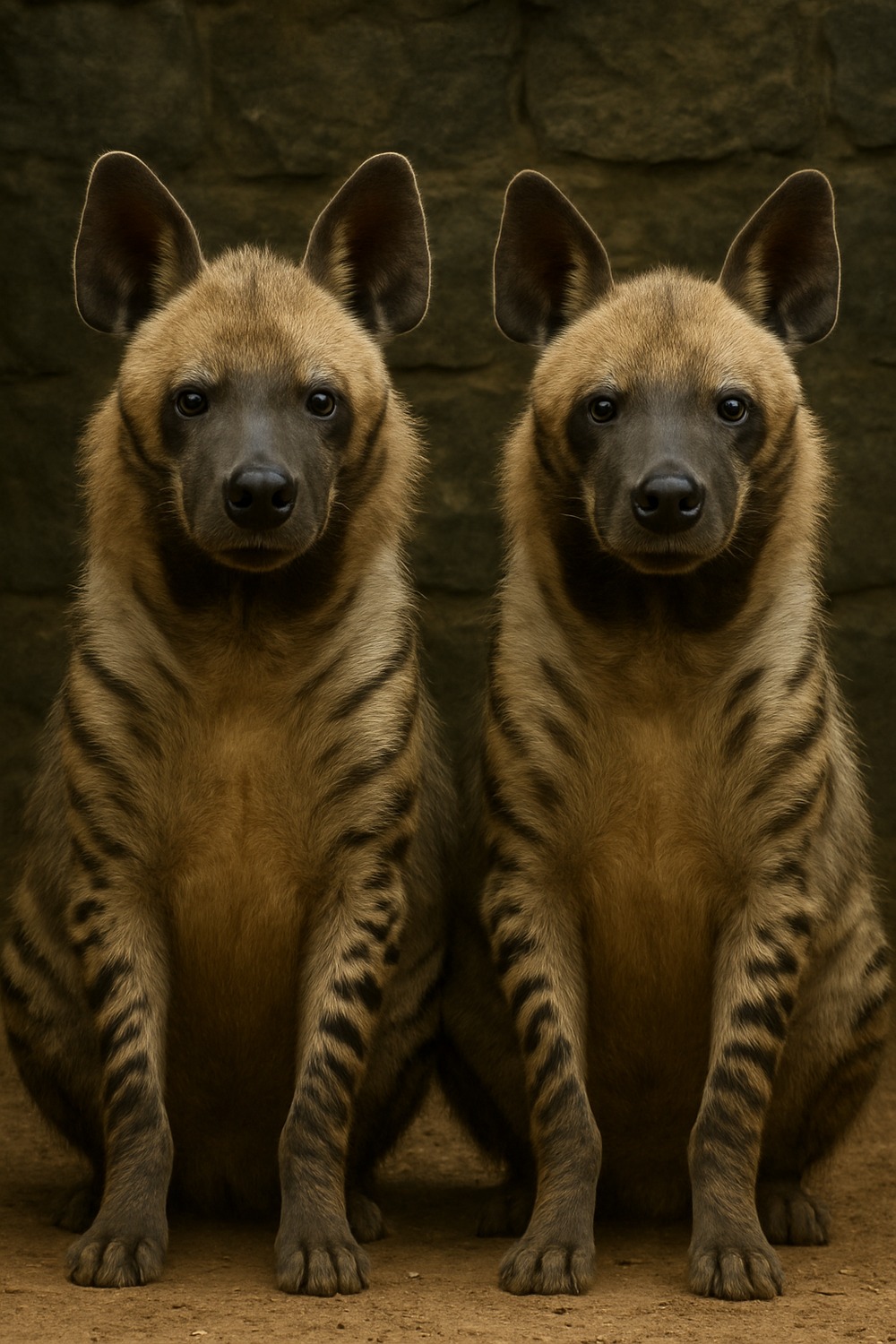
At the Maruyama Zoo in Sapporo, Japan, two striped hyenas named Kamutori and Kamutori II shared an enclosure while keepers worked patiently through breeding checklists. Diet adjustments. Temperature calibrations. Careful observation logs. All of it aimed at producing cubs. All of it aimed at the wrong goal entirely — because nobody realized there was nothing to breed.
Why Hyena Sex Identification Defeats Even the Experts
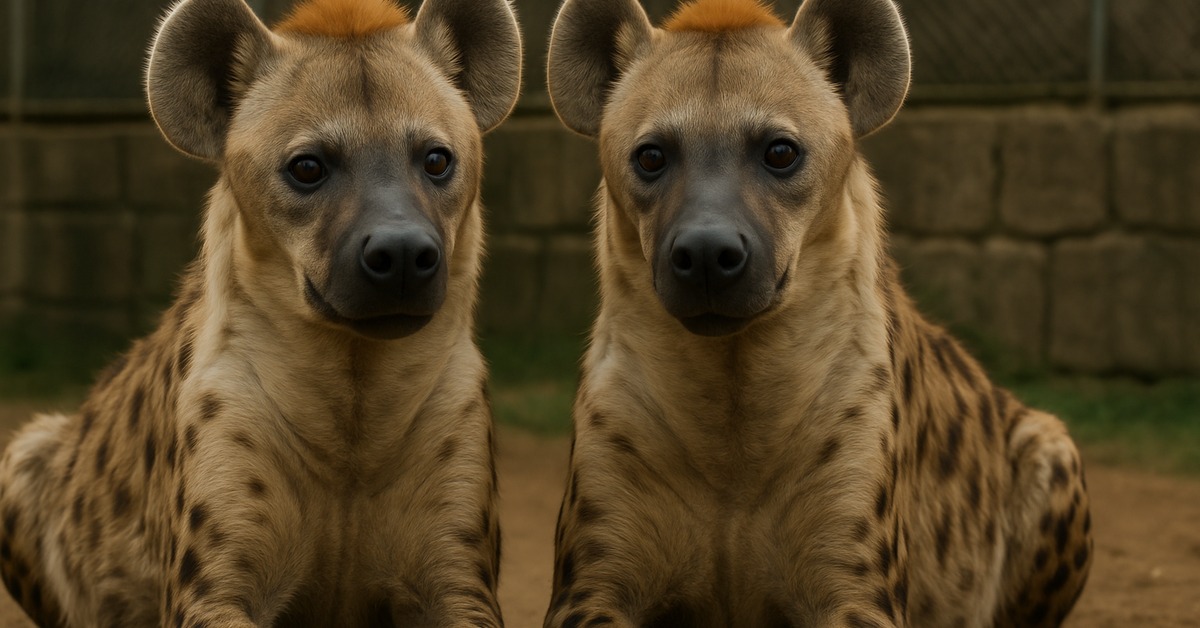
Striped hyenas, Hyaena hyaena, are genuinely one of the most sexually ambiguous mammals on Earth. Female spotted hyenas are famously difficult to sex due to masculinized genitalia — a trait so extreme it’s been studied for decades by researchers like Dr. Kay Holekamp at Michigan State University. But striped hyenas? Even less is written about them. Their external anatomy offers almost no reliable visual clues, and without hands-on examination or a DNA test, even experienced keepers can come up empty. You can read more about the genus on the Wikipedia page for Hyena.
So how many other zoos are working with the wrong assumptions right now?
The honest answer is: probably more than anyone wants to admit. These aren’t amateurs making rookie mistakes. These are professional animal caretakers with years of experience — people who have dedicated careers to understanding creatures most of us will never see outside a nature documentary. And still, two male hyenas spent four years quietly refusing to produce offspring while everyone around them wondered why.
Four Years of Charts That Led Nowhere
The keepers at Maruyama weren’t being careless. They were being meticulous. That’s what makes this story so disarming.
They adjusted the animals’ diet to optimize reproductive health. They fine-tuned lighting cycles and ambient temperatures to mirror the Tanzanian grasslands where wild striped hyenas roam. They spent hours observing behaviors, logging quirks, building a picture of two animals that simply never connected in the way a breeding pair should. You can find more stories of nature outsmarting human science over at this-amazing-world.com, and the pattern keeps showing up — more often than you’d expect.
What’s striking isn’t the mistake itself. It’s the sheer patience required to make it. Four years is a long time to believe in something. And when the DNA results finally came back, the mood apparently shifted from confusion to something closer to laughter. The zoo staff, to their enormous credit, shared the story publicly — which is exactly the kind of thing institutions usually don’t do.
The Trick Nature Plays on Anyone Paying Attention
Hyena sex identification is a niche problem, sure. But it points at something much bigger in animal science: the gap between confidence and knowledge is often narrower than professionals — or the public — expect. Wild creatures have evolved over millions of years without any obligation to be legible to humans. Their biology doesn’t come with labels. Their behavior doesn’t follow our assumptions.
Striped hyenas are especially secretive. Solitary, nocturnal, and far less studied than their spotted cousins. Most of what we know comes from brief field encounters and zoo records.
Records that, it turns out, can contain four-year-long errors.
Think about that. This wasn’t a casual misread on intake day. It was a sustained, documented, good-faith scientific effort — and it was still wrong. That last fact kept me reading about this for another hour.
How Hyena Biology Actually Works — It’s Complicated
Here’s the thing about hyenas: the biology is genuinely unusual, and not just in the spotted species. Across the hyena family, hormonal profiles blur what we typically use to identify sex in other mammals. In spotted hyenas, females have a pseudo-penis — a fully elongated clitoris that resembles male anatomy so closely that even births happen through it. Striped hyenas don’t share that extreme trait, but their external anatomy is still subtle enough that visual identification without examination is unreliable.
Turns out “just look at the animal” is not always a viable scientific method.
The implications go beyond one zoo in Sapporo. Captive breeding programs around the world depend on accurate sex identification to manage endangered populations. If the data is wrong at the starting point, every downstream decision — which animals to pair, when to transfer them, how to read their behavior — is built on a flawed foundation. The cost isn’t just wasted time. For critically endangered species, it could mean the difference between a recovering population and a disappearing one.
By the Numbers
- Striped hyenas are listed as Near Threatened by the IUCN (2022 assessment), with a global population estimated at fewer than 10,000 mature individuals — making accurate captive management critical.
- Spotted hyenas give birth through their pseudo-penis. Approximately 60% of first-time mothers experience serious complications during delivery — one of the highest maternal mortality rates among mammals.
- Maruyama Zoo: operating since 1951, 170+ species.
- DNA sexing only became widely accessible and affordable for zoos in the 2000s, which means older records at many institutions were built entirely on visual assessment — and some of those records are still in active use.
Field Notes
- Striped hyenas are one of the few large carnivores that are almost entirely solitary outside of mating season — meaning two individuals housed together will rarely display the kind of social bonding cues that might reveal mismatched sexing to an observer.
- No fixed social hierarchy. Unlike spotted hyenas, which live in complex female-dominated clans, striped hyenas have almost no consistent group structure — so behavioral comparison between a supposed “pair” is nearly impossible to interpret from the outside.
- Not just a hyena problem. A similar incident occurred at a Chinese zoo in 2013, where a pair of “breeding” giant pandas were discovered after extended observation to both be female.
- Suggesting this type of error isn’t limited to one species, or one country.
What This Story Says About Science and Humility
The Sapporo hyena story went viral in Japan for a reason. It’s funny — in that specific, gentle way where you laugh because you recognize the human condition in it. The absolute confidence of the checklists. The careful adjustment of the lighting. The slowly dawning realization that the premise was wrong from day one.
But underneath the humor is something worth sitting with. Hyena sex identification failing at a professional zoo isn’t an embarrassment. It’s a demonstration of how honest science actually works. You observe carefully. You adjust your methods. And eventually — sometimes after four years — the truth surfaces.
And then you share it publicly, even when it makes you look foolish.
That willingness to admit the mistake matters more than the mistake itself. Zoology, conservation biology, wildlife science — all of it advances through documented errors as much as documented discoveries. Kamutori and Kamutori II didn’t produce cubs. But they produced something arguably more valuable: a case study that will make future keepers reach for the DNA kit a little sooner.
Two male hyenas. Four years of meticulous, well-intentioned, completely wrong science. And a zoo brave enough to laugh and share the story anyway. Nature doesn’t owe us clarity — it just keeps being exactly what it is, waiting for us to catch up. That’s the part that stays with you. If this kind of story keeps you up at night, there’s more at this-amazing-world.com — and the next one is even stranger.