The Zoo Spent 4 Years Trying to Breed Two Male Hyenas
Four years. The same two hyenas. Daily observation logs, adjusted diets, calibrated lighting — and not a single cub. It took a DNA test to reveal what nobody had thought to check: both animals were male.
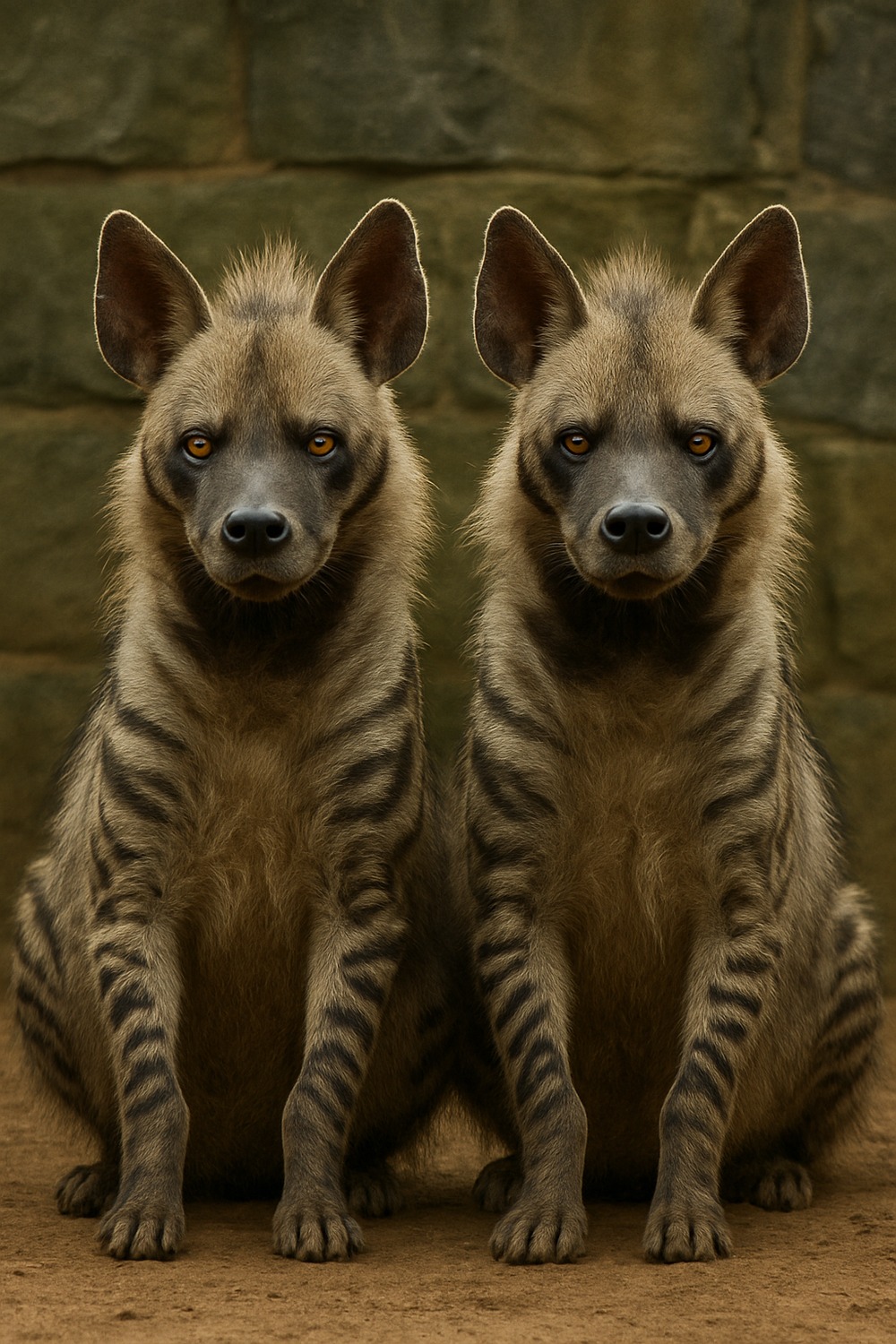
At the Maruyama Zoo in Sapporo, Japan, a pair of striped hyenas named Kamutori and Kamutori II shared an enclosure for four of the most meticulously documented years in that zoo’s history. Keepers tracked behavior. They adjusted diet. They fine-tuned temperature gradients and light cycles to approximate the Tanzanian grasslands these animals come from. They did everything the science said to do. And still — nothing. No cubs. No signs of pregnancy. Just two hyenas, living their quiet, secretive lives, completely unbothered by the humans furiously scribbling on clipboards outside the glass.
Why Striped Hyena Sex Identification Defeats Even Experts
Hyenas are one of the most misunderstood animal families on the planet, and the striped hyena, Hyaena hyaena, is the least studied of all four species. Nocturnal. Largely solitary. Deeply secretive. Wildlife biologist Dr. Kay Holekamp, who has spent decades studying hyena social structures, has noted that even spotted hyenas require close physical inspection to sex correctly in the field. The striped variety makes it harder still.
It comes down to anatomy. Female striped hyenas don’t have the dramatically masculinized genitalia that spotted hyenas are famous for — but the external differences between males and females are still remarkably subtle. Scrotal tissue can be minimal. Body size differences are minimal. And behavior? Almost identical between sexes in this species. There isn’t a visual shortcut. There really isn’t one.
That last detail kept me reading about this for another hour.
The Zoo Did Everything Science Said to Do
The keepers at Maruyama weren’t being careless. They were following every established protocol with genuine rigor. Diet was adjusted to support reproductive health. The enclosure environment was calibrated with real intention — temperature gradients, light cycles, even the texture of the substrate beneath the animals’ feet. You can read about the extraordinary lengths modern zoos go to for conservation breeding over at this-amazing-world.com, where the science behind these programs gets the attention it deserves.
Staff logged hours of behavioral observation. They noted feeding patterns, social interactions, resting positions. They were looking for signs of courtship, of dominance shifts, of the subtle hormonal changes that often precede breeding.
Every box was checked. Every box came back empty.
Which raises the obvious question — why didn’t anyone run a genetic test sooner? The answer is probably the least satisfying one: because nobody thought they had to. Visual sexing is standard procedure. It works the vast majority of the time, across the vast majority of species. Striped hyenas are an exception that the field hadn’t fully reckoned with yet.
The Secret Striped Hyenas Have Always Been Hiding
Here’s the thing — this isn’t just a quirky zoo mishap that got picked up by Japanese media and went mildly viral. Striped hyena sex identification is a documented challenge across zoological institutions worldwide. A 2013 review of captive hyena management flagged recurring difficulty in field-based sexing of both striped and brown hyenas without invasive or lab-based procedures.
These animals have essentially evolved to be opaque to outside observers.
That’s probably not an accident. In the wild, revealing vulnerabilities — behavioral tells, physical weaknesses, even something as basic as sex — can be fatal. What reads as frustrating ambiguity to a zookeeper with a clipboard is, from the hyena’s perspective, millions of years of very successful survival strategy. The animal isn’t hiding anything on purpose. It just never evolved a reason to make itself legible.
Four years. Hundreds of observation hours. Adjusted diets. Calibrated lighting. And two very unbothered male hyenas.
A DNA Test Changed Everything — With a Side of Laughter
The answer was sitting in a simple genetic test the whole time. When zookeepers finally ran a DNA analysis on both animals, the result came back unambiguous: Kamutori and Kamutori II were both male. Not borderline. Not ambiguous. Male. The story spread quickly through Japanese media and then internationally, becoming one of those rare zoo stories that makes people laugh not at the animals, but at the genuinely disorienting gap between what trained eyes can see and what the data actually says.
Zookeepers, veterinarians, outside consultants — all of them had looked at these animals repeatedly and reached the same wrong conclusion.
And that’s the part worth sitting with. These weren’t amateur observers making a sloppy call. The fact that trained professionals with years of field and captive-animal experience couldn’t determine the sex of these animals without a lab test isn’t an embarrassment — it’s a data point. A real one. It tells us something specific about the limits of observation, and about how much wild creatures can conceal even under the most controlled conditions imaginable.
By the Numbers
- Striped hyenas have an estimated wild population of fewer than 10,000 individuals globally — a 2021 IUCN assessment classified them as “Near Threatened,” which makes accurate captive breeding programs genuinely critical, not just academically interesting.
- At least 3 documented misidentification cases before Maruyama.
- In a survey of captive hyena facilities reviewed by the Hyena Specialist Group, misidentification of sex was flagged as a recurring concern across multiple institutions — Maruyama wasn’t an isolated incident so much as the one that got the most press.
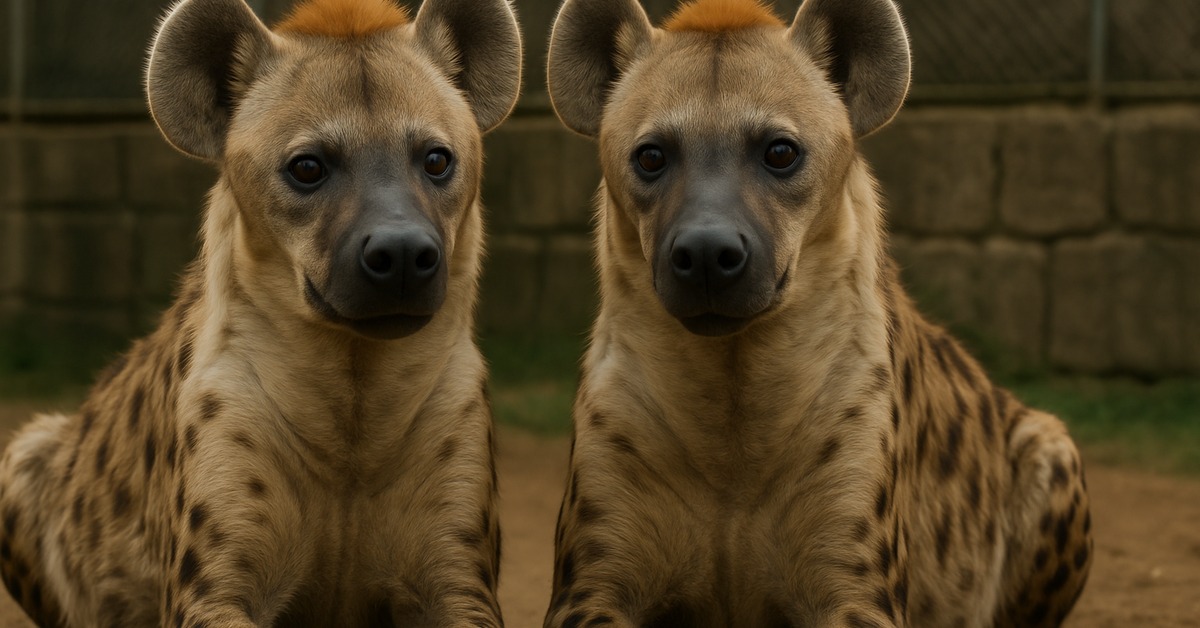
- The spotted hyena has the most masculinized female genitalia of any mammal on Earth — a clitoris so enlarged it’s functionally indistinguishable from a male penis at a casual glance, which means the entire hyena family has been confusing researchers for as long as researchers have existed.
- Roughly 1,460 days of observation at Maruyama. Not one genetic verification test in that window.
Field Notes
- Striped hyenas play dead — and convincingly. They’ll go completely limp when attacked, sometimes for extended periods, a behavior so persuasive that predators have literally walked away from a perfectly living animal.
- Unlike spotted hyenas, which live in complex matriarchal clans, striped hyenas are largely solitary and monogamous in the wild. That matters for captive breeding because a genuine pair needs to actually bond, not just coexist in the same enclosure. Two animals sharing space isn’t the same as two animals forming a reproductive partnership — which adds yet another layer of difficulty to programs like the one at Maruyama.
- Not entirely unique, either. Zookeepers in the UK famously spent years attempting to breed two giant tortoises before discovering one was female and one was a completely different species.
What This Tells Us About the Gaps in Our Knowledge
The Maruyama story circulates online because it’s funny. Two male hyenas. Four years. One embarrassed zoo. But the reason it stays with people is something less comfortable. Striped hyena sex identification sits at the intersection of everything that makes wildlife science genuinely humbling — the limits of visual observation, the gap between what we think we know and what the data actually says, and the quiet stubbornness of wild animals who’ve spent millions of years evolving to be unreadable.
Every captive breeding program carries an implicit assumption underneath it: that we understand the animal well enough to manage it.
Sometimes that assumption holds. And sometimes two male hyenas spend four years proving it wrong in the most polite, unbothered way possible.
The deeper question isn’t really about hyenas specifically. It’s about how many species we’re currently mismanaging, misreading, or simply getting wrong — not out of carelessness, but out of the honest, unavoidable limits of what human observation can actually see. Conservation depends on getting this right. And getting it right requires admitting, sometimes loudly, that we don’t always know what we’re looking at.
Science didn’t fail at Maruyama. It self-corrected. That’s exactly what it’s supposed to do.
Two male hyenas. Four years. One DNA swab. The story of Kamutori and Kamutori II isn’t really about a mistake — it’s about what happens when patience meets humility inside a hyena enclosure in Sapporo. Nature doesn’t cooperate with clipboards. And honestly, that’s what keeps this kind of science worth doing. If you want more stories where the animals win, there’s plenty more at this-amazing-world.com — and the next one is even stranger.