14 Wolves Were Released. Then the Rivers Changed.
Nobody was looking for rivers to move. That’s the part that still gets me about this story.
By 1926, every wolf in Yellowstone had been killed off — shot, trapped, or poisoned out of existence by federal predator control programs. The park ran without its apex predator for nearly 70 years. Nobody fully understood what that meant, not really, until 1995 when scientists brought 14 wolves down from Canada and quietly dropped them back into a landscape that had forgotten they existed. What happened next rewrote everything researchers thought they understood about how ecosystems hold together.
How Wolves Reintroduced to Yellowstone Changed Everything
The reintroduction wasn’t exactly a crowd-pleaser. Ranchers worried. Hunters protested. But ecologist William Ripple at Oregon State University started noticing something strange in the data — aspen and willow trees recovering along riverbanks in ways that rainfall totals and land management decisions couldn’t explain. Turns out the wolves weren’t just killing elk. They were changing where elk chose to stand. And that distinction, which sounds almost trivially small, turns out to be everything.
The answer is fear. Elk stopped hanging around riverbanks and open valleys — anywhere wolves could easily surround them. Vegetation that had been stripped bare for decades started coming back. Willows. Aspens. Cottonwoods. And with the plants came everything else.
Which raises the obvious question: if elk behavior was the missing piece the whole time, why didn’t anyone notice for 70 years?
Probably because there was nothing left to compare it to. When you’ve never seen the system working, you don’t know what broken looks like.
One Predator Rebuilt an Entire Food Web
This is what biologists call a trophic cascade — a chain reaction set off by a top predator that ripples all the way down through an ecosystem. Wolves eat elk. Elk avoid certain areas. Plants recover. Beavers return to those recovering areas and build dams. Beaver dams create ponds. Ponds support fish, amphibians, migratory birds. One predator. Fourteen animals. An entire food web rebooting itself from the top down, while researchers scrambled to document what was happening fast enough to keep up with it.
Beavers had been largely absent from much of Yellowstone for years before this. Their return wasn’t random — it was a direct downstream effect of wolves rearranging elk behavior across the landscape. And beavers, it turns out, are extraordinary ecosystem engineers. Their dams slow water flow, raise water tables, and build wetland habitat that dozens of other species depend on. The wolves brought back the beavers. The beavers brought back the wetlands. None of it was planned.
Then the Rivers Themselves Started to Move
Here’s where the wolves reintroduced to Yellowstone story shifts from interesting to genuinely hard to sit with.
As vegetation recovered along the riverbanks, root systems began stabilizing soil that had been eroding for decades. The banks held. River channels narrowed and deepened. Water moved differently through the landscape. Scientists documented measurable changes in the physical geography of Yellowstone’s rivers — not from floods, not from earthquakes, but because wolves had changed where a large herbivore chose to graze. That last part kept me reading about this for another hour when I first came across it.
The rivers literally changed course. Not dramatically, not overnight — but measurably, documentably, over years.
That’s not a metaphor. It’s hydrology. And it happened because of fourteen wolves.
Wolves Don’t Actually Want to Fight You
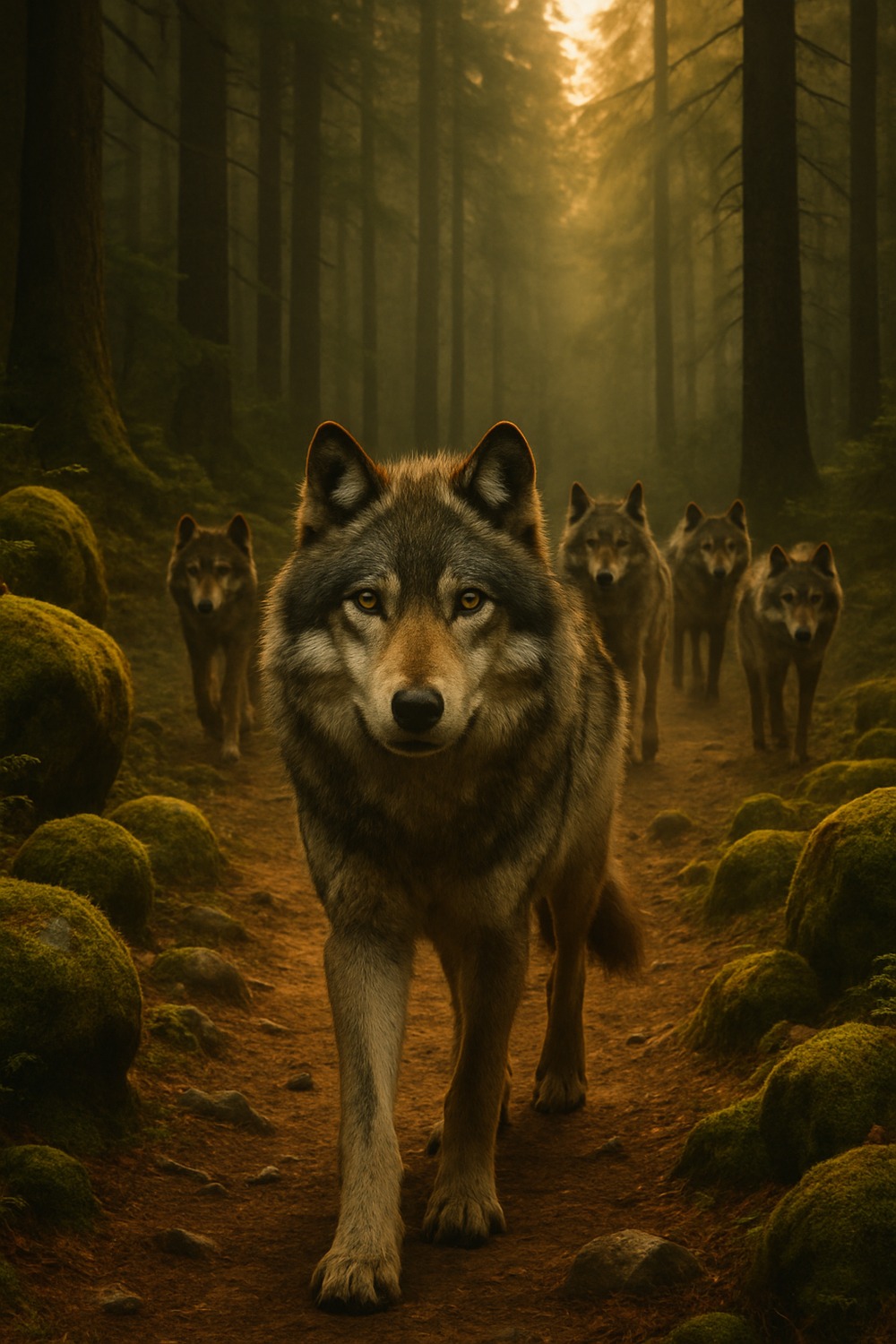
Here’s the thing: three centuries of folklore have handed us a version of the wolf that has almost nothing to do with the actual animal. Wolves aren’t naturally aggressive toward humans — given space, they actively avoid us. Their social structure looks less like a pack of apex killers and more like a functional family. A breeding pair, their pups, and often older offspring who stick around to help raise the next litter. They cooperate. They play. They’ve been documented grieving pack members. A wolf hunts because its pups are hungry, not because danger is somehow baked into its personality.
We spent roughly 300,000 years sharing this planet with Canis lupus. We wrote wolves into fairy tales, into nightmares, into the architecture of our deepest cultural fears. And then we systematically erased them from the wild. What we lost in the process, we didn’t fully understand until we tried to get it back.
By the Numbers
- By 2005 — just a decade after reintroduction — the Yellowstone wolf population had grown to around 118 individuals across 11 packs, according to the National Park Service.
- Elk populations in the Northern Range declined by roughly 50% between 1995 and 2004. But here’s the counterintuitive part: overall herd health measurably improved as the population stabilized, because the wolves were systematically removing the weakest animals.
- Beaver colonies: from 1 colony in 1996 to 9 by 2011.
- Before reintroduction, some willow stands in Yellowstone had declined by up to 80% from pre-predator baseline levels. Recovery began within years of wolves returning — not decades. Years.
Field Notes
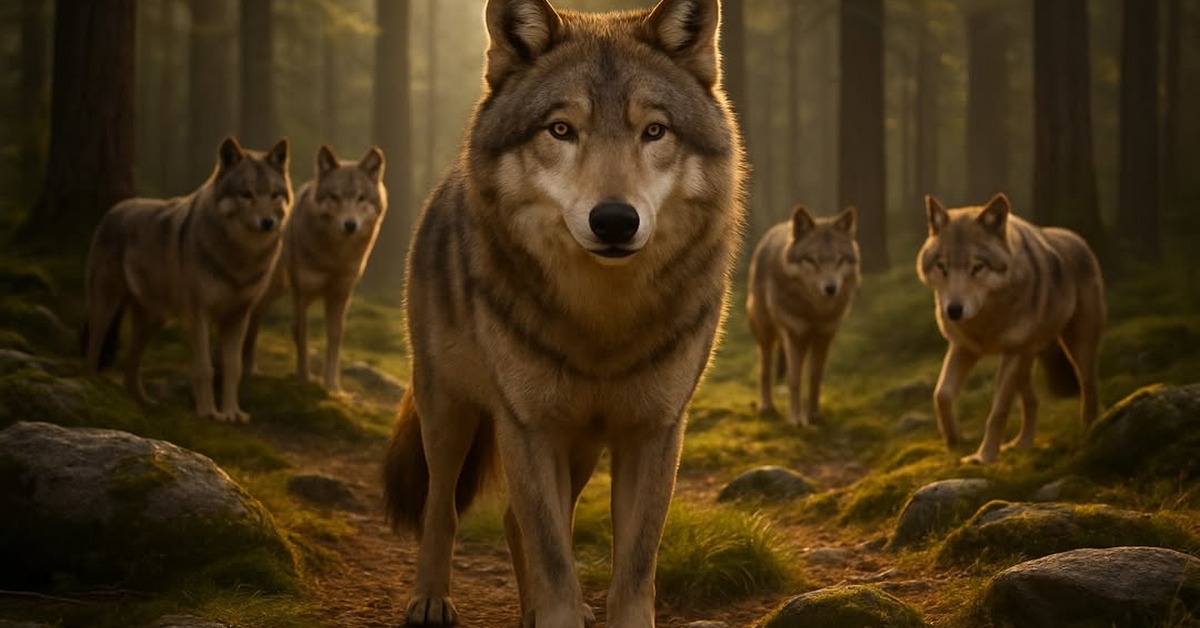
- Wolves in Yellowstone have been documented traveling over 30 miles in a single day.
- The “ecology of fear” is now a formal scientific concept, and the research coming out of Yellowstone helped establish it. Researchers found that the mere presence of a predator — not even an active hunt, just the possibility of one — changes prey behavior enough to alter vegetation patterns across large landscapes. The elk don’t need to be chased. They just need to know something is out there.
- Yellowstone’s wolf reintroduction is now considered one of the most successful conservation interventions in American history.
- It’s actively being studied as a model for rewilding projects in Scotland, Scandinavia, and elsewhere — places where the same question is being asked: what happens when you put the keystone back?
What We Broke Without Knowing — And Why It Matters
The wolves reintroduced to Yellowstone didn’t just restore a species. They exposed something uncomfortable about how ecosystems actually function — and about how quietly catastrophic our interventions can be when we don’t understand what we’re dismantling.
When we removed the wolf, we didn’t just lose a predator. We pulled a keystone from an arch. Everything above it shifted, slowly, over decades, and we had no baseline to compare it to because the collapse happened gradually enough that it just looked like normal. That’s how ecological loss actually works. It doesn’t announce itself. It’s gradual. It’s invisible.
Until it isn’t.
There are ecosystems all over the world missing their keystones right now. Missing predators, missing engineers, missing the species that were doing invisible structural work nobody thought to document before they were gone. Yellowstone showed us that restoration is possible. But it also showed us how much we didn’t know we were losing while it was happening.
And that question — what else have we quietly dismantled? — doesn’t have a comfortable answer.
Fourteen wolves. That’s all it took to start rebuilding a river system that humans had spent decades degrading without even trying. Nature doesn’t need much of a foothold — just the right species, in the right place, given enough time and space to do what it was already doing long before we arrived and decided we knew better. If this kind of story keeps you up at night, there’s more at this-amazing-world.com — and the next one is even stranger.