Buddhist Monk Lost His Leg. He Never Lost His Peace.
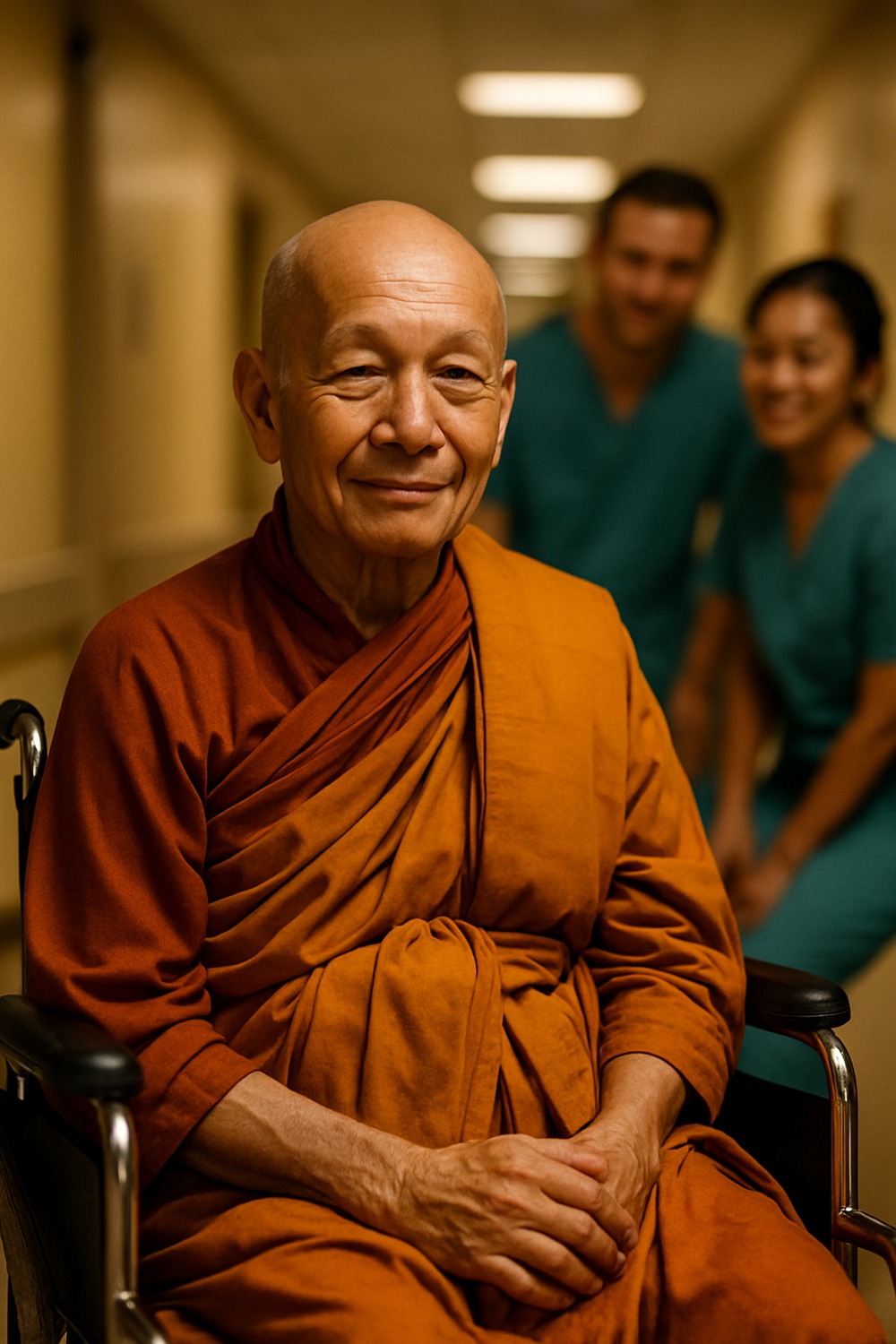
Forgiveness is supposed to come later — after the anger, after the grief, after enough time has passed to soften what happened. Phra Ajarn Maha Dam Phommasan, a Buddhist monk peace walk accident forgiveness story made flesh, skipped that sequence entirely. He was still in the hospital bed. The leg was gone. And he was already forgiving the driver who took it.
Maha Dam was a senior monk at Wat Lao Buddha Khanti Temple in Snellville, Georgia, walking 2,300 miles from Fort Worth, Texas, to Washington, D.C., as an act of spiritual witness for peace. Somewhere near Dayton, Texas, a vehicle struck him. The collision took his leg. What it couldn’t take — what it had no mechanism to remove — was the man himself. So who was he, exactly, before the world tried to break him?
The Long Walk: A Monk’s Journey Toward Peace
Peace walks are not casual undertakings. In Theravada Buddhist tradition, the oldest surviving school of Buddhism, walking as spiritual witness has roots stretching back over two millennia. Monks throughout Southeast Asia — in Thailand, Laos, Myanmar, Cambodia — have undertaken vast journeys on foot during times of war and civil unrest, not to protest in the Western political sense, but to embody peace itself. The act of walking becomes the message. The body becomes the argument. Maha Dam carried that tradition into the American South in 2023, placing one sandaled foot in front of the other across hundreds of miles of Texas highway, Georgia backroad, and everything between. He walked alone. He carried his robes. He carried his intention.
2,300 miles deserves a moment of stillness before you read past it. That’s roughly the span from London to Cairo. Walked. On foot. No support team, no camera crew documenting each mile. In the Theravada lineage Maha Dam follows, suffering endured with awareness becomes a form of teaching — so the walk was, by design, difficult. It was supposed to be. Hardship chosen consciously is very different from hardship imposed.
He had already covered hundreds of miles by the time the collision happened. His body knew the road. His mind was settled into the rhythm of the walk. Then, in one second, the context changed entirely — and everything that followed revealed something about what the practice had actually built inside him.
The Moment That Stopped the Hospital
Why does this matter? Because what unfolded at Piedmont Healthcare wasn’t just moving — it was medically disorienting for the staff who witnessed it.
Maha Dam offered forgiveness to the driver. Not eventually. Not after processing time with a counselor. He offered it from his hospital bed, in the immediate aftermath of catastrophic physical trauma, before he fully understood the extent of what had been taken from him. “Anger does not bring you peace,” he said. It’s the kind of statement that sounds like a greeting card until you place it in context — a man who had just lost his leg, speaking directly about the person who had taken it. That kind of radical compassion-under-pressure is genuinely rare, and it’s worth understanding what produces it. Much like the story of a baby who survived surgery before she was even born, what happened inside Piedmont Healthcare’s walls defied ordinary expectation — the human body and spirit holding steady against the worst odds medicine had seen in that room.
Medical staff described being visibly moved. These are professionals trained to maintain clinical distance — people who’ve seen trauma, grieving families, angry patients, the full spectrum of human response to sudden catastrophic injury. What they apparently hadn’t seen was a man who metabolized devastation in real time and produced something that looked, from the outside, like serenity. Neurologically, this isn’t magic. Long-term meditation physically restructures the brain’s response to threat (researchers actually call this neuroplastic recalibration). But understanding the mechanism doesn’t make watching it any less extraordinary.
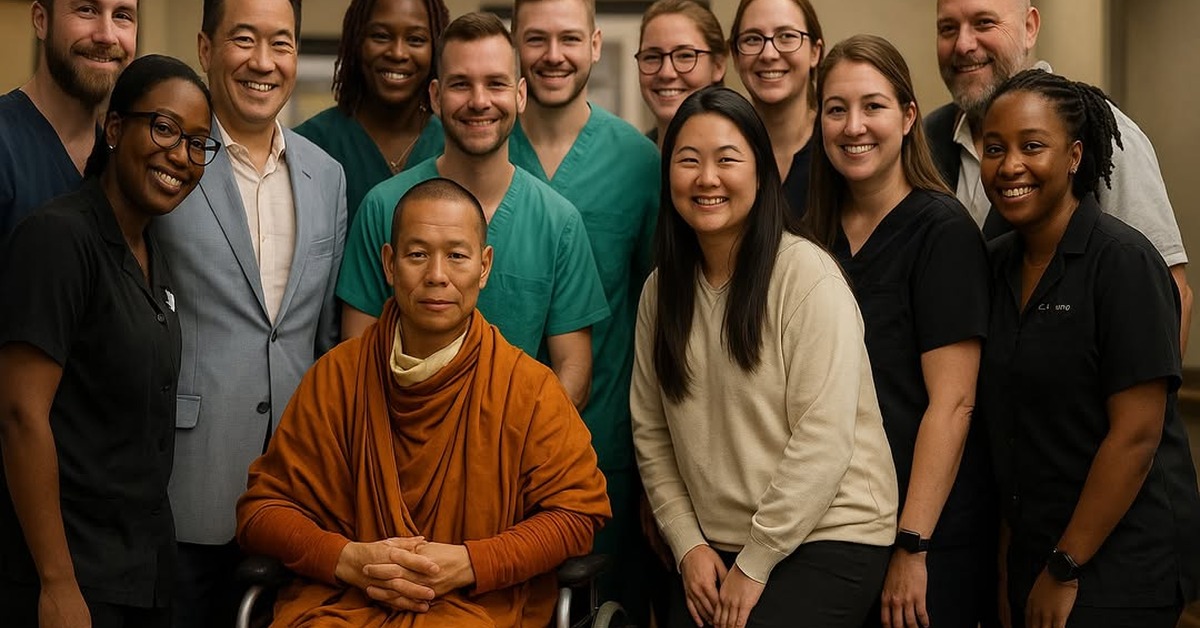
His community in Snellville received the news from hundreds of miles away. They gathered. They prayed. And when he finally came home — months later, after surgery and the long work of rehabilitation — they met him not with mourning clothes and lowered voices, but with celebration. That choice alone says something about how his community understood what had actually happened.
What Decades of Practice Actually Build Inside a Brain
By 2023, the science of contemplative practice had accumulated decades of neuroimaging data. Research conducted at institutions including the University of Wisconsin–Madison’s Center for Healthy Minds — where neuroscientist Richard Davidson has spent over thirty years studying meditators — has demonstrated measurable structural differences between the brains of experienced practitioners and non-practitioners. The amygdala, the brain’s primary threat-detection center, shows reduced reactivity in long-term meditators even under acute stress conditions. The prefrontal cortex — responsible for emotional regulation, decision-making, and the capacity to override reactive impulse — shows increased thickness and connectivity. These aren’t subtle differences. They’re visible on a scan. According to BBC Future’s reporting on contemplative neuroscience, experienced meditators demonstrate fundamentally altered baseline emotional responses — not suppression of feeling, but a different relationship to it entirely.
Maha Dam’s forgiveness wasn’t the absence of pain. It was pain held differently.
Here’s the thing: this is where the Buddhist monk peace walk accident forgiveness narrative stops being merely inspirational and starts being scientifically interesting. Forgiveness — real forgiveness, not performed forgiveness — has measurable physiological effects. Research published through Stanford University’s Center for Compassion and Altruism Research and Education (CCARE), established in 2008 under the directorship of James Doty, has linked forgiveness practice to reduced cortisol levels, lower inflammatory markers, and improved cardiovascular outcomes. When Maha Dam chose forgiveness, he wasn’t just being spiritually generous. He was, in the most literal biological sense, protecting himself. Anger maintained over time is genuinely injurious to the body — not as an abstract concept, but as lived embodied knowledge accumulated over decades of practice. A life spent on the cushion is also, it turns out, time spent building armor.
Forgiveness isn’t softness. It requires more internal strength than rage does. Rage is automatic — the body’s default. Forgiveness is something you have to construct, deliberately, against the current. That construction is what decades of practice builds the capacity for.
Buddhist Monk Peace Walk Accident Forgiveness: What It Teaches the Rest of Us
American stories tend to run on resistance — on fighting back, lawyering up, refusing to accept. That story has its place. Rights matter. Accountability matters. But Maha Dam’s response poses a genuine challenge to the assumption that those are the only valid responses to injustice. His tradition offers a different framework entirely, built not on passivity but on a specific understanding of what actually causes suffering to extend. The Theravada Buddhist analysis of dukkha — often translated as “suffering” or “unsatisfactoriness” — holds that much of what we experience as pain is pain we continue feeding through our responses to it. The initial wound arrives. What we do with it determines whether it compounds.
Any tradition that has been stress-tested by two millennia of human violence and loss probably deserves more than a passing read.
A study published in 2020 through the University of California, Berkeley’s Greater Good Science Center found that forgiveness interventions reduced symptoms of depression and anxiety across diverse cultural populations — not by minimizing harm, but by interrupting the cycle of rumination that re-traumatizes the nervous system long after the original event has passed. The Buddhist monk peace walk accident forgiveness story that Maha Dam’s life tells doesn’t require adopting his religion to be useful. What it does require is understanding that peace isn’t a passive state — it’s an active practice, maintained against friction, rebuilt daily. Maha Dam was walking 2,300 miles for peace before the accident. He continued practicing peace after it. The walk changed form. The intention didn’t.
And his community’s response — celebration rather than grief — reflects the same understanding. Loss of a limb is real loss. Nobody minimizes that. But the man who came back to Snellville was recognizably himself: a practitioner whose practice had held. That’s what they were celebrating. Not the accident. The holding.
How It Unfolded
- Centuries BCE: Theravada Buddhist walking practice — dhutanga — established as formal ascetic discipline, requiring monks to undertake journeys on foot as acts of spiritual commitment during times of conflict or moral crisis.
- 2023, Fort Worth, Texas: Phra Ajarn Maha Dam Phommasan, senior monk at Wat Lao Buddha Khanti Temple in Snellville, Georgia, begins a 2,300-mile peace walk toward Washington, D.C., walking alone through the American South.
- 2023, Dayton, Texas: A vehicle strikes Maha Dam mid-journey; he is transported to Piedmont Healthcare, where he undergoes emergency surgery and loses his leg — and where he offers immediate forgiveness to the driver from his hospital bed.
- 2023, Snellville, Georgia: Maha Dam returns home after months of surgery and rehabilitation; his temple community meets him with celebration, marking not his loss but the continuity of his practice and spirit.
By the Numbers
- 2,300 miles: The total planned distance of Maha Dam’s peace walk from Fort Worth, Texas, to Washington, D.C. — comparable in length to a walk from London to Cairo.
- Hundreds of miles: Distance already covered on foot before the collision occurred near Dayton, Texas.
- 30+ years: Duration of neuroscientist Richard Davidson’s research at the University of Wisconsin–Madison into measurable brain changes produced by long-term meditation practice.
- 2008: Year Stanford University’s Center for Compassion and Altruism Research and Education (CCARE) was established, anchoring the scientific study of forgiveness and compassion as physiological phenomena.
- 2020: Year UC Berkeley’s Greater Good Science Center published findings showing forgiveness interventions reduced depression and anxiety symptoms across diverse global populations.
Field Notes
- Maha Dam’s walk was not affiliated with any large organization or media campaign — he undertook it as a solo spiritual act, in the ancient Theravada tradition of dhutanga walking practice, relying on the road itself as the teacher. The anonymity was part of the point.
- The specific phrase he offered — “Anger does not bring you peace” — is not a scripture quote. It’s a personal formulation, which makes it more striking: not recited doctrine, but something distilled from his own experience and practice.
- Changes to amygdala reactivity have been detected in long-term meditators after as little as eight weeks of consistent daily practice — suggesting the capacity Maha Dam demonstrated isn’t confined to lifelong monastics.
- Researchers still can’t fully explain why some individuals under identical trauma conditions demonstrate Maha Dam’s pattern of response while others don’t — even when controlling for meditation experience. The individual variation remains one of contemplative neuroscience’s genuinely open questions.
Frequently Asked Questions
Q: What is the significance of a Buddhist monk peace walk accident forgiveness response in the Theravada tradition?
In Theravada Buddhism, forgiveness isn’t a personal choice made once — it’s a trained capacity, developed through years of formal practice. When Maha Dam offered immediate forgiveness after his accident in 2023, he was drawing on a deeply conditioned orientation toward compassion that the tradition explicitly cultivates. Theravada monks undertake regular metta (loving-kindness) meditation directed toward all beings, including those who cause harm. His response from Piedmont Healthcare was consistent with that training — not extraordinary for his context, even if extraordinary for ours.
Q: Does science actually support the idea that forgiveness is good for the body?
It does — measurably. Stanford’s CCARE has documented links between forgiveness practice and reduced cortisol, lower inflammatory markers, and improved cardiovascular function. The mechanism involves interrupting the stress-response cycle: sustained anger keeps the sympathetic nervous system activated, which is biologically costly over time. Forgiveness doesn’t mean denying harm occurred — it means choosing not to continue metabolizing it as a chronic stressor. For someone recovering from major surgical trauma, as Maha Dam was in 2023, that distinction is physiologically significant, not just spiritual.
Q: Doesn’t forgiveness let the person who caused harm off the hook?
This is the most common misconception. Forgiveness in contemplative practice is not the same as absolution, approval, or the removal of legal or moral accountability. Maha Dam’s forgiveness of the driver didn’t erase what happened — it released Maha Dam from carrying that event as ongoing suffering. Buddhist teaching is explicit on this: forgiveness is done for the practitioner, not for the person forgiven. Accountability and compassion are not mutually exclusive. The driver remains responsible for what occurred on that Texas road. Maha Dam’s peace was simply not contingent on that accountability being served first.
Editor’s Take — Sarah Blake
What stays with me about Maha Dam’s story isn’t the forgiveness itself — remarkable as it is. It’s the timing. From a hospital bed. Before he’d even fully processed the loss. Most of us, in our best moments, manage forgiveness eventually — after the anger runs its course, after time softens the edges. He didn’t wait for the edges to soften. He made a choice in the acute moment. That’s not a personality trait. That’s what thirty years of practice actually builds. It should make us curious about what we’re building.
Phra Ajarn Maha Dam Phommasan never finished the walk — not the original 2,300-mile route, not on two legs as planned. But the practice he was walking to demonstrate never required a destination to be real. It was already real. It showed itself in a hospital room near Dayton, Texas, in the face of a medical team that hadn’t seen anything quite like it. There is something the world does when it hands you every reason to harden — and something else entirely that becomes possible when you’ve spent decades preparing for exactly that moment. What are you preparing for?