The Biodegradable Urn Turning Human Ashes Into Forests
Here’s the thing about a biodegradable burial urn memorial forest: it shouldn’t work as well as it does. A coconut-shell capsule, a handful of ash, a seed — and somehow, within a decade, you get a woodland corridor that regional naturalists didn’t expect to exist. The math is quiet. The outcome is not.
Outside Barcelona, a cluster of oak saplings stands knee-high in a small clearing. To a stranger passing through, it reads as a reforestation project. To the families who planted them, it’s a cemetery — one that will still be growing five centuries from now. The question the traditional funeral industry keeps not answering: what exactly are we preserving when we bury someone in a sealed vault, and for whom?
The Capsule Changing What Burial Can Mean
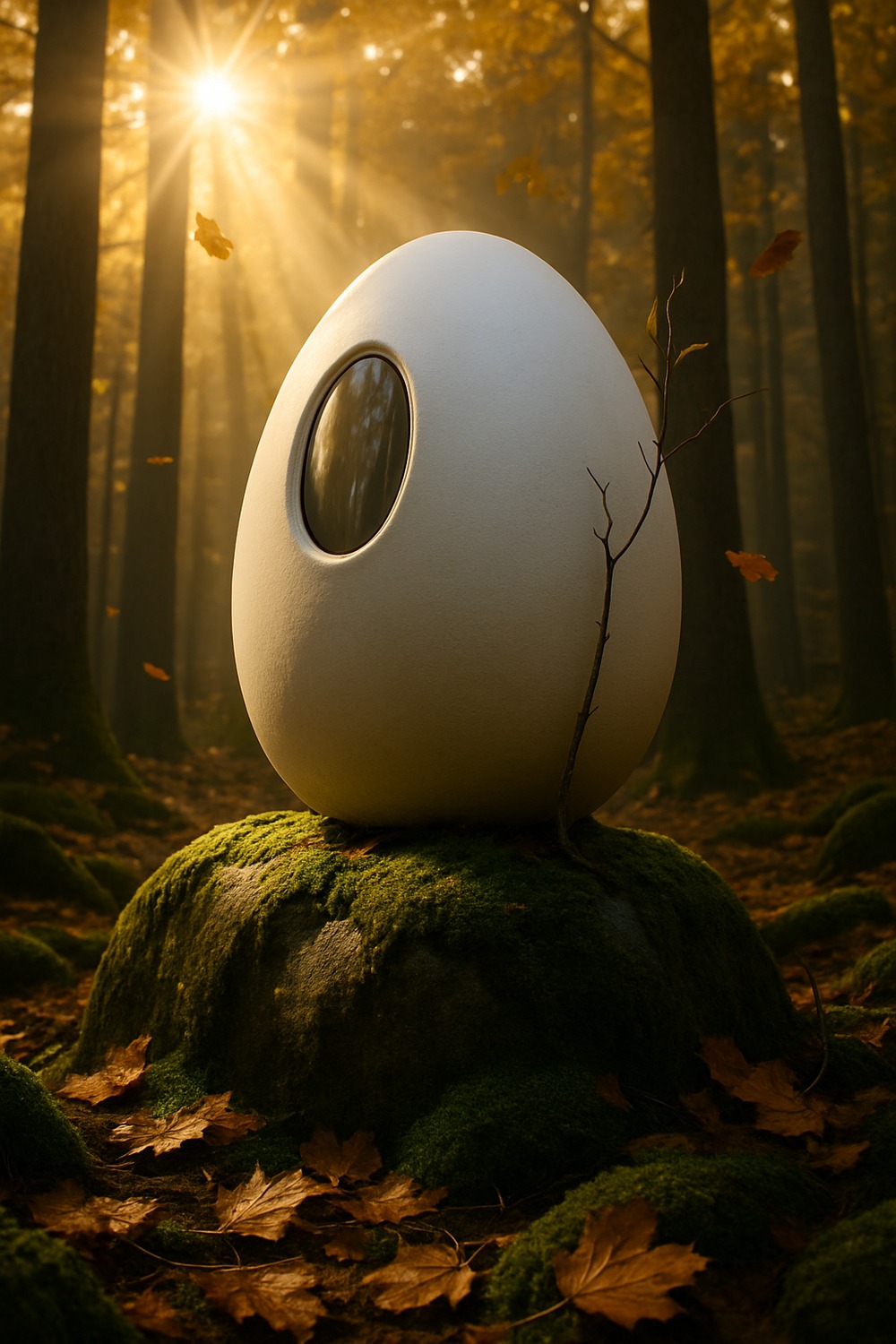
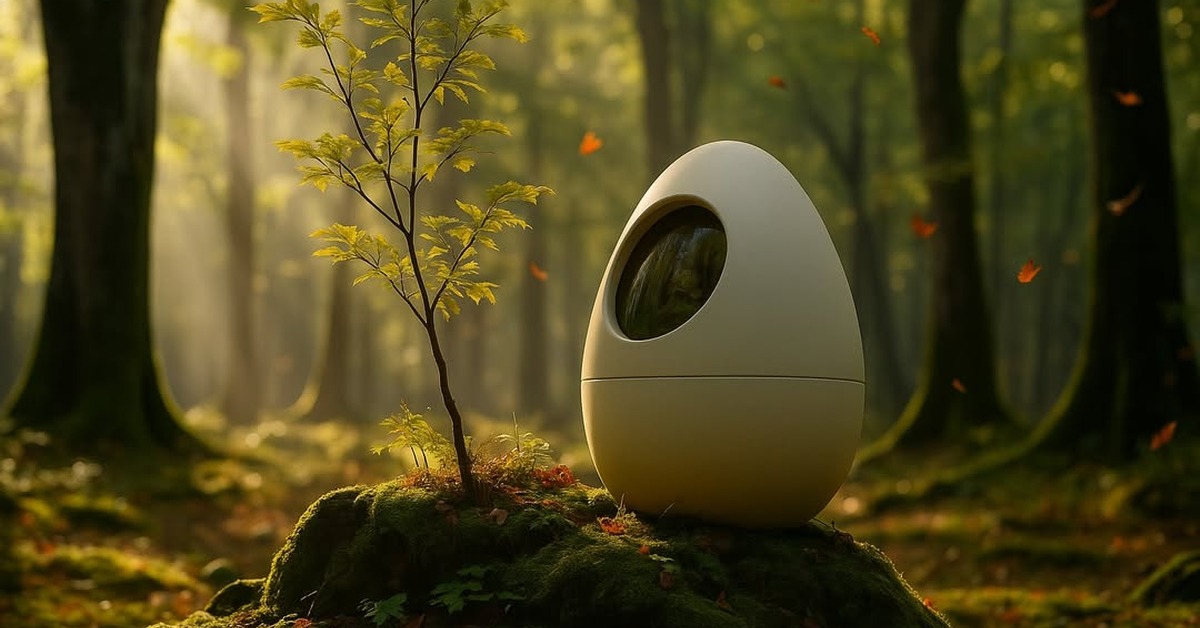
Launched commercially in 2013 by Barcelona designers Gerard Moline and Roger Moliné, the Bios Urn is deceptively simple — two chambers made from coconut shell, compacted peat, and cellulose, the same fibrous material that makes up plant cell walls. The upper chamber holds a seed or young sapling. The lower chamber holds cremated remains. As the capsule breaks down over months, the ashes — alkaline and high in phosphorus — interact with the surrounding soil, gradually threading into the nutrient web that feeds the tree above. The concept draws on nutrient cycling, the ecological process by which matter moves continuously between organisms and their environment. Death, in this framework, isn’t a terminus. It’s a transaction.
What makes the Bios Urn genuinely different from earlier eco-burial experiments isn’t the materials — it’s the specificity of the outcome. You choose your tree. Families have planted maples in northern Spain, stone pines along the Adriatic coast, Japanese cherry trees in urban memorial parks in Germany. Researchers at the Universitat Politècnica de Catalunya studied decomposition rates of similar cellulose-based burial vessels and found breakdown essentially complete within three to six months in temperate soil — leaving behind no synthetic residue of any kind.
Stand in one of these memorial groves long enough and you notice something traditional cemeteries rarely offer: birdsong. Saplings attract insects. Insects attract birds. Ecological succession starts almost immediately, even when the trees are still seedlings. Life doesn’t wait for an invitation.
What We’re Actually Doing With Traditional Burial
Why does this matter? Because the numbers behind conventional burial are difficult to read without a growing unease.
American cemeteries consume approximately 30 million board feet of hardwood annually — walnut, cherry, and mahogany caskets, many sealed in concrete vaults designed to slow, not stop, decomposition. More than 800,000 gallons of embalming fluid enter American soil each year, dominated by formaldehyde, a compound the International Agency for Research on Cancer classifies as a known human carcinogen. Cremation shrinks the land footprint but carries its own carbon cost: a single cremation releases roughly 400 kilograms of CO₂, equivalent to driving a mid-sized car approximately 1,000 miles. The biodegradable burial urn memorial forest model doesn’t eliminate that release — cremation still happens — but it immediately begins offsetting it through the tree that follows. That shift in accounting matters more than it might first appear. It’s the difference between a one-way transaction and a cycle.
There’s a broader ecological cost that rarely surfaces in funeral industry discussions. Land occupied by traditional cemeteries is, ecologically speaking, largely dead — mown grass, sealed vaults, regular pesticide application producing what urban ecologists call a biological desert: high in maintenance, low in function. A memorial forest, by contrast, accumulates ecological value over time. And there’s something worth noting here: much like a crow returning obsessively to a woodland patch to perform its ritualistic anting behavior along the forest floor, living creatures have something deeply wired in how they relate to old trees. They’re landmarks of time we can touch. The same instinct driving families toward living memorials — the desire for something that endures — is also what tethers people to ancient woodland.
The Bios Urn retails for under $200. A sapling adds another $20 to $80. The math isn’t subtle. What’s slowing adoption isn’t economics — it’s infrastructure, regulation, and the inertia of a multi-billion-dollar industry built on the assumption that burial means permanence through materials, not through biology.
Memorial Forests Are Already Reshaping Landscapes
Ecological evidence for what these forests can do at scale is beginning to arrive. A cluster of memorial plantings in Navarra, northern Spain, started in 2015 and has developed into a small but measurable woodland corridor — one that regional naturalists didn’t predict would establish itself so quickly. Bird species diversity increased in areas adjacent to these clustered plantings compared to traditional cemetery sites of equivalent age, according to a 2021 study by the Spanish National Research Council (CSIC). Native woodland species — including the short-toed treecreeper and the marsh tit — had begun using the memorial grove as a breeding corridor within five years of initial planting.
Nobody was looking at the right place.
According to National Geographic’s ongoing reforestation coverage, emerging woodland corridors in fragmented agricultural landscapes can restore local biodiversity within a single decade when native species are planted at sufficient density — precisely the outcome these memorial forests appear to be accelerating. But here’s what the biodegradable burial urn memorial forest model does that deliberate reforestation projects often struggle to replicate: it creates a human motivation for long-term stewardship. The families who planted those oaks in Navarra return. They water saplings during drought years. They pull competing invasive species without being asked. Traditional reforestation projects are frequently abandoned within two to three years for lack of sustained funding and engagement. Memorial forests don’t have that problem.
Grief, turns out, is an extraordinarily durable form of commitment.
Every sapling planted above a Bios Urn carries real ecological potential. A single mature oak supports over 500 insect species, which underpin entire food webs. A mature pine sequesters hundreds of kilograms of carbon across a three-century lifespan. The person beneath the tree would have been forgotten by their great-great-grandchildren’s generation. The tree might still be standing.
The Science Behind a Biodegradable Burial Urn Memorial Forest
Cremated remains present an interesting chemical challenge for burial ecologists. High-heat cremation — typically performed between 1,400 and 1,800 degrees Fahrenheit — destroys all organic matter, leaving behind calcium phosphate, potassium, and sodium compounds in fine granular form. The pH of cremains typically falls between 11 and 12, highly alkaline, comparable to garden lime. Planted directly, they can inhibit seed germination by pushing soil pH beyond what most species tolerate.
A 2019 study from the University of Bath’s Department of Chemical Engineering analyzed soil chemistry in cremains-adjacent plantings and found that the cellulose and peat matrix of the Bios Urn effectively buffered this alkalinity over the three-to-six-month breakdown window, allowing root systems to establish before full contact with the ashes occurred (researchers actually call this interface buffering, and it’s the capsule’s core design insight). It’s not just a poetic object. It’s a chemically considered solution to a real problem.
Phosphorus content in cremains — roughly 15 to 20 percent by weight — functions as a slow-release fertilizer once soil microbes begin processing the calcium phosphate compounds. Phosphorus is a limiting nutrient in many European and North American soils, meaning its presence in bioavailable form can meaningfully accelerate tree establishment. Forest ecologists at the Swiss Federal Institute for Forest, Snow and Landscape Research (WSL) documented faster early-stage growth rates in phosphorus-enriched soils compared to control plots, with differences measurable within 18 months of planting. The arithmetic of it is quiet but real. The biodegradable burial urn memorial forest doesn’t just honor the dead — in a measurable, soil-chemistry sense, it feeds the living.
And the Bios team has since extended the concept further: a GPS-linked app now allows families to track their tree’s growth remotely, access planting records, and share coordinates with future generations. Some memorial forests partner with local conservation organizations to integrate plantings formally into habitat restoration maps. The grove and the database grow together. Neither is complete without the other.
Could Grief Become a Conservation Strategy?
Roughly 60 million people die globally each year. Five percent of those resulting in a planted tree — in a meaningful ecosystem location — would mean three million new trees annually, a number comparable to mid-scale national reforestation programs. Conservation organizations have spent decades trying to build durable, community-driven planting mechanisms that persist beyond the initial funding cycle. The answer may have been sitting in the one human experience that never loses its motivating power.
An industry built on the assumption that scale and grief don’t mix has, apparently, been wrong about that for years — and the communities now living beside Friedwald sites know it.
Scotland’s first woodland burial site, established in Perthshire in the 1990s, now contains several thousand trees and has been formally incorporated into NatureScot’s regional biodiversity management plan. The Living Urn, launched in the United States in 2015, and Green Burial Council-certified sites across North America are building the legal and logistical framework for scaled integration. Germany legalized forest burials in 2001 and now has more than 60 designated Friedwald — “peace forest” — sites, growing at roughly 8 percent annually as of 2022. The regulatory scaffolding in the US is more complicated: many states still require burial on licensed cemetery land, making memorial tree planting in private forests or public parks difficult without specific permits. What’s less certain is whether the death-care industry, which operates on significant margins from casket sales and cemetery plot fees, will adapt or resist. The legal scaffolding is buildable. The cultural scaffolding is slower.
Stand at the edge of a Friedwald in the Taunus hills of central Germany on an autumn morning. Beech trees the color of tarnished copper rise in every direction. Small plaques, no larger than a paperback book, fixed to some trunks at eye height. Names, dates, a word or two. The forest doesn’t feel like a cemetery. It feels like a forest that happens to hold names — which is, perhaps, exactly the right order of things.
How It Unfolded
- 1993 — Scotland’s first formal woodland burial ground opens in Carlisle, establishing the legal precedent for nature-integrated interment in the UK.
- 2001 — Germany legalizes forest burial, leading to the establishment of the Friedwald network across the country’s protected woodland areas.
- 2013 — Gerard Moline and Roger Moliné launch the Bios Urn commercially from Barcelona, shipping to customers in Europe, North America, and Australia within the first year.
- 2022 — Friedwald reports over 80,000 burials completed across its German forest network, with annual growth in demand of approximately 8 percent.
By the Numbers
- 30 million board feet of hardwood consumed annually by US casket manufacturing (National Funeral Directors Association, 2022)
- 800,000 gallons of formaldehyde-based embalming fluid introduced into US soil each year
- 48 pounds of carbon sequestered per year by a single mature oak tree, across a potential lifespan of 500+ years
- 500+ insect species supported by a single mature oak — roughly 3× the biodiversity value of an equivalent area of maintained lawn
- $200 — approximate retail cost of the Bios Urn, compared to an average US funeral cost of $7,000–$12,000 (National Funeral Directors Association, 2023)
Field Notes
- In 2017, a family in Catalonia reported that the stone pine planted above their father’s Bios Urn had established a measurable taproot within eight months — faster than a control sapling planted in the same soil without cremains, which the local nursery attributed to the phosphorus boost from the ashes.
- The word “cremains” wasn’t coined until the 1950s, when the American funeral industry began marketing cremation as a cleaner, more modern alternative — it’s a portmanteau of “cremated remains” invented specifically for advertising copy, not clinical use.
- Several Friedwald sites in Germany have been incorporated into official bat roosting surveys by regional conservation agencies, because the older memorial trees have begun developing the cavity structures that endangered bat species require for breeding.
- Researchers still can’t determine whether trees planted in memorial contexts survive at higher rates than conventionally planted trees in equivalent ecosystems — the human stewardship variable is real, but it hasn’t been formally quantified in a peer-reviewed longitudinal study.
Frequently Asked Questions
Q: How does a biodegradable burial urn memorial forest actually work in practice?
The Bios Urn is a two-chamber capsule made from coconut shell, compacted peat, and cellulose. Cremated remains go in the lower chamber; a seed or young sapling goes in the upper chamber. When planted, the capsule breaks down over three to six months, buffering the alkalinity of the ashes while releasing phosphorus into the surrounding soil. The tree establishes its root system during this window, becoming chemically connected to the remains below before full breakdown occurs.
Q: Is it legal to plant a memorial tree on private land or in a forest?
Legality varies significantly by country and, in the US, by state. Germany legalized woodland burial in 2001 and has over 60 certified Friedwald sites. The UK permits woodland burial on licensed sites. In the United States, many states require interment on licensed cemetery land, making it difficult to plant memorial trees in private forests or public parks without specific permits. Organizations like the Green Burial Council maintain updated legal guidance by state. Always verify local regulations before planting.
Q: Don’t cremated ashes harm plants — isn’t that a misconception people have about memorial forests?
Yes, and it’s a common one. Raw cremains have a pH between 11 and 12 — highly alkaline — which can inhibit seed germination if placed directly against roots. However, the Bios Urn’s peat and cellulose matrix buffers this alkalinity during the breakdown period, allowing root establishment before full contact with the ashes occurs. Once fully broken down, the calcium phosphate in cremains becomes a slow-release fertilizer. The capsule’s design specifically solves the chemistry problem that makes direct ash planting unreliable.
Editor’s Take — Alex Morgan
What stops me about this story isn’t the product — it’s the stewardship data. Families who plant memorial trees return to water them during droughts, clear competing weeds, bring their grandchildren. Conservation organizations spend years trying to manufacture that kind of sustained commitment through grants and volunteer programs, and here it exists naturally, powered by grief. The biodegradable burial urn memorial forest may matter less as a burial technology than as an accidental discovery about what actually keeps humans tethered to a piece of land long enough to let a forest form.
Germany’s oldest known Friedwald tree — a beech planted in 2001, the year forest burial was legalized — is now nearly 25 years old and stands roughly eight meters tall. Beneath it, someone’s name is written on a small plaque no bigger than a postcard. Above it, the canopy has closed enough to shelter bats, treecreepers, and three species of moth. The person is gone. The forest doesn’t know that. It just keeps growing upward, doing its long, patient work — which may be, in the end, the most honest thing we can ask of anything we leave behind.