He Clung to a Stuffed Toy. One Old Monkey Changed Everything
Nobody handed Punchy a recovery plan. They handed him a stuffed toy, and for weeks, that was the whole plan.
He weighed almost nothing when rescuers found him. Hypothermic, shaking, the kind of small that makes you hold your breath. When the keepers at Monkey Mountain sanctuary in central Thailand gave him a little plush toy to hold onto, he grabbed it with both hands and did not let go. They called it Mama Doll. For a while, that toy was doing more therapeutic work than anything else in the building.
The Orphaned Macaque Healing Nobody Saw Coming
Crab-eating macaques — Macaca fascicularis — are scattered across at least ten countries in Southeast Asia, from Myanmar down through the Philippines. They’re not rare. But according to primatologist Dr. Agustín Fuentes, who’s spent decades watching these animals navigate human-dominated landscapes, genuine recovery from early trauma is. Maternal separation this young triggers a cascade: stress hormones spike, cortisol regulation gets disrupted, social behavior can be warped for life. Brain development too, in some cases. So when an orphaned rescue doesn’t just survive but actually heals — starts trusting, starts reaching out, starts acting like an animal with a future — that’s worth paying attention to.
Crab-eating macaques have rich, intricate social hierarchies. What does it actually take to break through the kind of fear that gets wired in before a creature even knows what fear is?
The short answer: it almost never happens alone. The longer answer involves a very old monkey, a lot of patience, and something that looks uncomfortably like love.
A Stuffed Toy Stood In for a Mother
Giving Punchy Mama Doll wasn’t sentiment. It was protocol. Primate sanctuaries across Southeast Asia have been using soft tactile objects with newly orphaned animals for years — the idea being that clinging to something approximates clinging to a mother’s body, keeps the nervous system from completely unraveling, buys the keepers time to figure out what comes next. Some of the most extraordinary animal rescue stories start exactly like this: a stopgap measure that quietly becomes a lifeline before anyone realizes it.
What caught the keepers’ attention wasn’t how tightly Punchy held the toy. It was his eyes. He’d grip Mama Doll and just… look around. Watchful. Calculating. Like he was cataloguing everything in the room and deciding, very slowly, what was safe to want. They recognized that expression. It’s the look of an animal that’s been hurt badly enough to stop trusting the world, but hasn’t quite decided to stop trying either.
Why Orphaned Macaque Healing Needs More Than Humans
Here’s the thing about primate trauma: humans can keep an animal fed and warm and alive, but they can’t give it back its social language. The grooming rhythms, the posture cues, the unspoken grammar of who yields space and who moves first — that’s a system only another macaque can transmit. Researchers studying Macaca fascicularis rehabilitation have found that orphaned macaque healing goes deepest when a calm, socially experienced older resident takes on an informal mentorship role. Not a structured pairing. Not supervised interaction with clipboards involved. Just proximity. Patience. The slow, deliberate closing of distance.
At Monkey Mountain, that role fell to Grandma Sotomaru.
Nobody assigned it to her.
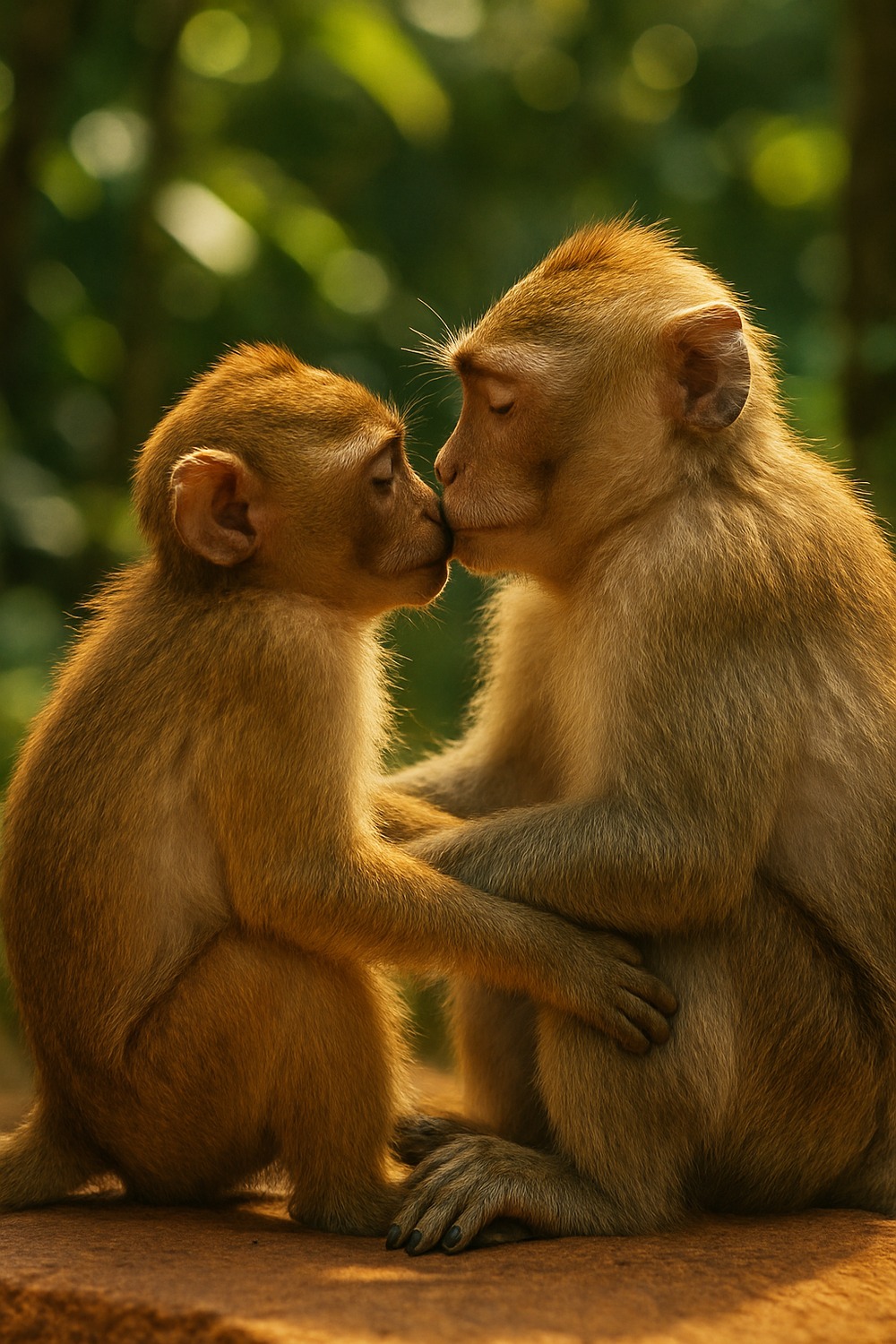
Grandma Sotomaru Had Done This Before
Turns out, Sotomaru has a history with this. Keepers credit her with helping rehabilitate more than a dozen traumatized young macaques over the years — which, when you sit with that number, is genuinely startling. Most trained animal behaviorists don’t rack up numbers like that. She’s a monkey who just seems to understand something the rest of the troop doesn’t bother with.
Her technique, if you can call it that, was almost aggressively undramatic. She didn’t approach Punchy. She’d settle nearby and do old-macaque things — forage slowly, groom herself, glance over with what the keepers describe as a kind of theatrical casualness, like she was very deliberately not making it a big deal. She gave him something steady to anchor to. Something he could watch without it watching him back too intensely.
That last detail kept me reading about this for another hour.
Because the distance started closing. Not because Sotomaru pushed. Because Punchy started moving toward her. And that distinction is everything — healing that actually sticks isn’t extracted from the outside. It gets drawn out from within, toward something the animal decides, on its own terms, that it wants to reach.
By the Numbers
- Crab-eating macaques span at least 10 countries across Southeast Asia — geographically one of the most widespread primates on Earth, and still flagged as vulnerable by the IUCN as of 2022 due to habitat loss.
- Harlow’s landmark research on rhesus macaque maternal deprivation, beginning in the 1950s at the University of Wisconsin, found that orphaned primates raised with only surrogate objects showed permanent social deficits in over 60% of cases. Which makes Punchy’s arc genuinely unusual. Not heartwarming-unusual. Scientifically unusual.
- Over 200 rescued primates at Monkey Mountain. Crab-eating macaques are the largest single intake category, most arriving through the illegal exotic pet trade.
- Young macaques in stable groups spend up to 40% of their waking hours in physical contact with troop members — so isolation doesn’t just feel bad. It actively reshapes their development at a structural level.
Field Notes
- Newly arrived rescues at Monkey Mountain almost always orient toward the oldest, calmest resident first. Not the youngest. Not the most active. Age reads as safety in macaque social logic.
- The Mama Doll protocol works faster than most people expect — sanctuary staff report reduced distress vocalizations within 24 hours of introduction in many cases, across multiple macaque species, not just crab-eaters.
- Tool use. In the wild, crab-eating macaques crack shellfish and nuts with stones along Thai and Burmese coastlines — one of very few primate species documented doing this. The same cognitive complexity behind Punchy’s recovery is the complexity that, in a different context, lets his species solve problems most other primates can’t even frame.
What Punchy’s Story Says About Healing Itself
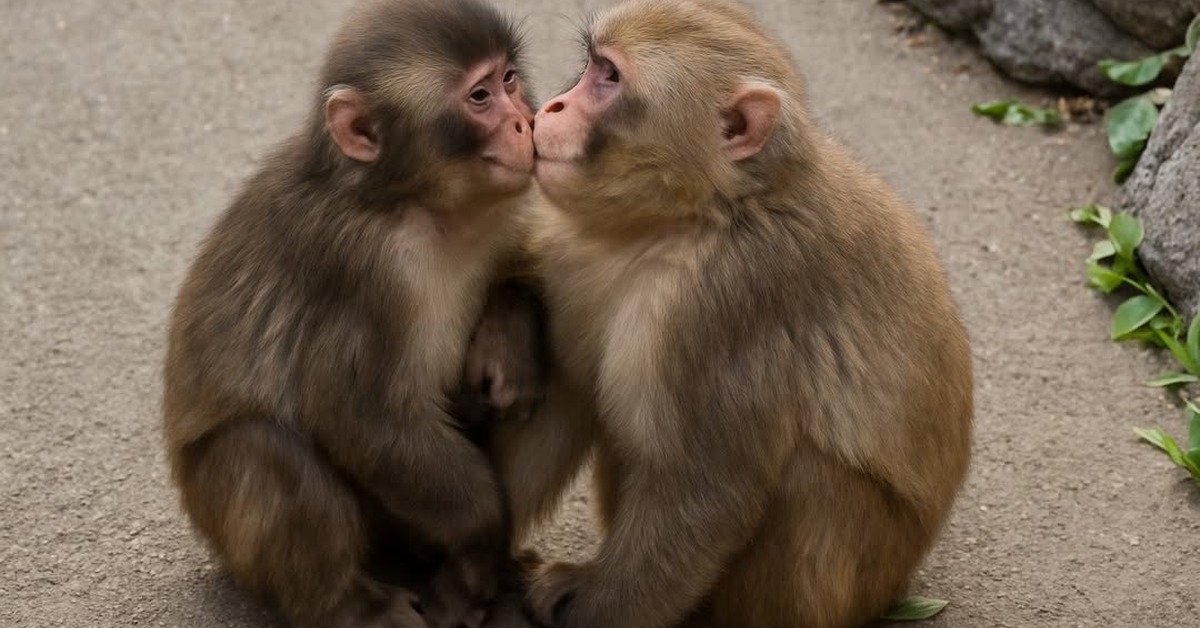
A year after they found him shaking, one tiny fist locked around a plush toy he’d decided was his mother, Punchy was nuzzling a younger macaque on a sun-warmed ridge while cicadas went full volume in the trees around him. He wasn’t performing recovery. Nobody was managing him through it at that point. The orphaned macaque healing that the keepers had quietly hoped for had simply — without announcement — happened.
Mama Doll sits on a shelf in the keeper’s office now. They kept it. Not as a trophy. More like a marker of how far a starting point can be from where something ends up.
There’s a question underneath all of this that keeps resurfacing. How much of healing — for a macaque, for any animal, for anything — actually comes down to medicine or intervention or carefully designed programs? And how much of it is just one steadier creature deciding to sit a little closer than yesterday, and then a little closer the day after that, until the frightened thing starts to suspect the world might be worth trusting after all?
Not a small question.
Punchy doesn’t need Mama Doll anymore. That sentence, when you let it actually land, carries more weight than most rescue statistics ever could. He went from hypothermic and abandoned to calm and connected and nuzzling strangers on a golden ridge in Thailand — not because of a program, but because one patient old monkey just kept showing up. If this kind of story is the thing that keeps you up at night, there’s more waiting at this-amazing-world.com — and the next one is even stranger.