The Tiny Alpine Stoat That’s Stealing the 2026 Olympics
Nobody picked a mountain lion. Nobody picked an eagle. The organizers of Milano Cortina 2026 looked out at the entire animal kingdom and came back with a stoat — a small, white, slightly unhinged weasel relative that spends its winters being basically invisible against Alpine snow.
Her name is Tina. And alongside her stands The Flo — a snowdrop, mid-bloom, in January. Together they’re about to be handed to over 2,900 Olympic athletes, one per podium finish, across every discipline these Games run. Not a trophy. Not a medal. A small creature and a winter flower. Turns out there’s a lot packed into that choice, if you bother to look.
How the Milano Cortina 2026 Mascot Won the Podium
Olympic mascots have a genuinely chaotic history. Misha the bear from Moscow 1980 became an icon. Izzy from Atlanta 1996 became the opposite of that — an abstract shape that looked like someone described a mascot over the phone to a committee that had never seen one. The stoat, known scientifically as Mustela erminea, lands somewhere else entirely. Wildlife biologist Dr. Annalisa Betti, who’s spent years studying ermine populations across the Dolomites, has called the stoat “one of the most behaviorally complex small predators in the European mountain ecosystem.” Which makes you wonder why it took this long for one to show up at an opening ceremony.
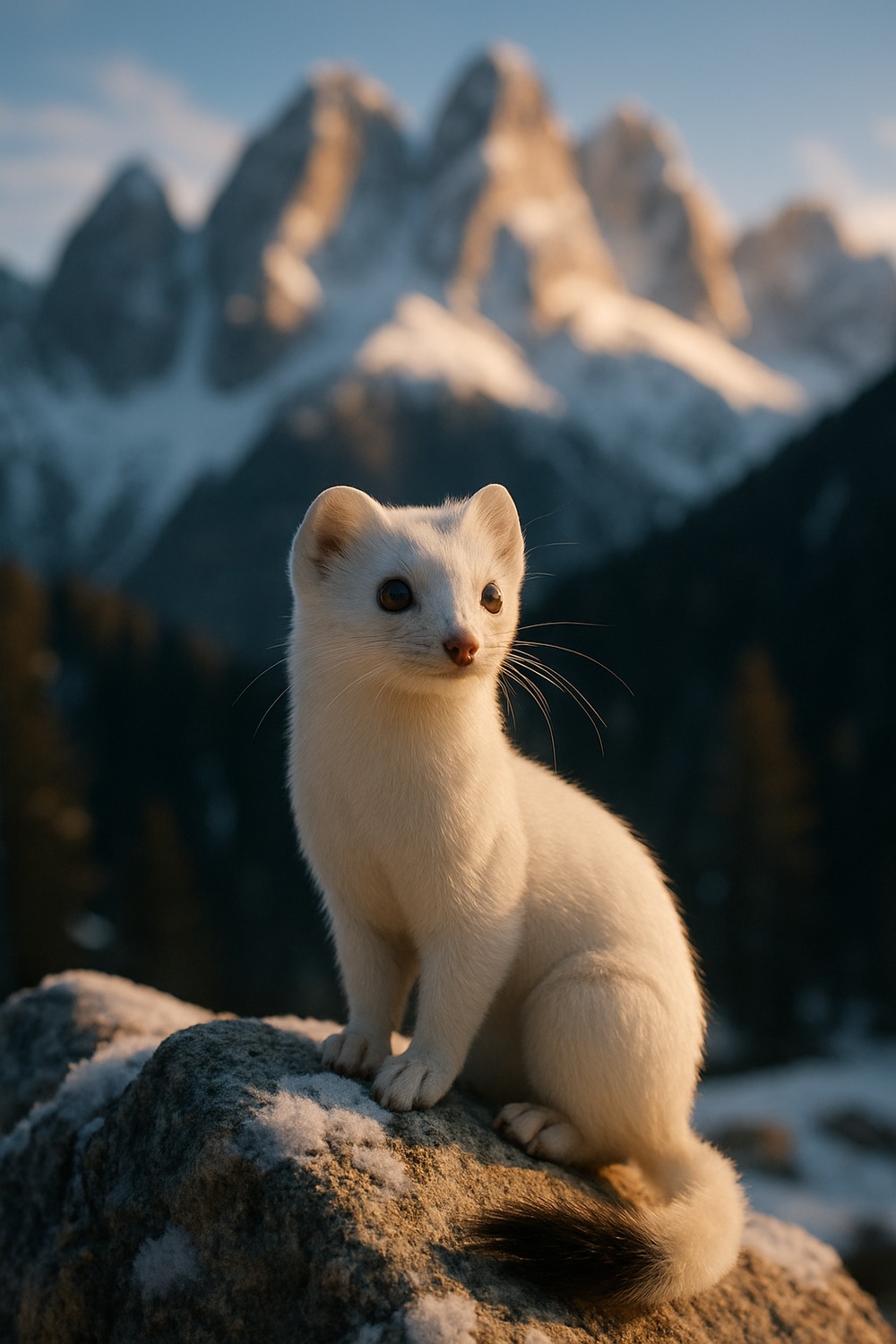
Tina isn’t cute in the usual committee-approved way. She’s got whiskers that tilt toward trouble. A grin that suggests she’s already clocked your next move and found it boring. She feels less like a brand asset and more like a creature with strong opinions about things.
Real Stoats Transform in Winter — Here’s How
The actual stoats living in the Dolomites right now are doing something that still kind of stops me when I think about it. Every autumn, as daylight hours shrink, their brown fur begins shifting to white. Not because of the cold — temperature has almost nothing to do with it. It’s the light. The reduction in photoperiod triggers a hormonal cascade that swaps pigment production almost entirely, and the result is a coat so white it essentially stops existing against Alpine snow. This seasonal disappearing act has kept stoats hunting through European winters for thousands of years, long before anyone thought to put them on a plush toy.
That white coat has a name: ermine. And here’s where it gets strange.
For centuries, ermine fur was legally restricted to royalty across Europe under what were called sumptuary laws. Those small black dots you see on royal robes in old paintings? Stoat tails. Hundreds of them, stitched together, worn as proof of status. Kings wrapped themselves in this animal. Now this animal is handing out medals. There’s a satisfying reversal somewhere in that, though I’ll leave you to decide exactly where it lands.
Turns out the stoat didn’t need the crown anyway. It was already one of the most effective hunters in the Alpine ecosystem, capable of taking down prey several times its own body weight. The royal wardrobe thing was just a side gig.
The Snowdrop: A Mascot That Refuses Winter’s Terms
Tina doesn’t stand alone. The Flo — a snowdrop in full bloom — is her co-mascot, and the choice is just as deliberate. Galanthus nivalis has been documented flowering across the Italian Alps since at least the 16th century, often pushing up through frozen ground in January or February while everything else is still keeping its head down. It’s the first plant of the year. It blooms into frost on purpose. For more on the quiet persistence of Alpine flora, the writers at this-amazing-world.com have been tracking the stories that don’t make the front page — and the Dolomites keep showing up.
The Flo isn’t enduring the season. She’s not waiting it out. She showed up early and bloomed anyway, which is either optimism or defiance depending on how you read flowers.
Why Small Symbols Land Harder Than Big Ones
The Milano Cortina 2026 mascot pair is a small argument dressed in fur and petals. Olympics mascots have always been asked to project something — national strength, speed, tradition, all the things that look good on a banner. Tina and The Flo project something different: resilience at a scale you can actually hold in one hand.
Each of the 2,900-plus athletes competing across venues in Milan, Cortina d’Ampezzo, and Valtellina will receive a plush version at the podium. Something small enough to fit in a coat pocket. Something that travels home in carry-on luggage, ends up on a shelf, gets pointed at during interviews years later.
That’s the quiet bet organizers are making. Intimacy over spectacle.
And then there’s the question nobody seems to be asking yet: what happens to 2,900 little stoats after the closing ceremony?
By the Numbers
- 2,900+ plush mascots distributed — one per podium finish, across all disciplines, per the Milano Cortina 2026 Organizing Committee (2024)
- Stoats can travel up to 6.5 km in a single night while hunting
- Galanthus nivalis survives cell-level ice formation — its petals contain antifreeze proteins that allow blooming at temperatures below 0°C, which is not a sentence I expected to be typing at this hour
- The full brown-to-white molt takes roughly 10 weeks, timed entirely by light exposure — temperature triggers nothing
Field Notes
- Stoats are one of the few small mammals capable of delayed implantation — after mating in summer, the female can pause embryo development for up to ten months, timing births to when food is most available. It reads almost like planning.
- The word “ermine” refers only to the winter coat — not the animal itself. A stoat in summer brown has zero royal connotation.
- Snowdrops contain a compound called galantamine, originally extracted from Galanthus species, now used in Alzheimer’s treatments. That last fact kept me reading for another hour.
- The transformation earns the name. The animal, without snow, is just a weasel.

What Tina Gets Right About the 2026 Games
There’s a version of this kind of thing that’s purely decorative — a mountain silhouette on a logo, a color palette borrowed from a lake, nature as aesthetic backdrop. The Milano Cortina 2026 mascot duo doesn’t do that. Tina is a real species from a real ecosystem, doing a real thing in the real Dolomites right now. The Flo actually blooms there in winter, has for centuries, and carries actual ecological and medicinal weight. These aren’t metaphors dressed up in fur. They’re ambassadors from a landscape the Games are physically occupying.
Which raises the obvious question — why didn’t more Olympics do this?
It matters more now because the Alps are changing. Snowpacks are shifting. Stoat populations track those changes closely — their camouflage only works when snow arrives on schedule. A white stoat on a browner mountain is a visibility problem with real consequences. Tina is charming, yes. She’s also a data point about what’s happening up there.
The best mascots make you look twice at something you’d have walked straight past. Tina is a stoat from the Dolomites, doing what stoats have always done — hunting, adapting, grinning at the cameras like she’s been expecting them. The Flo blooms anyway, same as she always has. The Games will come and go. These mountains, and the creatures in them, will still be doing their thing long after the closing ceremony lights go down. If this kind of story is the sort that keeps you up, there’s more at this-amazing-world.com — and the next one is stranger.