


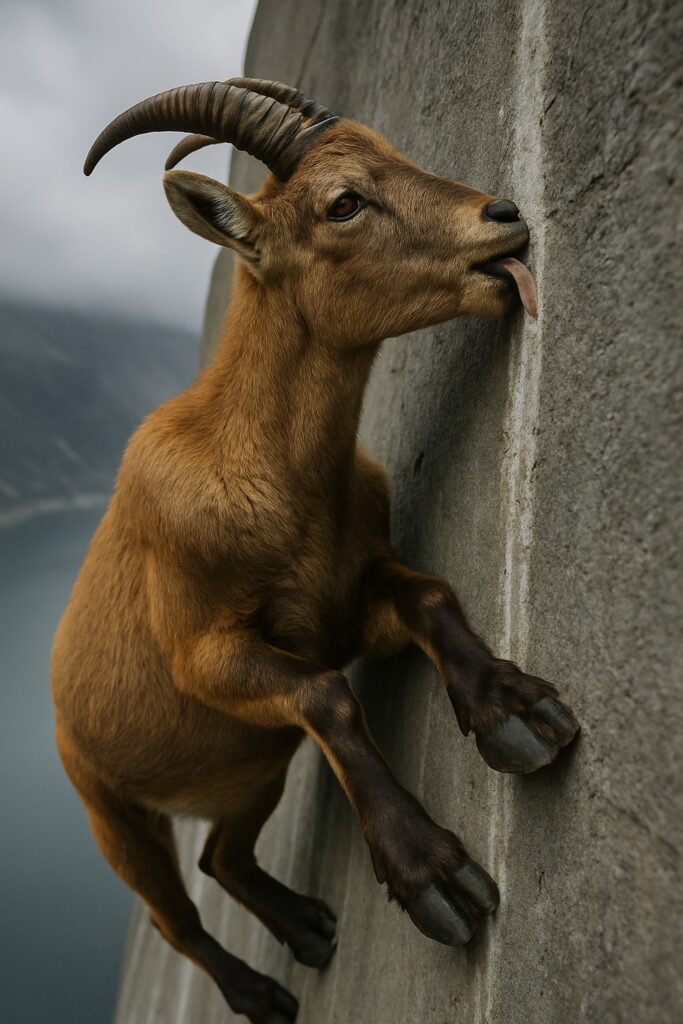
Alpine ibex dam wall climbing defies the basic math of gravity — and yet the math keeps coming out right. A hundred kilograms of wild goat, splayed against near-vertical masonry, tongue working salt from stone while cold reservoir water waits sixty feet below. Every spring at the Cingino Dam, they do it anyway. Not recklessness. Desperation, dressed up as athleticism.
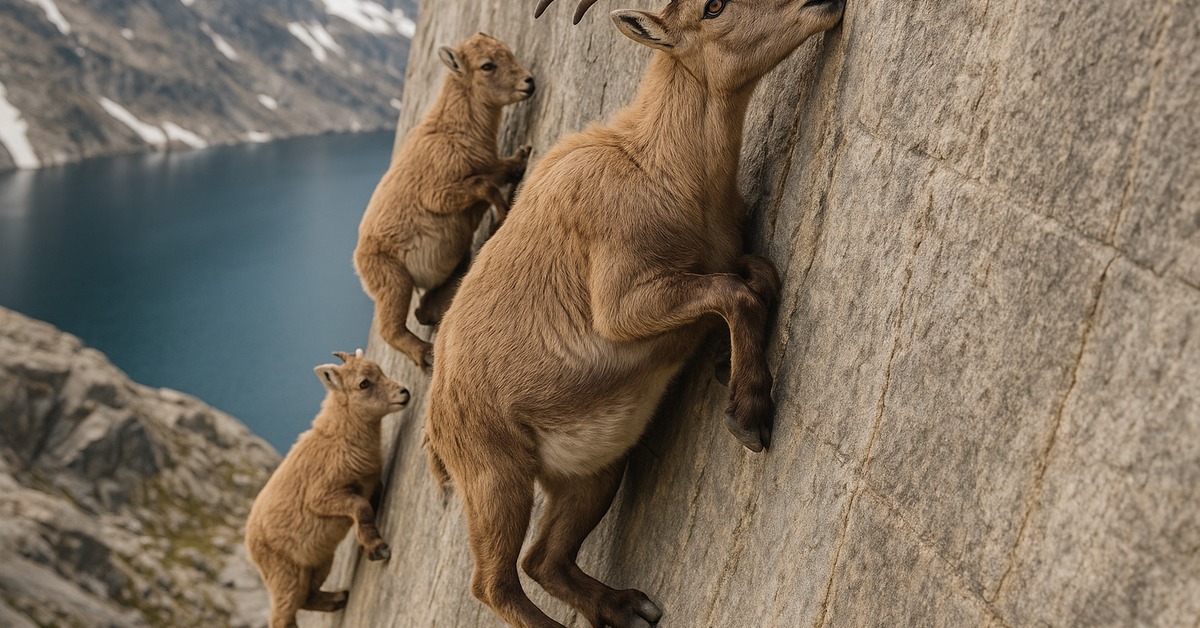
At the Cingino Dam in the Piedmont region of northern Italy, female Alpine ibex scale a 49-meter (160-foot) wall of granite-block masonry to reach something they desperately need: salt. Every spring, as snowpack retreats and nursing mothers push their bodies to the limit, these animals make a climb that would terrify most experienced alpinists. The question isn’t whether they can do it. The question is why evolution built them this way — and what it tells us about life’s relentless drive to find what it needs.
How Alpine Ibex Defy Gravity on Dam Walls
The Alpine ibex (Capra ibex) is one of the most sure-footed large mammals on Earth. Researchers at the Gran Paradiso National Park — Italy’s oldest national park and a critical sanctuary for ibex recovery — have documented hooves with a hard outer rim for gripping rock edges and a soft, concave inner pad that generates suction-like friction on smooth surfaces. Think of it as a biological climbing shoe, engineered over millennia. It’s not one feature. It’s a complete system.
What makes the Cingino Dam so unusual is that its masonry isn’t poured concrete — it’s composed of large, slightly irregular granite blocks. On a perfectly smooth surface, even an ibex would struggle. But those tiny gaps and mineral seams create just enough texture for ibex hooves to find purchase.
The architecture helps. Accidentally.
Salt Hunger Drives These Goats Up Impossible Slopes
Minerals aren’t optional for large ungulates — they’re physiological necessities. Sodium, calcium, magnesium, and phosphorus all play critical roles in muscle function, bone density, and milk production. For female ibex emerging from a brutal Alpine winter and simultaneously nursing kids born in May and June, the mineral deficit can become acute. The damp granite blocks at Cingino leach trace mineral salts to the surface — a process called efflorescence (researchers actually call this “salt bloom” in masonry science) — and ibex have learned to exploit it the way a traveler finds a water source in the desert. If you want to see more remarkable examples of animals discovering and exploiting unexpected resources, explore this-amazing-world.com for stories that will genuinely change how you look at wildlife.
Why does this matter? Because the behavior almost certainly isn’t instinct — it’s learned, passed down through generations of females who figured out that the dam is a better mineral source than anything the mountain offers in spring. Field observers near Cingino have noted that females almost always ascend in the early morning hours, when the dam face is still cool and shaded. They move deliberately, pausing to lick specific streaks of discoloration on the stone. They’re not grazing randomly. They know exactly what they’re looking for.
Why Spring Makes the Mineral Need Most Desperate
Timing matters enormously in wildlife biology, and the Cingino ibex story is deeply seasonal. Spring in the Alps brings two overlapping pressures. First, lactation places extraordinary demands on calcium and phosphorus stores, producing rich, fatty milk for newborn kids. Second, winter depletes stored mineral reserves — particularly sodium, lost through urine, breath, and sweat during cold-season metabolic stress. Studies of domestic goats suggest lactating females can require two to three times their baseline calcium intake. For wild ibex with no supplemental feed, that gap has to come from somewhere.
An animal willing to press its chest against a near-vertical dam wall for a few licks of dissolved salt is an animal running on empty. The dam becomes a pharmacy. No prescription needed. Just courage and hooves built for the impossible.

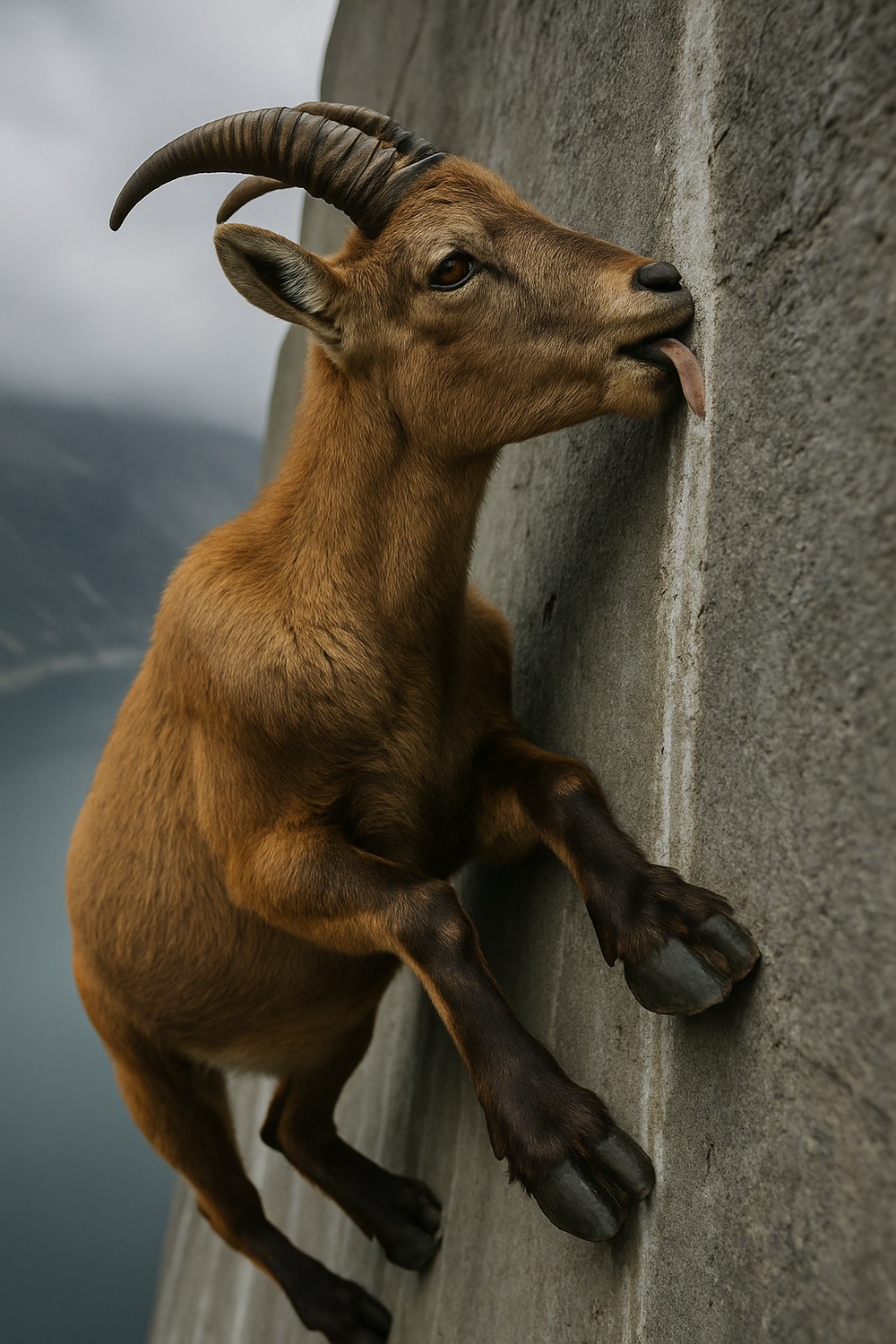
The Science Behind Alpine Ibex Dam Wall Climbing
Alpine ibex dam wall climbing works because of a biomechanical advantage most people underestimate. Combined with a low center of gravity relative to leg length, and extraordinary ankle-joint range of motion, these animals can pivot and lock their legs into positions that would dislocate a human knee. The hoof of Capra ibex also has a dewclaw — a vestigial digit — that can press against the rock during particularly steep ascents, adding a third point of contact. Zoologists have compared the mechanics to a grappling hook that resets itself with every step.
And Alpine ibex dam wall climbing reveals something unexpected about animal cognition. These ibex aren’t simply following instinct blindly — they’re making spatial decisions, evaluating routes, and choosing specific patches of the wall. That level of environmental problem-solving places them alongside crows and octopuses in the growing literature on non-primate intelligence.
Watching an animal solve a vertical architecture problem in real time, you stop thinking of “wildlife behavior” as something separate from intelligence — and that distinction, once lost, is hard to recover.
A Species That Came Back from the Brink
By the early 19th century, hunting had reduced the entire world population to fewer than 100 individuals, all sheltering in what would become Gran Paradiso National Park under the protection of the House of Savoy. From that single remnant population, painstaking reintroduction programs across Switzerland, Austria, France, Germany, and Slovenia rebuilt the species. Today, roughly 50,000 Alpine ibex live across the Alps — a number that would have seemed impossible in 1850.
Nobody was watching closely enough to appreciate what that recovery actually meant.
These aren’t just athletic goats on a wall. They’re descendants of a near-extinction event, carrying the genetic memory of survival in their hooves and their hunger. Every climb is, in a sense, a testament to how close the species came to vanishing entirely — and how completely it refused to.

Where to See This
- Cingino Dam, Antrona Valley, Piedmont, Italy — best observed in May and June during peak nursing season, when mineral demand drives the most frequent ascents
- Gran Paradiso National Park, Aosta Valley, Italy — Italy’s oldest national park and the anchor site for ibex population recovery; ranger-led wildlife watches run spring through autumn
- For a starting point before visiting, the IUCN Species Survival Commission’s Alpine ibex assessment (freely available online) gives the clearest picture of current population distribution and the conservation programs still active across the Alps
By the Numbers
- Fewer than 100 Alpine ibex survived globally by the early 1800s, all concentrated in the Gran Paradiso region of Italy (IUCN Species Survival Commission)
- Cingino Dam stands approximately 49 meters (160 feet) tall — roughly equivalent to a 16-story building — with a near-vertical incline that approaches 80 degrees in some sections
- Current Alpine ibex population across the Alps: approximately 50,000 individuals as of recent IUCN assessments, representing one of the most successful large-mammal recoveries in European conservation history
- Lactating female ungulates can require 2–3× their baseline calcium intake during peak nursing periods, according to comparative studies of Capra species — a deficit the mineral-laced dam wall helps close
Field Notes
- Male Alpine ibex are conspicuously absent from dam wall climbing footage at Cingino — it’s almost exclusively females and juveniles who make the ascent. Adult males don’t experience the intense mineral drain of pregnancy and lactation, and they tend to forage at lower altitudes in spring, which makes the gender split in this behavior about as predictable as it gets once you understand the underlying biology.
- Those discoloration streaks the ibex lick aren’t random markings — they’re efflorescent deposits, a chemical process where soluble salts migrate through porous material and crystallize on the outer surface when water evaporates. Old masonry dams are particularly prone to it, which may explain why Cingino became a mineral hotspot while newer concrete dams don’t attract the same behavior.
- Alpine ibex can climb at angles exceeding the slope of most black-diamond ski runs, and they do it carrying body weights of 60–100 kilograms (130–220 pounds) for females, up to 120 kilograms (265 pounds) for males — making their skeletal engineering one of the most extreme load-bearing adaptations in mountain mammals.
Frequently Asked Questions
Q: Is Alpine ibex dam wall climbing dangerous for the animals?
Falls do occur, but they’re relatively rare given how precisely ibex hooves are adapted to this kind of terrain. Sufficient grip comes from the masonry texture of the Cingino Dam itself, which suits the animals’ specialized hooves far better than smooth poured concrete would. Conservation observers haven’t documented mass casualties from the behavior, suggesting the risk-reward calculation favors the climb when mineral needs are acute.
Q: Can visitors see Alpine ibex climbing the Cingino Dam in person?
Cingino Dam sits in the Antrona Valley in Piedmont, and reaching it requires nothing more than a decent pair of hiking boots and a free morning. Spring — particularly May and June — is the most reliable window to catch the behavior, since that’s when mineral deficits peak in nursing females. Local wildlife guides and Italian alpine associations can point visitors toward responsible viewing spots that don’t disturb the animals during their ascent.
Q: Why don’t Alpine ibex just find natural salt licks instead of climbing a dam?
Natural salt licks do exist in alpine environments, and ibex certainly use them. But mineral availability in high mountain ecosystems is patchy and seasonal. When a reliable, concentrated source like the Cingino Dam’s efflorescent deposits is discovered — likely by curious individuals and then learned across generations — it becomes a preferred resource. Here’s the thing: it’s a classic example of cultural transmission in wildlife, meaning the behavior is probably taught, not simply reinvented by each animal independently.
Editor’s Take — Alex Morgan
What strikes me most about the Cingino ibex isn’t the climb itself — it’s the specificity of it. These animals don’t wander the whole dam face. They go to particular streaks of discoloration, the same patches season after season, which means somewhere in that herd there’s a living memory of where the salt is richest. We built a dam. They turned it into a pharmacy with a map. The real question isn’t whether animals are smarter than we thought — it’s whether we’ve been paying any attention at all.
There’s something that reframes our entire relationship with wild animals in the image of a goat pressed flat against a dam wall, sixty feet above a reservoir, tongue working the salt from ancient stone. It doesn’t fit our category of “natural” behavior — and that’s exactly the point. Nature doesn’t care about our categories. Animals find what they need, wherever it is, with whatever tools evolution gave them. As humans continue reshaping landscapes, the question worth sitting with is this: what other unplanned mineral pharmacies, accidental migration corridors, and improvised habitats are we creating — and are we paying close enough attention to notice?


