


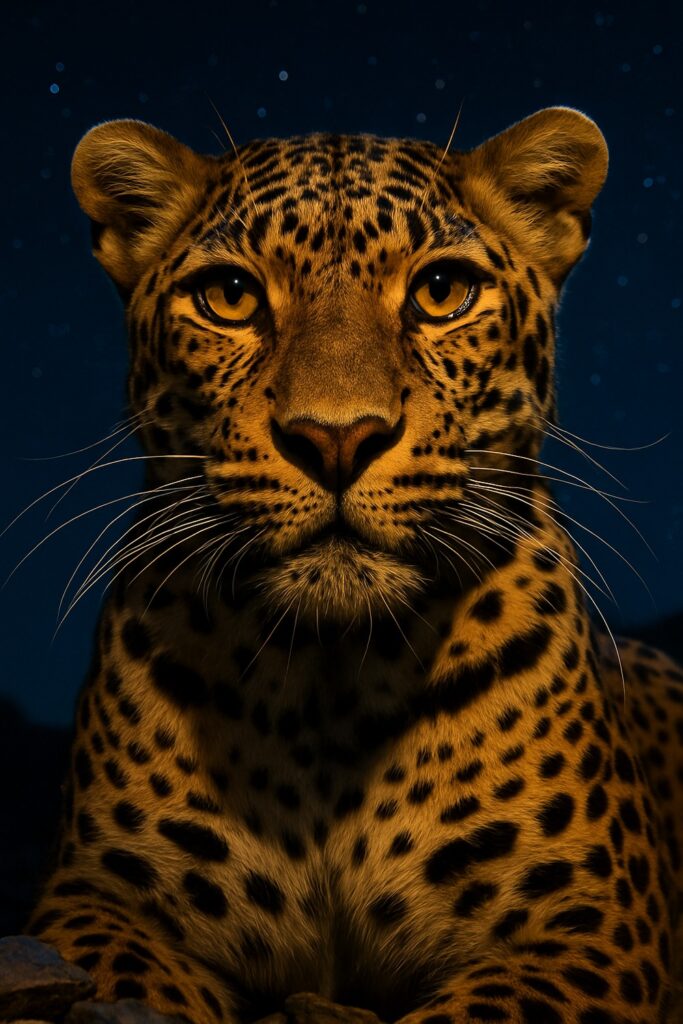
Fewer than fifty wild Arabian leopards may still exist — and that number might be generous. The Arabian leopard, Panthera pardus nimr, clings to the limestone ridges of Oman and Yemen with a grip that’s been loosening for centuries, not decades. Some field rangers count forty-seven. Others won’t commit to a number at all. What nobody disputes is this: each sighting is load-bearing. Each one holds something up.
They’ve survived here for centuries — enduring 45°C heat, near-zero rainfall, and terrain that breaks ankles with every step. The Arabian leopard is the smallest of the world’s nine leopard subspecies, but its story carries an outsized gravity. How does a species cling to existence across two of the most politically volatile landscapes on Earth, and what happens if it finally lets go?

The Arabian Leopard’s Ancient Mountain Kingdom
The Arabian Peninsula isn’t where most people picture a big cat. But the Arabian leopard — Panthera pardus nimr — has occupied this landscape for millennia, carved into the rock art of ancient Yemeni and Omani cultures long before modern borders sliced the region into nations. The subspecies was formally described by science in the 19th century, but its relationship with the mountains long predates that. The Hajar Mountains of Oman, rising to over 3,000 metres, remain its last credible stronghold on the Arabian Peninsula.
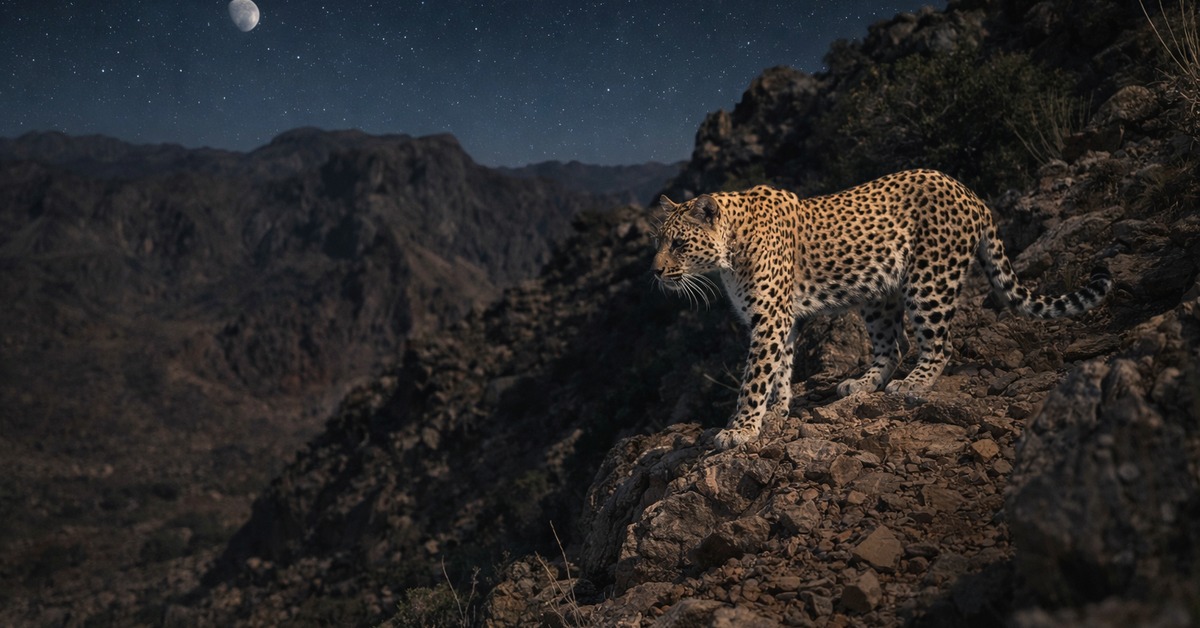
In 2006, a camera trap survey led by the Office for Conservation of the Environment in Oman captured some of the first verified photographic evidence of surviving wild individuals in decades — evidence that sent a quiet tremor through the conservation world. What those images showed wasn’t a big, imposing cat. Adult males typically weigh between 30 and 40 kilograms, roughly half the mass of a male African leopard. But smaller doesn’t mean fragile. These cats have adapted to hunt prey in steep, fractured terrain where larger predators would simply struggle to move — compact, muscular, with proportionally large feet that grip loose rock with the confidence of animals that have spent generations learning exactly where to place each paw.
Locals call them nimr. The word means leopard in Arabic, but in the mountains it carries something older — a mix of fear, respect, and a faint sadness that comes from watching something precious shrink away from the world in real time.
What the Rosettes Hide: Behaviour and Biology
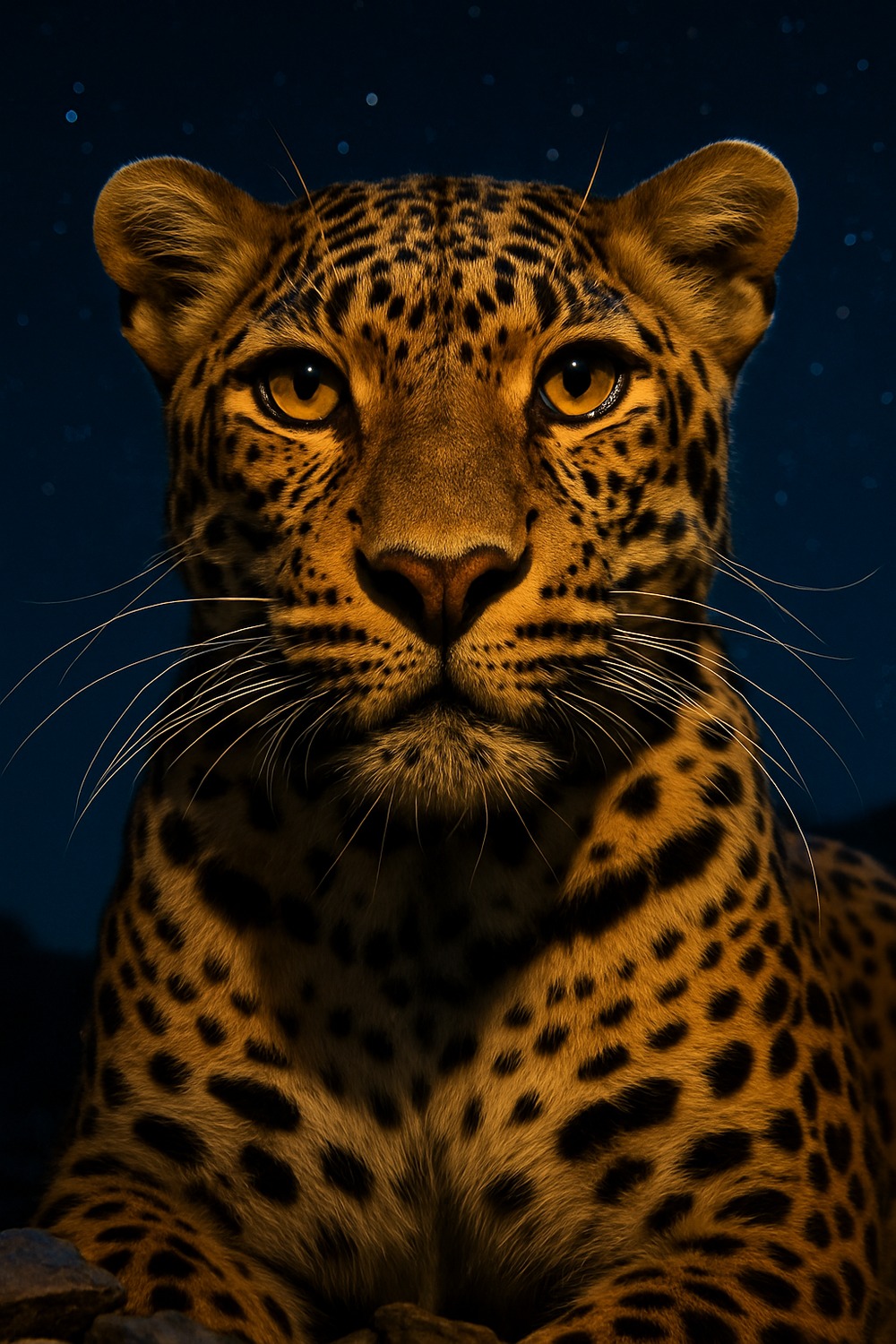
Camouflage is the Arabian leopard’s first and most powerful defence. Its golden coat, dense with jet-black rosettes, doesn’t just disappear against rocky outcrops — it actively mimics the dappled shadow patterns created by acacia branches and fractured limestone at every hour of the day. This isn’t luck. It’s the product of thousands of generations of natural selection refining a visual trick that works equally well in the honey-gold light of dawn and the blue-grey dark of a moonlit wadi.
Here’s the thing: the leopard’s biology is tuned so precisely to this environment that even its scent-marking behaviour reflects a deep understanding of predator hierarchies unique to the Arabian Peninsula — dragging kills high into cliff-face trees where no hyena or wolf can reach. In many ways, studying this cat is like studying the antelope jackrabbit’s enormous ears in the Sonoran Desert: a single extraordinary adaptation reveals an entire evolutionary conversation between animal and landscape.
Their diet is opportunistic but anchored by Nubian ibex and Arabian gazelle. Camera trap data collected by the Oman-based Antelopes and Leopards Conservation Programme between 2013 and 2019 showed that individual Arabian leopards maintain home ranges of 80 to 120 square kilometres — vast territories for an animal their size, driven by the sparsity of prey in an already lean ecosystem. A single leopard might walk 20 kilometres in a single night in pursuit of a meal that isn’t guaranteed. Prey density in these mountains is a fraction of what African savannahs support.
There’s something almost monastic about their solitude. They don’t gather. They don’t cooperate. Each animal holds its range alone, communicating through scratched tree bark and scent-marked boulders — a language of absence that says, simply: I was here. I am still here.
The Forces Driving a Subspecies Toward Silence
What does it take to push a predator to the edge of existence? Not one thing. A slow accumulation of pressures, each one individually survivable, collectively devastating. Habitat loss drives the first wedge — grazing by domestic livestock has stripped the mountain vegetation that sustains ibex and gazelle populations, removing the prey base that leopards depend on. Poaching delivers the second. Farmers who lose goats to a leopard’s nocturnal raid have historically responded with poison or traps, a conflict that conservation biologists at the National Geographic Big Cats Initiative have documented across multiple range countries.
The third pressure is perhaps the most insidious: ongoing armed conflict in Yemen has made systematic survey work nearly impossible since 2015, leaving the leopard’s southern range effectively unmonitored for years at a stretch.
Turns out, the Arabian leopard has likely been in steep decline not for decades but for centuries. Genetic analysis published in 2015 by a team at the Sharjah Breeding Centre for Environment in the UAE found that wild Arabian leopards show markedly reduced genetic diversity — a hallmark of a population that has been contracting, slowly and quietly, since long before modern conservation was a concept (researchers actually call this a “ghost population” signature). The subspecies may never have been abundant. It may have always lived at the edge.
That changes the moral arithmetic considerably. We aren’t trying to restore a population to some remembered abundance. We’re trying to prevent the permanent erasure of something that was always rare, always elusive, and — for that very reason — always extraordinary.
Can Captive Breeding Save the Arabian Leopard?
The most concrete hope currently alive for the Arabian leopard sits not in the wild but in a series of carefully managed breeding facilities across the Gulf states. Sharjah’s Breeding Centre for Environment in the UAE has operated one of the world’s most significant captive programmes for the subspecies since the early 1990s — by 2023 holding a population of over 20 individuals managed under a coordinated studbook, a genetic register that tracks every birth, every pairing, every individual in the global captive pool to prevent inbreeding. Saudi Arabia’s Wildlife Authority breeding centre in Taif has been central to survival planning since the late 2000s. Together, these institutions hold approximately 50 to 60 captive Arabian leopards — more than the estimated wild population.
The studbook, maintained under oversight from the IUCN Cat Specialist Group, shows successful reproduction rates and a growing captive population. But captive success and wild success are not the same equation. Reintroduction — releasing captive-born leopards into mountain terrain where they’ve never hunted, never navigated, never learned the specific scent trails and prey movements of a real landscape — carries a failure rate that conservation biologists don’t minimise.
Watching a species approach a threshold this narrow, you stop calling captive breeding a solution and start calling it what it actually is: a waiting room.
A 2021 assessment by the IUCN’s Arabian Leopard working group identified suitable reintroduction habitat in Oman’s Dhofar region, but stressed that prey populations must first recover and human-leopard conflict must be systematically reduced before any release is biologically defensible. Rangers in the Dhofar mountains have started that work — compensation schemes for livestock losses, community education in mountain villages, the gradual rebuilding of ibex numbers through managed grazing exclusion zones. None of it is fast. All of it is necessary.
The Fragile Calculus of a Species’ Future
And consider the comparison that gives this story its sharpest edge. Panthera pardus pardus, the African leopard, numbers somewhere between 250,000 and 700,000 individuals across sub-Saharan Africa and parts of Asia. The Arabian leopard has between 100 and 120. That’s not a conservation gap — it’s a chasm. For context, the snow leopard, one of the most celebrated endangered big cats on Earth, has an estimated wild population of 4,000 to 6,500. The Arabian leopard’s numbers are so small they barely register on the scale that conservation funding tends to follow.
Because funding follows visibility, and visibility follows charisma, and charisma in the conservation world tends to favour animals that live somewhere photogenic and accessible. The Arabian leopard lives in mountains fractured by conflict, in countries where international wildlife researchers can’t always get visas, survey permits, or safe passage. What isn’t counted doesn’t get saved. Population estimates that circulate — 47 individuals, 100 individuals, 120 individuals — differ so dramatically partly because consistent field monitoring has never been possible across the full range. The uncertainty itself is a form of danger.
Stand at dusk on the edge of a wadi in Oman’s Jebel Samhan Nature Reserve. The light bleeds from gold to ochre. Somewhere in the cliff face above you, there may be a leopard watching — amber eyes perfectly still, breath controlled, utterly invisible. The weight of that possibility — that such a creature still exists, here, now — is harder to carry once you understand how close it is to becoming only memory.

Where to See This
- Jebel Samhan Nature Reserve, Dhofar, Oman — the most significant protected area for wild Arabian leopards, best visited in the cooler months of October through February when leopard activity near water sources increases. Direct sightings are extremely rare; camera trap footage is the most likely form of evidence.
- The Sharjah Breeding Centre for Environment (UAE) operates one of the most important captive programmes for the subspecies and periodically allows supervised educational visits; contact via the Sharjah Environment and Protected Areas Authority at epaa.gov.ae.
- The IUCN Cat Specialist Group’s Arabian Leopard working group publishes updated population assessments and conservation action plans freely available at catsg.org — the single most authoritative source on current wild status and reintroduction planning.
By the Numbers
- Estimated wild Arabian leopard population: 100–120 individuals (IUCN Red List, 2023 assessment), with some field rangers placing the number as low as 47 in Oman alone
- Adult male body weight: 30–40 kg, roughly half the mass of an African leopard male at the same age
- Home range per individual: 80–120 km² in Oman’s mountain terrain (Antelopes and Leopards Conservation Programme, 2013–2019)
- Captive population: approximately 50–60 individuals held across UAE and Saudi Arabian breeding facilities — more than the estimated wild total
- Maximum recorded elevation in the Arabian leopard’s range: over 3,000 metres in the Hajar Mountains, Oman
Field Notes
- In 2019, a camera trap operated by the Environmental Society of Oman recorded an Arabian leopard carrying a Nubian ibex carcass vertically up a near-vertical cliff face in the Dhofar region — a feat of strength that researchers estimated required the cat to haul a load roughly equal to 80% of its own body weight across broken terrain in complete darkness.
- Among all big cat subspecies, the Arabian leopard alone has been documented caching kills on cliff-face ledges inaccessible to every other predator in its range — a behaviour not recorded in African or Asian leopard populations operating in comparable rocky environments.
- Ancient Yemeni rock art dated to approximately 3,000 years ago includes detailed depictions of what appear to be Arabian leopards being hunted with dogs — suggesting the human-leopard conflict that drives modern population decline has roots far deeper than the 20th century.
- Researchers still cannot determine whether isolated populations in the Hejaz Mountains of western Saudi Arabia and the Dhofar region of Oman are genetically connected or effectively isolated from each other. If they’re isolated, each population may need to be managed as a separate conservation unit — a question with enormous implications for reintroduction planning that current data can’t answer.
Frequently Asked Questions
Q: How many Arabian leopards are left in the wild in 2024?
The most current IUCN assessment, updated in 2023, estimates between 100 and 120 Arabian leopards remain in the wild across the entire subspecies range. Some field researchers place active estimates considerably lower — as few as 47 individuals in Oman, based on camera trap survey data. That wide variance reflects the difficulty of systematic monitoring across politically unstable terrain, particularly in Yemen, where survey work has been largely impossible since 2015.
Q: What makes the Arabian leopard different from other leopard subspecies?
Size is the most immediate difference — males typically weigh 30 to 40 kilograms compared to 60 to 90 kilograms for African leopard males. Beyond that, the Arabian leopard maintains home ranges two to three times larger than comparable-sized leopard populations elsewhere, compensating for low prey density in an arid mountain environment. Its coat rosette pattern is also distinctive: smaller and more densely packed than African counterparts, providing superior camouflage against pale limestone and dry vegetation.
Q: Is captive breeding actually working for the Arabian leopard?
Biologically, yes — breeding rates at facilities in the UAE and Saudi Arabia are strong, and the studbook population has grown steadily since the 1990s. But captive success doesn’t automatically translate into wild recovery. Reintroduction of captive-born Arabian leopards hasn’t yet been attempted at scale, because prey populations in potential release areas haven’t recovered sufficiently and human-leopard conflict hasn’t been adequately reduced. Conservation biologists are clear: captive breeding buys time, but habitat restoration solves the problem.
Editor’s Take — Alex Morgan
What strikes me hardest about the Arabian leopard isn’t the number — 47, 100, 120, pick your estimate. It’s the realisation that this subspecies may have always been at the edge. The genetic data suggesting centuries-long contraction reframes everything. We’re not reversing a modern catastrophe. We’re deciding whether to allow the final chapter of a very long, very quiet disappearance. That’s a different moral weight. And it makes the camera trap footage from Jebel Samhan feel less like evidence of survival and more like a last letter.
The Arabian leopard doesn’t need our admiration. It needs our restraint — space to hunt, prey to find, mountains that haven’t been grazed to nothing. The species has survived drought, heat, and millennia of human presence in landscapes that would break most animals. What it can’t survive is indifference dressed up as inevitability. Somewhere on a limestone ridge tonight, a rosette-dappled shadow is moving through the dark. The question isn’t whether we can save it. The question is whether we’ll decide to — before the last amber eyes go out.


