



A bedtime routine for children sleep seems like soft parenting advice — the kind that fills the back pages of lifestyle magazines between smoothie recipes and storage tips. It isn’t. What researchers at Oxford’s Sleep and Circadian Neuroscience Institute actually found, after years of tracking pediatric sleep patterns, is that the presence or absence of a nightly routine separates children by forty-seven minutes of sleep per night. That gap is a neurological event. Inside a still-developing brain, it lands like a structural difference, not a scheduling one.
What they’ve found isn’t just about tiredness. It’s about memory consolidation, cortisol regulation, emotional stability, and the precise ticking of biological clocks that most parents never think about — until something goes wrong.

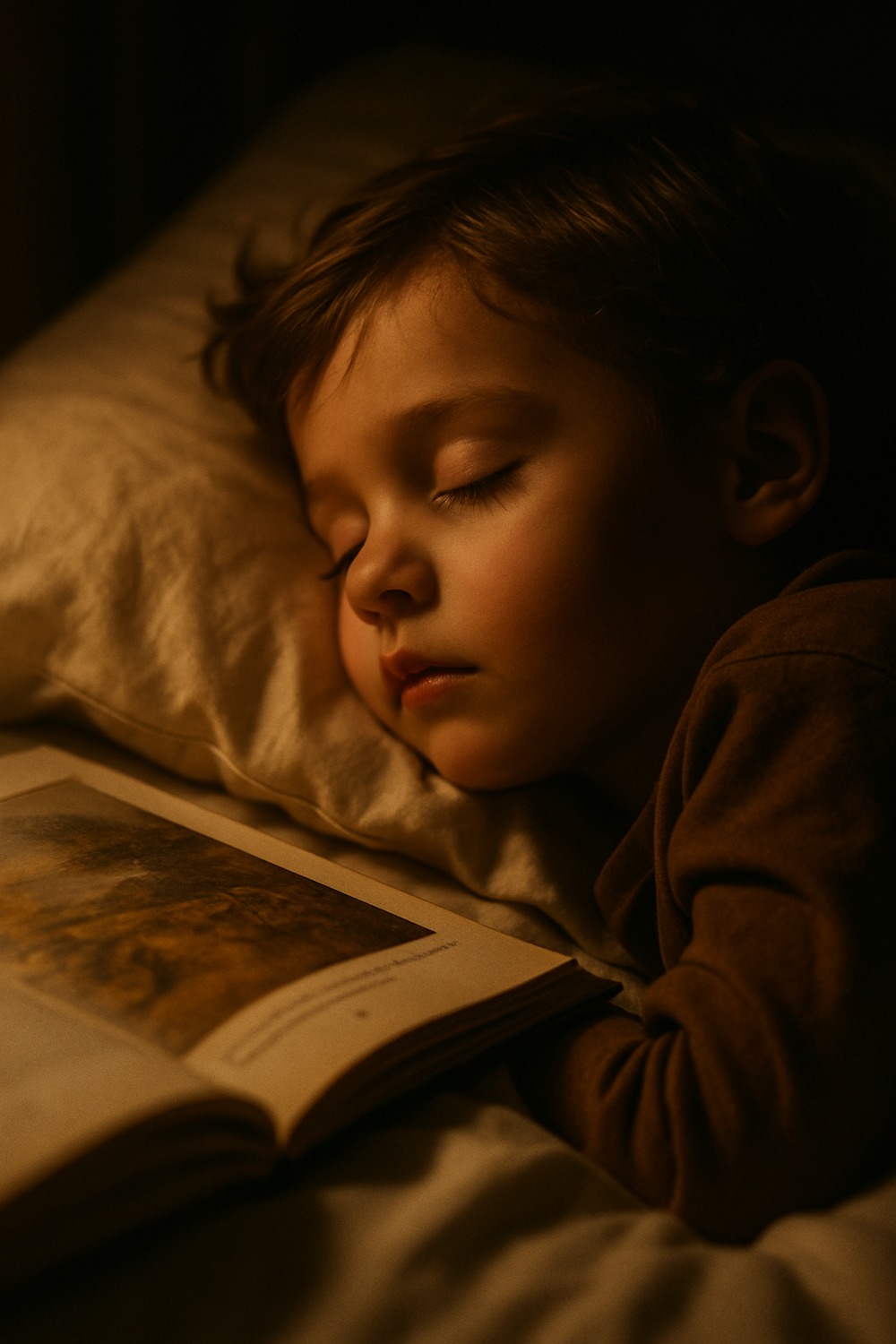
What Forty-Seven Minutes Does to a Child’s Brain
That number didn’t arrive from one dramatic study. It emerged across a body of longitudinal research, including work from Oxford’s Sleep and Circadian Neuroscience Institute, which has tracked pediatric sleep patterns since the early 2010s. Children with consistent bedtime routines fell asleep faster, stayed asleep longer, and accumulated meaningfully more total sleep — an average of forty-seven minutes more per night. Across a school week, that’s nearly four additional hours of brain development. The mechanism driving this isn’t willpower or discipline. It’s the suprachiasmatic nucleus, a cluster of roughly twenty thousand neurons in the hypothalamus that governs the body’s circadian rhythm. In children, this internal clock is still calibrating. Routine gives it the consistent signals it needs — dimming light, falling temperature, familiar sequences — to release melatonin at the right time, reliably, night after night.
Here’s the thing about those forty-seven minutes: during deep slow-wave sleep, the brain isn’t resting — it’s working. Consolidating the day’s memories, filing new information into long-term storage, running what neuroscientists sometimes describe as an overnight maintenance cycle. Children who reach adequate slow-wave sleep show measurably stronger recall the following morning. Those who don’t arrive at school already behind — not because they’re less capable, but because their brains haven’t had time to finish the job the previous night started.
The deficit compounds. Week after week, the gap between well-rested and sleep-deprived children widens in ways that show up in classroom performance, emotional regulation, and even social behaviour. Think of it like a filing system that never fully closes. Papers pile up. By Friday, nothing is where it should be. That’s the sleep-deprived child’s brain trying to learn new material on top of unprocessed old material — and crucially, it doesn’t feel like tiredness. It feels like difficulty concentrating, irritability, and a short fuse.
The Emotional Stakes Nobody Warns You About
Why does this matter beyond cognition? Because the emotional dimension of sleep loss in children may be the more urgent story.
Sleep research tends to focus on memory and academic performance. But when children don’t sleep enough, cortisol levels — the body’s primary stress hormone — remain elevated into the following morning. Elevated cortisol sharpens the amygdala’s threat responses while dampening the prefrontal cortex’s ability to regulate them. The result: a child who overreacts to small frustrations, struggles to recover from upsets, and finds it genuinely harder to make decisions under pressure. This isn’t a character trait. It’s a biochemical state — and strikingly similar, in its neural signature, to what attachment researchers observe in children experiencing chronic stress. The connection between sleep and emotional security is one that researchers studying early childhood development, including those examining how infant attachment shapes long-term behaviour, have found runs far deeper than most parents suspect.
A 2020 study from the University of Colorado Boulder examined cortisol patterns in 244 children between ages five and nine, tracking both bedtime consistency and morning hormone levels over eight weeks. Children without consistent bedtime routines showed cortisol readings 15 to 21 percent higher than their routinised peers — even after controlling for family stress, diet, and physical activity. Fifteen percent higher cortisol, sustained across weeks and months of childhood, alters how the stress-response system develops. It effectively recalibrates the child’s baseline threat sensitivity upward. The brain learns to anticipate difficulty because it’s chronically operating in a mild stress state.
Parents often interpret this as stubbornness. Teachers read it as defiance.
History has a way of treating the people who ignored this kind of evidence unkindly — and the evidence here has been available, clearly, for over a decade. Recognising what’s actually happening changes everything about how adults respond, and what interventions actually help.
What Routines Actually Do Inside the Body
Consistency isn’t just psychologically comforting — it’s physiologically active. When a child follows the same sequence of pre-sleep behaviours night after night, those behaviours begin to function as conditioned cues. Bath time triggers a slight drop in core body temperature as heat disperses from the skin — a drop that the brain interprets as a biological sleep signal. Dim light in the final hour before bed reduces alerting signals from the retinohypothalamic tract and allows melatonin secretion to begin earlier, without interference from blue-spectrum light. Reading aloud slows breathing and shifts brainwave activity toward the quieter rhythms that precede Stage 1 sleep. Each element of a routine isn’t arbitrary. It’s a lever.
Research published in Scientific Reports in 2020 tracking over 10,000 children across multiple countries found that those with consistent multi-step bedtime routines — defined as three or more sequential pre-sleep activities — had statistically significant advantages in sleep duration, sleep quality, and daytime functioning compared to children with single-step or no routines. The bedtime routine for children sleep isn’t, in other words, simply about getting kids into bed. Preparation takes time — typically twenty to thirty minutes of wind-down activity for school-aged children, slightly longer for those under five whose circadian systems are less mature.
And most families who report bedtime battles are compressing this window or skipping it entirely, moving children directly from stimulating activity into expected sleep. The brain doesn’t switch off. It needs to be guided down. Researchers at the American Academy of Sleep Medicine have repeatedly noted that three components appear most reliably effective: reduced light exposure, a consistent sequence, and a defined endpoint. Not a perfect endpoint — just a predictable one.
The Bedtime Routine for Children’s Sleep: What the Science Recommends
In 2015, researchers at Brown University’s Centre for the Study of Children at Risk published findings from a multi-year study examining the effect of structured bedtime routines on developmental outcomes in children from eighteen months to six years. Children who had a consistent bedtime routine at ages one and two showed better language development, stronger numeracy skills, and lower rates of behavioural problems at school entry — even after controlling for parental education, household income, and birth order. The mechanism, the researchers argued, wasn’t simply more sleep. It was the predictable structure itself. Children’s developing brains are pattern-seeking systems. When sleep arrives as part of a recognised sequence, the brain organises information more efficiently during sleep. The routine isn’t incidental to the benefit. It’s constitutive of it.
Practically speaking, a bedtime routine for children’s sleep doesn’t need to be elaborate. Oxford’s researchers consistently found that three to four sequential steps — bath, pyjamas, teeth, story — performed at roughly the same time each night produced outcomes nearly identical to longer, more complex routines. What mattered wasn’t the number of steps or the specific activities. It was the consistency and the sequence. A child who knows what comes after the bath, and after the story, has a brain already beginning its descent toward sleep before the lights go out. Timing matters, too. The American Academy of Pediatrics recommends ten to thirteen hours of total sleep for children aged three to five; nine to twelve hours for ages six to twelve. Most children in Western countries fall short of these targets by at least forty-five minutes — a figure that should, by now, sound familiar.
Start earlier than feels necessary. A 7 p.m. routine for a child who seems wide awake at 7 p.m. catches the circadian window before the second-wind cortisol surge that typically arrives around 8 to 8:30 p.m. Miss that window, and you’re battling biology. Catch it, and the body does most of the work for you. (Researchers actually call this timing the “melatonin window” — and the name is more literal than it sounds.)

How It Unfolded
- 1953 — American physiologist Nathaniel Kleitman and his student Eugene Aserinsky discover REM sleep, establishing for the first time that sleep is an active, structured biological process rather than simple unconsciousness.
- 1984 — The National Sleep Foundation is established in the United States, beginning the first large-scale public education efforts linking adequate sleep to childhood development and cognitive outcomes.
- 2009 — A landmark study from the University of London tracks 7,000 British children and finds that irregular bedtimes by age three predict measurably lower reading and maths scores by age seven — among the first direct evidence linking routine, not just duration, to outcomes.
- 2020 — Scientific Reports publishes the largest multi-country analysis to date on pediatric bedtime routines, covering more than 10,000 children, confirming that multi-step consistent routines outperform both single-step and absent routines across all measured developmental domains.
By the Numbers
- 47 minutes — average nightly sleep difference between children with and without consistent bedtime routines (Oxford Sleep and Circadian Neuroscience Institute)
- 10,000+ children tracked in the 2020 Scientific Reports multi-country bedtime study — the largest of its kind at publication
- 15–21% higher morning cortisol levels recorded in children without consistent routines, versus routinised peers (University of Colorado Boulder, 2020)
- 3× improvement in sleep-onset time reported in children whose routines included light-reduction at least thirty minutes before bed, compared to no light-reduction
- 57% of children aged six to seventeen in the United States do not meet the American Academy of Pediatrics’ recommended sleep duration on school nights (CDC National Health Interview Survey, 2020)
Field Notes
- In 2017, researchers at University College London found that children who had irregular bedtimes at age three, but transitioned to regular routines by age five, showed cognitive improvements that largely closed the gap with children who’d had consistent routines from infancy — suggesting the brain’s responsiveness to routine doesn’t have a hard cutoff in early toddlerhood.
- The second-wind phenomenon — that burst of alertness many children display around 8 p.m. — is a genuine cortisol surge driven by the circadian system, not a sign that the child isn’t tired. It’s the brain’s last-ditch attempt to stay awake past its natural sleep window, and it typically passes within twenty minutes if the child is kept calm and in low light.
- Children’s melatonin secretion begins roughly two hours before their natural sleep onset — meaning the physiological preparation for sleep starts in the early evening, long before most families begin any bedtime activity.
- Researchers still can’t fully explain why consistent bedtime routines appear to produce benefits even on nights when total sleep duration doesn’t increase — the structural predictability itself may have developmental effects independent of sleep quantity, but the mechanism remains unclear.
Frequently Asked Questions
Q: How long does a bedtime routine for children’s sleep actually need to be?
Most sleep researchers recommend a wind-down period of twenty to thirty minutes for school-aged children. The 2020 Scientific Reports study found that routines comprising three or more sequential steps produced the strongest outcomes — not longer routines, just more clearly structured ones. Specific activities matter less than the consistency. Bath, pyjamas, a short book, and lights out performed as well as more elaborate sequences, provided the sequence was repeated nightly at roughly the same time.
Q: What actually happens in the brain when a child follows a regular bedtime routine?
The repeated sequence functions as a conditioned cue. Each step — bath, reduced light, familiar sounds or reading — signals the hypothalamus to begin melatonin release earlier and more reliably. Core body temperature drops slightly after bathing, which the brain interprets as a sleep signal. Brainwave activity shifts from alert beta rhythms toward the slower theta waves that precede sleep. By the time the child reaches bed, the neurological descent toward sleep is already underway — the routine has done the biological lifting so the child doesn’t have to fight the transition.
Q: Does the timing of bedtime matter as much as the routine itself?
Both matter, but timing interacts with the child’s circadian phase in ways many parents don’t anticipate. A consistent routine performed too late — after the evening cortisol surge around 8 to 8:30 p.m. — is fighting an uphill biological battle. Research from Brown University and the American Academy of Sleep Medicine consistently shows that earlier, consistent timing captures the natural melatonin window more efficiently. A child put to bed at 7:15 p.m. with a routine will often fall asleep faster than one put to bed at 9 p.m. with an identical routine, even though the later child appears more tired.
Editor’s Take — Sarah Blake
What stays with me about this research isn’t the forty-seven minutes. It’s the cortisol finding. Fifteen to twenty-one percent higher stress hormones in children who simply don’t have a predictable evening — not children in difficult circumstances, not children under acute stress, just children without a sequence. We’ve spent decades designing educational interventions for the achievement gap. Turns out some portion of that gap is being written in the hours between dinner and sleep, in homes where nobody told anyone that consistency was a biological requirement, not a lifestyle preference.
A bedtime routine for children’s sleep sits at the intersection of neuroscience, parenting, and public health — and it’s one of the rare places where the science and the practical advice actually align. No expensive equipment. No specialist knowledge. Just sequence, light, time, and repetition, applied consistently enough that a child’s brain begins to trust what comes next. The deeper question isn’t whether routines work. The evidence on that is settled. The question is what it says about how we design children’s evenings — and what else we might be missing in the hours we treat as simply waiting for sleep.


