


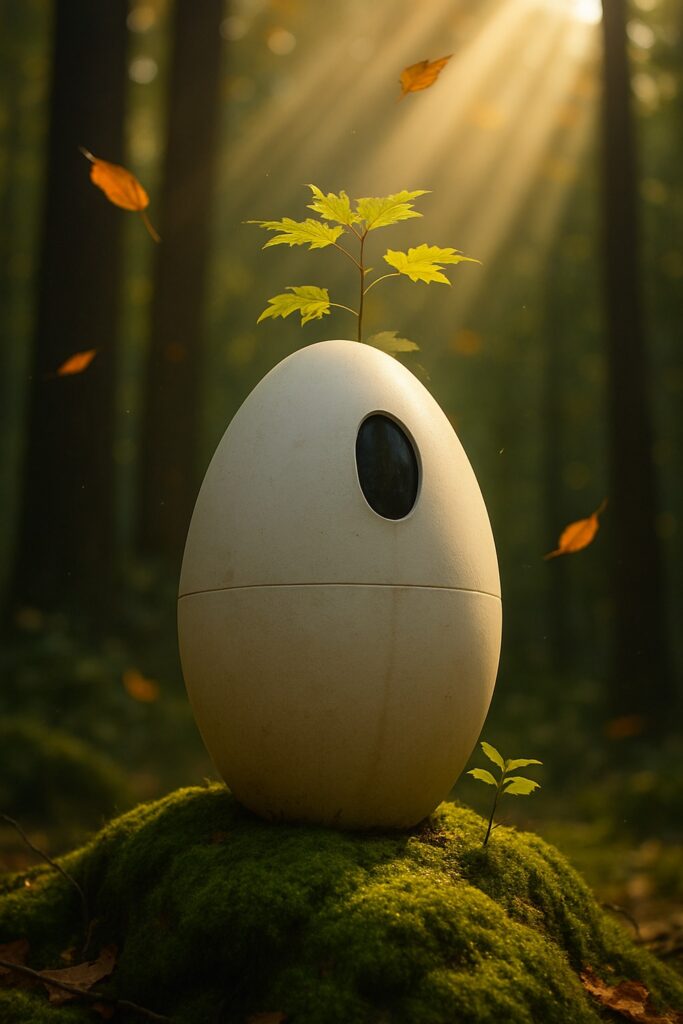
Here’s a paradox worth sitting with: the Bios Urn memorial tree is one of the fastest-growing segments of the death industry, and it doesn’t look anything like death. No marble. No engraving. No permanence of the kind we’ve spent centuries insisting on. Just a biodegradable capsule pressed into soil — and then, if everything goes right, decades of leaves.
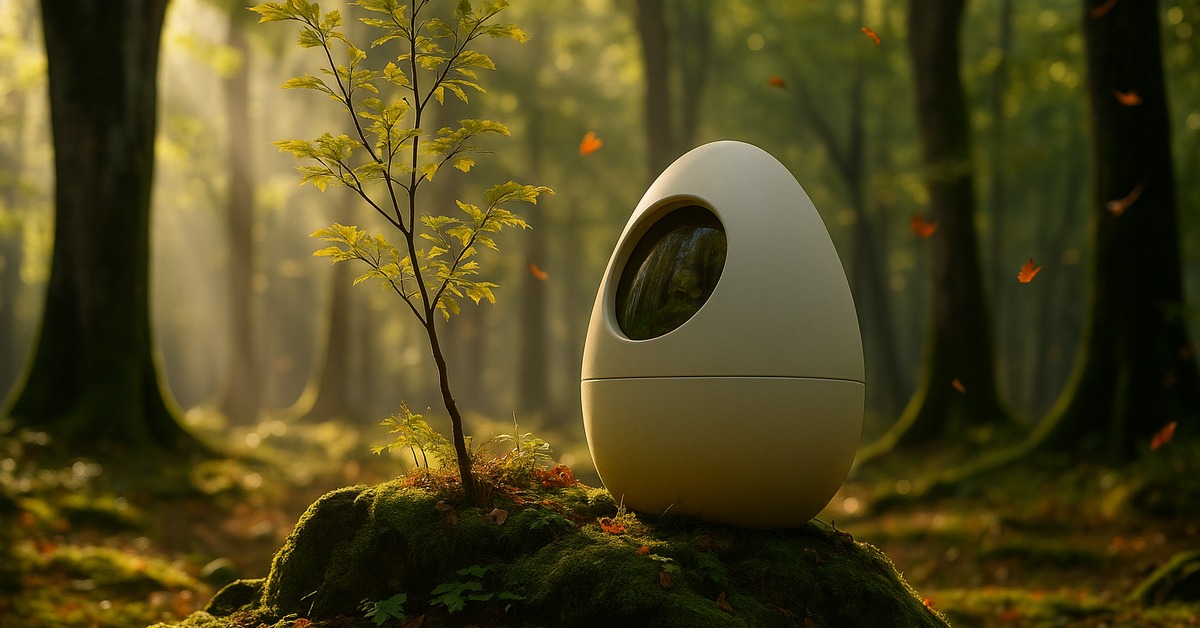
The Bios Urn is a biodegradable capsule, roughly the size of a cooking pot, made from coconut shell, compacted peat, and cellulose. Inside sits a tree seed and a compartment for cremated remains. The seed germinates. The capsule dissolves. The tree grows. It sounds almost too clean — too poetic to be real engineering. And yet the design has been quietly transforming how tens of thousands of families in more than 60 countries say goodbye.

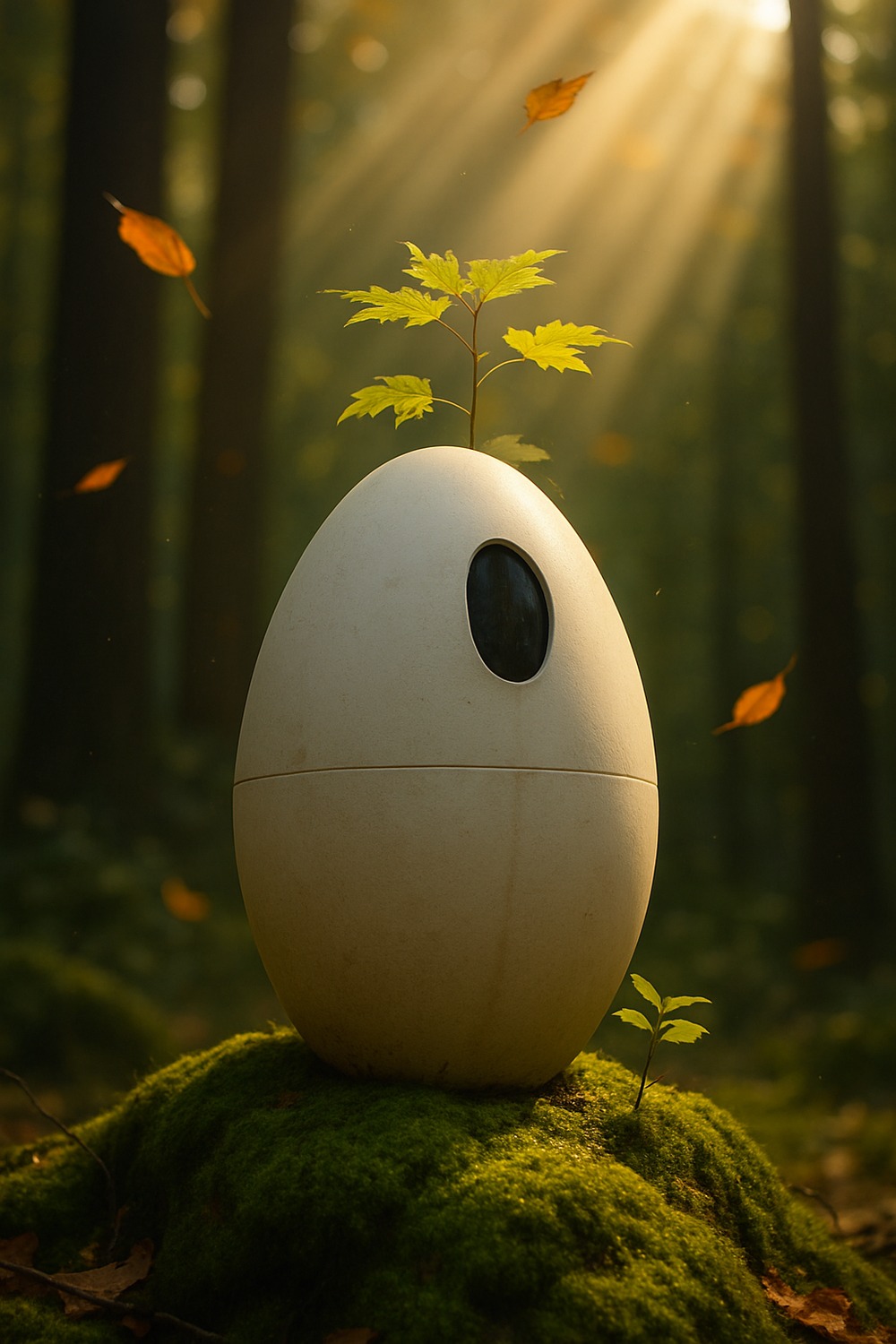
The Capsule That Dissolves Into Something Living
Barcelona designers Gerard Moline and Roger Moliné launched the Bios Urn commercially in 2013, after years of prototyping materials that could survive soil moisture long enough to shelter a germinating seed — but break down completely once establishment took hold. The capsule’s outer shell is made from 100% natural materials: coconut fibre, compacted peat, and cellulose. The inner chamber holds cremated ashes mixed with a growth medium, with the seed positioned above that. According to the natural burial movement, which has grown steadily since the 1990s, the appeal of returning human remains directly to the earth is both ancient and urgently modern.
Bios took that impulse and engineered it into a repeatable, scalable product that doesn’t require a funeral director, a vault, or a backhoe.
What surprises most people is how straightforward the chemistry is. Cremated remains — called cremains — are largely calcium phosphate, the same mineral compound found in bone. They’re alkaline, occasionally too alkaline for young roots. Bios addresses this by blending the ashes with a pH-buffering growth medium before the capsule is sealed. The seed never touches raw cremains directly. It contacts a carefully calibrated substrate. The capsule walls soften over weeks in moist soil, eventually disappearing entirely within a few months, leaving nothing synthetic behind.
Families can choose from dozens of tree species — maple, oak, beech, ginkgo, pine — matched to local climate and soil. You plant it like any young tree. Water it. Step back. There’s something quietly radical about a memorial you have to tend rather than visit.
What Roots Do That Headstones Never Could
There’s a specific kind of attention that living things demand, and it changes the shape of mourning. Psychologists at the University of Arizona have documented since the mid-2010s what grief counselors have long observed informally: rituals tied to growth — tending plants, nurturing seedlings — can extend what researchers call “continuing bonds” (and this matters more than it sounds), a healthy psychological connection to the deceased that supports long-term bereavement recovery. The Bios Urn memorial tree structure taps into this almost accidentally. You’re not just visiting a marker. You’re checking on something alive. Wondering if it survived the frost. Noticing new leaves in April. This is not unlike the way nature has always offered humans a language for impermanence — the same impulse that draws us to flowering cycles and extraordinary plant lives hidden just beneath the surface of the visible world.
A grandmother in Catalonia. Her family chose a Mediterranean oak. Three years on, it’s taller than her grandchildren. They bring picnics. Nobody needed a guidebook to understand what that tree means.
The ecological math compounds the emotional one. A single mature oak tree can sequester around 48 pounds (22 kilograms) of carbon dioxide per year, according to data published by the US Forest Service in 2022. Over a 100-year lifespan, that same oak removes roughly 2.4 metric tonnes of CO₂. Traditional burial in the United States, by contrast, introduces an estimated 827,060 gallons of embalming fluid into the soil annually, along with 30 million board feet of hardwood and 90,000 tonnes of steel for caskets and vaults. Cremation followed by a Bios Urn planting bypasses all of that entirely.
Reforestation’s Unlikely Alliance With Grief
Why does species selection matter so much here? Because a tree planted in the wrong place can do more harm than no tree at all.
Ecologists at the University of Edinburgh have cautioned since 2019 that planting non-native species — even beloved ones — in unsuitable habitats can harm local biodiversity rather than help it. The Bios Urn memorial tree concept works best when families consult local forestry guidance and choose species indigenous to their region. A Douglas fir in the Pacific Northwest is an ecological gift. A Douglas fir planted in southern Spain is an ecological mistake. Bios has expanded its offering in recent years to include the Bios Incube, a smart planter with built-in sensors that monitors soil moisture, temperature, and light levels — designed for families in urban apartments who want to grow their memorial tree indoors before eventually transferring it to a permanent outdoor site.
The company has also partnered with reforestation projects, allowing customers to designate GPS coordinates in restoration zones, turning individual burials into nodes in a larger ecological network. According to a 2021 report by the World Resources Institute, the planet needs to restore approximately 350 million hectares of degraded forest land by 2030 to meet international climate targets. National Geographic’s coverage of global reforestation efforts has repeatedly emphasized that large-scale planting campaigns succeed only when individual trees are cared for long-term — exactly what a family tending a Bios Urn memorial tree naturally provides.
When species matching is done thoughtfully, the results are striking. Memorial forests in Germany’s Schwarzwald region have seen bird species diversity increase measurably within a decade of establishment. Death, managed with ecological intelligence, genuinely feeds life. Treating that outcome as a side benefit, rather than a design goal worth scaling aggressively, is one of the more expensive miscalculations conservation policy keeps making.
How the Bios Urn Memorial Tree Changes Death’s Economy
Turns out the funeral industry is one of the least disrupted sectors on earth. The average American funeral in 2023 cost between $7,000 and $12,000, according to the National Funeral Directors Association — a figure that has risen faster than inflation for three consecutive decades. Cremation, now chosen by more than 57% of Americans as of 2022, costs significantly less, but ash scattering or storage in urns offers no ecological return. Couple that with a modest cremation fee and a patch of suitable land, and the total cost of a Bios burial can come in under $2,000 — a fraction of conventional funeral expenses, with a tree as the remainder. The Bios Urn retails for approximately $145 USD, making it one of the most affordable memorial options available.
And the legal landscape is shifting to accommodate this. As of 2024, six US states — including California, Colorado, and Oregon — have legalized some form of human composting or green burial that aligns with Bios-style interment. The UK’s Natural Death Centre has advocated for natural burial since 1991, and there are now over 270 registered natural burial grounds across Britain. Germany, Australia, and several Scandinavian countries have similarly updated their burial regulations in the past decade. Traditional cemetery operators are beginning to designate woodland sections — not because they’ve become environmentalists, but because demand is outpacing their stone-and-turf model.
Cities are watching this shift carefully. Madrid’s municipal government began piloting a memorial forest zone in 2022. London has held planning consultations on green burial expansion since 2021. The infrastructure of grief is changing faster than most people realize.
The Forest That Outlives the Memory of Loss
What happens when no one is left to tend the tree? This is the question that separates a memorial garden from a forest. Bios has begun addressing it directly through its land partnership program, in which designated memorial forests are managed by conservation organizations long after individual families can no longer visit. Already, the oldest of these designated sites — established in collaboration with a reforestation nonprofit in northern Spain in 2016 — contains trees whose original planters have themselves since died. The forest continues without them. It’s an odd and moving idea: that the act of mourning can outlast the mourner, and that trees planted in grief might shade strangers for centuries.
Researchers at Wageningen University in the Netherlands published findings in 2023 suggesting that memorial forests — when well-managed and species-diverse — can reach ecological complexity comparable to natural secondary forests within 40 to 60 years. Canopy closure, soil microbiome diversity, invertebrate populations: all measurably approach old-growth benchmarks within two human generations.
The Bios Urn memorial tree isn’t just a tribute. Over time, it becomes indistinguishable from a wild tree — and that’s exactly the point.
Stand at the edge of one of these forests on a cool morning. Mist in the lower branches. A woodpecker working at something above. No names on stones anywhere. Just the particular green light that only moves through leaves.

How It Unfolded
- 1991 — The Natural Death Centre is founded in the UK, laying early intellectual groundwork for the natural burial movement that would eventually support products like the Bios Urn.
- 2013 — Barcelona designers Gerard Moline and Roger Moliné commercially launch the Bios Urn, shipping to customers in Europe and North America within the first year.
- 2017 — Bios expands its product line to include the Bios Incube indoor smart planter, allowing urban families to begin the memorial tree process in an apartment setting.
- 2024 — Six US states have legalized human composting or green burial compatible with Bios-style interment, and the company ships to over 60 countries worldwide.
By the Numbers
- 57% of Americans chose cremation in 2022, up from 27% in 2002 — the trend that created the market Bios Urn now serves (National Funeral Directors Association, 2023).
- 30 million board feet of hardwood and 827,060 gallons of embalming fluid enter US soil annually through conventional burial (Green Burial Council, 2022).
- 350 million hectares of degraded forest require restoration globally to meet 2030 climate targets (World Resources Institute, 2021).
- A single mature oak sequesters approximately 48 pounds (22 kg) of CO₂ per year over its lifespan (US Forest Service, 2022).
- At approximately $145 USD, the Bios Urn costs roughly 2% of the average American conventional funeral in 2023.
Field Notes
- In 2019, a family in Oregon documented their Bios Urn maple reaching 1.8 metres in height within 18 months of planting — faster than the company’s own published growth estimates, likely due to unusually high organic nitrogen in the local soil interacting with the cremain substrate.
- Cremated remains are not “ash” in the traditional sense — they’re crushed, calcified bone fragments, predominantly calcium phosphate, and they don’t burn. The grey powder most people picture is the result of a processing step called cremulation, which grinds the remains after the furnace cycle.
- Japan, which has one of the world’s highest cremation rates (over 99% of deaths), has begun a cultural conversation about memorial tree burial — a significant shift in a country where ancestral grave visiting is a core social ritual tied to the Buddhist festival of Obon.
- Researchers still don’t fully understand how much — if any — of the specific mineral profile of an individual’s cremains influences the long-term growth characteristics of the memorial tree above them. It’s a genuinely open question, and the answer could be more biologically interesting than anyone has yet tested for.
Frequently Asked Questions
Q: How does a Bios Urn memorial tree actually work — does the tree really grow from the ashes?
The Bios Urn memorial tree grows from a seed placed above a chamber of cremated remains, not directly from the ashes themselves. The capsule’s design buffers the alkaline cremains with a pH-adjusted growth medium, protecting the germinating seed during its most vulnerable stage. As the capsule biodegrades over several months in moist soil, the root system gradually reaches the nutrient-rich substrate below. The tree doesn’t “contain” the person in any mystical sense, but the minerals from cremated remains do become part of the soil that feeds it.
Q: Is it legal to plant a Bios Urn in your backyard or on private land?
Legality varies significantly by country, state, and even municipality, so checking local burial regulations before planting is essential. In the United States, green burial laws differ by state — California, Colorado, and Oregon are among the most permissive as of 2024. In the UK, home burial on private land is generally legal if the location is registered and doesn’t risk groundwater contamination. Most European countries require burial in designated sites. Bios provides a country-by-country legal guidance resource on its website, which is the best starting point for anyone navigating this.
Q: What’s the biggest misconception people have about Bios Urn memorial trees?
Most people assume the ashes directly nourish the tree the way compost does — they don’t, at least not in the early stages. Cremains are sterile, mineral-heavy, and high in pH, which can actually inhibit plant growth if unmodified. Bios engineers around this with its growth medium blend. What’s clear is that the capsule design works practically: thousands of trees are growing from Bios Urns around the world right now, and families report healthy growth rates consistent with naturally planted specimens of the same species.
Editor’s Take — Alex Morgan
What strikes me most about the Bios Urn isn’t the engineering — clever as it is. It’s what it does to the ritual. Grief has always needed something to do with its hands. Headstones are passive; you stand before them. A memorial tree is active; you water it, worry about it, watch it catch wind. That shift from monument to organism changes the emotional architecture of loss in ways grief researchers are only beginning to map. The tree doesn’t replace the person. It gives the mourning somewhere to go.
Somewhere outside Barcelona tonight, a family is in their second growing season with a Bios Urn memorial tree planted last spring. Leaves the size of an open hand. Nobody needed to be told what it means — the meaning arrived with the roots. As memorial forests grow denser across Europe and North America, they raise a question worth sitting with: what if our final act on earth could be measured not in stone and steel and embalming fluid, but in canopy cover, bird calls, and the particular hush of old trees? The math of that legacy looks entirely different from a gravestone’s shadow.


