


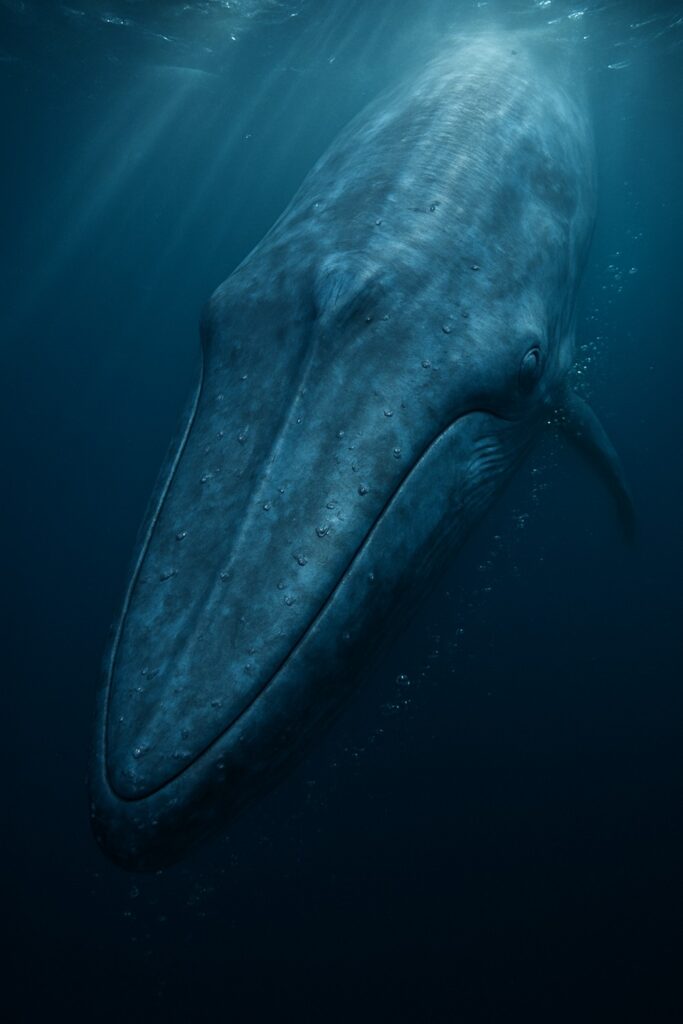
Here’s the thing about silence: it only becomes data when someone was listening before it arrived. Blue whale songs ocean warming research didn’t begin with an alarm — it began with a routine archive check, a flatline where a waveform should have been, and a researcher in San Diego squinting at a spectrogram trying to figure out if the equipment had failed. It hadn’t. The ocean had just gone quiet in a way that had no precedent in thirty years of recordings.
For decades, underwater microphone arrays strung across the Pacific and Southern Ocean captured the deep, resonant calls of blue whales — signals reaching 188 decibels, traveling thousands of miles through open water. Marine biologists treated those recordings as a reliable census. More song meant more whales, more feeding, more health. Now the recordings are going quiet, and the scientists who built careers around listening are scrambling to understand what the silence actually means.
The Ocean’s Loudest Voice Is Disappearing
Blue whales are the loudest animals on Earth — a biological fact that sounds almost impossible until you sit in a hydrophone monitoring station and feel the vibrations move through the equipment at frequencies too low for the human ear to detect directly. Males produce calls between 10 and 40 hertz, well below the threshold of normal human hearing, and those calls carry across thousands of kilometers of open ocean. The blue whale uses this acoustic range because low-frequency sound travels with almost no energy loss through deep water — a physical property of the ocean that evolution has exploited over millions of years.
Researchers at the Scripps Institution of Oceanography in San Diego began systematically cataloguing these calls in the early 1990s, building one of the most comprehensive marine acoustic databases in existence. By 2005, they had enough longitudinal data to identify individual song patterns, track seasonal migration routes, and detect population-level changes in behavior. The archive became a living document of the deep.
What nobody anticipated was that the archive would start documenting absence. The calls didn’t disappear all at once — they faded irregularly, seasonally, then with increasing frequency. Male blue whales sing in long, repeating phrases, sometimes for hours without pause. Scientists had assumed that where food was abundant, singing would follow. The males were advertising fitness, saying: I am here, I am strong, the ocean is good. When krill populations began collapsing under warming conditions, the males kept singing for a while, as though they hadn’t quite received the memo. Then they stopped.
The silence isn’t uniform. In some regions it’s seasonal. In others it’s been sustained across multiple years. And the pattern correlates, with terrifying precision, to the timing and geography of marine heat events.
Krill Collapse and the Cost of Staying Quiet
A single blue whale needs up to 40 million krill per day. That number is staggering when you hold it next to the image of the animal itself — the largest creature ever to exist on this planet, sustained entirely by organisms averaging two centimeters in length, consumed in quantities that seem more like industrial extraction than feeding. Krill form dense aggregations in cold, upwelled waters, and blue whales have evolved over millions of years to exploit exactly those aggregations. The entire behavioral calendar of a blue whale — its migrations, its breeding, its song — is organized around the predictable availability of krill in specific ocean zones at specific times of year.
When that predictability breaks down, everything downstream breaks down with it. The relationship between energy expenditure and acoustic output is direct: singing is expensive (researchers actually call this the acoustic trade-off problem). A male producing sustained low-frequency calls for hours is burning calories that, in a krill-poor environment, he simply can’t afford to replace. Feed or sing. Not both. This dynamic isn’t so different from the sockeye salmon run in Alaska, where every calorie burned in the river journey upstream is a calorie that can’t be recovered — a one-way expenditure that shapes an entire ecosystem’s nutrient cycle.
Why does this matter beyond the whales themselves? Because acoustic silence is now one of the clearest early-warning signals we have for krill collapse across entire ocean sectors.
The “Blob” — that infamous marine heat wave that pushed Northeast Pacific surface temperatures 3 to 4 degrees Celsius above normal between 2013 and 2016 — provided the starkest evidence of this trade-off. Krill surveys conducted simultaneously with hydrophone monitoring showed biomass reductions of up to 60 percent in some sectors. NOAA researchers tracking hydrophone arrays in the Northeast Pacific recorded a dramatic drop in blue whale call rates during the peak heat years. The correlation was almost one-to-one. As krill vanished, calls dropped. The whales weren’t gone — they were just silent.
The NOAA Southwest Fisheries Science Center published analysis in 2019 linking these acoustic gaps directly to foraging pressure. Whales in energetically stressed environments actually covered more ocean surface, moved faster, and spent more time in deep dives — behaviors consistent with active searching rather than feeding. They were burning more calories looking for food while simultaneously losing the acoustic signals that might have helped other whales find productive patches. The silence was, in a very real sense, contagious.
How Warming Seas Rewire an Entire Food Web
The mechanism behind krill decline under warming conditions is worth understanding in precise terms, because it’s more complex than “warm water kills krill.” Antarctic krill — Euphausia superba — depend on sea ice for reproduction. Their larvae shelter beneath ice sheets and feed on ice algae during winter. As Arctic and Antarctic sea ice coverage has declined across four decades of satellite measurement, the nursery infrastructure that supports krill populations is literally shrinking. But in the North Pacific, it’s a different species and a different mechanism. Euphausia pacifica responds to thermal stratification: when warm surface waters sit above cold deep water in a stable, stratified column, the nutrient upwelling that drives phytoplankton blooms — the base of the krill food chain — is suppressed. No upwelling means no bloom. No bloom means no krill. No krill means no blue whales.
And as National Geographic’s reporting on blue whale ecology has documented, the North Pacific blue whale population was already operating from a recovery baseline following commercial whaling that removed an estimated 99 percent of their global population before the 1966 International Whaling Commission moratorium. A species rebuilding from near-zero has no margin for ecosystem disruption at this scale. That this is happening now, precisely as the population was showing signs of genuine recovery, is not bad luck — it’s what the physics of warming oceans was always going to deliver.
Blue whale songs ocean warming research has revealed something else unexpected: the frequency of blue whale calls has been dropping globally, by roughly one hertz per decade since the 1960s. Some scientists initially speculated this was noise pollution — whales adjusting their calls to cut through increasing ocean noise from shipping traffic. But the trend predates the acoustic industrial age. More recent analysis by researchers at the University of California Santa Cruz suggests the frequency drop may reflect a gradual recovery in body size as populations rebound from whaling, with larger animals naturally producing lower-frequency calls. It’s a reminder that these acoustic signals carry multiple channels of information simultaneously, and disentangling them requires extraordinary care.
This complexity matters enormously for conservation. If researchers are using call frequency as a proxy for population health, but frequency is also being driven by body size recovery, the same signal can mean two completely opposite things depending on what question you’re asking. The silence of marine heat waves and the downward frequency shift of recovering populations could, in a worst-case scenario, mask each other in the data.
What Blue Whale Songs Tell Us About Ocean Health

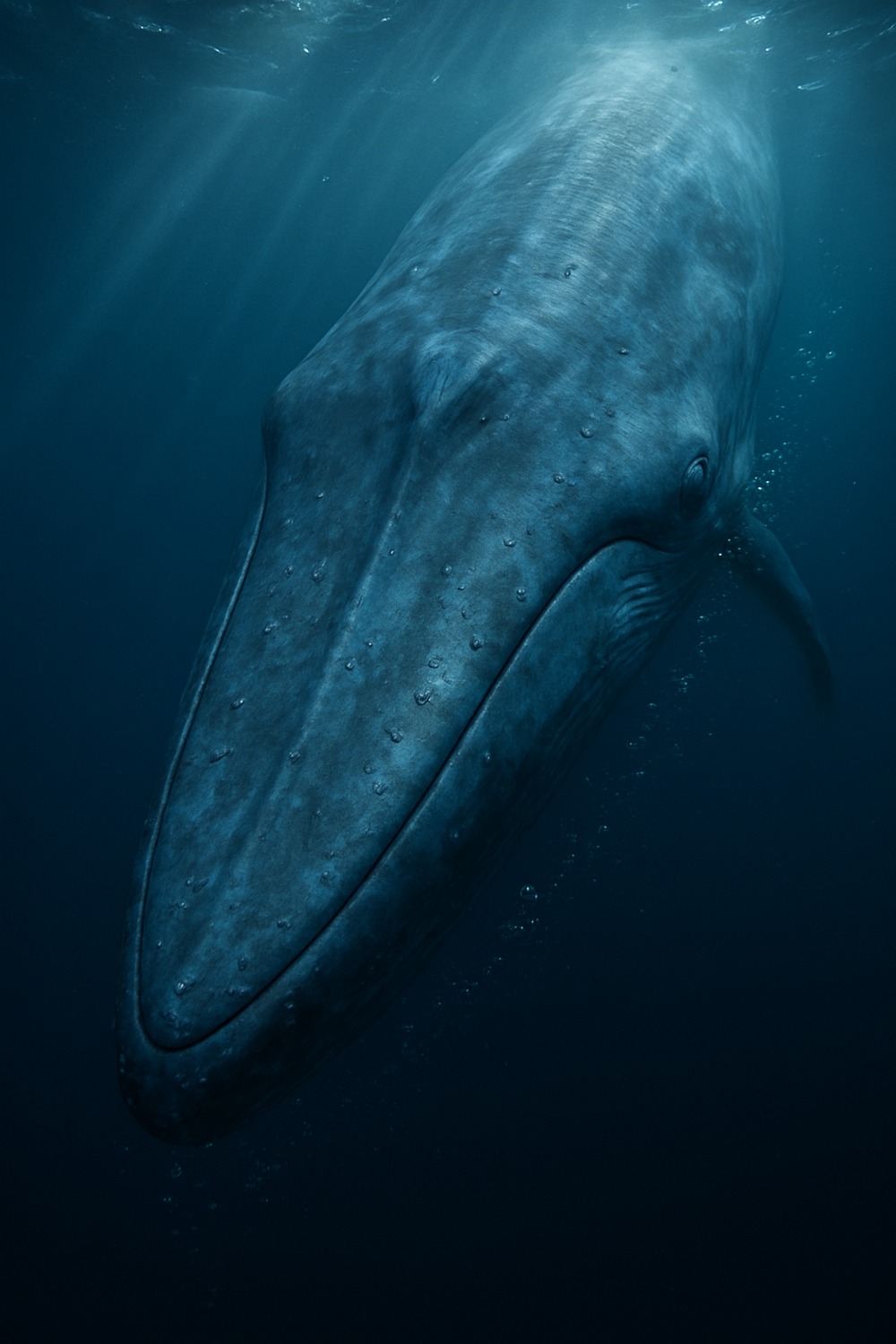
Cornell University’s Bioacoustics Research Program has spent over thirty years building the theoretical framework for using animal sound as ecological monitoring. The core idea is elegant: animals that are stressed behave differently, and behavior changes acoustics. Apply enough hydrophones across enough ocean, and you have a passive monitoring system that covers territory no ship survey ever could. The blue whale, with its extraordinary vocal range and consistent song structure, is close to an ideal indicator species for this approach.
A 2021 study published in the journal PLOS ONE used fifteen years of hydrophone data from the Eastern North Pacific to construct what the authors called an “acoustic health index” — a running score of vocal activity, call complexity, and call duration that tracked closely with independent measures of krill availability and sea surface temperature anomalies. The index showed clear degradation during each significant marine heat event in the study period, and recovery in cooler La Niña years. It was, in effect, a real-time thermal stress test for an entire ocean basin, conducted by the whales themselves.
Acoustic archives held at institutions like MBARI — the Monterey Bay Aquarium Research Institute — contain recordings from the 1990s that can now be reanalyzed with modern machine-learning tools, pulling out behavioral signals that weren’t detectable with the analysis software of the time. The implications for climate monitoring reach back further than satellites. Blue whale songs ocean warming data creates a biological record predating the current resolution of satellite sea surface temperature measurements by decades. In 2023, a team at MIT Lincoln Laboratory applied deep learning to one such archive and identified six previously unknown call variants associated exclusively with post-heat-event behavior — calls that appear to function as long-range aggregation signals, possibly drawing dispersed whales back toward recovering prey patches.
Researchers at MBARI are now deploying next-generation autonomous underwater gliders equipped with low-frequency hydrophones that can remain at depth for months, transmitting acoustic data in near real-time via satellite. The goal is to close the temporal gaps in the monitoring record — to catch the exact moment a population shifts from singing to searching, and correlate that moment with oceanographic conditions measured simultaneously. It’s the most ambitious passive acoustic monitoring program ever attempted for a single species.
The Future of Listening in a Warmer Ocean

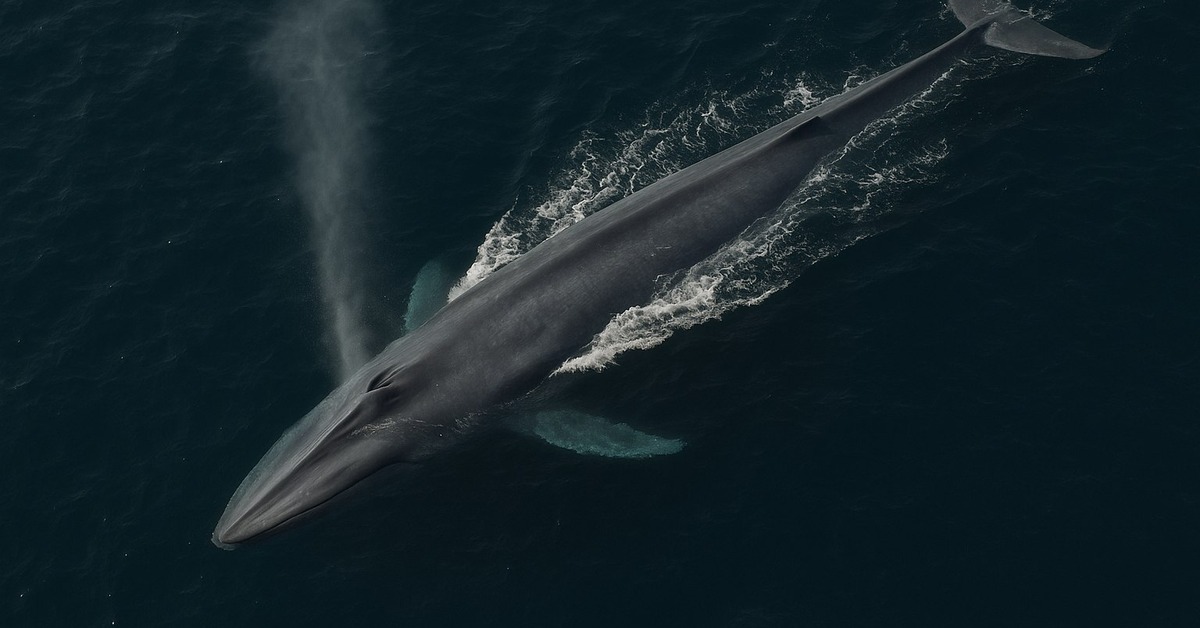
Marine heat waves are becoming more frequent, more intense, and longer in duration. The World Meteorological Organization’s 2023 State of the Global Climate report documented that 2023 saw the highest recorded annual average ocean surface temperature since satellite measurement began, with multiple regional anomalies exceeding previous records by significant margins. The Northeast Pacific, the Southern Ocean, and the North Atlantic all experienced simultaneous extreme heat events in the same calendar year — a combination that has no modern precedent. For blue whale populations in all three basins, the energetic implications are severe. The recovery window between heat events — the cold La Niña years when krill bloom and whales rebuild body condition — is compressing. When recovery time shrinks faster than depletion time, even a rebounding population can be pushed back toward the edge.
Watching a population claw back from near-extinction only to hit an ecosystem ceiling imposed by ocean temperature, you stop calling it a setback and start calling it a structural failure of the conditions that recovery requires.
The blue whale songs ocean warming connection forces a difficult question about what “recovery” actually means for a species that was nearly hunted to extinction, is now showing population growth in some regions, and is simultaneously facing an ecosystem disruption that undermines the very food supply that recovery depends on. Commercial whaling took the population from somewhere between 200,000 and 300,000 animals down to perhaps 3,000 by the 1960s. That the species survived at all is remarkable. The IWC estimate of current global blue whale population sits between 10,000 and 25,000 individuals — a vast range that reflects genuine scientific uncertainty, not data richness.
Off the coast of Sri Lanka, in the warm waters of the northern Indian Ocean, blue whales feed year-round on dense upwellings of krill that form in the lee of the island’s continental shelf. A researcher named Asha de Vos — founder of Oceanswell, Sri Lanka’s first marine research and conservation organization — has spent nearly two decades documenting what she calls a “resident” blue whale population that never migrates to polar feeding grounds. She describes listening to their calls through headphones on a small research vessel at 3 a.m., in complete darkness, the ocean glass-flat. The calls come through as a physical sensation before they register as sound. In the years when the upwelling weakens, she says, the calls change. Not louder, not softer — different. Shorter phrases, longer gaps. As though the whales are asking a question and waiting for an answer that doesn’t come.
How It Unfolded
- 1966 — The International Whaling Commission issued a moratorium on commercial blue whale hunting after population estimates fell below 1 percent of historical levels in some ocean basins.
- 1992 — Scripps Institution of Oceanography deployed one of the first dedicated hydrophone arrays in the Northeast Pacific specifically to monitor blue whale acoustic activity at a population level.
- 2013–2016 — The “Blob” marine heat wave caused the most dramatic documented decline in recorded blue whale call rates in the North Pacific monitoring record, correlated directly with a 60 percent crash in krill biomass in affected sectors.
- 2023 — MIT Lincoln Laboratory researchers identified six previously unknown blue whale call variants in archival recordings, associated exclusively with post-heat-event dispersal behavior, using deep-learning analysis tools unavailable when the recordings were originally made.
By the Numbers
- 188 decibels — the measured peak intensity of a blue whale call, making it the loudest sound produced by any animal on Earth (NOAA, 2018).
- 40 million krill per day — the estimated daily consumption requirement of a single adult blue whale at peak feeding season.
- 60% — estimated reduction in krill biomass in Northeast Pacific sectors during the 2013–2016 Blob event, correlated with simultaneous acoustic monitoring gaps (NOAA Southwest Fisheries Science Center, 2019).
- ~1 Hz per decade — the rate at which global blue whale call frequency has been declining since the 1960s, across all major populations studied (UC Santa Cruz analysis).
- 10,000–25,000 — the current estimated global blue whale population, compared to a pre-whaling estimate of 200,000–300,000 individuals (IWC, 2022).
Field Notes
- In 2014, at the peak of the Blob event, NOAA hydrophone stations in the Gulf of Alaska recorded near-complete acoustic silence from blue whales for a 47-day period — the longest documented gap in the 22-year monitoring record at that location. Satellite tagging data confirmed whales were present in the region; they had simply stopped vocalizing.
- Blue whale calls are so low in frequency that they’re technically classified as infrasound — below 20 hertz, the lower threshold of human hearing. Researchers listening in real time often detect them first as a pressure change in the chest rather than a sound entering the ears.
- The downward trend in blue whale call frequency over six decades was initially interpreted as a stress response to ocean noise pollution. The current leading hypothesis — that it reflects genuine body size recovery as the population rebounds from whaling — reframes decades of data from a distress signal into a possible recovery indicator.
- Researchers still can’t fully explain why some individual males in heat-stressed environments continue to call while others go completely silent. Whether this represents individual variation in energetic condition, different reproductive strategies, or something else entirely remains an open question that no current monitoring system is granular enough to answer.
Frequently Asked Questions
Q: How does blue whale songs ocean warming research actually work — what are researchers measuring?
Researchers use fixed and mobile hydrophone arrays — underwater microphone networks — to record blue whale vocalizations continuously across large ocean areas. They measure call rate (how often individuals call), call duration, frequency, and complexity. These acoustic metrics are then cross-referenced with oceanographic data including sea surface temperature, krill survey results, and satellite tracking from tagged individuals. The combination builds a picture of how behavioral state changes under environmental stress. The Northeast Pacific monitoring network has been generating usable data since 1992.
Q: If blue whales stop singing, does that mean their population is declining?
Not necessarily — and this is one of the most important nuances in the research. Acoustic silence reflects behavioral change, not necessarily population change. Whales that stop calling during a marine heat event may still be present in an area, still alive, and still reproducing. The silence signals energetic stress and foraging prioritization. Sustained silence across multiple seasons, combined with reduced body condition data from tagged individuals, does indicate potential long-term reproductive consequences — because females in poor nutritional condition produce fewer calves and have lower calf survival rates.
Q: Aren’t blue whales recovering from whaling? Why is ocean warming still a threat?
Blue whale populations in some regions, particularly the Eastern North Pacific, have shown genuine recovery since the 1966 whaling moratorium. But “recovering” doesn’t mean “recovered.” With a global population still estimated at less than 10 percent of pre-whaling levels, the species has almost no buffer against additional stressors. Marine heat waves reduce reproductive rates precisely when populations most need consistent breeding success to continue climbing back toward viable long-term numbers. Recovery and vulnerability aren’t mutually exclusive — a common misconception worth setting aside entirely.
Editor’s Take — Alex Morgan
What strikes me hardest about this research isn’t the silence itself — it’s the fact that we almost didn’t notice it, because the silence looked like absence. The whales were there. The hydrophones were running. We just weren’t asking the right question about what it meant when the recordings went quiet. Passive acoustic monitoring might be the most underrated conservation tool on the planet right now. The ocean is already talking. We’re still learning how to listen to what it’s actually saying.
Blue whales have been producing these calls for millions of years — long before there was anyone to hear them, long before there were hydrophones to record them. The ocean has been full of this sound in a way that most humans will never directly experience. What’s changing now isn’t just a behavioral metric in a scientific database. It’s the acoustic texture of an entire ecosystem under stress, recorded in real time by the largest animals that have ever lived. The question worth sitting with: if the ocean’s loudest voice goes quiet, what else are we failing to hear?


