The Monk Who Lost His Leg But Never Lost His Peace
Here’s the thing about a Buddhist monk peace walk forgiveness story: it doesn’t begin where you’d expect. Not in a temple. Not in a moment of quiet resolve. It begins on the shoulder of a Texas highway, with the sound of a car that didn’t stop in time — and a man who, hours later, would say seven words that neither the driver nor the hospital staff were prepared to hear.
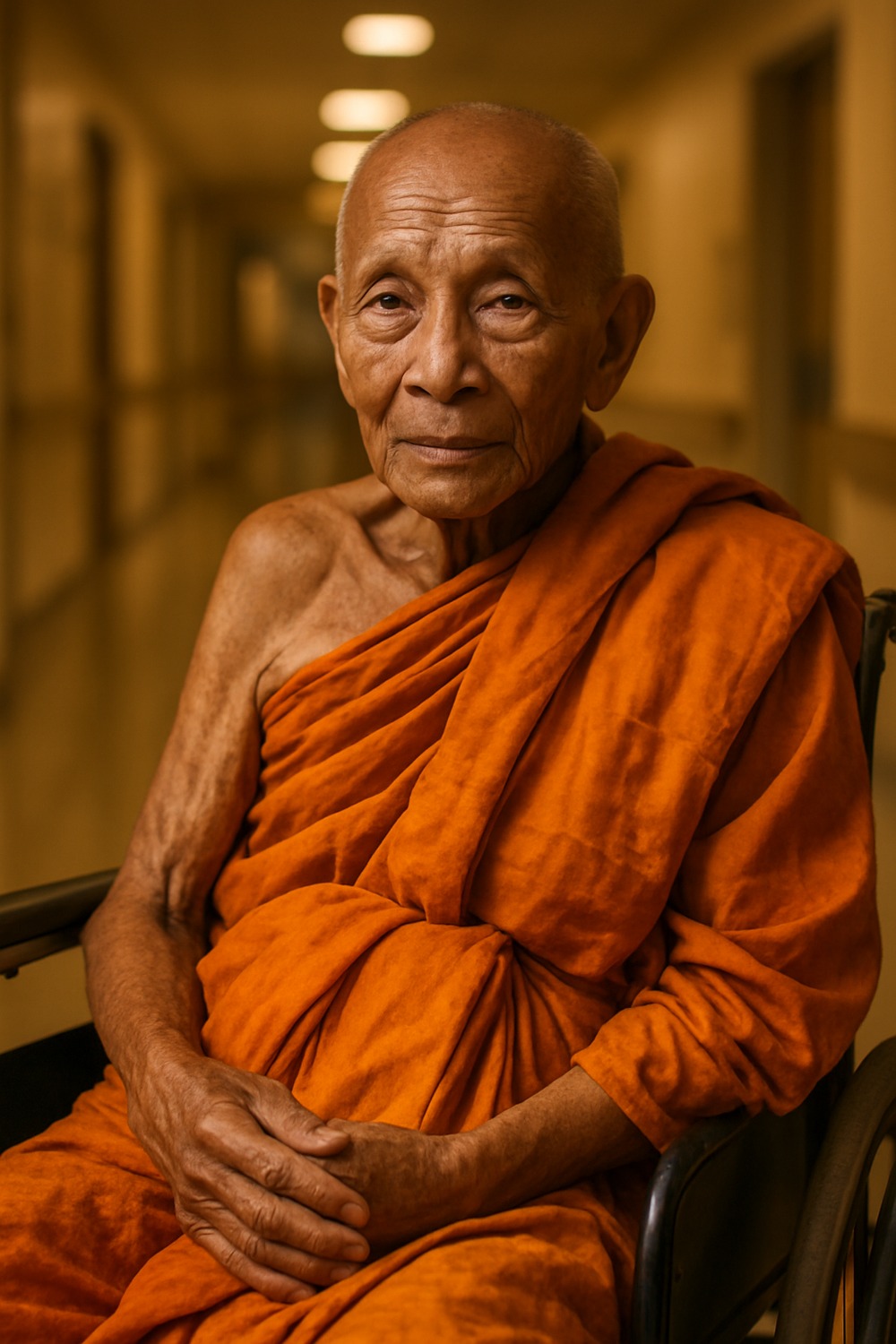
Phra Ajarn Maha Dam Phommasan, senior monk at Wat Lao Buddha Khanti Temple in Snellville, Georgia, was alone on the roadside near Dayton, Texas, when a car struck him during his solo walk from Fort Worth to Washington, D.C. From a hospital bed at Piedmont Healthcare, surrounded by staff who would later say they’d never seen anything like it, he forgave the driver. Quietly. Completely. Without conditions.
The Long Tradition Behind a Peace Walk
Walking as spiritual witness has roots that run deep in Theravada Buddhist tradition, the oldest surviving school of Buddhist practice, which spread across Southeast Asia over two millennia and still shapes the spiritual lives of roughly 150 million people across Thailand, Laos, Myanmar, Cambodia, and Sri Lanka. In this tradition, the physical act of walking — slow, deliberate, present — is not a means to an end. It is the practice itself. Monks have walked hundreds, sometimes thousands, of miles across conflict zones, drought-stricken landscapes, and jungle corridors as living embodiments of the Buddhist concept of metta, or loving-kindness.
Wat Pah Pong monastery in Thailand, founded by the revered Ajahn Chah in 1954, helped carry this walking tradition into the modern era, sending monks trained in mindful movement into global communities. Maha Dam’s walk in 2023 drew directly from that lineage — not performance, not protest in the Western sense, but presence. A human body moving through the world and refusing to harden.
Fort Worth to Washington, D.C. traces approximately 2,300 miles through the American South — Texas, Louisiana, Mississippi, Alabama, Georgia, the Carolinas, Virginia. That a Buddhist monk from a Lao immigrant community in Georgia would choose this particular corridor says something specific about the kind of spiritual statement he was making. Not abstract. Not universal in the vague sense. Targeted. Grounded in a geography with weight. He had already covered hundreds of miles before the collision. Each step documented, witnessed, deliberate.
Then Dayton, Texas. One car. One second. Everything changed — and, depending on how you hold it, nothing did.
What the Hospital Staff Witnessed That Day
There’s a particular category of human behavior that medical professionals aren’t trained for. Clinical frameworks handle pain, blood loss, surgical intervention, recovery timelines. What they don’t have is a protocol for the patient who, hours after losing a limb, expresses forgiveness toward the person who took it. Staff at Piedmont Healthcare who treated Maha Dam described being visibly moved — not just professionally impressed, but genuinely shaken by his composure.
Why does this matter? Because the physiology of what they witnessed is measurable and real. Research from the University of Wisconsin-Madison’s Center for Healthy Minds, where neuroscientist Richard Davidson has spent decades studying how contemplative practice reshapes neural architecture, shows that long-term meditators demonstrate measurably different responses to pain and emotional distress. The amygdala — the brain’s alarm system — is quieter. The prefrontal cortex, associated with conscious regulation, is more active. What Maha Dam’s hospital team observed wasn’t mystical. It was decades of practice made visible under pressure.
His words, reported widely in the days following the accident, were simple: “Anger does not bring you peace.” Seven words. No qualification, no performance of forgiveness, no conditional clause. Just a statement offered the way you’d offer water — because it seemed like the obvious thing to give. This kind of unconditional forgiveness has parallels in other documented cases of severe trauma survived by contemplative practitioners. Tibetan monks who survived decades in Chinese prisons — including figures whose accounts were recorded by the Mind & Life Institute — described compassion meditation as the primary tool they used to avoid what one called “the real danger,” which wasn’t physical suffering but hatred. The threat they feared most wasn’t injury. It was what injury might do to the mind left untended.
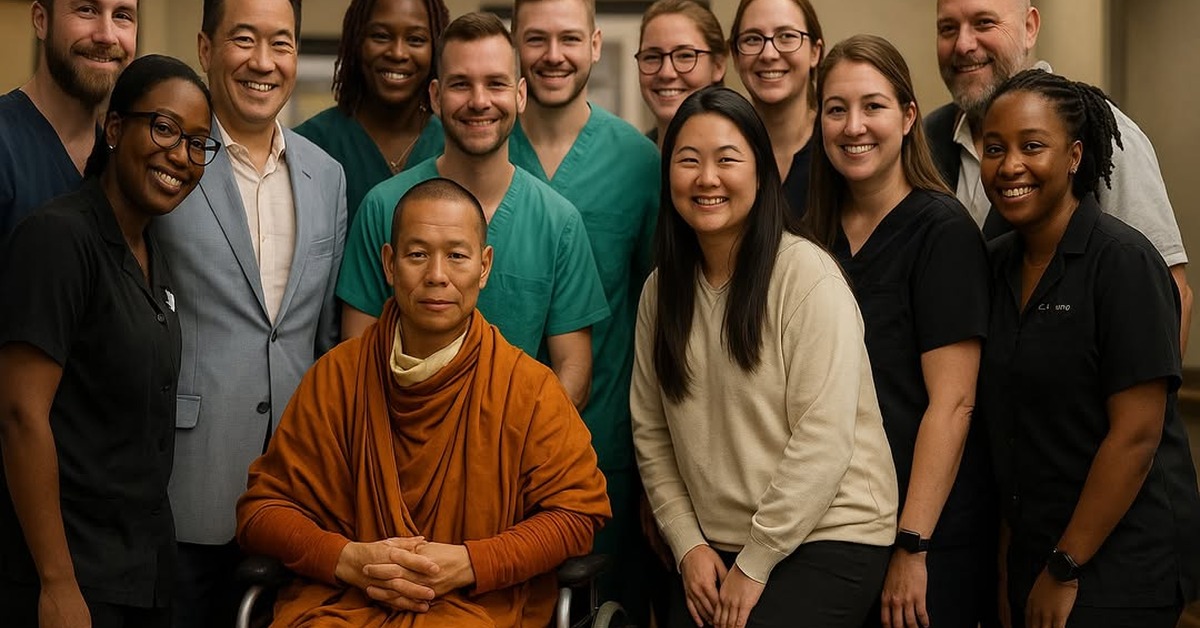
Maha Dam’s community in Snellville didn’t wait to hear that he’d recovered perfectly before celebrating. They met him as he was — with one leg fewer, with the same spirit intact.
Forgiveness Under Pressure — What Research Actually Shows
The science of forgiveness has matured significantly over the past two decades, moving from pastoral counseling into peer-reviewed psychology and neuroscience. Launched in the late 1990s, the Stanford Forgiveness Project — led by psychologist Dr. Fred Luskin — was among the first systematic efforts to study forgiveness as a trainable skill with measurable health outcomes. What Luskin and his collaborators found, replicated across multiple international studies since, is that forgiveness practice reduces cortisol levels, lowers blood pressure, and is associated with significantly improved outcomes in patients recovering from serious physical trauma. A 2016 study in the Personality and Social Psychology Bulletin demonstrated that people who practiced “decisional forgiveness” (researchers actually call this a choice to release resentment regardless of emotional state) recovered faster from both physiological stress responses and self-reported emotional pain. The Buddhist monk peace walk forgiveness narrative that emerged from Dayton, Texas, isn’t just spiritually compelling. It aligns almost precisely with what the data predicts for a practitioner of Maha Dam’s training and experience.
The evidence leaves no comfortable room for dismissing what happened as luck or personality — this was the outcome the research would have forecast, and that convergence deserves more attention than it has gotten.
What surprises people is that forgiveness in this research context doesn’t require reconciliation, acknowledgment from the offending party, or even warm feeling toward the person forgiven. What it requires — the mechanism, as Luskin describes it — is a shift in the story you tell about what happened. The event stays. The wound stays. But the narrative posture toward it changes. For someone with Maha Dam’s decades of meditative practice, that shift wasn’t a heroic act of will. It was, as best as we can understand from the outside, something more like a reflex. A well-groomed one. Built over years of morning prayer, walking meditation, and the disciplined cultivation of non-attachment.
The driver involved in the collision was never publicly identified. Maha Dam did not pursue legal action. The absence of that expected move — the lawsuit, the demand, the anger — became its own kind of statement.
Buddhist Monk Peace Walk Forgiveness and the Body That Kept Moving
After months of surgery and recovery, Maha Dam returned to his temple in Snellville, Georgia. What the medical team at Piedmont Healthcare had to offer was significant — amputation management, prosthetic fitting, physical rehabilitation. But what happens to a man whose spiritual identity is literally built around walking, around physical presence, around the mile-by-mile act of bearing witness? That question sits at the intersection of medical recovery and existential identity in a way that doesn’t resolve neatly.
And yet the community gathered anyway — not in spite of what had been lost, but in recognition of what had held.
Roughly 2.1 million Americans are living with limb loss, with lower limb amputations comprising the majority of cases, according to the Amputee Coalition’s 2022 data. The psychological dimension of that loss — particularly for individuals whose mobility was central to their sense of purpose — is well-documented as a primary challenge in long-term rehabilitation. What distinguishes Maha Dam’s recovery narrative isn’t the physical outcome. It’s that he appears to have arrived at his hospital room already equipped with a framework that had room for this loss. Not denial. Not forced positivity. A practiced acceptance of impermanence that the Buddhist tradition calls anicca — the understanding, held not as a concept but as a bodily knowing, that everything changes.
His community’s celebration wasn’t about pretending the loss didn’t happen. It was about recognizing that something — some core quality — proved unbreakable when tested in the most literal way possible. Research on social support in recovery from traumatic injury is unambiguous: patients embedded in strong, responsive communities recover faster, report higher quality of life, and show lower rates of depression than those who face recovery in isolation. Maha Dam walked into his accident alone. He walked out of it surrounded.
The 2,300-mile intention from Fort Worth to D.C. remains unfinished in the physical sense. Whether Maha Dam intends to complete it is something only he knows. But the spiritual walk, it seems, never stopped.
How It Unfolded
- Centuries of practice: Theravada Buddhist monks have undertaken long-distance peace walks across Southeast Asia as acts of spiritual witness, a tradition tracing back to the earliest centuries of the Buddhist monastic order.
- 2023, Fort Worth, Texas: Phra Ajarn Maha Dam Phommasan begins his 2,300-mile solo peace walk from Fort Worth, Texas, toward Washington, D.C., representing the Lao Buddhist community in Snellville, Georgia.
- 2023, Dayton, Texas: A vehicle strikes Maha Dam near Dayton, Texas, resulting in the loss of his leg; from his hospital bed at Piedmont Healthcare, he publicly forgives the driver, drawing national attention.
- 2023–2024: Following months of surgery and physical rehabilitation, Maha Dam returns to Wat Lao Buddha Khanti Temple, where his community gathers in celebration of his resilience and continued spiritual commitment.
By the Numbers
- 2,300 miles: the intended length of Maha Dam’s solo peace walk from Fort Worth, Texas, to Washington, D.C., in 2023.
- 2.1 million: Americans currently living with limb loss, with lower limb amputations representing the majority of cases (Amputee Coalition, 2022).
- 150 million: estimated practitioners of Theravada Buddhism worldwide, the tradition underpinning Maha Dam’s walking practice.
- Decades of practice: long-term meditators studied at the University of Wisconsin-Madison’s Center for Healthy Minds show measurably reduced amygdala reactivity compared to non-meditators.
- 7 words: the entirety of Maha Dam’s public statement on forgiveness — “Anger does not bring you peace” — as reported following the accident.
Field Notes
- Metta (loving-kindness) in Theravada practice isn’t a feeling to be summoned but a skill to be trained — monks at monasteries like Wat Pah Pong in Thailand spend years on structured metta meditation before undertaking any form of public spiritual witness, including long-distance walking practice.
- Maha Dam completed his walk without support vehicles or an organized team — a choice that reflects the traditional solo nature of Buddhist walking pilgrimage, distinct from group peace marches common in Western protest traditions.
- Forgiveness in Buddhist practice is understood as primarily protective of the forgiver, not the forgiven — the Pali Canon describes held resentment as “holding a hot coal with the intention of throwing it” at another person.
- Researchers at the Mind & Life Institute, founded in 1987 through a collaboration between the Dalai Lama and neuroscientist Francisco Varela, still can’t fully explain why some meditators show drastically accelerated emotional recovery from physical trauma while others with equal training hours do not — individual variables in neural plasticity remain poorly understood.
Frequently Asked Questions
Q: What is a Buddhist monk peace walk, and how does it differ from a protest march?
A Buddhist monk peace walk forgiveness tradition draws from Theravada Buddhist practice, where walking is itself a meditative act — slow, deliberate, and inwardly focused rather than outwardly confrontational. Unlike a protest march, which seeks to influence external systems through collective visibility, a monastic peace walk is an act of spiritual witness: one practitioner moving through the world as an embodiment of metta, or loving-kindness. Maha Dam’s 2,300-mile walk in 2023 carried that interior quality — he walked alone, without media infrastructure or organized support.
Q: How did Maha Dam survive the psychological trauma of losing his leg during the walk?
The evidence points to decades of contemplative training rather than any single coping strategy. Research from the University of Wisconsin-Madison’s Center for Healthy Minds shows that long-term meditators demonstrate measurably different neurological responses to pain and loss — the brain’s threat-response systems are quieter, and the capacity for conscious emotional regulation is stronger. Maha Dam’s public expression of forgiveness toward the driver, offered from his hospital bed at Piedmont Healthcare, wasn’t performed resilience. It appears to reflect a deeply conditioned orientation toward impermanence that his tradition calls anicca — the practiced acceptance that all conditions, including the condition of one’s own body, are subject to change.
Q: Does forgiving someone who caused you harm mean you don’t pursue justice?
This is one of the most common misconceptions about forgiveness in both religious and secular contexts. Forgiveness, as understood in Buddhist practice and confirmed by the Stanford Forgiveness Project research, is not the same as condoning harm, abandoning legal rights, or requiring reconciliation. It’s a deliberate shift in the internal narrative about what happened — releasing the resentment that would otherwise continue injuring the person who holds it. Maha Dam’s choice not to pursue legal action was his own; it isn’t a model that forgiveness requires. What the tradition and the research agree on is that the release of anger primarily protects the one releasing it.
Editor’s Take — Sarah Blake
What I keep returning to is that seven-word sentence. Not a speech, not a manifesto — just “Anger does not bring you peace,” offered from a hospital bed to the people who’d just taken his leg. The research on forgiveness and recovery confirms what that sentence already knows. But there’s something the data can’t fully hold: that a man who had walked hundreds of miles toward peace continued, in the moment of maximum disruption, to walk in exactly the same direction. That’s not a lesson. That’s a demonstration. And demonstrations are harder to dismiss.
Maha Dam’s story sits in the Medical Breakthroughs category not because of anything a surgeon did — though the surgeons mattered — but because what broke through here was a different kind of evidence. Evidence that the mind, disciplined over decades, can hold something steady when the body can’t. That forgiveness isn’t softness but a form of structural integrity. If you want to understand what radical healing looks like from the inside out, consider the other stories emerging from the edges of human endurance — like the baby who was operated on before she was even born, her survival another quiet argument that the body — and the will around it — is stranger and stronger than we’ve been taught to expect. What would you have to practice, for how many years, to meet your worst moment with seven words and mean every one of them?