


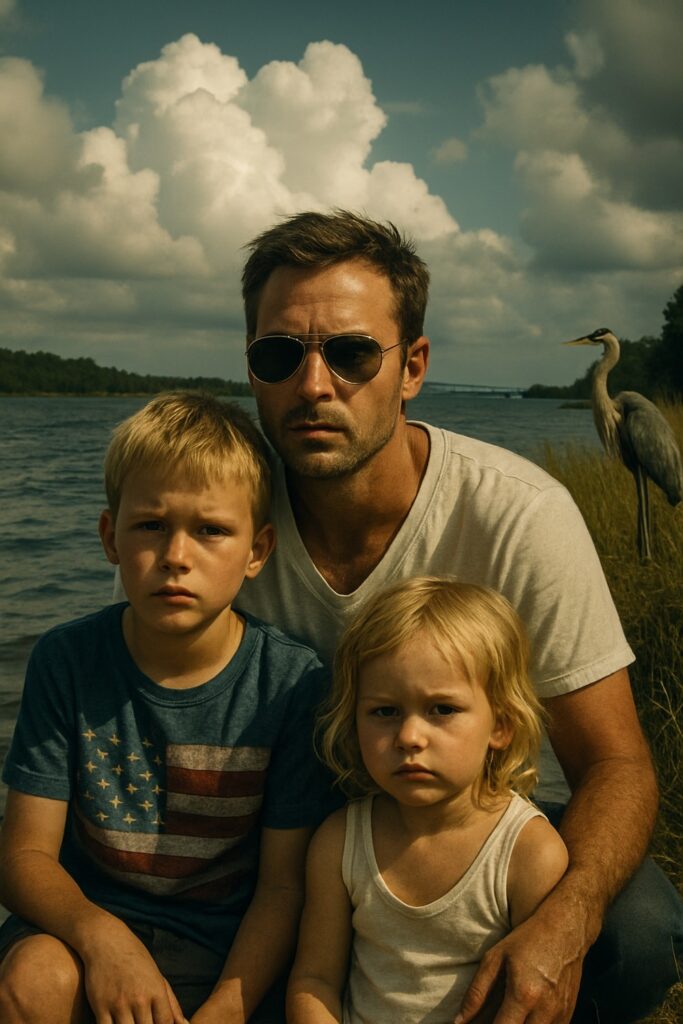
Seven years old, no life jacket, more than a mile of open tidal water between him and shore — Chase’s heroic swim on the St. Johns River in June 2021 shouldn’t end the way it does. Most survival stories that begin this way don’t end with everyone alive. His father is in the water behind him, his four-year-old sister somewhere back at the boat, and the instruction he carries with him into that current is the only thing his dad has time to give: swim toward that far bank, and don’t stop.

When the River Turned
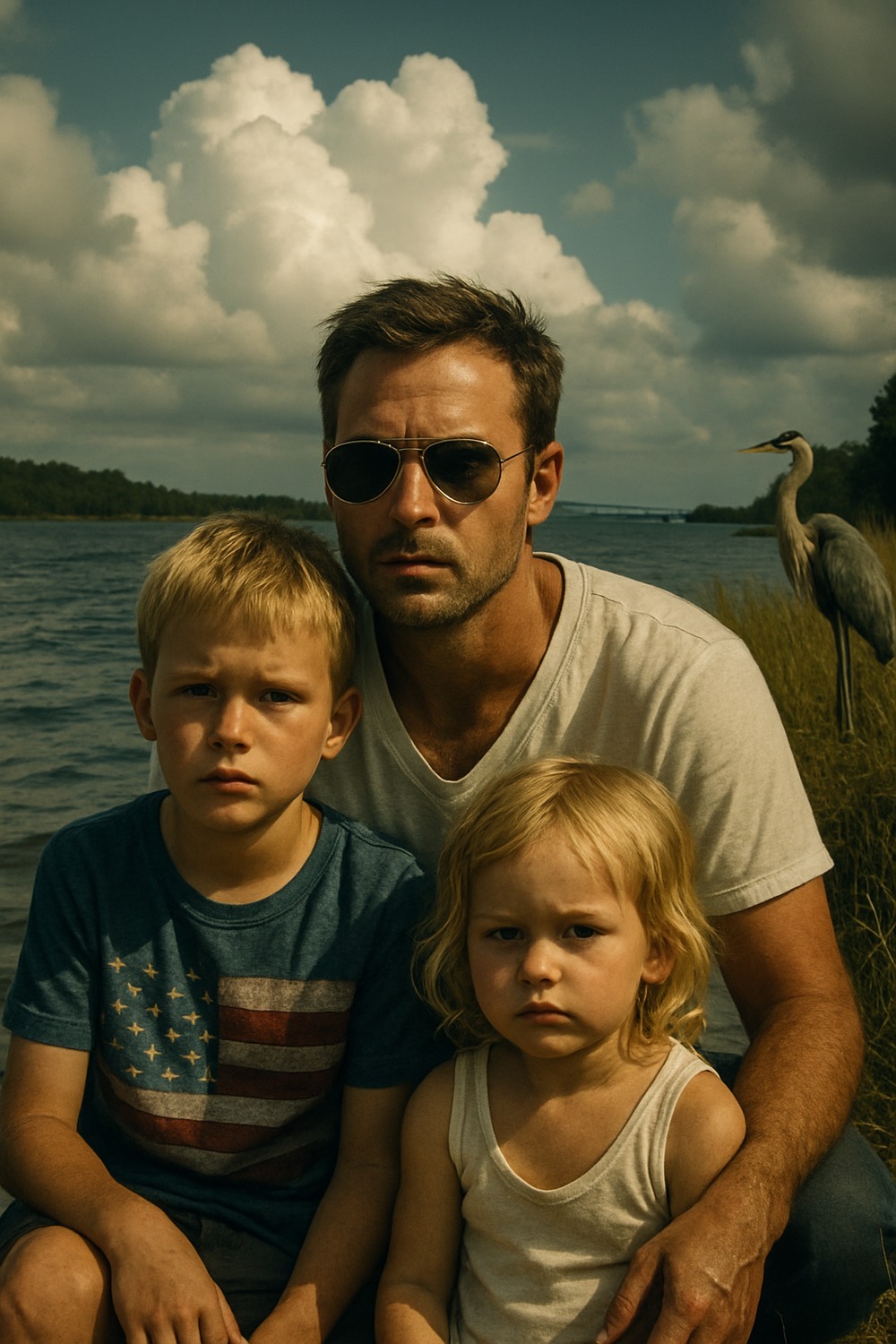
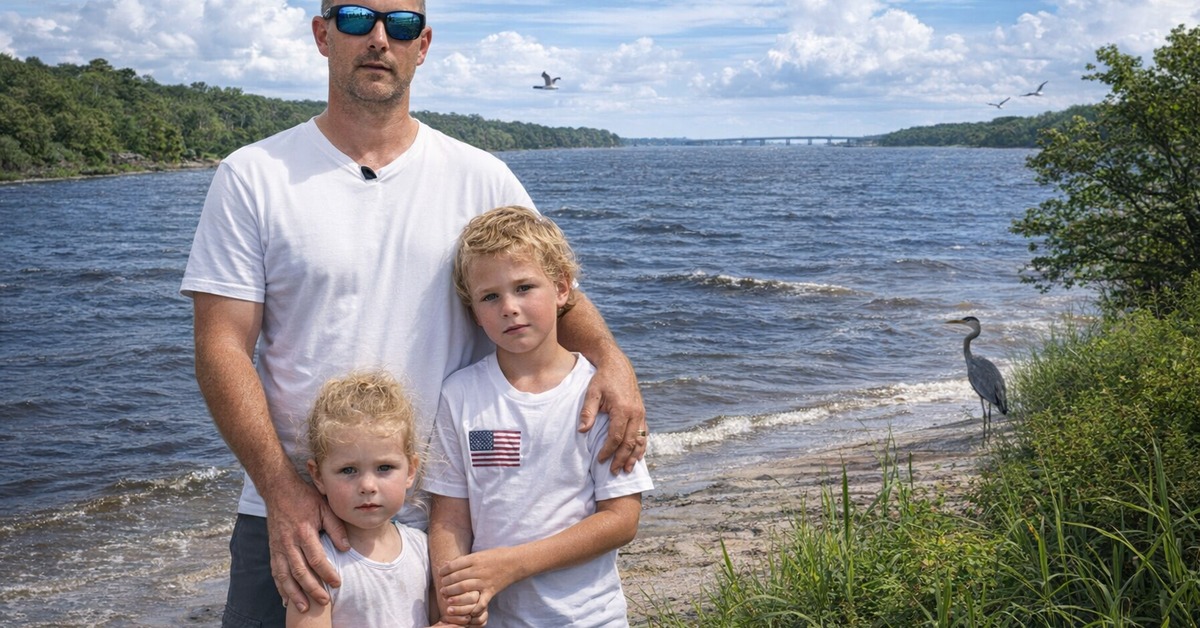
The afternoon gives no warning. Chase’s father has anchored the family boat on the St. Johns River, one of Florida’s most iconic waterways — a broad, northward-winding giant that drains through Jacksonville before meeting the Atlantic Ocean. Beneath that glittering surface, shifting currents, tidal flows, and hidden eddies have humbled swimmers far more experienced than a family on a recreational afternoon. That day, a fast-moving current seizes Chase, then seven, and his younger sister Abigail, just four years old, pulling them rapidly away from the anchored boat. It looks calm. It isn’t.
Their father plunges in immediately. He fights hard. The current is harder. Distance opens between them with the cold arithmetic of moving water, and within seconds he faces the kind of choice no parent should ever have to make.
Abigail is four. She is closer and she is sinking. He goes to her. And he tells his son — his second-grader, his boy — to swim for the far bank and find help. The far bank is more than a mile away across open, tidal water shared with alligators and boat traffic. For a trained adult, it’s a serious undertaking. For Chase, it is almost incomprehensible. He turns toward shore and starts to swim anyway.
A Mile Across Moving Water
What follows defies easy accounting. For roughly an hour, Chase is alone in the St. Johns River with no flotation device, no one coaching him, and nothing between him and drowning except the swimming basics he’d picked up in a pool somewhere. He dog-paddles. He flips onto his back and floats when his arms give out, letting his body recover before pushing forward again.
That shore must have seemed unreachable for most of that hour.
Emergency responders who later reviewed what he’d done described his technique as textbook aquatic survival behavior — the float-and-rest method taught in formal water safety programs. Here’s the thing: Chase hadn’t been through a formal water safety program. He just knew, somehow, not to panic and sink. When he finally crawls onto the riverbank, spent and soaking, he doesn’t stop. He runs to the nearest house he can find and pounds on the door, tells the occupants his father is in the water and his little sister is at the boat, and asks them to call 911. Responders arrive quickly. Both his father and Abigail are pulled out cold and shaken, but alive.
The family reunites. The boy who held them together with nothing but his arms and his stubbornness gets called a hero by the rescue workers on scene — and they mean it without any ceremony at all.
What Nature Teaches Us About Ourselves
Spend any time with ecologists who work on rivers like the St. Johns and they’ll tell you the same thing in different ways: the water doesn’t negotiate. An ecological masterpiece, the St. Johns supports habitat for manatees, ospreys, river otters, and American alligators, sustaining some of the richest biodiversity in the American Southeast. It’s also been flowing for thousands of years and has absolutely no interest in your afternoon plans. Naturalists and survival experts have long understood this plainly: the natural world doesn’t accommodate human vulnerability. Vast, indifferent, occasionally merciless in the way only something ancient can be.
Chase’s story cuts through the sentimentality to something harder and more useful. He survived not on luck alone, but because someone had once taken the time to teach him how to stay afloat. That’s the uncomfortable truth the river offers here — preparation isn’t a guarantee, but its absence is often a death sentence. The histories of rivers like this one are lined with people who went in confident and didn’t come back.

The Science of Survival and the Urgency of Water Safety
Water safety researchers have been citing Chase’s experience as a case study ever since. Why does this matter? Because the evidence base is unambiguous: formal swim instruction dramatically improves a child’s odds of surviving accidental water immersion. According to the American Red Cross, structured swim lessons can reduce the risk of childhood drowning by as much as 88 percent (and this matters more than it sounds). That number should be everywhere. It largely isn’t — partly because access to lessons remains deeply fractured along lines of income, geography, and race in ways that cost actual lives every year, quietly and without headlines.
The U.S. Coast Guard has noted repeatedly that the majority of drowning victims in recreational boating accidents weren’t wearing life jackets. Most experts advocate beginning water familiarization as early as age one, with structured survival skills introduced by age four. Chase was seven and prepared enough to survive a mile of open river alone. Most children that age have never been taught to float on their backs for thirty seconds.
But the gap between those two realities is exactly where children drown.
How It Unfolded
- 2021, June — Chase, age seven, is swept from a family boat on the St. Johns River along with his four-year-old sister Abigail during a recreational outing.
- 2021, June (same day) — Their father reaches Abigail but cannot get back to Chase; he instructs Chase to swim for the far bank, more than a mile away.
- 2021, June (approximately one hour later) — Chase crawls onto the riverbank after an unassisted open-water swim, reaches a nearby home, and calls for help.
- 2021–present — Water safety organizations and emergency responders begin referencing Chase’s swim as a case study in child aquatic survival training.
By the Numbers
- 1+ mile — distance Chase swam unassisted across the St. Johns River
- ~1 hour — estimated time he spent in the water
- 7 years old — Chase’s age at the time
- 4 years old — his sister Abigail’s age
- 88% — reduction in childhood drowning risk associated with formal swim instruction, per the American Red Cross
- Age 1 — earliest age most experts recommend beginning water familiarization
- Age 4 — when structured survival swimming skills are typically introduced
Field Notes
- The St. Johns River is one of the few rivers in North America that flows north; its tidal sections near Jacksonville are affected by Atlantic tidal cycles, creating strong and unpredictable current reversals.
- The float-and-rest technique Chase used instinctively — alternating active swimming with passive back-floating — is a core element of water safety programs designed for children aged four and older.
- American alligators are a documented presence throughout the St. Johns River system, particularly in shallower, vegetated margins.
- The majority of childhood drownings in the U.S. occur in fresh water, most within a short distance of a point of safety — making self-rescue technique disproportionately valuable.
Frequently Asked Questions
How far did Chase swim on the St. Johns River?
Chase swam more than a mile across open tidal water to reach the far bank — a distance emergency responders described as remarkable for any child his age, trained or untrained.
What swimming technique did Chase use?
Witnesses and responders noted he alternated between dog-paddling and floating on his back to recover — a method that matches the float-and-rest survival technique taught in structured water safety programs.
Did Chase have any formal swimming training?
He had basic pool experience but had not completed a formal water safety program. Responders credited his instinctive use of survival floating as the likely reason he made it to shore.
What happened to his father and sister?
His father reached Abigail and kept her afloat until emergency responders arrived. Both were pulled from the water cold and shaken but physically unharmed.
What do water safety experts say about this incident?
Experts have pointed to Chase’s story as a compelling argument for early swim instruction. The American Red Cross data suggests structured lessons can cut drowning risk by up to 88 percent — a figure that takes on different weight after reading what Chase faced that afternoon.
Editor’s Take — Sarah Blake
What stays with me about Chase’s swim isn’t the distance — it’s the silence of it. No cameras in the water, no adult guiding him, just a second-grader reading a tidal river and making the right call, stroke by stroke, for nearly an hour. The 88 percent statistic from the Red Cross is the one that should have arrived before that afternoon, not after. Children are drowning in gaps that swim lessons could close — and the families least likely to have access to those lessons are precisely the ones most likely to live near water. That’s not an accident. That’s policy.
Chase’s swim on the St. Johns will be told for a long time — in firehouses, in swim schools, at kitchen tables where parents quietly open a browser and look up lesson schedules. It’s a story about a boy, yes. It’s also a story about water and wildness and the particular kind of courage that doesn’t announce itself in advance. The river didn’t care that he was seven. It gave him the same current it gives everyone. He read it, adapted, and kept moving — one stroke at a time, for the people he loved most. That’s not a metaphor. That’s just what he did.


