



Animal empathy education for children became Colombian law not with a press conference, but with a quiet curriculum revision that most of the world missed entirely. Here’s the paradox: the most consequential thing a national school system has done in decades looked, from the outside, like paperwork.
Colombia has written animal protection into its national school curriculum, requiring that empathy toward living creatures be taught alongside reading, arithmetic, and civic responsibility. No headlines, no ceremony — just classrooms from Bogotá to Medellín where children are being asked, for the first time in a structured way, to consider what another creature feels. What happens to a society that starts doing this early enough? That’s not a rhetorical question. Colombia is in the process of finding out.

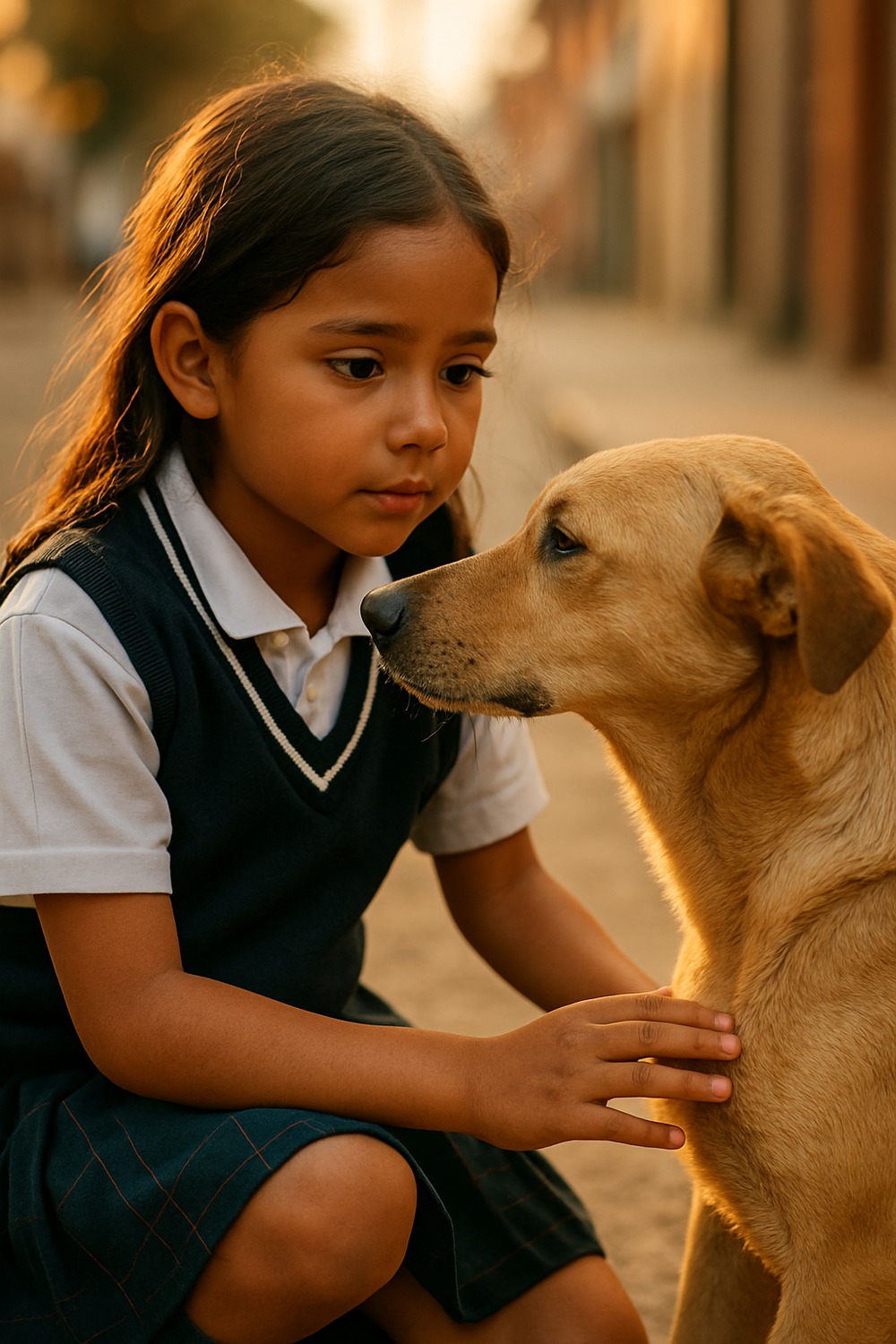
How Colombia Built Empathy Into Its Classrooms
Law 1774, passed in 2016, formally recognized animals as sentient beings under Colombian law and introduced protections against cruelty. But the classroom component — the decision to take that recognition and embed it into early childhood education — represents a different kind of ambition entirely. The Ministry of National Education worked alongside animal welfare organizations to develop modules appropriate for children between the ages of six and twelve, targeting the developmental window that psychologists have long identified as critical for moral formation. Socialization, as developmental theorists define it, is the process by which children internalize the values of the world around them — and Colombia decided to make compassion toward animals one of those values, deliberately and systematically.
The modules don’t look like philosophy class. They’re tactile, story-driven, designed to meet children where they are. A lesson might involve a picture book about a dog in the rain. It might involve a discussion about what a chicken needs to feel safe.
The point isn’t to overwhelm a six-year-old with the ethics of factory farming. It’s simpler than that — and harder. It’s asking children to recognize that something outside themselves has an interior life. That recognition, once planted, tends to grow.
Teachers in Bogotá’s public schools report that the conversations these lessons trigger often run long. Children bring in stories from their neighborhoods — a dog chained outside all winter, a bird that hit a window. The curriculum gives them a vocabulary for what they’re already observing. That’s not nothing. That’s the whole mechanism.
What the Science Says About Empathy Learned Young
Why does this matter? Because the research behind Colombia’s bet is more robust than most people realize. A landmark study published by the University of Massachusetts in 2012 followed children who had participated in humane education programs — structured instruction about animal welfare and compassion — and found that those children scored significantly higher on measures of empathy toward both animals and other humans, compared to control groups. The lead researcher, Dr. Frank Ascione, had spent decades building the case that early attachments to animals shape emotional development in ways that persist long into adulthood. His work consistently points to a window — roughly ages five to ten — during which children are most receptive to moral instruction through emotional experience rather than abstract principle.
The mechanism is cleaner than it might sound. When children are taught to identify an animal’s distress — to notice the flattened ears, the stillness, the flinching — they’re practicing a cognitive skill called perspective-taking (researchers actually call this the engine of empathy). Developmental psychologists at Harvard’s Center on the Developing Child documented in 2017 that children who practice perspective-taking in early education carry measurably stronger emotional regulation skills into adolescence. It’s the ability to step outside your own experience and model what another being might be feeling. The animal context is almost incidental. The skill transfers.
Here’s the thing about Colombia’s approach: it doesn’t treat animal empathy as a soft skill or a feel-good add-on. It’s framed as a moral competency — the same category as honesty, fairness, and responsibility. That framing matters. Children don’t just absorb information. They absorb what adults signal is worth taking seriously.
A Global Movement That Hasn’t Moved Fast Enough
Colombia didn’t arrive at this in isolation. The global conversation about animal sentience has been building for decades — most visibly in 2012, when a prominent group of neuroscientists signed the Cambridge Declaration on Consciousness, formally asserting that non-human animals possess the neurological substrates for conscious experience. That declaration didn’t create a policy. It created a pressure. The European Union had already moved in 2009 to recognize animal sentience in the Lisbon Treaty; New Zealand followed with the Animal Welfare Amendment Act in 2015. What these legislative moves shared was a focus on adult systems — farming, research, trade. None of them thought to start in a first-grade classroom.
That gap is what makes animal empathy education for children so structurally distinct. Adult policy changes behavior through enforcement. Childhood education changes behavior through formation. The difference isn’t semantic — it’s a question of durability. Studies on value formation in developmental psychology suggest that moral attitudes established before age ten are substantially more resistant to reversal than those adopted in adulthood. Colombia isn’t trying to convince people who’ve already decided how they feel about animals. It’s working on people who haven’t decided anything yet.
A country willing to bet on formation over enforcement — and accept that the payoff arrives a generation later — is doing something most legislatures simply don’t have the patience for.
Other countries are watching. Brazil has piloted similar programs in select municipalities. Uruguay has introduced humane education in teacher training. But nationwide, mandatory, early-childhood integration — that remains rare. The gap between what the science recommends and what national education systems actually implement is, as gaps in policy science tend to be, enormous.
Why Animal Empathy Education Changes More Than Animal Welfare
The most important finding in this field isn’t about animals at all. It’s about violence. Researchers at the University of Denver published a study in 2019 tracking juvenile behavior in communities where humane education had been introduced and found a statistically significant reduction in peer-on-peer aggression among participating students. The link between animal cruelty and interpersonal violence has been studied since the 1970s — the FBI formally began tracking animal abuse as a predictor of other violent crimes in 2016 — but the inverse relationship, the idea that teaching children empathy toward animals reduces their propensity toward cruelty to peers, received less attention for years. The data is now hard to ignore.
And the cause-and-effect chain is neurologically specific: children who are taught to recognize animal suffering develop stronger inhibitory control around aggressive impulses. They’re practicing, in miniature, the pause that separates an impulse from an action. That pause — what neuroscientists call executive function — is the same cognitive mechanism that prevents a child from hitting a classmate, or an adult from making a decision in rage that can’t be undone. The classroom lesson about the dog in the rain is, at a neurological level, a lesson in self-regulation. The animal is almost a teaching tool — which is either beautiful or uncomfortable, depending on how you look at it.
Colombia’s educators report something else: children who go through these modules become advocates. Not in a performative way — in the quietly persistent way of children who’ve made up their minds. They tell their parents. They argue at dinner. A seven-year-old who’s been taught to see a stray dog as a being with needs doesn’t un-see that. The curriculum isn’t planting a seed. It’s training a lens.
What Comes Next, and Why It Can’t Wait
Nine point seven million children are currently enrolled in Colombian primary schools, spread across a country of extraordinary geographic and economic diversity. Implementing a consistent national curriculum in that context isn’t an administrative task — it’s a logistical feat. Teacher training is the bottleneck. A lesson about animal empathy facilitated by an educator who treats it as a checkbox rather than a conversation doesn’t land the same way. The Colombian Ministry of Education acknowledged this publicly in 2022, committing additional resources to pedagogical training specifically for the animal welfare modules in rural and under-resourced school districts.
The stakes of getting it right extend beyond Colombia’s borders. If the program produces measurable outcomes — lower rates of animal cruelty, lower rates of peer aggression, higher scores on empathy assessments — it becomes a template. International education bodies including UNESCO have flagged social-emotional learning as a global curriculum priority through 2030. Animal empathy education for children sits squarely within that framework, but it needs the data. Colombia is, in effect, running the experiment that the rest of the world is waiting for.
In a classroom in Medellín, a boy named Sebastián — eight years old, gap-toothed, football mad — was asked during a lesson what he would do if he found an injured bird on the way to school. He thought for a long moment. “I’d be late,” he said. His teacher wrote it on the board. It stayed there all week.


How It Unfolded
- 2009 — The European Union formally recognized animal sentience in the Lisbon Treaty, marking the first major legislative acknowledgment of animals as conscious beings in international law.
- 2012 — Neuroscientists signed the Cambridge Declaration on Consciousness, asserting that non-human animals have the neurological capacity for conscious experience and reigniting global policy debate.
- 2016 — Colombia passed Law 1774, recognizing animals as sentient beings and laying the legal groundwork for animal protection to enter the national education conversation.
- 2022 — Colombia’s Ministry of Education committed expanded resources to teacher training for animal welfare modules, signaling that the curriculum was moving from pilot into national implementation.
By the Numbers
- 9.7 million children are currently enrolled in Colombian primary schools, representing the full reach of the national animal welfare curriculum (Ministry of National Education, 2023).
- Children who receive humane education before age ten are measurably more likely to retain prosocial values toward both animals and humans into adulthood, according to University of Massachusetts research published in 2012.
- The FBI began formally tracking animal cruelty as a standalone crime category in 2016, recognizing its predictive relationship to other forms of interpersonal violence.
- New Zealand’s Animal Welfare Amendment Act 2015 and the EU’s Lisbon Treaty of 2009 both recognized sentience legislatively — but neither extended that recognition into school curricula.
- A 2019 University of Denver study found statistically significant reductions in peer aggression in communities where humane education programs had been introduced in early childhood settings.
Field Notes
- In 2017, Harvard’s Center on the Developing Child documented that perspective-taking skills built in early education — including through animal-focused lessons — correlated with stronger emotional regulation in adolescence, suggesting the benefits compound over time rather than plateauing.
- Colombia’s Law 1774 doesn’t just protect animals from cruelty — it specifically defines “abandonment” as a punishable act, a legal nuance that directly connects to what children are taught in school about the responsibilities of caring for a living creature.
- Researchers studying humane education programs have consistently noted that children in rural settings, who often have more direct daily contact with animals, show faster initial engagement with empathy curricula — and greater behavioral transfer outside the classroom.
- Scientists still can’t fully explain why empathy learned through animal interaction generalizes to human relationships so reliably. The mechanism — whether it’s shared neural pathways, emotional mirroring, or something else entirely — remains an open and actively contested research question.
Frequently Asked Questions
Q: What does animal empathy education for children actually look like in a Colombian classroom?
The curriculum uses age-appropriate stories, discussions, and activities designed for children between six and twelve. A typical lesson might involve a picture book featuring an animal in distress, followed by a guided conversation about what that animal might be experiencing and what a responsible person could do. The goal isn’t to deliver a lecture on animal rights — it’s to give children a structured opportunity to practice perspective-taking using animals as the subject. The Ministry of Education developed the materials in collaboration with animal welfare organizations beginning around 2016.
Q: Does learning empathy toward animals actually make children more empathetic toward other people?
The evidence strongly suggests yes — though researchers are still working out exactly why the transfer happens. Perspective-taking, the cognitive skill at the core of empathy, appears to be domain-general: practicing it in one context strengthens the capacity across contexts. A 2012 University of Massachusetts study found that children who participated in structured humane education programs scored higher on empathy measures for both animals and humans. A 2019 University of Denver study went further, linking humane education participation to measurably lower rates of peer aggression in school settings.
Q: Isn’t teaching animal empathy just for kids who already love animals — doesn’t it miss the children who need it most?
Turns out this is the most common misconception about humane education programs, and the research largely refutes it. Children who initially show indifference or even hostility toward animals aren’t poor candidates for empathy education — they’re often the ones who show the most significant shifts. Developmental psychologists note that children who lack modeled empathy at home are more likely to respond to structured empathy instruction in school, not less. The curriculum doesn’t require a pre-existing love of animals. It creates conditions in which that recognition can form for the first time.
Editor’s Take — Sarah Blake
What strikes me about Colombia’s approach isn’t the animal welfare angle — it’s the sequencing. Every other country that’s moved on animal sentience has started with adult systems: farming laws, research regulations, trade restrictions. Colombia started with children. That’s a bet on formation over enforcement, and it’s a bet that takes a generation to pay off. The patience required to make that choice — in a political environment that rewards quick wins — is, honestly, the most radical thing about it.
For decades, the science of moral development has been telling us that the window between ages five and ten is when values take root in ways that last a lifetime. Colombia looked at that window and decided to put something specific through it: the idea that cruelty is not an option, and that a living thing — any living thing — deserves to be seen. History has a way of treating the people who ignored this kind of evidence unkindly. Every country that hasn’t made that choice is, in its silence, making a different one. The real question isn’t whether this works. The question is what it costs to keep waiting to find out.


