The Lifeguard Who Never Lost a Life — Then Vanished at Sea
Nobody planned to build a legend out of a lifeguard tower at Waimea Bay. But then, Eddie Aikau didn’t really plan things — he just went.
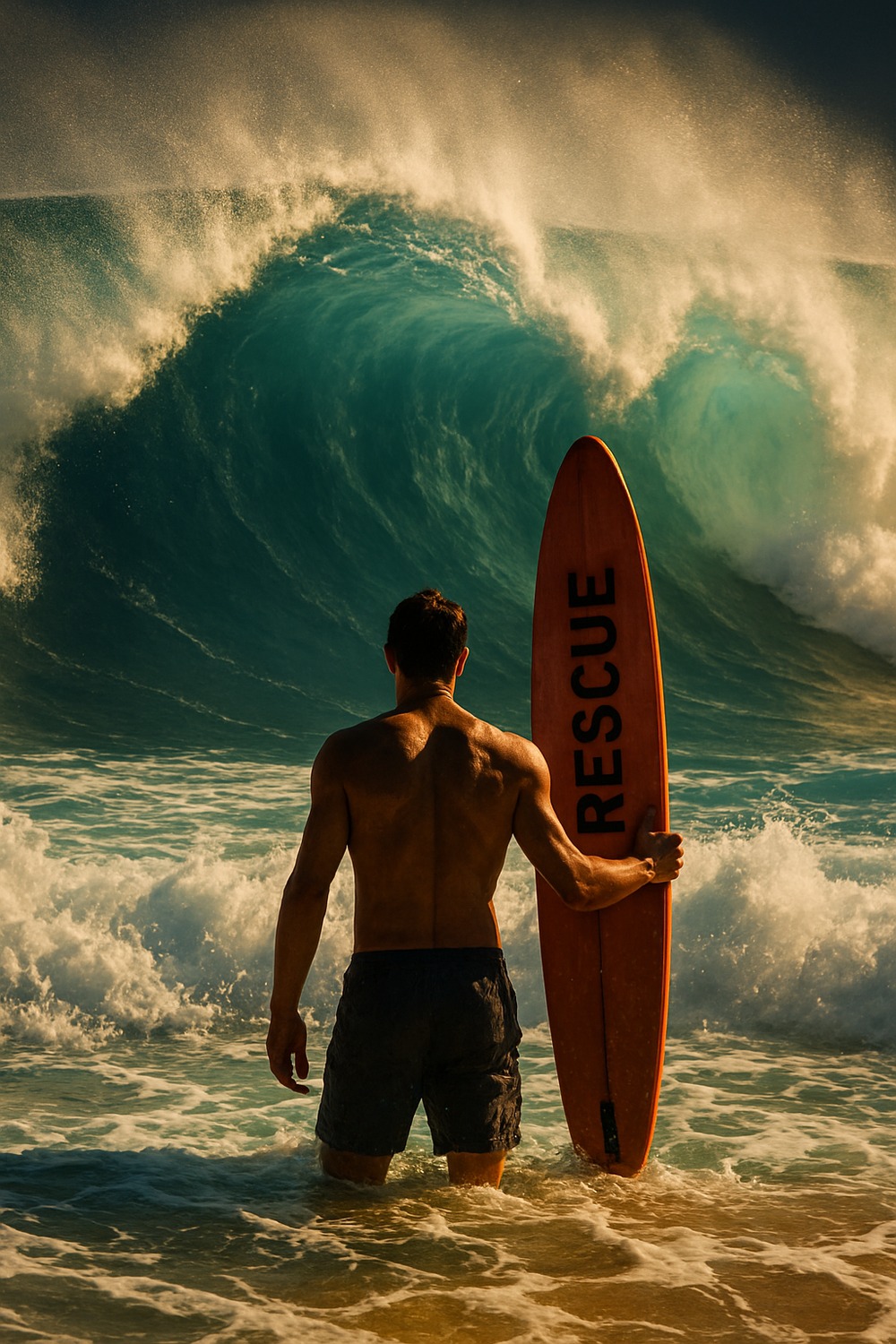
It’s 1968, North Shore of Oʻahu, and a 22-year-old Hawaiian man has just accepted what might be the most quietly terrifying job on the island: keep people alive in front of 30-foot waves. The Honolulu Department of Parks and Recreation had finally decided Waimea Bay needed a full-time lifeguard. They picked Eddie. He didn’t hesitate.
Eddie Aikau Lifeguard Legend: Born in the Water
Eddie grew up in a family where the ocean wasn’t a backdrop — it was the point. His father, Solomon Aikau, raised his kids on Hawaiian values that are harder to translate than they sound: respect for the sea, responsibility to community, courage that doesn’t announce itself before it acts. According to historians who’ve studied Eddie’s life and legacy, he started surfing Waimea Bay when most locals wouldn’t go near it. Hawaiian cultural historian Isaiah Walker has written about how Eddie embodied a tradition of ocean stewardship that existed centuries before Western lifeguarding had a name for what it was.
Which raises the obvious question — what made Waimea so dangerous that even experienced surfers kept their distance?
The bay is deceptive in a specific way. Waves that look manageable from the sand can double in size before they reach you. The seafloor drops suddenly. Currents reverse with no warning. And tourists — drawn by the sheer spectacle of it — wade in without understanding any of this. Eddie understood all of it. He’d been reading that water since he was a kid.
How He Pulled People From the Jaws of It
Over roughly a decade at Waimea, Eddie performed more than 500 documented rescues.
That’s not a typo. Five hundred times, he paddled into surf that would’ve stopped most trained lifeguards cold — reached a panicking swimmer, a fisherman caught in a rip, a tourist who’d misjudged everything — and brought them back alive. The City and County of Honolulu confirmed that during his entire tenure, not one person in his care was lost. That record has never been matched at Waimea Bay. You can find more about extraordinary ocean rescues and the people who perform them at this-amazing-world.com, where stories like Eddie’s sit alongside some of the most remarkable human feats ever documented.
What people who worked alongside him kept saying afterward was that Eddie didn’t rescue the way a trained professional was supposed to. He didn’t wait for conditions to ease. Didn’t run probabilities. He saw someone in trouble and went. The water was never too rough. The moment was never too dangerous. He simply went.
Every. Single. Time.
The Surfer the Ocean Respected Back
Here’s the thing that reframes the whole story: Eddie wasn’t just saving people from big waves. He was riding them too.
By the mid-1970s, the Eddie Aikau lifeguard legend had grown well past the beach tower. He’d become one of the most respected big-wave surfers on the planet — not because he was flashy, but because he was fearless in a way that unsettled people who watched him. In 1977, he won the Duke Kahanamoku Invitational Surfing Championship, one of the most prestigious big-wave contests ever held on the North Shore. He didn’t just compete. He dominated.
Think about what that combination actually means. The man spending his days pulling terrified strangers out of the ocean was simultaneously mastering the exact waves that terrified them. He lived in both worlds at once — the protector and the risk-taker, the calm professional and the surfer paddling into things other people photographed from a safe distance. That last detail kept me reading about him for another hour.
And then 1978 arrived.
The Voyage That Ended His Story
The Hōkūleʻa wasn’t just a boat. It was a cultural resurrection — built in 1975 to recreate ancient Polynesian navigation routes between Hawaiʻi and Tahiti using only stars, swells, and wind. No instruments. No GPS. Just knowledge that had almost been lost. The canoe had already completed one successful round trip when Eddie joined the crew in 1978 for a second voyage. For him, it wasn’t just an expedition. It was a homecoming to something much older than himself.
On March 16, just hours after leaving Honolulu Harbor, the Hōkūleʻa capsized in rough seas between Oʻahu and Molokaʻi. The crew clung to the overturned hull through the night. Miles from shore, no rescue visible, the radio damaged. And so Eddie Aikau — the man who’d spent a decade pulling people out of the ocean — made the decision that defined everything he ever was.
He strapped himself to his surfboard and paddled toward Lānaʻi. Roughly 12 miles of open ocean. Alone. At night.
He was never seen again.
What the Ocean Took That Night
Turns out, a passing ship eventually spotted the capsized Hōkūleʻa and rescued the remaining crew. They survived. A Coast Guard search launched immediately, covering vast stretches of ocean between the islands. They found his surfboard. Nothing else.
No one knows exactly what happened. Whether exhaustion pulled him under, whether the currents took him sideways, whether the open ocean between islands simply swallowed him the same way it had swallowed the people he’d spent his life fishing out of it. The investigation left more questions than answers. The ocean kept its secret, the way it always does.
What stayed behind was the weight of the choice itself. He didn’t have to go. He could have stayed on the hull with the others and waited for rescue. But that wasn’t Eddie. It had never been Eddie. For a man who’d paddled into chaos 500 times for strangers, paddling for his own crew wasn’t a decision — it wasn’t even a question worth asking. Of course he went.
By the Numbers
- 500+ documented rescues at Waimea Bay between 1968 and 1978, with zero fatalities recorded under Eddie’s watch — confirmed by the City and County of Honolulu.
- The Eddie Aikau Big Wave Invitational has run only 10 times since 1984. It doesn’t run on a schedule. It runs when waves hit at least 20 feet measured from the back — a threshold that sometimes takes years to appear.
- Waimea Bay faces during large swells: 25 to 40 feet.
- The Hōkūleʻa capsized approximately 12 miles off Molokaʻi — the exact distance Eddie tried to paddle alone, through open ocean, in the dark, to find help for his crew.
Field Notes
- “Eddie would go” — now a Hawaiian cultural touchstone — started as something surfers said to each other on the North Shore when waves got too big and everyone was stalling. It meant: you know what Eddie would do. It became something larger than surfing.
- The contest bearing his name has no fixed schedule. Organizers wait — sometimes for years — until the ocean cooperates. The 2023 event was only the tenth in nearly four decades of waiting.
- His brothers Clyde and Gerald, both accomplished watermen, have stayed central to the contest and to keeping his legacy grounded in what he actually stood for — not just the mythology, but the daily, unglamorous practice of showing up.
Why the Eddie Aikau Story Still Matters Today
The Eddie Aikau lifeguard legend isn’t really a story about bravery as a personality trait. It’s a story about what happens when someone’s values get so deep into them that they stop functioning as choices. Eddie didn’t decide to be brave each time he paddled out — bravery had become his baseline, built through years of showing up, going out, and bringing people home. Cultural anthropologists studying Hawaiian identity point to Eddie as a living bridge between ancient Polynesian ocean culture and something that looks, from the outside, like modern heroism. He didn’t see it that way. He thought of himself as responsible.
That distinction is easy to gloss over and worth not glossing over. Heroism can look like a single moment — adrenaline, a snap decision, one remarkable afternoon. What Eddie built was different. It was a sustained, daily practice of putting other people’s lives ahead of his own comfort, his own fear, his own survival instinct. Five hundred times in a decade. Then once more, in the dark, alone, on a surfboard, in open ocean.
Not because someone was watching.
Because someone needed help.
The ocean never gave Eddie back. But it never really took him, either. He lives in every swell that qualifies for his contest. In every surfer who hesitates at the lineup and then paddles anyway. In four words that carry an entire philosophy forward: Eddie would go. If stories like this are the kind that keep you up past midnight, there’s more waiting at this-amazing-world.com — and the next one is stranger than this one.