


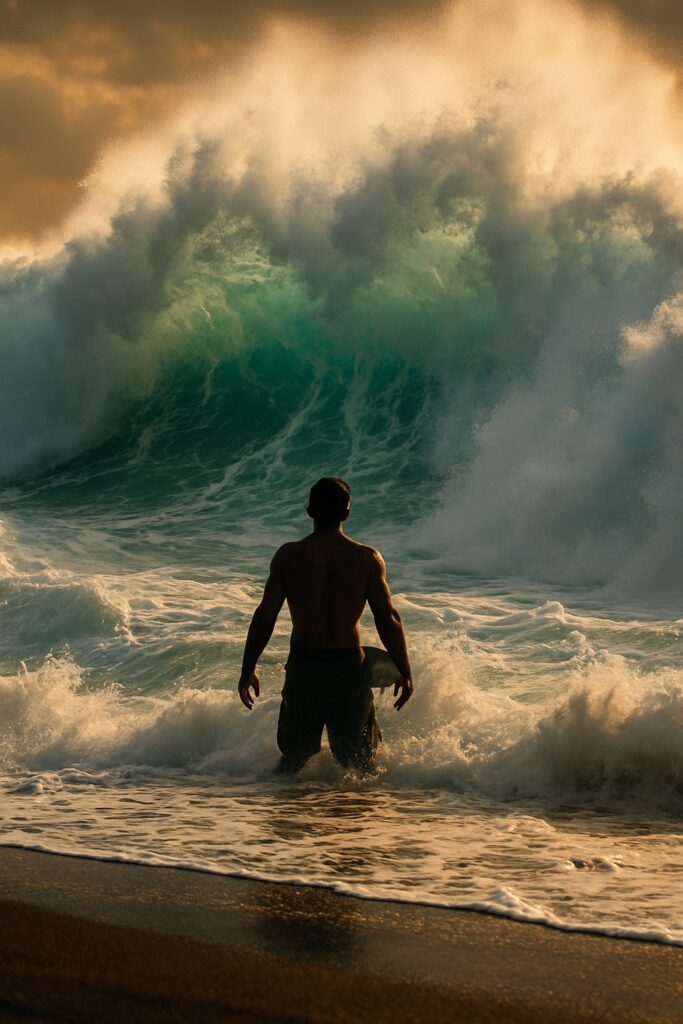
Nobody drowned at Waimea Bay for an entire decade. That fact alone should stop you cold, because if you’ve ever seen Waimea in winter, you understand how genuinely impossible that sounds.
In 1968, Waimea Bay wasn’t complicated — it was just dangerous. Riptides that appeared without warning, rogue sets that closed out the whole bay at once, tourists who stepped off the sand and into something they couldn’t read. The North Shore of Oʻahu had already claimed lives. Waimea was where it happened most. Then a young Hawaiian man named Eddie Aikau showed up for his first shift, and the math changed completely.
Eddie Aikau Lifeguard: Why He Chose the Danger
The City and County of Honolulu didn’t fully know what they were getting when they hired Eddie Aikau as Oʻahu’s first official lifeguard at Waimea Bay. According to historian Isaiah Walker, whose research on Hawaiian watermen is documented in detail on Wikipedia’s Eddie Aikau entry, Eddie’s relationship with the ocean wasn’t built in a training program. It was built in the water itself, since childhood, in the kind of immersion that produces something closer to fluency than skill. He didn’t just know how to swim. He knew how the ocean thought.
Which sounds mystical, but it wasn’t. It was mechanical. He’d watched Waimea long enough to know where a rip would pull a panicked swimmer in the next thirty seconds. He knew which waves would close out and which would give you a seam. He didn’t react to what was happening. He was already responding to what was about to happen.
That’s a completely different thing.
What 500 Rescues Actually Looks Like in Practice
Five hundred rescues across a decade sounds like a statistic until you start picturing them individually. A fisherman caught in a rip. A surfer held down by a wave twice the size of a house. A tourist who thought they could handle it and was wrong within sixty seconds of entering the water. Each one required Eddie to enter conditions that most trained ocean professionals would’ve stopped to assess from the shore first.
Witnesses described the same thing, consistently, across years. According to accounts gathered by this-amazing-world.com: he was already moving before anyone else had finished processing that something was wrong.
That last detail kept me reading for another hour.
Because that’s not instinct. You can’t train instinct. What you can build — slowly, through years of small failures before the stakes get high — is a mental map of a body of water that rewrites itself every single day. Eddie didn’t have a protocol. He had presence. Those aren’t the same thing, and most people with a protocol never get the second one.
The Waves at Waimea Don’t Forgive Anyone Easily
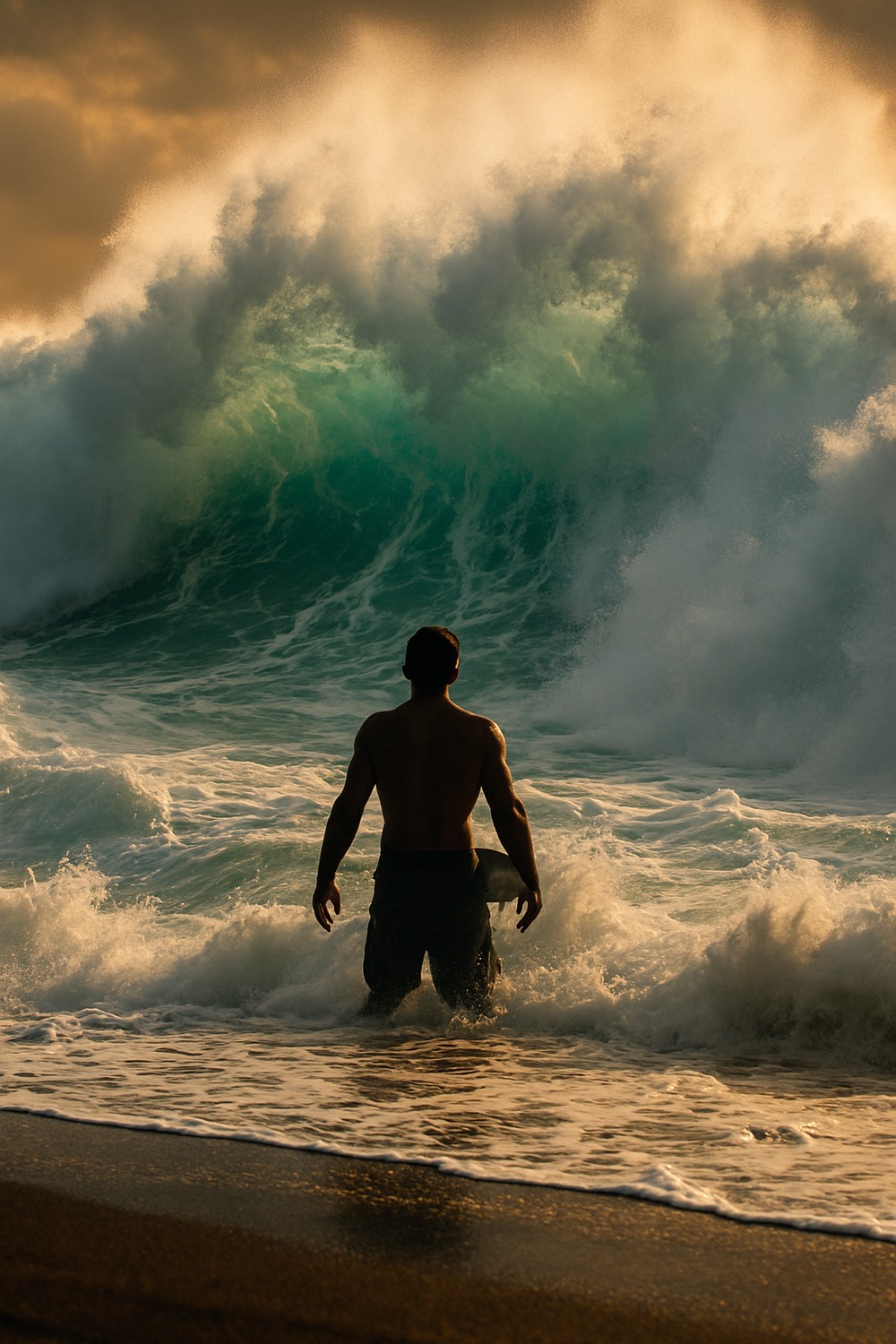
Waimea Bay sits on the North Shore of Oʻahu, and winter turns it into something that feels barely compatible with human activity. Swells generated thousands of miles away in the North Pacific arrive concentrated, fast, and unforgiving. Thirty-foot faces aren’t exceptional — they’re just Tuesday in January. The Eddie Aikau lifeguard era began precisely when big-wave surfing was drawing international attention to the bay, which meant more bodies in the water, more variables, more chances for something to go fatally sideways.
Nothing went fatally sideways. Not once. Not in ten years.
Veteran surfers of that era would sit on the sand and study incoming sets for several minutes before paddling out — reading the interval, the rhythm, the exact spot where the worst waves were breaking. Eddie would already be in the water by the time they finished watching.

The Surfer Side of Eddie That the World Recognized
Here’s the thing most people miss — Eddie wasn’t a lifeguard who happened to surf on his days off. He was one of the most respected big-wave surfers of his generation, full stop. In 1977, he won the Duke Kahanamoku Invitational Surfing Championship, one of the most prestigious contests the surf world had. That win wasn’t just athletic validation. It was the ocean community formally saying what people at Waimea Bay had quietly understood for years: this man belonged in that water in a way that was genuinely unusual.
Winning that contest meant he could’ve pivoted. Competition, sponsorships, the surf industry that was starting to pay real money. He kept showing up to the lifeguard station instead.
The station wasn’t a fallback. It was the whole point.
By the Numbers
- 500+ documented rescues at Waimea Bay between 1968 and 1978 — zero fatalities recorded during his tenure. No known parallel exists in big-wave lifeguarding history.
- Waimea in winter: 20 to 30-foot faces on a regular swell, occasionally bigger, which is exactly why the City and County of Honolulu stationed a full-time lifeguard there for the first time in 1968.
- The Eddie Aikau Big Wave Invitational requires a minimum 20-foot wave height measured from the back — strict enough that the contest has run fewer than ten times across four decades.
- He was 31 when he disappeared.
- Younger than most lifeguards are when they’re considered veterans of difficult surf conditions.

Field Notes
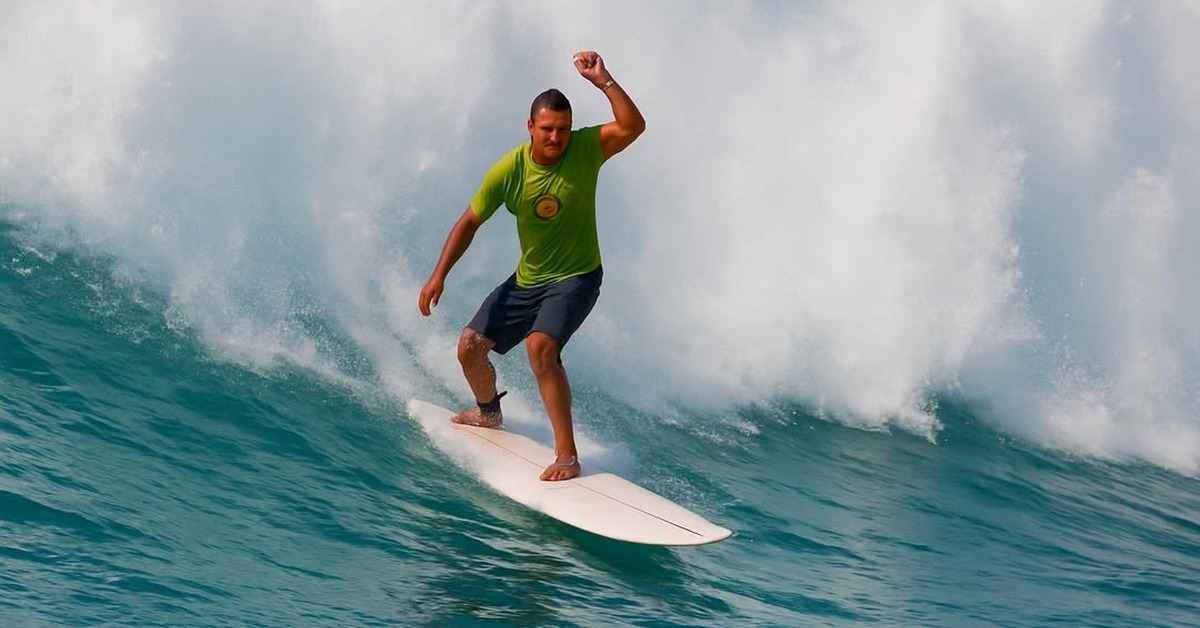
- Eddie reportedly paddled into conditions that caused other trained ocean professionals at neighboring beaches to wait for backup — they described him as operating by a completely different internal threshold for what was survivable.
- The Hōkūleʻa, the traditional Hawaiian voyaging canoe that capsized in 1978, wasn’t just a vessel. It had been built specifically to revive ancient Polynesian navigation techniques. Eddie was part of a cultural revival when he disappeared — not just an ocean adventure.
- “Eddie would go.” Surfers who never saw him paddle out use this phrase today, meaning conditions are extreme enough that only someone with his particular relationship to danger would attempt it.
Why Eddie Aikau Still Matters Beyond the Legend
The story of the Eddie Aikau lifeguard era isn’t a heroism story in the way movies use that word. It’s about what happens when someone spends a lifetime building a genuine relationship with something dangerous — and then chooses to use that relationship for other people. He didn’t conquer Waimea. He didn’t tame it. He understood it well enough to move through its worst moments with a clarity that saved hundreds of lives, and that understanding came from immersion, not certification.
Most of us learn to avoid the things that frighten us. Eddie moved toward them, repeatedly, and the result was that nobody died on his watch for a decade. Zero fatalities. That’s not a small accomplishment. That’s a life’s work compressed into a single number.
And then the ocean took him anyway — not at Waimea, not during a rescue, but on open water at night, miles from shore, paddling a surfboard toward help that he never reached. He was doing the same thing he’d always done. Moving toward the problem. His body was never found. The search covered hundreds of miles of Pacific Ocean and came back empty.
That emptiness is part of the story now.
The contest held in his name only runs when conditions are massive enough that most surfers wouldn’t attempt it on their best day. It’s been held fewer than ten times since 1984. And that rarity is the tribute — not a parade or a statue or a fixed date on the calendar. A contest that requires the ocean itself to be worthy of the name. Some years it just isn’t. In those years, they wait. The waiting is also the tribute.
Eddie Aikau saved hundreds of lives on the most dangerous beach in Hawaii, won the sport’s most respected big-wave contest, and disappeared trying to save a crew he loved — all before he turned 32. The ocean didn’t beat him by being brutal. It beat him by being the thing he trusted most. That’s the kind of story that doesn’t leave you. More at this-amazing-world.com — and the next one is even stranger.


