



Here’s the thing about Thomas Edison’s 1903 prediction: he made it without antibiotics, without imaging technology, without a single tool that would have made it actionable. The future of preventive medicine, he declared, belongs to the doctor who teaches patients to care for their bodies — not the one who treats them after they’ve collapsed. A century passed. The tools finally exist. The system still hasn’t caught up.
120 years later, his words are reassembling themselves in research labs, on wrists, in gut microbiome studies, and in the offices of physicians who are finally being paid to keep people healthy instead of waiting for them to get sick. The question isn’t whether Edison was right. It’s why it took this long.


The Ancient Idea Medicine Keeps Rediscovering
Around 400 BC, a Greek physician on the island of Cos wrote something that should have settled this debate permanently. Hippocrates, the figure Western medicine calls its founding father, argued that food, movement, and environment were the primary tools of healing — not substances administered after collapse. “Let food be thy medicine and medicine be thy food” is the phrase attributed to him, though the historical record is messier than the bumper sticker. What isn’t disputed is the overall arc of his philosophy: understand the conditions that produce disease, and change them.
The Hippocratic corpus — roughly 60 medical texts produced by his school around 400–370 BC — devoted enormous attention to diet, air quality, water sources, and seasonal change as determinants of health. Population-level thinking, 2,400 years before the term public health existed.
Then something happened. Medicine industrialized. Pharmaceutical development in the 20th century produced genuine miracles — penicillin, insulin, vaccines that eliminated smallpox. Nobody is arguing those weren’t transformative. But the infrastructure built around them was optimized for acute intervention, not long-term prevention. You wait until the body signals distress. Then you respond. It’s a model that works beautifully for infections and injuries. For chronic disease, it’s like mopping the floor while the tap runs.
Edison understood this intuitively. He wasn’t a physician. He was a systems thinker. And the system he saw, even in 1903, was already oriented in the wrong direction.
What Wearables and Data Are Actually Changing
Why does this matter now? Because continuous monitoring at population scale has finally made the invisible visible.
For most of human history, the only data point available to a physician was the patient sitting across from them — flushed, pale, or clutching their chest. Annual blood panels helped, but they were snapshots, not films. The Apple Heart Study, conducted in partnership with Stanford University between 2017 and 2019, enrolled over 400,000 participants and used Apple Watch sensors to detect irregular heart rhythms — catching atrial fibrillation in people who had no idea anything was wrong. That’s not treatment. That’s surveillance in the best possible sense. Continuous glucose monitors, now worn not just by diabetics but by researchers trying to understand how different foods affect blood sugar in real time, are transforming what it means to know your own body — the same way understanding the rhythms of a complex natural system, like the layered ecosystem sustained by a single ancient oak, changes how you protect it.
The global wearable medical device market was valued at approximately $27.8 billion in 2023 and is projected to reach $195.6 billion by 2032, according to Fortune Business Insights. Each device generates thousands of data points per day. The challenge is no longer collection — it’s interpretation. Machine learning models trained on millions of health trajectories are beginning to identify patterns that precede disease onset by months or years. A 2022 study from the University of California San Francisco found that changes in resting heart rate variability detected by wearables could signal the onset of COVID-19 up to two days before symptoms appeared. The same principle is now being applied to cardiovascular events, metabolic shifts, and early neurological changes.
None of this is magic. It’s pattern recognition at a scale humans alone couldn’t manage. But it’s beginning to make Edison’s prediction look less like a vision and more like a calendar entry someone forgot to check.
The Gut, the Brain, and the New Frontier
If wearables represent the external revolution in preventive medicine, the gut microbiome represents the internal one. Roughly 38 trillion microbial cells live in the human gastrointestinal tract — approximately equal to the number of human cells in the entire body. For most of medical history, these organisms were considered largely irrelevant bystanders. That view has collapsed entirely.
Research published in Nature in 2022 identified specific gut bacterial compositions associated with reduced risk of type 2 diabetes, cardiovascular disease, and several inflammatory conditions. The Weizmann Institute of Science in Israel has been particularly active in this space. Their 2015 Personalized Nutrition Project demonstrated that the same food — identical in every measurable nutritional sense — could spike blood sugar dramatically in one person and barely register in another, entirely based on differences in gut microbiome composition. That single finding shattered the idea of universal dietary guidelines. When the evidence lands that cleanly, dismissing it stops being scientific skepticism and starts being something else.
Turns out, the future of preventive medicine may not be about telling everyone to eat less sugar. It may be about telling each specific person what their specific microbial ecosystem needs to function optimally. That’s a fundamentally different model from public health messaging — personalized, predictive, biological — and it requires understanding each person as a unique system rather than an average. Type 2 diabetes affects roughly 537 million adults globally as of 2021, according to the International Diabetes Federation. If microbiome-informed dietary interventions could reduce even 10% of new cases annually, the downstream effect on healthcare costs and human suffering would be measurable in trillions.
What researchers are learning is that the gut doesn’t operate in isolation. The gut-brain axis — the bidirectional communication network between intestinal microbes and the central nervous system (researchers actually call this the “second brain” pathway) — means that what you eat doesn’t just affect your metabolic health. It shapes mood, cognition, and stress response. Prevention, it turns out, isn’t just cardiac. It’s neurological.
The Future of Preventive Medicine Is Now Economic
The most powerful argument for the future of preventive medicine has always been the one no one wanted to make: it’s cheaper. Dramatically, undeniably cheaper. A 2019 study by the Milken Institute calculated that preventable chronic diseases cost the United States economy $3.7 trillion annually — including both direct healthcare costs and lost productivity. That number exceeds the GDP of every country on Earth except the United States, China, Japan, and Germany.
Cardiovascular disease alone accounts for roughly $363 billion in annual U.S. healthcare costs, according to the American Heart Association’s 2023 Heart Disease and Stroke Statistics update. Yet investment in prevention consistently represents less than 5% of total U.S. healthcare spending. The math has been this obvious for decades. The infrastructure just wasn’t built to respond to it.
And that’s beginning to shift — driven less by ideology than by cost calculations that insurance companies and large healthcare systems can no longer ignore. Kaiser Permanente began investing heavily in preventive care infrastructure in the early 2000s and by 2015 had documented significantly lower hospitalization rates among its members compared to national averages. The Veterans Health Administration launched a comprehensive Whole Health model in 2011, reorienting care around lifestyle, purpose, and community rather than symptom management. Both programs show the same result: healthier patients who use fewer expensive acute services. The economics of prevention aren’t just good medicine. They’re becoming good business.
Physicians are adapting, too — though not as fast as the evidence demands. Lifestyle medicine, a board-certified medical specialty in the U.S. since 2017, focuses explicitly on the behavioral causes of chronic disease. Over 6,000 board-certified practitioners now hold that title in the United States. Edison’s doctor of the future has a job title.
What Has to Change Before This Becomes Normal
The gap between what’s possible and what’s practiced remains wide. In 2023, the average primary care appointment in the United States lasted 18 minutes, according to data from the National Center for Health Statistics. That’s not enough time to take a meaningful dietary history, assess sleep quality, review wearable data trends, and adjust a prevention plan.
Nobody is building the clinical infrastructure fast enough.
Training programs, reimbursement structures, and appointment models were all built for reactive care. Rebuilding them for preventive care requires policy change, not just scientific enthusiasm. There’s also a health equity dimension that can’t be avoided. Wearable monitors, microbiome testing kits, and personalized nutrition apps cost money. Continuous glucose monitors without insurance coverage can run $100–$250 per month. If the future of preventive medicine is accessible only to people who can afford premium wellness technology, it risks deepening the health disparities it claims to solve. A 2021 analysis in The Lancet found that life expectancy gaps between the highest and lowest income quintiles in the United States had widened to 14.6 years for men and 10.1 years for women — a gap driven almost entirely by the differential burden of preventable chronic disease. Prevention that only prevents for the wealthy isn’t prevention. It’s a different kind of treatment.
Researchers who are most optimistic about this aren’t naive about the obstacles — they’re specific about solutions: community health workers trained in lifestyle intervention, school-based nutrition programs with clinical follow-up, mobile health platforms that work on low-cost smartphones, and insurance mandates that cover preventive counseling at the same rate as acute care. Several of these are already running, at scale, in Finland, Japan, and Singapore — with measurable outcomes in reduced cardiovascular mortality and diabetes incidence.

How It Unfolded
- 400 BC — Hippocrates and his school produce the first systematic written framework linking diet, environment, and lifestyle to disease prevention, recorded in the Hippocratic corpus.
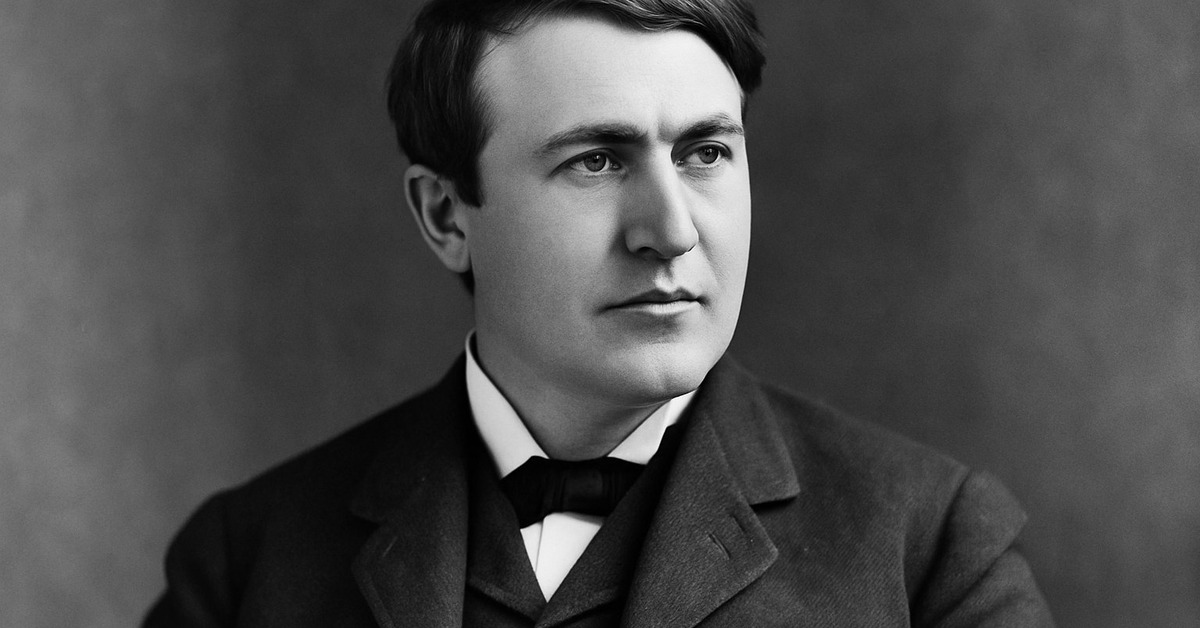
- 1903 — Thomas Edison publicly predicts that the physician of the future will focus on diet and disease prevention rather than medication, a statement largely dismissed by the contemporary medical establishment.
- 2015 — The Weizmann Institute’s Personalized Nutrition Project publishes findings in Cell demonstrating that identical foods produce radically different blood glucose responses in different individuals, fundamentally challenging universal dietary guidelines.
- 2023 — Lifestyle medicine becomes a growing board-certified specialty in the U.S., with over 6,000 practitioners, and wearable health monitoring becomes a multi-billion-dollar global industry reshaping real-time disease detection.
By the Numbers
- 74% of all deaths worldwide are caused by chronic noncommunicable diseases, most of them largely preventable (WHO, 2023).
- 537 million adults globally were living with type 2 diabetes in 2021 — a figure projected to reach 783 million by 2045 (International Diabetes Federation).
- $3.7 trillion — the annual economic cost of preventable chronic diseases in the United States alone (Milken Institute, 2019).
- 400,000+ participants enrolled in the Apple Heart Study with Stanford University between 2017 and 2019, making it one of the largest cardiovascular screening studies in history.
- Less than 5% of total U.S. healthcare spending is currently directed toward prevention, despite chronic disease accounting for 90% of the nation’s annual $4.1 trillion in healthcare expenditure (CDC, 2023).
Field Notes
- Finland’s landmark North Karelia Project, launched in 1972 in response to the country’s catastrophically high cardiovascular mortality rates, reduced coronary heart disease deaths in the region by over 80% within 30 years through sustained community-based prevention — one of the most successful public health interventions ever documented.
- Weighing roughly 1–2 kilograms — about the same as the human brain — the gut microbiome contains more than 1,000 distinct bacterial species, most of which weren’t characterized until the Human Microbiome Project concluded in 2012.
- Japan’s universal health check program, introduced nationally in 2008 and targeting metabolic syndrome through mandatory waist measurement and lifestyle counseling, helped make Japan one of the few developed nations where adult obesity rates have remained below 5%.
- Researchers still can’t fully explain why some populations who adopt near-identical lifestyle interventions show dramatically different rates of disease prevention — individual genetic variation, microbiome composition, and psychosocial factors all appear to interact in ways that no current model can reliably predict.
Frequently Asked Questions
Q: What exactly does the future of preventive medicine look like in practice?
Continuous biometric monitoring, personalized nutrition informed by microbiome analysis, lifestyle interventions addressing sleep and stress, and AI-assisted early detection tools — that’s the practical shape of it. Rather than waiting for a patient to present with symptoms, the goal is identifying risk trajectories months or years in advance. Some of this is already available: wearable heart monitors, continuous glucose tracking, and genetic risk assessments are all clinically accessible in 2024.
Q: Can lifestyle changes really prevent serious chronic diseases, or is genetics the dominant factor?
Genetics matter, but they’re far from the whole story. According to a landmark 2018 study published in JAMA Cardiology, individuals with high genetic risk for cardiovascular disease who maintained a healthy lifestyle reduced their risk of a cardiac event by nearly 50% compared to high-risk individuals with poor lifestyle habits. For type 2 diabetes, the Diabetes Prevention Program — a major U.S. clinical trial from the early 2000s — found that modest lifestyle changes reduced new diagnoses by 58%, outperforming metformin drug therapy. The genes load the gun; lifestyle largely decides whether it fires.
Q: Isn’t preventive medicine just another term for wellness culture — expensive and inaccessible to most people?
This is the most important misconception to correct. Evidence-based preventive medicine doesn’t require a $300 smartwatch or a subscription to a microbiome testing service. Regular physical activity, adequate sleep, whole-food dietary patterns, tobacco cessation, and stress management have essentially zero financial cost — and these remain the most powerful preventive interventions the research supports. The wellness industry has colonized the language of prevention, but the clinical evidence behind it doesn’t require premium products. What it requires is time, access to reliable information, and healthcare systems willing to support sustained behavioral change.
Editor’s Take — Sarah Blake
What strikes me about Edison’s quote isn’t that he was ahead of his time. It’s that the people who could have acted on it — insurance companies, hospital systems, medical schools — had every financial incentive not to. Prevention doesn’t generate repeat customers. The tragedy isn’t that we ignored a genius. It’s that the system was perfectly rational in doing so. What’s changed isn’t the science. It’s that chronic disease has become so expensive that prevention is finally the more profitable option. That’s a grim reason to get something right.
Edison’s 1903 prediction wasn’t really about medicine. It was about a civilization’s willingness to treat human beings as systems worth maintaining rather than machines worth repairing after they break. The science, finally, is catching up to that idea — in microbiome labs in Rehovot, on the wrists of 400,000 study participants in California, in a community health clinic in Helsinki where a nurse asks a 52-year-old man about his sleep before she asks about his chest pain. The question that remains is whether the systems surrounding that science — the economics, the policy, the infrastructure — can move fast enough to matter.


