Elizabeth Freeman: The Lawsuit That Ended Slavery in Massachusetts
Elizabeth Freeman didn’t petition. She didn’t protest. She sued — and the Elizabeth Freeman lawsuit that followed in 1781 would dismantle slavery in Massachusetts not through legislation, not through war, but through a single constitutional question a jury couldn’t answer the wrong way.
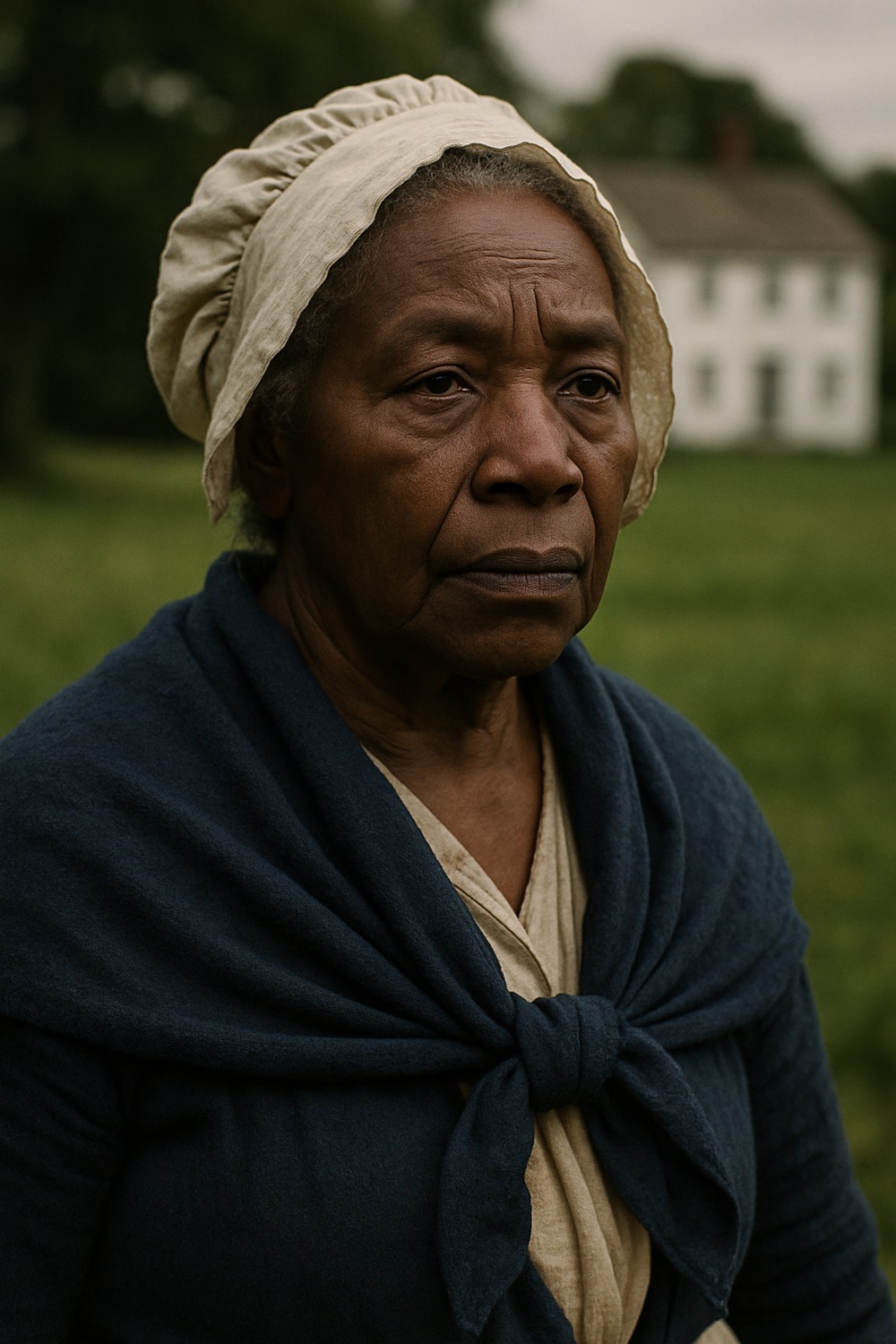
A Life Forged in Injustice
Freeman was born around 1742, most likely in Claverack, New York, the daughter of enslaved African parents. As a small child, she passed into the ownership of John Ashley, a prominent Sheffield landowner and political figure, and spent decades inside his household absorbing the specific cruelties of enslaved life in colonial New England — a region whose reputation for quiet Puritan virtue had always concealed a serious appetite for human bondage. She wasn’t passive about any of it. Contemporary accounts describe a woman of fierce personal dignity.
One story, frequently cited, tells of Freeman stepping between her sister and a blow from Ashley’s wife, raising her own arm to take the strike. She carried the scar for the rest of her life and displayed it openly, deliberately. Neighbors said she wore it as evidence — testimony inscribed in flesh.
Massachusetts in Freeman’s time was a place of jarring contradictions. The same men who penned outraged pamphlets about British tyranny kept enslaved people in their homes and fields. Revolutionary ideas about liberty and natural rights had been circulating for years, and they couldn’t coexist with slavery indefinitely — though plenty of people were trying their best to make that work. When John Adams and his colleagues drafted the Massachusetts Constitution of 1780, its preamble declared all men born free and equal, possessed of natural, essential, and unalienable rights. Whether the framers intended that language to reach enslaved Black people remains contested among historians. Freeman decided to find out — not through petition, not through protest, but through the courts themselves, using the law as a lever against the very system that had imprisoned her.
The Case That Changed Everything
Why does this matter? Because what Freeman did next wasn’t instinct — it was strategy, and the distinction is everything.
She sought out Theodore Sedgwick, a young Sheffield attorney with abolitionist sympathies and political ambitions that would eventually carry him to the United States Senate and the speakership of the House of Representatives. Convinced by both principle and the compelling legal logic she presented, Sedgwick takes the case. Accounts of their first meeting vary in their details, but the essential moment holds: Freeman walks to Sedgwick’s door and asks him, with quiet directness, whether the new constitution means she is free. Joining Freeman was another enslaved man named Brom, whose identity and personal history remain frustratingly thin in the historical record — a silence that says something uncomfortable about whose stories were considered worth preserving. Together, Brom and Bett filed suit against John Ashley in the Berkshire County Court of Common Pleas in the spring of 1781.
Sedgwick’s argument was elegant in its simplicity and radical in its constitutional reach. If Massachusetts declared all men born free and equal, then slavery was flatly incompatible with the state’s foundational law. Ashley’s legal team countered that the constitutional language was never intended to cover enslaved people and that property rights in human beings had deep roots in common law. The jury in Great Barrington deliberated that August and returned a verdict that stunned the colony. Brom and Bett were free. John Ashley owed thirty shillings in damages.
It wasn’t an anomaly. It was a crack in a dam.
Ripples Across the Commonwealth
Historians are careful to note that the Brom and Bett ruling didn’t abolish slavery in Massachusetts by itself — but it lit a constitutional fuse that nobody could extinguish. The following year, a closely related case, Commonwealth v. Jennison, reached the Massachusetts Supreme Judicial Court. Chief Justice William Cushing cited the same constitutional language in ruling that slavery was incompatible with Massachusetts law. Together, the two decisions made the institution legally indefensible within the state.
No sweeping legislative act announced abolition. Slavery simply collapsed under accumulated legal pressure, case by case, courtroom by courtroom, until it was effectively gone by the end of the decade. Here’s the thing: Freeman hadn’t broken the law. She’d read it more carefully than the men who wrote it. She had seen the door the constitution left ajar — and pushed it open with both hands.
The legal architecture she helped build deserves to be called what it was: a dismantling from the inside (historians actually call this “constitutional abolitionism”), achieved without a single vote in a legislature.
A Legacy Written in Precedent
And yet, what followed her victory is its own kind of story. After winning her freedom, Freeman chose to work for wages in the Sedgwick household — a decision that reflected both her genuine ties to the family and the hard practical realities facing Black women in post-revolutionary New England. She built a reputation across the Berkshires as a skilled nurse and midwife.
When she died in 1829, she was buried in the Sedgwick family plot in Stockbridge, Massachusetts. Her gravestone inscription, believed to have been written by her granddaughter, reads in part: “She never suffered wrong to escape reproof.” Questions remain about how directly her case shaped abolition efforts in other states, and Brom’s full story is almost certainly lost to history — these are the silences that haunt the archive, and anyone who spends time with it.
History has a way of treating the people who ignored this kind of evidence unkindly — and the framers who assumed their words wouldn’t be taken literally by the people those words most concerned were the first to learn that lesson.
How It Unfolded
- 1742 — Elizabeth Freeman born in Claverack, New York, to enslaved African parents; soon passed into ownership of John Ashley of Sheffield, Massachusetts
- 1780 — Massachusetts Constitution ratified, with preamble declaring all men “born free and equal” — language that Freeman hears and refuses to set aside
- 1781 — Brom and Bett v. Ashley filed in Berkshire County Court of Common Pleas; jury rules in Freeman’s favor, awarding freedom and thirty shillings in damages against Ashley
- 1783 — Commonwealth v. Jennison decided by the Massachusetts Supreme Judicial Court; Chief Justice Cushing cites the same constitutional language, effectively ending slavery statewide
By the Numbers
- 1742 — approximate birth year of Elizabeth Freeman
- 1780 — year the Massachusetts Constitution was ratified, containing the language Freeman would use as the basis for her suit
- 1781 — year the Brom and Bett case was decided in Great Barrington
- 30 shillings — damages awarded to Brom and Bett against John Ashley
- 1783 — year Commonwealth v. Jennison extended the ruling’s reach across Massachusetts
- 1829 — year of Freeman’s death; she was buried in the Sedgwick family plot in Stockbridge
Field Notes
- Freeman was known locally as “Mum Bett” — a name she later discarded after winning her freedom, choosing “Elizabeth Freeman” as an act of self-definition
- Theodore Sedgwick went on to serve as Speaker of the U.S. House of Representatives and as a Justice of the Massachusetts Supreme Judicial Court
- The Brom and Bett v. Ashley case is often studied alongside Commonwealth v. Jennison as a paired legal landmark
- Freeman’s portrait, painted around 1811, is one of the earliest known portraits of a free Black woman in America
- For more on figures who changed history through law rather than legislation, see this-amazing-world.com
Frequently Asked Questions
What was the Elizabeth Freeman lawsuit about?
Freeman, an enslaved woman in Sheffield, Massachusetts, sued her owner John Ashley in 1781 on the grounds that the Massachusetts Constitution’s declaration that “all men are born free and equal” made slavery illegal within the state. The jury agreed.
Did the case immediately end slavery in Massachusetts?
Not by itself. The ruling in Brom and Bett v. Ashley was followed the next year by Commonwealth v. Jennison, in which the state’s Supreme Judicial Court reached the same constitutional conclusion. Together, the two cases made slavery legally untenable in Massachusetts — though the process was gradual rather than immediate.
Who was Brom?
Brom was another enslaved man owned by John Ashley who joined Freeman’s lawsuit. Beyond that, the historical record preserves almost nothing about him — a gap that reflects whose lives were considered worth documenting at the time.
Where is Elizabeth Freeman buried?
Freeman is buried in the Sedgwick family plot in Stockbridge, Massachusetts, alongside the family she worked for after winning her freedom — an unusual arrangement that speaks to the complicated bonds of the era.
Why is Freeman’s case still studied today?
Because it demonstrated that constitutional language could be used as a direct legal weapon against slavery — a strategy that would echo through American legal history for the next eighty years, culminating in the Civil War amendments.
Editor’s Take — Sarah Blake
What strikes me, returning to this case, is not the verdict — it’s the walk to Sedgwick’s door. Freeman had no guarantee she’d be heard, no precedent to point to, no legal identity the court was obliged to recognize. She went anyway. The Massachusetts Constitution was written by men who almost certainly didn’t intend it to free her. That it did — because she refused to let ambiguous language stay ambiguous — may be the sharpest demonstration in American history of what it means to hold a document to its own word.
What survives, though, is extraordinary. A woman with no formal education, no political standing, and no legal personhood under the system that held her heard a promise buried inside her oppressors’ own words — and refused to let them forget it. Freeman didn’t wait for freedom to be granted. She walked into a lawyer’s office and demanded that the law mean exactly what it said. In doing so, she exposed the central contradiction of the American experiment with a precision that no pamphlet, no speech, and no political debate had yet managed. She didn’t argue. She didn’t petition. She sued. And the commonwealth of Massachusetts was never quite the same again.