


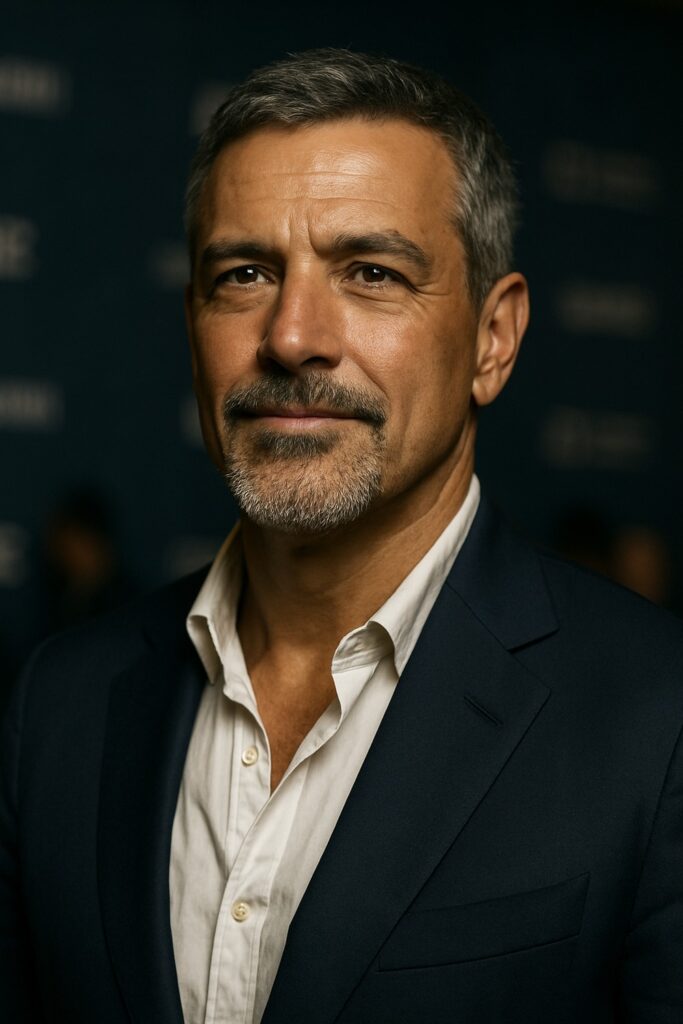
ALS doesn’t negotiate. It doesn’t respond to wealth, platform, or the size of someone’s audience — and Eric Dane knew that when he made the decision most people in his position don’t make. The Eric Dane ALS death legacy starts there: not with a press release, not with a foundation announcement, but with a 53-year-old man choosing transparency over the privacy he could have kept, at a cost the disease was already beginning to collect.
Eric Dane — the actor who made Dr. Mark “McSteamy” Sloan one of television’s most recognizable presences across nearly a decade on Grey’s Anatomy — died after a battle with amyotrophic lateral sclerosis. He revealed his diagnosis in April 2025. He was gone months later. His wife Rebecca Gayheart and their two daughters were beside him. What he did in between those two moments is a story about science, advocacy, and the particular power of a famous face refusing to look away.

The Disease That Took Eric Dane: What ALS Actually Does
Amyotrophic lateral sclerosis — known in the United States as Lou Gehrig’s disease after the Yankees first baseman who died of it in 1941 — is a progressive neurodegenerative disease that destroys the motor neurons controlling voluntary movement. According to the ALS Association, approximately 5,000 Americans are diagnosed with ALS each year, and the average survival after diagnosis sits between two and five years. There is no cure. The disease doesn’t pause. It dismantles muscle control from the outside in and the inside out simultaneously, eventually robbing patients of the ability to swallow, breathe, and speak. The neurological mechanisms of ALS involve the degeneration of both upper and lower motor neurons — a dual assault that makes it uniquely resistant to treatment.
Researchers at the National Institute of Neurological Disorders and Stroke have been mapping its genetic architecture since the early 1990s, and yet the disease still wins almost every time. That’s the landscape Dane walked into in 2025.
What makes ALS particularly cruel is its clarity. The mind stays intact. Patients watch themselves disappear with full cognitive awareness — at least in the majority of cases. There’s a subset of ALS cases, roughly 15 percent, that involve frontotemporal dementia, which does affect cognition. But for most patients, including those whose disease follows a classic progression, the experience is one of a completely functioning mind trapped inside a body that’s being methodically switched off. It’s not a metaphor. It’s a mechanism.
Dane knew exactly what he was facing. That’s what makes his decision to go public so striking. He didn’t have to — many don’t — and he chose transparency when privacy would have been completely understandable. That choice set everything that followed in motion.
Why Going Public With a Terminal Diagnosis Changes Everything
Why does this matter? Because the research on what happens after a public figure announces a serious illness is surprisingly consistent: awareness spikes, donations move, and legislation gets attention it didn’t have the week before.
The phenomenon has a name in public health circles — sometimes called the “celebrity health effect” (researchers actually call this a demand-side shock to disease awareness) — and it’s been documented since Magic Johnson’s 1991 HIV announcement shifted the entire cultural conversation around AIDS in America. Eric Dane’s ALS death legacy fits squarely inside that tradition, but with a specificity that matters. ALS has historically been underfunded relative to diseases with comparable mortality rates. The Ice Bucket Challenge of 2014 was a watershed — it raised over $115 million globally in a single summer, according to the ALS Association — but the momentum didn’t hold evenly across subsequent years. There’s something worth noting in that gap between viral attention and sustained scientific investment. It’s a gap that Dane, in his final months, tried to close with his own name.
The question of what public figures owe their audiences when their bodies become the story is one with no clean answer. But reading about people who chose to give everything, including their most private hours, to a cause — as explored in our piece on what it means to fight for a life against impossible odds — reframes how we think about courage in medicine.
And the advocacy Dane undertook in 2025 wasn’t performative. He spoke at events. He gave interviews where he was visibly deteriorating. He pushed for congressional attention to ALS research funding at a moment when his own capacity for speech was under direct attack from the disease. That’s not a PR decision. That’s a choice made with full knowledge of the cost. The ALS Association reported in mid-2025 that public inquiries about the disease jumped substantially in the months following Dane’s announcement — consistent with what researchers at Johns Hopkins Bloomberg School of Public Health documented after earlier celebrity diagnoses, where search volume for disease information can increase by 30 to 50 percent within weeks of a high-profile announcement.
His co-stars noticed. The cast of Grey’s Anatomy — a show that ran for two decades and shaped how American audiences understood hospital medicine — responded to his death with public statements that went beyond condolence. They talked about his work for ALS. Grief plus advocacy recognition is a different signal than grief alone.
ALS Research in 2025: How Close Are Scientists, Really?
Closer than 2015. Not close enough. The Food and Drug Administration approved two ALS drugs in 2023 — tofersen, which targets a specific genetic mutation in SOD1-related ALS, and AMX0035, a combination therapy that showed modest survival benefits in clinical trials. But neither is a cure. Neither stops the disease. They slow it, in specific patient populations, under specific conditions. According to a 2024 review published in Nature Reviews Neurology, the challenge with ALS drug development is its biological heterogeneity — the disease presents differently across patients, and what works for one genetic subtype may be entirely ineffective for another.
Incremental progress over a decade is not the same as momentum, and the gap between what ALS research receives and what it actually requires has never been adequately explained by the people controlling those budget lines.
This is why the Eric Dane ALS death legacy matters beyond the personal. Every public death from a disease is, in part, a data point that either galvanizes or fades. The question for researchers at institutions like the Target ALS Foundation and the Prize4Life consortium is whether Dane’s public death accelerates the kind of sustained funding that genetic research into ALS actually requires.
The most promising current direction involves RNA-targeting therapies — specifically antisense oligonucleotides, which can be designed to silence or modify the expression of genes implicated in ALS. The SOD1 mutation, present in roughly 2 percent of all ALS cases but heavily studied because it was the first ALS gene identified, in 1993, has become a proof-of-concept target. Turns out, if you can silence a toxic gene before it does its damage, you potentially have a tool that can be adapted across genetic subtypes. That’s not a guarantee. But it’s a mechanistic logic that didn’t exist twenty years ago, and the Eric Dane ALS death legacy could fuel the clinical trial investment that brings it forward.
The cruelty of ALS research timelines is that patients don’t have time. Dane didn’t. The disease doesn’t wait for Phase 3 trials to complete. That tension — between the pace of responsible science and the pace of a terminal diagnosis — is where the human story and the scientific story collide.

Eric Dane ALS Death Legacy: What Remains After the Grief
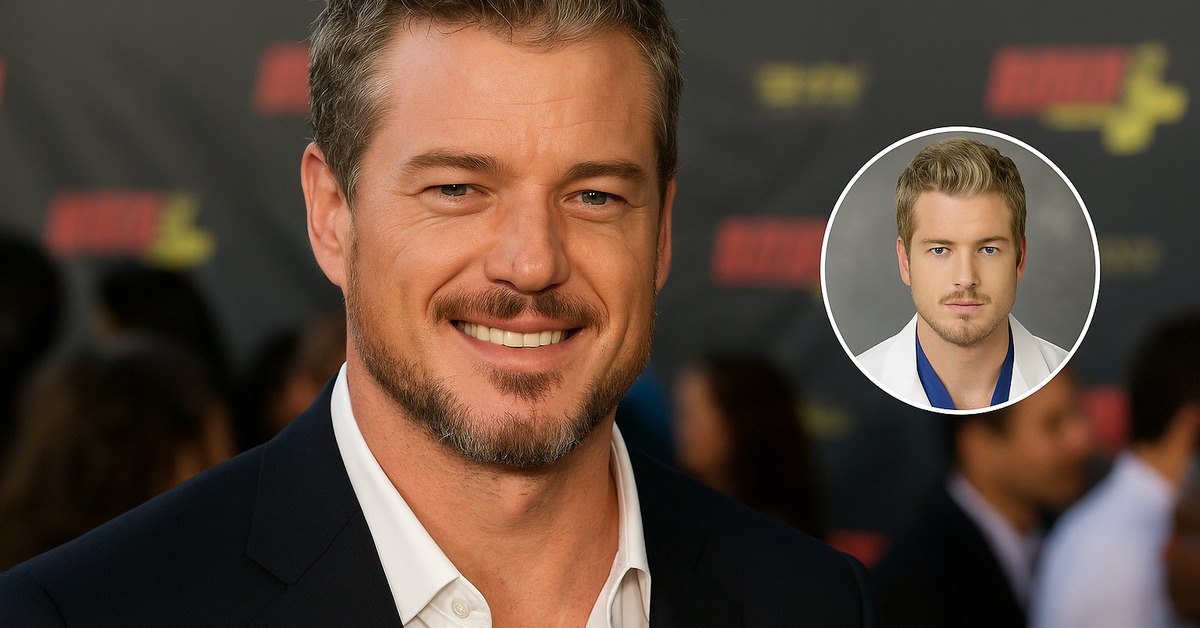
Legacy is a word that gets applied too easily. But in Dane’s case, the contours are already visible. Diagnosed in April 2025, he used the months that followed with deliberate intention — interviews, public appearances, fundraising pushes, each costing him something physical, because ALS extracts a fee for every exertion. Named donations citing Dane as inspiration arrived at the ALS Association within days of his diagnosis announcement. Research institutions don’t get funded by silence. They get funded by attention, and attention follows names that people trust.
Nobody in the medical advocacy landscape of 2025 was paying enough attention to ALS until a name they recognized was attached to it.
In the landscape of 2025, where public figures routinely retreat from diagnosis to private treatment, Dane’s approach was — the data makes this plain — unusual. And the Eric Dane ALS death legacy will be measured, in part, by whether that attention sustains itself past the initial grief cycle. His television work gave him the platform: Grey’s Anatomy made him visible to tens of millions across nearly a decade; Euphoria introduced him to a younger generation between 2022 and 2024. But visibility alone doesn’t create advocacy impact. Plenty of famous people get sick and stay quiet. What Dane did with his visibility was specific — he directed it at a disease that desperately needed a face, at a moment when ALS funding debates were live in Congress. The National Institutes of Health’s FY2025 budget included proposed increases for neurological disease research, the kind of line item that benefits when a senator’s constituent base suddenly knows what ALS is.
His daughters will grow up knowing what their father chose to do with the time the disease left him. That’s a different kind of legacy than a filmography. Both are real. But only one required him to keep showing up when everything hurt.
How It Unfolded
- 1993 — Scientists identify the first ALS-linked gene mutation, SOD1, marking the beginning of the genetic era of ALS research at Massachusetts General Hospital.
- 2014 — The Ice Bucket Challenge raises over $115 million globally in a single summer, transforming ALS into a household name and accelerating research funding across multiple institutions.
- 2023 — The FDA approves tofersen and AMX0035, the first new ALS treatments in years, representing incremental but genuine progress toward targeted therapy.
- April 2025 — Eric Dane publicly reveals his ALS diagnosis, triggering a measurable surge in public awareness, online search activity, and charitable donations directed at ALS research organizations.
By the Numbers
- 5,000 — approximate number of new ALS diagnoses in the United States each year, according to the ALS Association (2024).
- 2–5 years — average survival window after ALS diagnosis; roughly 10 percent of patients live longer than 10 years.
- $115 million — total raised globally by the Ice Bucket Challenge in the summer of 2014, the largest single fundraising event in ALS history.
- 30–50% — documented increase in disease-related online search volume following high-profile celebrity diagnoses, per Johns Hopkins Bloomberg School of Public Health research.
- 15% — the approximate proportion of ALS patients who also develop frontotemporal dementia, affecting cognitive function alongside physical decline.
Field Notes
- In 2023, researchers at University College London published findings showing that ALS can begin in specific spinal cord segments up to five years before symptoms appear — meaning the disease is already progressing silently long before any diagnosis is possible with current tools.
- ALS is not purely a disease of older adults: roughly 10 percent of cases are classified as “juvenile ALS,” diagnosed before age 25, a fact that rarely surfaces in mainstream coverage.
- The Ice Bucket Challenge funded the discovery of the NEK1 gene variant in 2016 — a direct line from a social media moment to a molecular biology finding, illustrating exactly why public awareness translates into science.
- Researchers still can’t answer why ALS clusters geographically in certain regions — including parts of the Pacific Northwest and specific military veteran populations — despite decades of epidemiological investigation. The environmental trigger hypothesis remains unresolved.
Frequently Asked Questions
Q: What is the Eric Dane ALS death legacy, and why does it matter for research?
The Eric Dane ALS death legacy matters because public figures who advocate during terminal illness create measurable shifts in awareness and funding. Dane announced his diagnosis in April 2025 and spent his remaining months pushing for ALS research attention. The ALS Association documented increases in donations and public inquiries following his announcement. Sustained advocacy — not just a single announcement, but ongoing engagement — is what moves research dollars. It doesn’t cure the disease. But it funds the people trying to.
Q: How is ALS actually diagnosed, and why does it take so long?
ALS diagnosis is notoriously delayed — the average time from first symptom to confirmed diagnosis is 12 to 18 months, because the disease mimics other neurological conditions in its early stages. Neurologists typically rule out treatable conditions first. There’s no single definitive test; diagnosis relies on a combination of electromyography, nerve conduction studies, and clinical observation over time. The El Escorial criteria, established by the World Federation of Neurology, provide the diagnostic standard, requiring evidence of progressive upper and lower motor neuron degeneration across multiple body regions.
Q: Does ALS always affect thinking and memory, or just the body?
Here’s the thing — this is one of the most common misconceptions about ALS. The disease is primarily a motor neuron disease: it targets the cells controlling voluntary movement, not cognition. The majority of ALS patients retain full intellectual function throughout their illness. Roughly 15 percent develop frontotemporal dementia alongside ALS, affecting judgment and behavior. But for most patients, the experience is a functioning mind watching a body become progressively immobile. That clarity is part of what makes the disease so devastating — and part of what made Eric Dane’s public advocacy possible for as long as it was.
Editor’s Take — Dr. James Carter
What strikes me about Dane’s final months isn’t the bravery framing that obituaries reach for — it’s the specificity of the choice. He knew exactly what public advocacy would cost him physically. ALS charges for exertion. He paid the fee anyway, repeatedly, in front of cameras. The research community doesn’t often get that kind of unsolicited assistance from someone with that size of platform. Whether the funding momentum holds past the grief cycle is the real question. And the honest answer is: it depends on whether the rest of us stay paying attention.
ALS kills roughly 30,000 Americans at any given time. It’s been doing that for decades, largely out of the spotlight, grinding through lives that most of the public never hears about. What changes when someone famous dies of it isn’t the disease — it’s the room the disease gets to speak in. Eric Dane walked into every room he could reach and used whatever voice he had left. The science is still catching up. The funding gaps are still real. The question worth sitting with isn’t how he died — it’s whether what he started outlasts the news cycle.


