The Co-Pilot Who Hijacked His Own Flight for Asylum
Every hijacking leaves a paper trail — threat assessments, cockpit recordings, criminal charges. The Ethiopian Airlines Flight 702 co-pilot hijacking of February 2014 left all of those, and something else: a question about European airspace that nobody in uniform particularly wanted answered in public. Hailemedhin Abera Tegegn didn’t seize the aircraft with weapons or demands. He used a locked door, a redirected autopilot, and the cold patience of someone who had already decided.
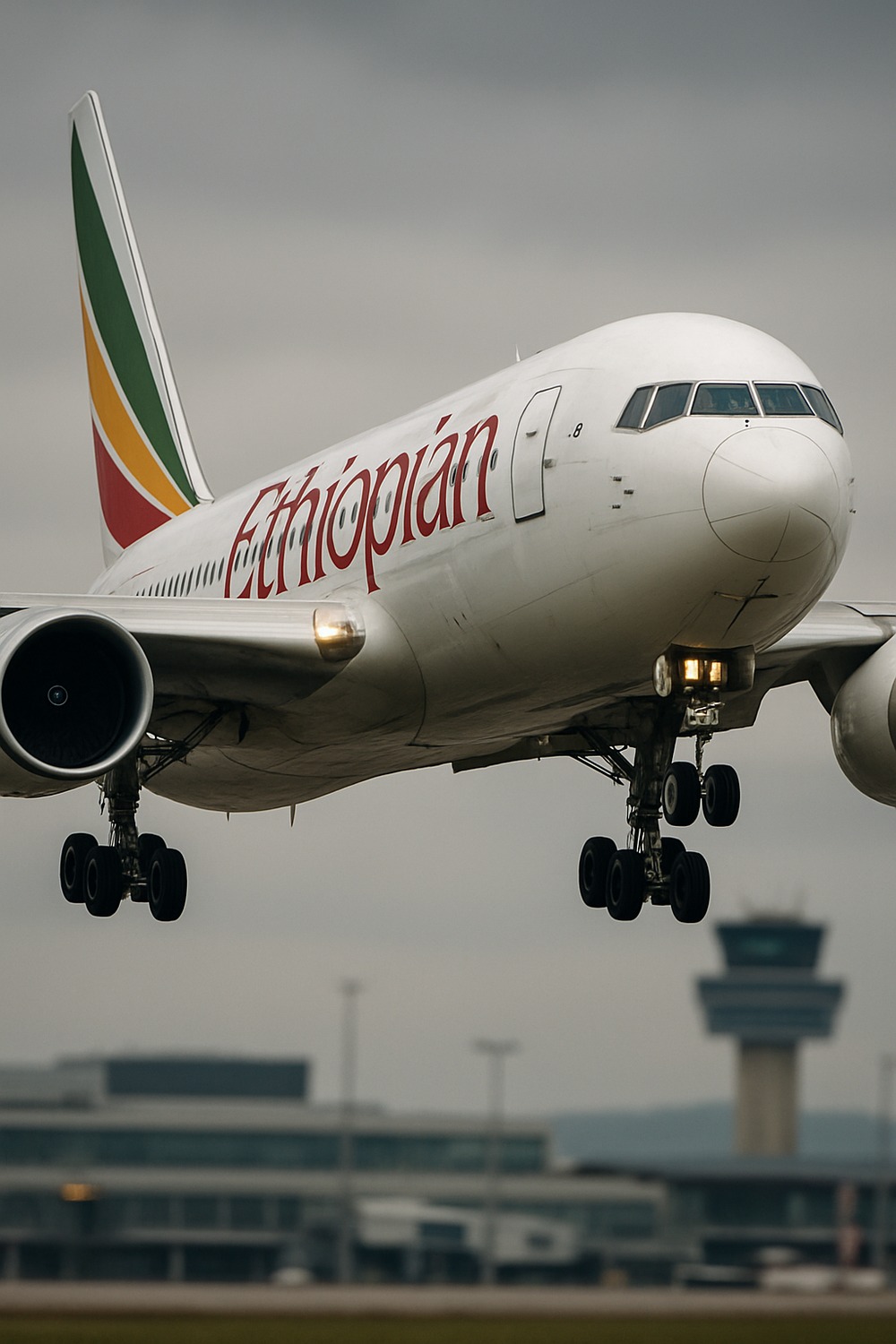
A Locked Door and a Stolen Course
The captain returns to a closed door that won’t open. Emergency override codes get him nowhere — Tegegn is holding the handle from the inside. Flight attendants are quietly alerted; they keep the cabin calm while meters away, behind them, nearly two hundred people sleep on in ignorance. Up ahead, unreachable, Tegegn is on the radio with air traffic controllers across European airspace — announcing, by one account through a distress signal and by others through direct contact, exactly what he is doing and where he is going. He isn’t threatening to crash the plane. He isn’t threatening anyone. His sole objective is Swiss soil, and the protection he believes it offers from what he calls political persecution back home in Ethiopia.
French and Italian air traffic controllers clock the deviation almost immediately. The unauthorized course change is confirmed as deliberate within minutes, and military responses follow fast. Both air forces scramble fighter jets. Suddenly a commercial airliner full of sleeping holidaymakers and business travelers has a military escort through two countries’ airspace — which is, it’s worth saying plainly, one of those sights that stops you believing aviation is routine. Geneva mobilizes ground crews and emergency services. Swiss authorities begin coordinating their response.
And Switzerland’s own air force, as the world is about to find out, is nowhere in the sky.
Switzerland’s Unmanned Skies
Here’s the thing: the detail that hit harder than the hijacking itself wasn’t Tegegn’s nerve. Switzerland’s air force didn’t fly overnight patrols. At the time, Swiss military aviation operated on something close to weekday office hours — roughly 8 a.m. to 6 p.m., Monday through Friday. Outside those windows, the airspace above one of Europe’s most diplomatically loaded nations went unguarded by Swiss jets.
Almost nobody outside defense circles knew this. The Ethiopian Airlines incident dragged it into the open and left it there, blinking in the harsh light of public scrutiny. (Defense planners asked to staff 24-hour watch rotations would probably note, with some feeling, that threats have never respected the working week.) Swiss officials were quick to point out that the country operates within a web of agreements with neighboring NATO members — France and Italy responded legally, procedurally, correctly, and the situation resolved without casualties. Switzerland isn’t in NATO, and its centuries-old doctrine of armed neutrality shapes the whole architecture of its defense posture.
Why does this matter? Because supporters and critics weren’t really arguing about one incident — they were arguing about the entire logic underpinning Swiss airspace. Supporters argued the system worked: allies covered the gap, the plane landed safely, no one got hurt. Critics argued the incident exposed a dangerous assumption — that benign outcomes shouldn’t be mistaken for sound policy. In a security environment where unconventional threats don’t announce themselves through diplomatic channels, office hours are a liability.
History has a way of treating the people who ignored this kind of evidence unkindly.
The Landing and Its Aftermath
Flight 702 touches down at Geneva’s Cointrin Airport at roughly 6 a.m. local time. Emergency vehicles ring the runway. Tegegn walks out of the cockpit and surrenders on the spot — no resistance, no drama. Swiss police take him into custody. Passengers disembark shaken, physically unharmed, many of them only now understanding what happened on the flight they mostly slept through.
In the court proceedings that follow, Tegegn describes a genuine fear of returning to Ethiopia, alleging political repression by the Ethiopian government. Swiss authorities convict him on hijacking-related charges and sentence him to nearly five years in prison, though he’s released earlier under Swiss sentencing conventions. His asylum claim is processed separately from the criminal case — two parallel tracks, two different answers to the same man’s fate.

How It Unfolded
- 2014, February 17 (predawn) — Co-pilot Tegegn locks the cockpit door after the captain steps out, redirects Flight 702 northward toward Geneva using autopilot
- 2014, February 17 (early morning) — French and Italian air forces scramble fighter jets; Switzerland’s air force is offline due to overnight stand-down protocol
- 2014, February 17 (approx. 6 a.m.) — Flight 702 lands at Geneva Cointrin Airport; Tegegn surrenders immediately on the jet bridge
- 2014–2015 — Swiss criminal proceedings result in conviction; Tegegn sentenced to nearly five years, released early; asylum claim processed on a separate track; Switzerland initiates review of military aviation readiness protocols
One Sky, Many Policies
What stays with you about this story isn’t Tegegn’s audacity, though that’s considerable. Pull one thread and the fabric strains — and European airspace carries hundreds of thousands of passengers every day inside a framework built on the quiet assumption that every participating nation is holding up its corner. Treaties, protocols, mutual coordination: the whole thing runs on collective trust. Aviation security analysts and defense planners tend to be less comfortable with reassuring outcomes than the rest of us. Their version of the question is sharper: in a world where threats don’t schedule themselves, how ready is ready enough?
The 2014 hijacking ended peacefully, and it’s easy, in peacetime, to treat a fortunate outcome as evidence of a working system. But the structural exposure it revealed — one gap, one morning, one locked door — is the part that doesn’t age well.
Editor’s Take — Sarah Blake
Most hijacking stories end with a weapon, a manifesto, or a body count. This one ended with a man sitting down on a jet bridge and waiting for handcuffs. What lingers isn’t Tegegn’s desperation — it’s the defense gap his flight accidentally mapped. Switzerland’s overnight stand-down wasn’t a secret, exactly. It just hadn’t been tested in daylight. Every comfortable assumption about shared airspace rests on the same unspoken bet: that whatever happens next will be someone else’s problem to intercept.
Europe’s skies have grown more complicated in the decade since that winter morning. Drone incursions, sharpening geopolitical tensions, and a threat landscape that keeps rewriting itself have pushed air defense to the front of national security conversations across the continent. Switzerland has since reviewed elements of its military aviation readiness, though the specifics of current protocols aren’t publicized. The broader lesson, though, isn’t Switzerland’s alone. Safety in shared airspace has never been the product of any single country’s vigilance. It’s a collective arrangement — fragile, ongoing, dependent on neighbors willing to cover each other’s blind spots even before sunrise, even on a Monday, even when the office is technically closed.