


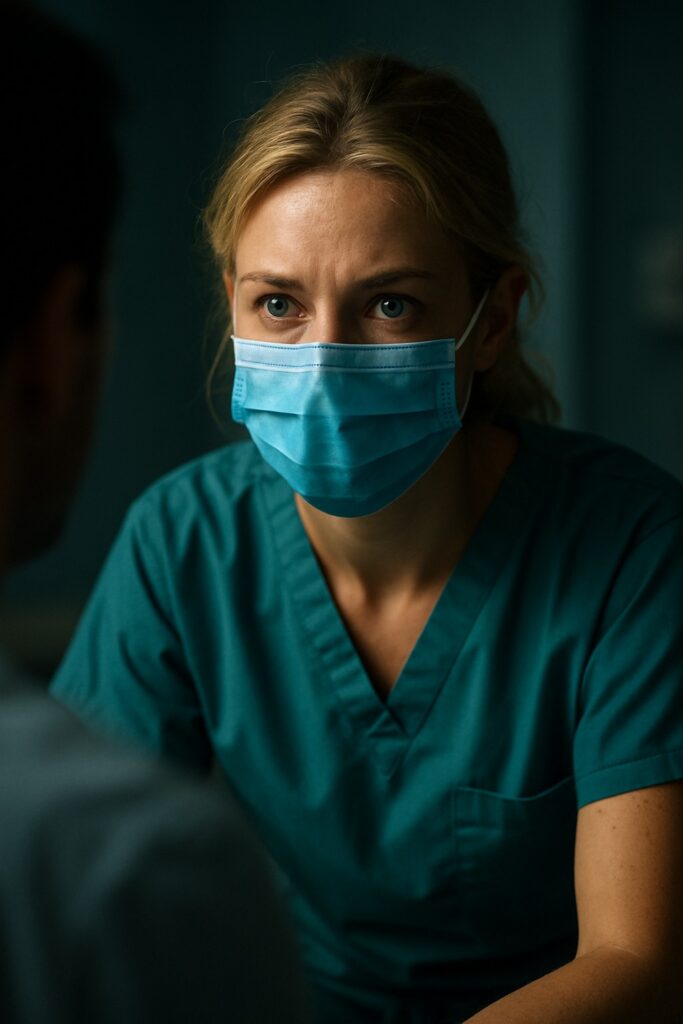
Seven months. That’s how long Autumn Bardisa walked the floors of AdventHealth Palm Coast Parkway before anyone checked. By the time they did, she’d treated 4,486 patients.
She moved through the unit like everyone else — taking vitals, administering care, doing all the quiet work that nurses do. Patients trusted her the way patients trust nurses, which is to say completely, without thinking about it, because why would they think about it? Nobody questioned her credentials. Not once. Not until someone went looking for something else entirely.
How Fake Nurse License Fraud Slips Past the System
Florida’s Department of Health runs something called the MQA — Medical Quality Assurance — system. A publicly accessible licensing portal. Any employer can pull up any nurse’s credentials in under two minutes. According to Florida’s Department of Health, this is precisely what it’s there for — to stop unauthorized practitioners from entering clinical settings before they ever see a patient. Healthcare policy researcher Linda Aiken has spent decades documenting how staffing shortcuts erode safety protocols, and the MQA exists as a direct answer to that problem.
So the answer to “how did this happen” isn’t that the system failed. The system was there. The lock was real. Nobody turned the key.
That one missing step — an administrative check that takes less time than a coffee break — is what let someone with allegedly fabricated credentials stand at a patient’s bedside for the better part of a year.
What Actually Caught Her Wasn’t a Safety Audit
Not an inspection. Not a regulatory sweep. Not a whistleblower.
A promotion. Someone applied for an internal advancement, and the standard vetting pulled Bardisa’s credentials in the process. The numbers didn’t match. AdventHealth confirmed she couldn’t verify her identity or licensing status and terminated her on January 22, 2025. That last fact kept me reading for another hour — because it means if nobody had been ambitious enough to seek that promotion, there’s no obvious reason this ever comes to light. For a closer look at how institutions miss what’s sitting right in front of them, this-amazing-world.com has covered similar cases where systemic blind spots persisted for years before an accident exposed them.
The 4,487th patient might never have known anything was different from the 4,486th. The catch was entirely accidental. Which raises the obvious question — how many cases like this one never get accidentally caught?
The Pattern Behind This Case Goes Back Decades
Fake nurse license fraud isn’t new, and Florida isn’t unusual. In 2022, a woman in Texas practiced as a nurse for years using the credentials of a deceased person. In 2019, a man in Pennsylvania worked in an ICU for months before anyone noticed his license had lapsed — not fabricated, just quietly expired and ignored. The pattern each time looks almost identical: institutional trust doing the job that verification was supposed to do, with overwhelmed HR departments running on assumption rather than confirmation.
Bardisa allegedly used a real nurse’s license information. Someone else’s identity. Someone else’s years of training, examinations, clinical hours — borrowed without permission and worn like a uniform.
That’s not a paperwork error. That’s a full impersonation.

Here’s the Thing About 4,486 Patients
That number isn’t abstract. Each one of those 4,486 people came to a hospital because something was wrong with them. They were scared or in pain or both, and they handed themselves over to that institution and trusted that everyone in scrubs around them had earned the right to be there. They didn’t consent to being treated by someone operating under false credentials. They couldn’t have — they had no idea there was anything to consent to.
The legal consequences for Bardisa will unfold in court. Charges related to practicing medicine without a license carry serious weight in Florida, and criminal investigators moved quickly after her termination. But for those nearly 4,500 people, the legal outcome doesn’t answer the personal one. If a procedure went wrong, if a medication interaction was missed, if a subtle symptom wasn’t recognized — how would they even know to connect it back to this?
Most won’t. And that’s the part that stays with you.
By the Numbers
- Florida’s MQA portal lists over 300,000 licensed healthcare practitioners — every one verifiable in under two minutes (Florida Department of Health, 2024). The alleged failure to complete this check at hiring isn’t a gray area. It’s the most basic procedural step there is.
- Roughly 1 in 4 healthcare credential fraud cases goes undetected for more than six months, according to a 2023 report from the National Council of State Boards of Nursing. Most are caught by accident rather than audit.
- The Texas case lasted over three years.
- Hospitals with understaffed HR departments are 67% more likely to skip secondary credential verification, per a 2021 American Hospital Association survey — which reframes the question from “how did this happen” to “how does this keep happening” rather quickly.

Field Notes
- Florida law requires not just that a license exist, but that it be verified as active and in good standing at the time of hire. A lapsed or suspended license can still appear in a basic search without flagging its status — which means a quick glance at the number isn’t the same as actually checking.
- Most healthcare credential fraud cases don’t involve invented documents. Real licenses. Real people. Borrowed or stolen identities that pass a casual inspection because the underlying number genuinely belongs to someone.
- AdventHealth Palm Coast Parkway expanded significantly in the early 2020s to meet regional demand — the kind of rapid growth that healthcare administrators have long flagged as a risk factor for compressed vetting timelines.
What This Case Tells Us About Who We Trust
The deeper issue that fake nurse license fraud keeps surfacing isn’t really about bad actors — though the bad actors are real and the harm they cause is real. It’s about what happens when systems that should function as checks become formalities instead. When the portal exists but nobody logs in. When the verification step is technically required but culturally optional. When the assumption of competence does the work that confirmation was supposed to do, because everyone’s busy and nothing’s gone wrong yet.
Bardisa’s case will likely prompt AdventHealth and facilities across Florida to reexamine their onboarding processes. Regulators may tighten requirements. Policy discussions will happen.
All of that matters. But it matters for the next patient. The 4,486 people who were already patients don’t get a reexamined onboarding process. They get the knowledge, after the fact, that the system they trusted had a door someone walked through without a key.
And they get to decide what to do with that.
The unsettling thing about this case isn’t that it’s unusual. It’s that the gap between a system that exists and a system that actually functions is wide enough, apparently, for seven months and thousands of patients to slip through unnoticed. It almost always takes an accident — or someone else’s ambition — to expose it. That’s what makes this worth sitting with. It’s not really about one person with a fake license. It’s about what we assume when we should be verifying. More cases like this one, and stranger, at this-amazing-world.com.


