


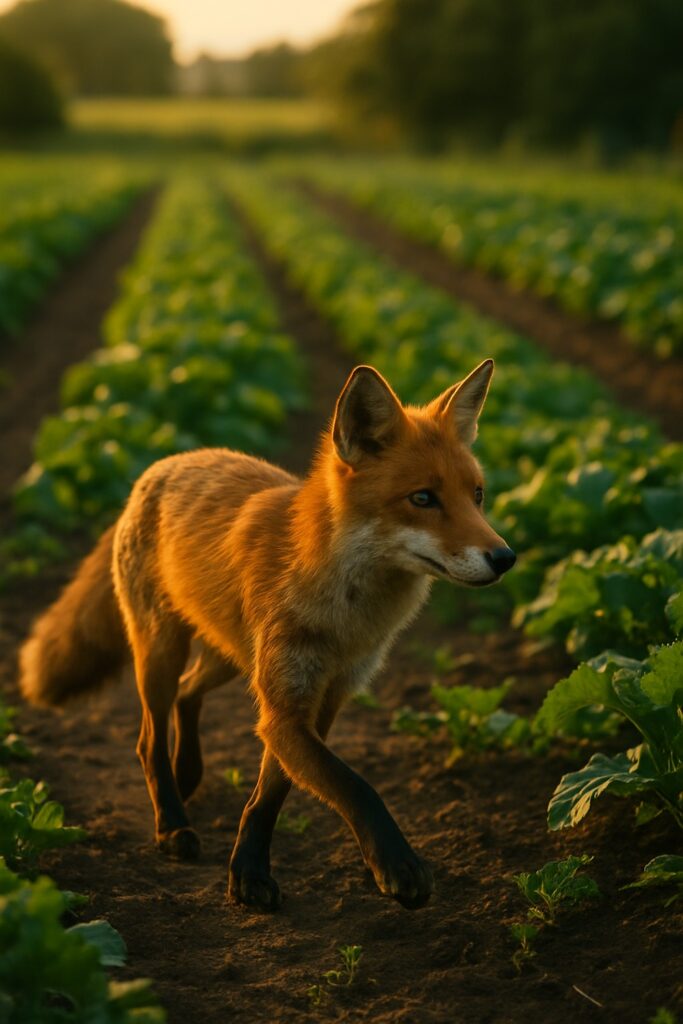
Nobody reported this. No conservation charity sent a press release. A farmer in rural England just stopped one night, squinted at the field’s edge, and decided not to reach for the trap wire.
He’d been losing vegetables. Not dramatically — no ransacked rows, no obvious carnage — just a slow, nagging deficit he couldn’t account for. Something was moving along the field margins after dark. Russet-colored, low to the ground, gone before he could get a proper look. Most farmers would have ended the story there. He kept watching instead. And what he saw over the following weeks turned out to be a fairly decent argument for rethinking everything we think we know about red foxes.
Wild Red Fox Behavior Most Farmers Never See
The red fox (Vulpes vulpes) is one of those animals that everyone has an opinion about and almost nobody has actually observed. There are roughly 357,000 of them across the British Isles, according to figures cited by the Red Fox Wikipedia entry, and the dominant cultural narrative about them fits on a bumper sticker: they steal chickens, they’re a pest, they need managing. Wildlife ecologist Dr. Dawn Scott of the University of Brighton has spent years carefully unpicking that story. The fox, in her framing, isn’t a raider. It’s a precision ecosystem engineer. That distinction sounds academic until you watch one work a farm for six weeks straight.
This particular fox was a vixen. Her kits — probably born in a late spring litter — were weeks behind in weight, hidden somewhere in the hedgerows and burning through more energy than she could easily replace. She wasn’t taking vegetables for sport or out of some opportunistic cunning. She was desperate in the specific, practical way that nursing mothers get desperate. And desperation, it turns out, makes animals improvise in ways that look almost like intelligence.
A Farmer Watches Instead of Retaliating
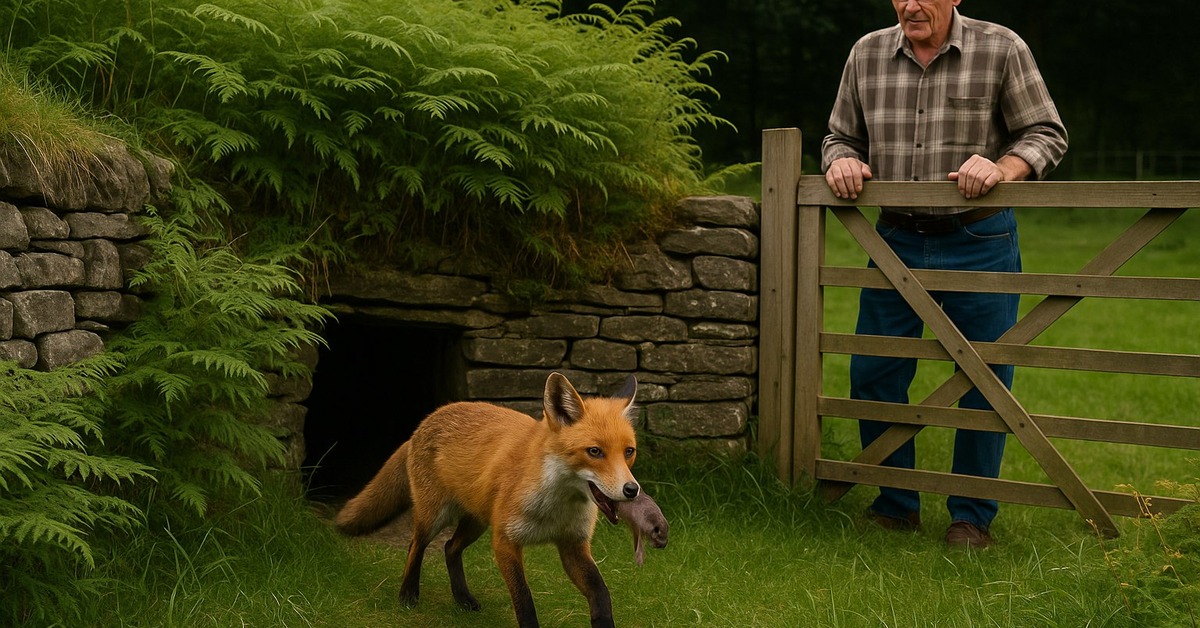
He left food out. That’s it. That was the whole intervention.
It sounds almost embarrassingly low-tech, but that single decision triggered what wildlife biologists call a commensal relationship — where two species start benefiting each other almost by accident, neither of them particularly intending to. The farm became a case study in what that actually looks like when you’re patient enough to let it develop. (If you want to fall down a rabbit hole of similar accidental partnerships, the archive over at this-amazing-world.com will cost you an afternoon you won’t regret.)
Once the vixen felt safe, her behavior shifted in a way the farmer hadn’t anticipated. She stopped taking from the field. Her range tightened around the farm’s perimeter — not because she was trapped there, but because it had become worth defending. From things he hadn’t even noticed were there.
What the Vixen Was Actually Hunting All Along
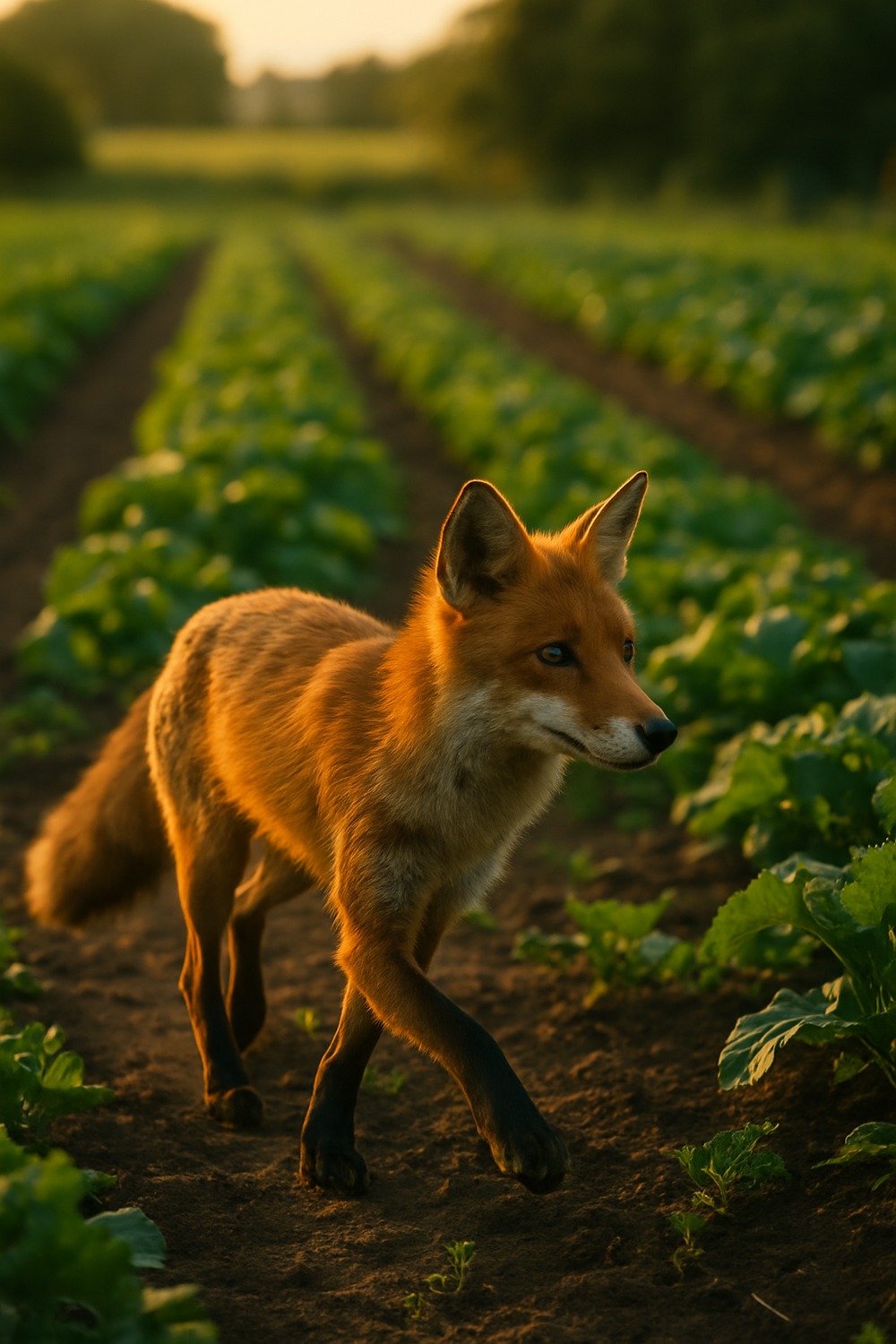
Here’s where wild red fox behavior gets genuinely impressive. A single red fox during active hunting season can move through more than 1,000 small rodents — voles, mice, young rabbits — across a single year. But the rodents are almost the obvious part. What the vixen was also targeting were the ground beetles and root-boring insects that silently wreck crops from underneath, the ones that never appear on a farmer’s radar until the damage is already showing in the harvest numbers. No pesticide reaches them the way a fox does: digging, pouncing, methodical, patient in a way that no spray schedule can replicate.
The crops started coming in cleaner. Vole runs along the field margins collapsed. Rabbit pressure dropped noticeably. And the farmer, watching from a careful distance, started piecing together something that most rural communities have quietly unlearned over the last hundred years.
Foxes don’t just take. They balance.

The Science Behind What Happened on That Farm
That last fact kept me reading for another hour, because it’s not just one farmer’s anecdote — there’s a whole body of research sitting behind it. Mesopredator control, which is the idea that medium-sized predators like foxes actively regulate small mammal populations, has been studied seriously since the 1990s. When foxes are removed from agricultural land, vole and rabbit numbers spike within two to three growing seasons. Root crop damage follows almost immediately after that. Teams at the Game & Wildlife Conservation Trust have documented farms with stable fox territories consistently reporting lower small mammal pest pressure than farms that actively cull. The relationship isn’t sentimental. It’s load-bearing.
What makes this English farmer’s story stick isn’t that it’s rare. It’s that it’s probably happening on dozens of farms across Britain right now, without anyone connecting the dots. Most landowners never wait long enough to see what a fox is actually doing on their land. They catch the blur at the field’s edge. They assume the worst. They act before the second chapter begins, and then they never know what the second chapter would have been.
By the Numbers
- 357,000 — estimated wild red fox population across the British Isles, with urban foxes now accounting for roughly 150,000 of that total (Mammal Society UK, 2023)
- Up to 10 kilometres in a single night, when a vixen is hunting for a litter — territory that would take most farmers hours on foot
- Farms without fox predation can see small mammal pest populations climb by up to 40% within two growing seasons, per Game & Wildlife Conservation Trust studies
- Over 300 species of prey recorded across the red fox’s global range, which makes it one of the most dietary-flexible wild predators on the planet — not a specialist, an opportunist in the most ecologically useful sense of that word

Field Notes
- Red foxes use the Earth’s magnetic field to time their pounce — orienting attacks in a north-northeast direction with measurably higher success rates. Czech researcher Jaroslav Červený published the finding in Biology Letters, and it remains one of the stranger documented behaviors in mammal predation.
- Vixens remember reliable food sources across multiple breeding seasons.
- The red fox is the only wild canid known to regularly cache food in urban and agricultural environments — burying surplus prey and returning days later. A fox working a farm is also, whether anyone acknowledges it or not, functioning as an unintentional pest disposal system running entirely on its own fuel.
Why One Fox and One Farmer Changes the Whole Picture
Wild red fox behavior has been misread for a long time. Centuries, probably. They’ve been hunted, trapped, and poisoned on the assumption that their presence means loss — that the calculation is simply fox equals missing chickens, end of story. But the ecological research that’s been accumulating quietly since the 1990s tells something messier and more interesting: the fox’s role in a working landscape is deeply functional, not predatory in the way the folklore suggests. This farmer’s choice to pause, watch, and then extend a kind of basic trust didn’t just help a desperate vixen feed her kits. It unlocked something the farm had been missing without knowing it was gone.
He didn’t make a grand conservation decision. He just waited.
And the ecosystem around him — unbalanced, pest-heavy, quietly struggling under chemical management — started to self-correct because one animal got the chance to do what it had spent thousands of years evolving to do.
The vixen’s kits grew up. They likely stayed near that farm. And somewhere in England right now, there’s probably a fox moving along a field margin at dusk, hunting the exact things that would have cost a farmer a solid chunk of his harvest — and nobody’s watching it happen. That’s usually how the best relationships work. No ceremony. No headlines. Just a quiet accounting that balances itself out by morning. If this kind of story keeps you reading past a sensible hour, there’s more at this-amazing-world.com — and the next one is stranger still.


