


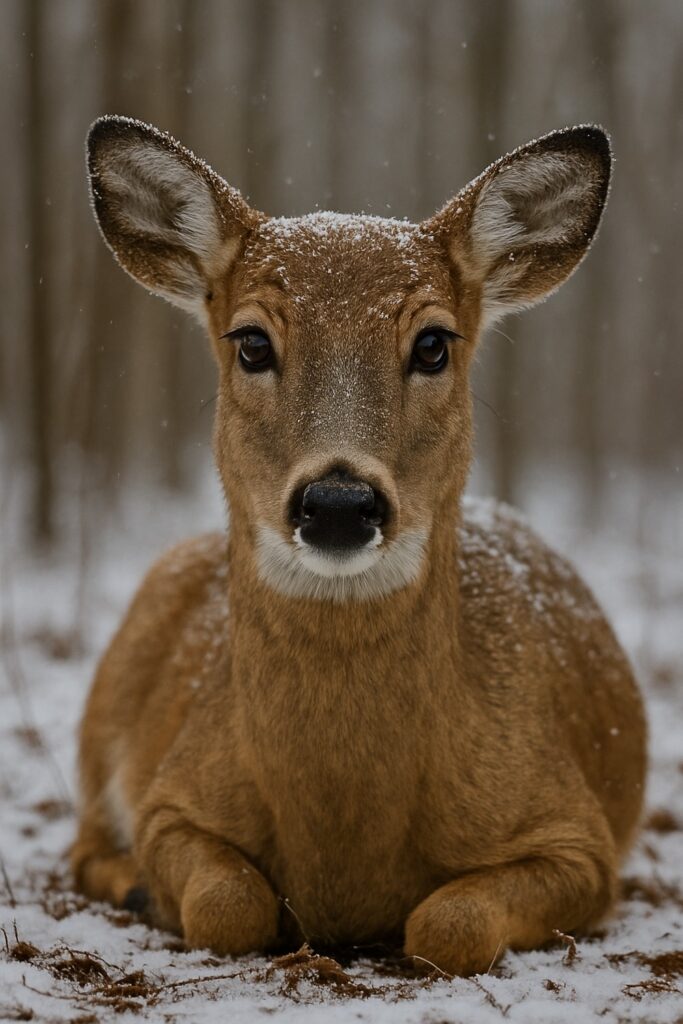
Deer torpor winter survival works precisely because it looks like nothing at all. A white-tailed deer standing motionless at the edge of a frozen field — eyes open, ears swiveling — with its metabolism quietly dialed down by half. That stillness fooled biologists for a long time. Turns out, the animal wasn’t just resting. It was running a survival calculation we barely understand.
Every January, white-tailed deer across North America face brutal arithmetic: calories stored versus calories burned. Food disappears under ice. Temperatures crash. Movement costs energy the deer can’t afford to spend. So some of them simply… slow down. Not for months like a hibernating bear, but strategically — for hours or days at a stretch. Researchers watching them in Ohio’s Cuyahoga Valley National Park found the behavior hiding in plain sight.
When Deer Almost Press Pause on Metabolism
Dr. Clint Moore and wildlife physiologists at the white-tailed deer’s range of study institutions, including teams affiliated with Ohio State University, have documented metabolic reductions of 40 to 50 percent in deer during peak winter cold snaps. Heart rate drops. Breathing slows. Digestion practically stalls. That’s not a minor dip — it’s a near-halving of the engine’s idle speed.
The deer are awake, aware of their surroundings, and capable of bolting from a predator. Yet internally, they’re running on a fraction of normal fuel. What makes this different from hibernation is the degree of commitment. Torpor is short-term, reversible within minutes. Hibernation locks an animal into physiological debt for weeks. Deer can’t afford that vulnerability — they need to stay alert. Torpor lets them have it both ways: conservation without surrender.
The Biological Savings Account Nobody Knew About
Think of fat reserves as a finite bank account opened in late summer. Every calorie burned in winter is a withdrawal. A deer roaming two miles through frozen forest looking for browse it won’t find is spending savings on a losing bet. Torpor flips that calculation. By dramatically reducing metabolic demand, a deer stretches the same fat reserves across significantly more cold days. Researchers studying cervid physiology describe it as the difference between a car idling at 800 RPM versus 1,600 — same tank, twice the time. For a deeper look at how animals deploy extraordinary cold-weather adaptations, explore this fascinating overview of cold-weather survival strategies across the animal kingdom.
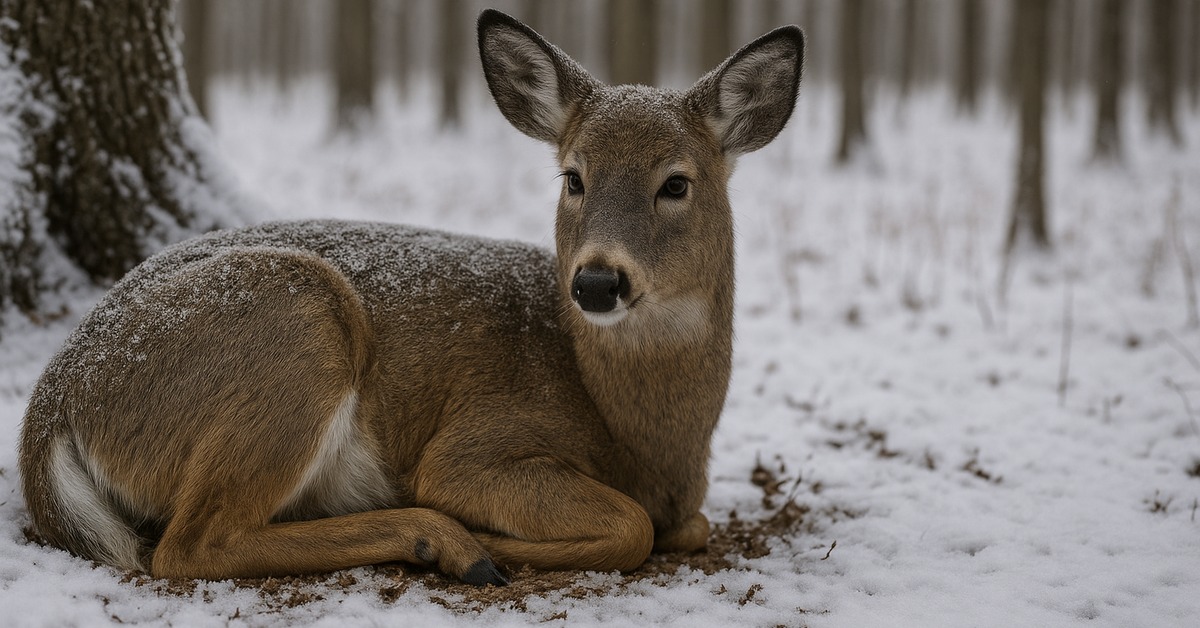
Field observers in Cuyahoga Valley noticed deer standing or lying motionless for four to six hours during temperature plunges — not sleeping, but strikingly inactive. Their breath came slow and shallow, steaming faint wisps into frozen air. Eyes open. Ears tracking every sound. It didn’t look dramatic. That was the whole point.
How Torpor Differs From Hibernation in Bears
Bears enter what scientists technically call shallow hibernation — or more precisely, carnivore lethargy — with body temperatures dropping as much as 10°C over months. Bats and ground squirrels go further, crashing into true torpor where body temperature can fall to near ambient levels and heart rates plummet to just a few beats per minute. Deer occupy a different tier entirely. Their body temperature during torpor episodes drops only one to three degrees Celsius (researchers actually call this “heterothermy-lite” in some literature). That’s a modest reduction — but it’s enough to meaningfully reduce metabolic demand without triggering the physiological risks of deep cold, including tissue damage or immune suppression.
Three degrees doesn’t sound like much. But in metabolic terms, every one-degree drop in core temperature can reduce cellular energy demand by roughly five to seven percent. Stack a few of those together and you’ve bought the animal real time.

Deer Torpor Winter Survival — The Triggers Nobody Fully Understands
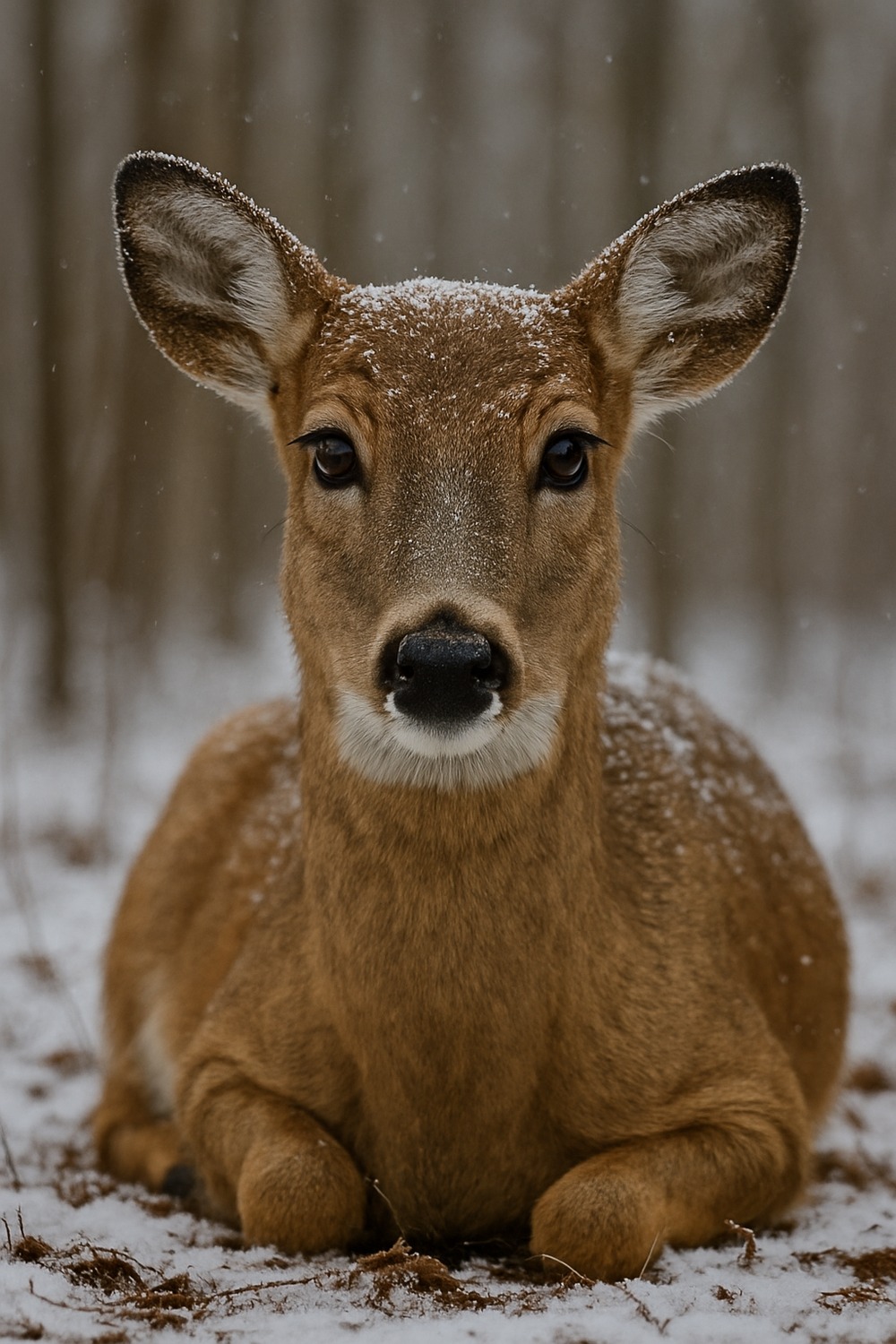
Here’s the thing: deer torpor winter survival science hits its most honest edge precisely where researchers admit they still don’t know what flips the switch. Photoperiod — the shortening of daylight — is the best candidate. Hormonal shifts involving melatonin and thyroid function almost certainly play a role. Deer begin physiological preparation for winter in autumn, driven by light cues rather than temperature alone. But the precise cascade of signals that pushes an individual deer from normal resting to full deer torpor winter survival mode remains unclear. It’s one of the more tantalizing open questions in cervid biology right now.
What’s clear is that deer torpor winter survival isn’t random. It appears to be triggered by the combination of cold, food scarcity, and accumulated physiological stress — not just one factor alone. A mild winter with available browse may never trigger the full response. A sudden freeze after an ice storm likely does. The body reads multiple signals at once and makes a decision that no researcher can yet predict from the outside.
The evidence that’s accumulated over the past decade makes it hard to dismiss this as edge-case physiology — this is a core survival strategy, and we spent decades not recognizing it.
A Phenomenon More Widespread Than Anyone Predicted
Why does this matter? Because if it’s happening in white-tailed deer — 30 million of them across North America — the ecological implications are enormous.
For decades, the assumption was that torpor-like states belonged to dedicated hibernators — animals evolutionarily committed to the strategy. Bears, bats, ground squirrels, hedgehogs. Not ungulates. Not animals that size. The category felt settled.
But data emerging from studies of European roe deer, mule deer in the American West, and reindeer in Scandinavia suggests that metabolic suppression during winter is far more common across temperate herbivores than older models accounted for. A 2020 analysis of reindeer physiology published in the journal Frontiers in Physiology documented resting metabolic rates in winter that fell well below what body size alone would predict — pointing squarely at active metabolic downregulation. And that finding unsettled a lot of settled thinking.
Winter survival in temperate mammals isn’t a binary — hibernate or endure — but a spectrum. Many animals we thought were simply toughing out the cold may actually be running quiet, sophisticated strategies we missed entirely. If torpor-adjacent states are widespread among deer-sized animals, it rewrites something fundamental about how we model energy budgets across entire ecosystems.
Nobody was looking in the right place.

Where to See This
- Cuyahoga Valley National Park, Ohio, USA — one of the primary field sites where torpor-adjacent behavior in white-tailed deer has been observed directly; winter months (December–February) offer the best conditions for witnessing prolonged inactivity bouts in open meadow edges at dawn and dusk.
- The Scandinavian Arctic Research Institute (Fram Centre, Tromsø, Norway) — home to ongoing reindeer physiology research, including the metabolic suppression studies that have expanded this field beyond North American cervids.
- Start with the 2020 Frontiers in Physiology paper on reindeer winter metabolism — it’s open access and more readable than most primary literature in this field. Pair it with the Quality Deer Management Association’s public data on white-tailed deer population ecology for continental context.
By the Numbers
- Metabolic rate reduction of 40–50% documented in white-tailed deer during peak winter cold, compared to summer baselines (cervid physiology studies, Ohio State University collaborative research, 2010s–2020s)
- Body temperature drop of 1–3°C during torpor episodes in white-tailed deer — compared to up to 10°C in hibernating black bears and near-ambient drops in true hibernators like Arctic ground squirrels
- Reindeer winter resting metabolic rates measured at roughly 30% below summer-adjusted predictions for their body mass (Frontiers in Physiology, 2020)
- White-tailed deer in North America number approximately 30 million individuals — making any widespread metabolic adaptation in this species ecologically significant at continental scale (Quality Deer Management Association estimates, 2023)
Field Notes
- Deer observed in torpor-adjacent states don’t appear sedated or vulnerable — they track sounds and movement with normal alertness, suggesting the metabolic downregulation is entirely internal and doesn’t compromise their immediate survival responses. Predators get no advantage from the state.
- Shrinkage of the rumen — a deer’s fermentation chamber for digesting plant material — occurs in winter, reducing its own metabolic maintenance cost. This gut downsizing is a separate but complementary adaptation to torpor, giving the deer a double efficiency gain during food scarcity (and this matters more than it sounds, since rumen maintenance alone consumes a surprising share of baseline energy).
- Some researchers now believe that what was historically recorded as “yarding behavior” in deer — the tendency to congregate in sheltered areas and remain motionless for extended periods — may partly reflect coordinated torpor episodes rather than simple weather avoidance. The behavior may be metabolic, not just thermal.
Frequently Asked Questions
Q: What exactly is deer torpor winter survival and how is it different from sleep?
Deer torpor winter survival refers to a short-term state of metabolic suppression in which a deer’s heart rate, breathing, digestion, and energy expenditure drop dramatically — by as much as 50% — without the animal losing consciousness or alertness. Unlike sleep, the deer remains responsive to its environment and can move quickly if threatened. Unlike hibernation, the state lasts hours to days rather than months, and body temperature barely changes.
Q: Do all deer species use torpor, or just white-tailed deer?
Metabolic suppression during winter has been documented or strongly inferred in multiple deer species, including white-tailed deer, mule deer, roe deer, and reindeer. Intensity and frequency appear to vary by species and geographic location. Researchers believe the capacity may exist across a broader range of temperate cervids than previously thought, though detailed physiological studies remain limited for many species.
Q: Why doesn’t deer torpor work as well as full hibernation for surviving winter?
Deer are large-bodied ungulates with limited ability to store the extreme fat reserves that dedicated hibernators accumulate. Full hibernation requires months of physiological downregulation that would leave a deer dangerously vulnerable to predators and unable to respond to rapidly changing conditions. Torpor gives deer a middle path — meaningful energy savings without the commitment or vulnerability of deep hibernation, which simply isn’t compatible with their ecology or body plan.
Editor’s Take — Alex Morgan
What stays with me about this research isn’t the metabolic percentages — it’s how long the behavior was invisible to us. Thirty million animals quietly engineering their own survival through winter, and the prevailing assumption was that ungulates simply endured the cold. We built entire models around that assumption. The deer were never just standing there. They were doing something precise, something studied, something that took field observers years of watching frozen fields at dawn to finally name. What else are we standing too far away to see?
What deer torpor winter survival reveals isn’t just a clever trick in one species — it’s a reminder that the boundary between hibernation and endurance isn’t as clean as textbooks once drew it. Somewhere in between, a white-tailed deer is standing motionless at the edge of a frozen field right now, its metabolism quietly dialing down while the temperature falls and the snow comes in. The forest looks still. Nothing, actually, is standing still at all. How many other animals are doing something similar, and we simply haven’t thought to look?


