How Human Ashes Are Growing Memorial Forests Worldwide
Here’s the thing about a memorial forest biodegradable burial: it doesn’t announce itself. No marble. No grid. Just birdsong, a sapling small enough to carry in two hands, and a circle of people who know what’s buried underneath it. Inside a coconut-shell capsule smaller than a shoebox, someone they loved is already entering the forest’s long conversation with the dead.
This isn’t a future technology or a fringe experiment. It’s happening right now in Italy, Spain, the United States, and across northern Europe — a quiet revolution in how humans return to the earth. The question nobody’s asking loudly enough: could these scattered plantings eventually grow into something large enough to change the landscape itself?
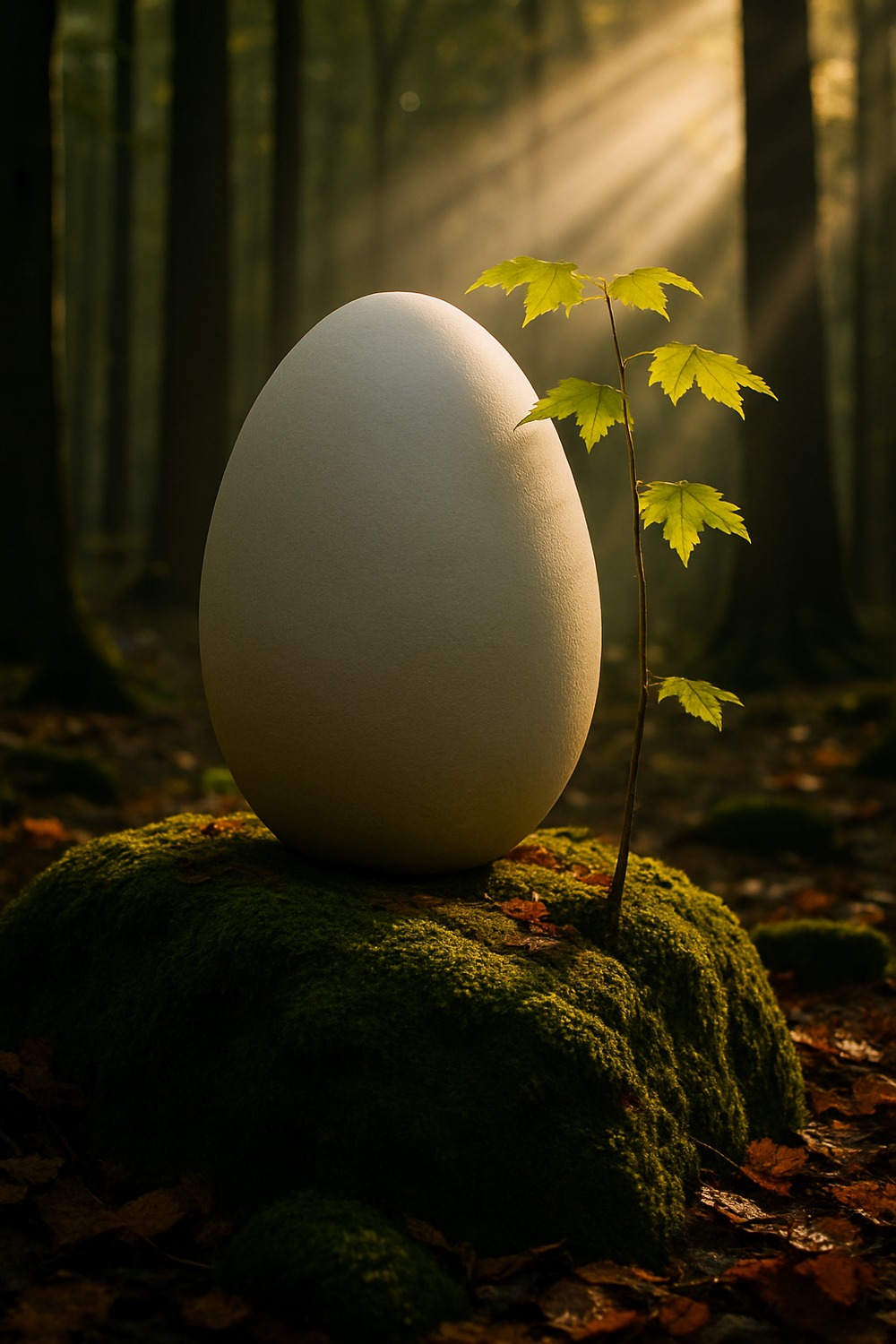
The Capsule That Turns Ashes Into Living Forest
Designed by Spanish designers Martín Azúa and Gerard Moline and launched commercially in 2013, the Bios Urn is deceptively simple. A biodegradable container made from coconut shell, compacted peat, and cellulose holds a pocket of soil above a compartment for cremated remains. When buried and watered, the capsule begins to break down within weeks. The alkalinity of cremated ash — which typically registers between pH 9 and 12 — can initially stress plant roots, so the two-chamber design keeps the seedling’s roots separated from the ash until the soil chemistry has had time to neutralize. According to cremation chemistry documented in detail by researchers at the University of Guelph in 2019, processed human remains consist largely of calcium phosphate — the same mineral compound that makes bones dense and that, over time, genuinely does enrich soil.
What the marketing materials don’t always explain is the timeline. A newly planted memorial tree can take several growing seasons before the capsule’s breakdown has meaningfully altered the surrounding soil. The tree isn’t feeding directly on the ash so much as growing through a landscape that the ash is slowly reshaping. That distinction matters — it’s slower, stranger, and more beautiful than the simple “you become a tree” framing suggests. The biology is more entangled than a clean metaphor allows.
Families have planted Bios capsules with oaks, maples, ginkgos, and native pines. Some choose the species their loved one favored. Others let the climate decide. Either way, the seedling’s first winter is the hardest — and not every tree survives it. Death, it turns out, doesn’t guarantee resurrection.
What We’re Leaving Behind in Traditional Cemeteries
Why does this matter? Because the scale of what conventional burial requires is genuinely staggering — and it doesn’t get discussed enough at funeral homes.
In the United States alone, traditional burials consume more than 30 million board feet of hardwood casket timber every single year — enough lumber to build a small town. Add to that approximately 800,000 gallons of embalming fluid, a cocktail dominated by formaldehyde, methanol, and glutaraldehyde, chemicals classified as hazardous by the Environmental Protection Agency. These compounds leach slowly into surrounding soil and groundwater, where they’ve been detected at measurable concentrations up to 25 years after burial, according to the Green Burial Council’s 2021 environmental impact review. Cremation itself isn’t carbon-neutral — a single cremation releases roughly 400 kilograms of CO₂ — but the memorial forest biodegradable burial model pairs cremation with active carbon sequestration, which at least begins to offset what the cremation released. There’s something almost like logic to the exchange: the carbon released in the cremation furnace, recaptured slowly by the tree growing above.
Green burial isn’t new as a concept — it’s new as an industry. For most of human history, bodies simply went back into the ground without chemical intervention. What’s changed is that we’ve built the infrastructure and the language to make that choice feel intentional rather than merely inevitable. That instinct to participate in the forest rather than stand apart from it connects to something older than any modern green burial movement — you can see a version of that same biological intimacy in how forest ecosystems run on decomposition, on the constant cycling of matter through living and non-living forms, much like the remarkable behavior crows exhibit when they use formic acid from ant colonies to clean their own feathers.
Memorial Forests Are Reshaping Actual Landscapes
Researchers tracking memorial tree plantings in Catalonia, Spain, documented in a 2022 study published in the journal Restoration Ecology that clustered memorial plantings in previously degraded periurban land had contributed measurably to local canopy cover increase — not dramatically, but consistently, year over year. What nobody planned for is that the emotional pull of a specific tree — my father’s oak, her maple — creates a constituency for that forest that no abstract conservation argument can manufacture. When families return annually to visit a loved one’s tree, they tend to clear competing invasive shrubs, water during dry seasons, and sometimes plant companion species nearby. The grief, in other words, generates maintenance. And maintenance generates forest.
Similar patterns emerged in conservation burial grounds across the American Southeast, where privately managed woodland cemeteries are actively preserving contiguous forest corridors that conventional development would otherwise fragment — findings documented in a National Geographic investigation into the green burial industry.
The memorial forest biodegradable burial movement is, at its most effective, converting grief into stewardship. Conservation biology has struggled for decades with the challenge of creating lasting human connections to specific pieces of land. Protected areas get defunded. Conservation easements expire. But a grandmother’s tree? That pulls people back. It generates photographs and stories and children who grow up knowing exactly which oak on a hillside belongs to their family’s history. The tree becomes a landmark of the self, not just the landscape. Watching this happen across sites and decades, you start to suspect that conservationists were solving the wrong problem all along — the answer wasn’t better policy, it was more personal stakes.
A single mature oak sequesters roughly 48 pounds of carbon per year and, under the right conditions, can live for 500 years. A cemetery headstone sequesters nothing. The arithmetic isn’t subtle.
Memorial Forest Biodegradable Burial and the Science of Soil
Underground is where the deeper biological story lives — and it’s considerably more complex than any product description captures. Dr. Suzanne Simard’s foundational work at the University of British Columbia, most prominently laid out in her 2021 book Finding the Mother Tree, demonstrated that forest trees don’t grow as isolated individuals but as interconnected networks exchanging carbon, nitrogen, and signaling compounds through fungal mycorrhizal threads (researchers actually call this the “wood wide web,” and this matters more than it sounds). When a memorial tree’s roots grow down through soil enriched by decomposing organic material — including, eventually, the calcium phosphate from cremated remains — those roots don’t just take from the soil. They join a conversation.
By 2023, researchers at ETH Zürich were actively studying whether the mineral composition of cremated remains influences mycorrhizal colonization rates in memorial plantings. If certain ash compositions actively attract beneficial fungi, the memorial forest biodegradable burial practice could be doing something ecologically useful that nobody designed for. A question with implications far beyond the grief industry.
In the first year after burial, the high pH of ash creates a zone of suppressed microbial activity immediately around the capsule. But by year three to five, as the capsule degrades fully and rainwater dilutes and neutralizes the alkalinity, that zone typically rebounds — sometimes with measurably higher phosphorus availability than the surrounding soil. Phosphorus is a limiting nutrient in many forest ecosystems. What was briefly a dead zone becomes a nutrient hotspot. The math of decomposition runs on a longer clock than human attention spans are comfortable with, but it runs reliably.
And preliminary findings from conservation burial sites in Vermont only deepen the puzzle. Field observations collected by the nonprofit Ramsey Creek Preserve between 2018 and 2023 documented that memorial trees planted over five years showed higher mycorrhizal association rates than control trees planted in identical soil without the capsule substrate. Small sample sizes. But preliminary findings are where the interesting questions live.
What Happens When Communities Embrace the Forest Model
Thirty years of grief. Thirty years of roots.
Woodland Burial Trust sites in the United Kingdom have been operating since the mid-1990s, and some of the earliest now host woodlands where 30 years ago there was only agricultural field. The Arbory Trust in Cambridgeshire, established in 1994, manages 180 acres of developing native woodland that exists entirely because families chose it as a burial destination. Documented populations of barn owls, red kites, and at least 14 species of native wildflower that weren’t present at the site’s founding now inhabit the land — a functioning woodland ecosystem built on three decades of conservation burial choices. At sufficient scale and sufficient time, this model doesn’t just offset environmental harm. It actively creates habitat that didn’t previously exist.
Global death rates run at roughly 60 million people per year. If even 10 percent of those deaths eventually involved some form of memorial forest biodegradable burial — a conservative projection given current growth rates in the green burial sector — that would mean 6 million new tree plantings annually, in addition to whatever conservation land management accompanied them. The Nature Conservancy estimates that restoring 350 million hectares of degraded land globally by 2030 is necessary to meet Paris Agreement biodiversity targets. Six million annual tree plantings won’t close that gap alone, but they represent something harder to quantify: a cultural shift in how humans conceive of their relationship to the land after they’re done using it.
Stand in the Arbory Trust woodland on a November morning, light coming low through nearly bare oaks, and you’ll hear barn owls hunting before dusk. The owls don’t know they’re living in a cemetery. They just know the field vole population is reliable, the trees are spaced right, and the humans who come here tend to be quiet. Grief, it turns out, makes excellent habitat management.
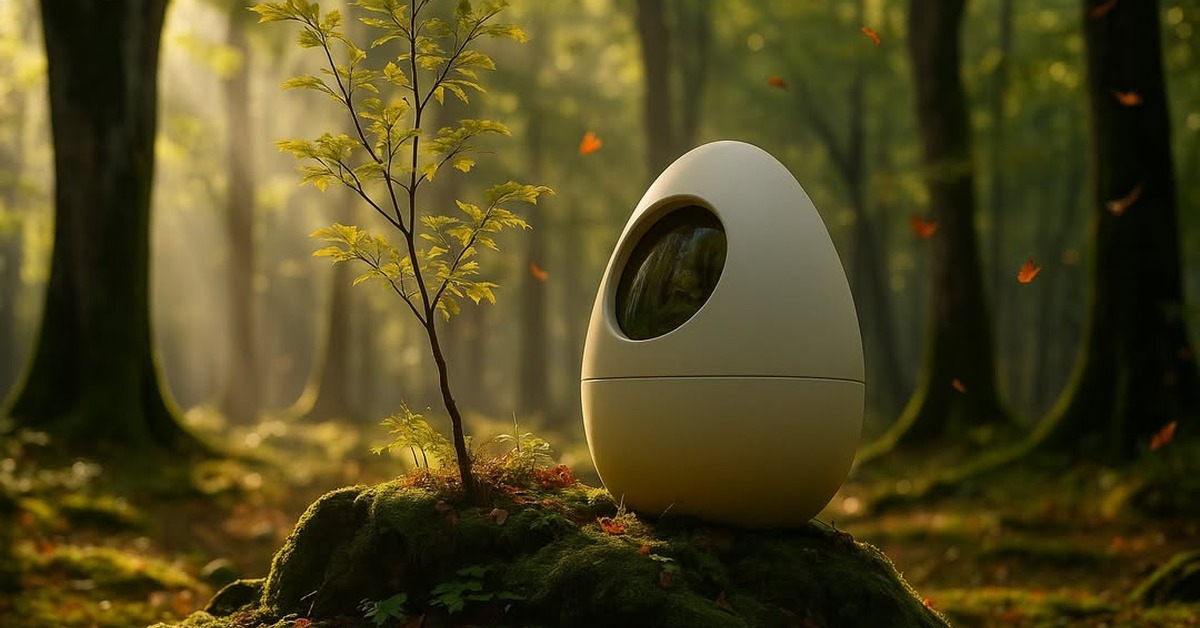
How It Unfolded
- 1993: The first dedicated woodland burial site in the United Kingdom opened in Carlisle, Cumbria, established by Ken West, marking the formal beginning of the modern green burial movement.
- 2013: Bios Urn launched commercially out of Barcelona, Spain, making biodegradable burial capsules available to individual consumers for the first time at scale.
- 2016: The Green Burial Council in the United States certified its 100th approved burial ground, signaling that conservation burial had moved from fringe practice to established industry sector.
- 2022: Restoration Ecology published peer-reviewed findings documenting measurable reforestation impacts from clustered memorial tree plantings in Catalonia — the first study to quantify landscape-level effects.
By the Numbers
- 30 million board feet of hardwood timber consumed annually by traditional casket manufacturing in the United States alone (Green Burial Council, 2021).
- 800,000 gallons of formaldehyde-based embalming fluid enter US soil every year through conventional burial practices.
- 48 pounds of CO₂ sequestered per year by a single mature oak tree — over a 500-year lifespan, that’s 24,000 pounds per tree.
- 400 kilograms of CO₂ released by a single cremation — partially offset when paired with a memorial forest biodegradable burial capsule and long-lived tree planting.
- 180 acres of functioning native woodland now managed by the Arbory Trust in Cambridgeshire, UK — a forest that exists entirely because of 30 years of conservation burial choices.
Field Notes
- In 2019, researchers at the University of Guelph confirmed that calcium phosphate — the dominant mineral compound in cremated human remains — can measurably increase available phosphorus in acidic forest soils within three to five years of burial, a finding that surprised soil scientists expecting ash to function primarily as a growth inhibitor.
- The Bios Urn’s two-chamber design — keeping the seedling’s root zone physically separated from the ash compartment during the first growth phase — was developed specifically because early prototypes saw high seedling mortality when roots contacted highly alkaline ash directly. The fix was architectural, not chemical.
- Barn owls have been documented nesting in at least seven UK woodland burial sites, suggesting that the particular combination of open meadow edges, maturing trees, and minimal human disturbance created by these sites accidentally mirrors ideal barn owl territory.
- Researchers at ETH Zürich studying mycorrhizal colonization rates in memorial tree soils still can’t determine whether the beneficial fungal associations they’re observing are caused by the ash mineral composition, the capsule’s organic material, or simply the act of deep soil disturbance during burial — the mechanism remains genuinely unresolved as of 2024.
Frequently Asked Questions
Q: What exactly is a memorial forest biodegradable burial, and is it legal everywhere?
A memorial forest biodegradable burial typically involves placing cremated remains inside a biodegradable capsule — most commonly the Bios Urn — which is then buried beneath a young tree in a designated natural area. Legality varies significantly by country and state. In the US, it’s legal in most states on private land with landowner permission, and increasingly available through certified green burial grounds. In the UK, natural burial is fully legal and regulated. Germany and France have stricter restrictions on where ashes can be buried, so families should verify local regulations before planning.
Q: Does the ash actually help the tree grow, or is that mostly marketing?
The relationship is real but complicated. Cremated human ash is primarily calcium phosphate, which can enrich phosphorus-limited soils — but its initial high pH (between 9 and 12) can stress or kill young roots if contact occurs too early. Well-designed capsules like the Bios Urn use a two-chamber system to prevent direct contact during the seedling’s first growth phase. By years three to five, as the ash alkalinity neutralizes and the capsule fully degrades, soil chemistry around the tree does measurably improve. It’s not instant, and it’s not magic. But it’s genuinely happening.
Q: Is this the same as a “green burial,” or are they different things?
They overlap but aren’t identical. Green burial typically refers to burying an unembalmed body directly in the ground in a biodegradable shroud or simple container — no cremation involved. Memorial forest biodegradable burial usually starts with cremation, which itself has a carbon cost, then pairs those remains with a tree planting. Green burial purists sometimes argue that skipping cremation entirely has a lower environmental footprint. Both approaches avoid embalming chemicals and concrete burial vaults. The right choice depends on a family’s priorities, local land access, and how they weigh the emotional symbolism of a living tree against the lower-impact simplicity of direct natural burial.
Editor’s Take — Alex Morgan
What strikes me most about this story isn’t the product or the policy — it’s the accidental conservation mechanism embedded in grief. Nobody designed woodland burial sites to create barn owl habitat or to solve the mycorrhizal colonization problem in degraded soils. Those outcomes emerged from people wanting to visit a specific tree because someone they loved is underneath it. Conservation biology has spent decades trying to manufacture that kind of attachment to land. Apparently, all it required was making the land personal enough that people couldn’t stay away.
Forests growing from human ash aren’t making a grand statement about environmentalism. Most families choosing this path are simply trying to find a way to hold onto someone. But scale those individual choices across decades and communities, and something genuinely unexpected emerges: a new kind of forest, rooted in grief, attended by the living, slowly building canopy over land that might otherwise hold only concrete and silence. The question worth sitting with isn’t whether we can grow forests from the dead. It’s whether we were always supposed to — and whether we’ll recognize the forest we’ve been missing only when we start planting it, one loved one at a time.