


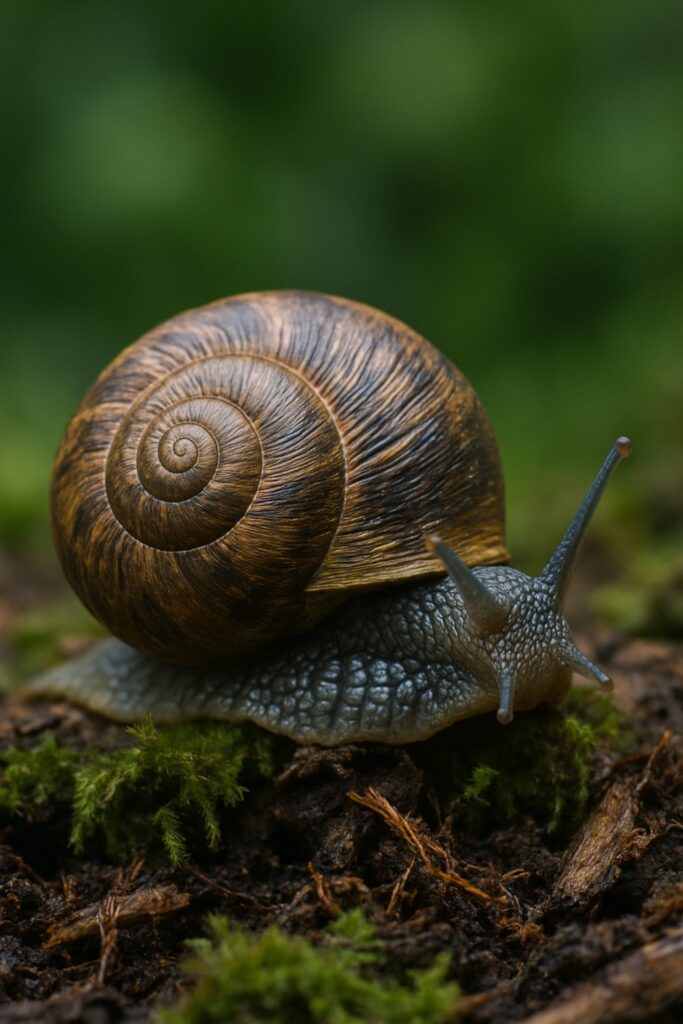
Nobody was looking for a left-handed snail. A retired scientist was just turning over compost in his London garden when he found one — and what happened next took two years, three continents, and one genuinely heartbreaking twist to resolve.
In 2016, that snail ended up in the hands of Dr. Angus Davison, a geneticist at the University of Nottingham who’d spent years trying to understand why snail shells coil the direction they do. The snail’s name became Jeremy. And Jeremy’s story turned out to be equal parts science breakthrough and biological tragedy, the kind you almost don’t want to explain because the setup sounds too strange to be real.
Why the Left-Handed Snail Jeremy Was So Alone
Garden snails — Cornu aspersum, if you want to be precise — grow shells that spiral clockwise when you look down from the top. Almost universally. Jeremy’s spiraled counter-clockwise, a condition called chirality reversal. The odds of finding a naturally occurring left-coiling garden snail sit at roughly one in a million. Davison recognized immediately what he was looking at.
But here’s the thing — this wasn’t just about aesthetics. Snails mate face-to-face, bodies pressed together, organs aligned. When one coils clockwise and the other counter-clockwise, their reproductive geometry ends up completely mirrored. Nothing connects. Jeremy wasn’t just statistically unusual. Jeremy was structurally, physically, unable to mate with any snail on Earth.
That last detail kept me reading about this for another hour.
The Internet Searches for Jeremy’s Perfect Match
Davison’s team did something that would’ve seemed absurd a generation ago: they went online and asked the public to help find a mate. Not metaphorically. They posted Jeremy’s story, explained the problem, and waited.
It worked. Newspapers picked it up, social media ran with it, and within weeks two left-coiling snails had been found — Lefty, discovered by a garden center owner in Ipswich, and Tomeau, spotted by a snail enthusiast in Majorca, Spain. You can read about other animals whose stories changed science at this-amazing-world.com, but few of them have this particular flavor of emotional whiplash.
Three left-coiling snails. In one lab. That had essentially never happened before.
Lefty and Tomeau Had Other Plans
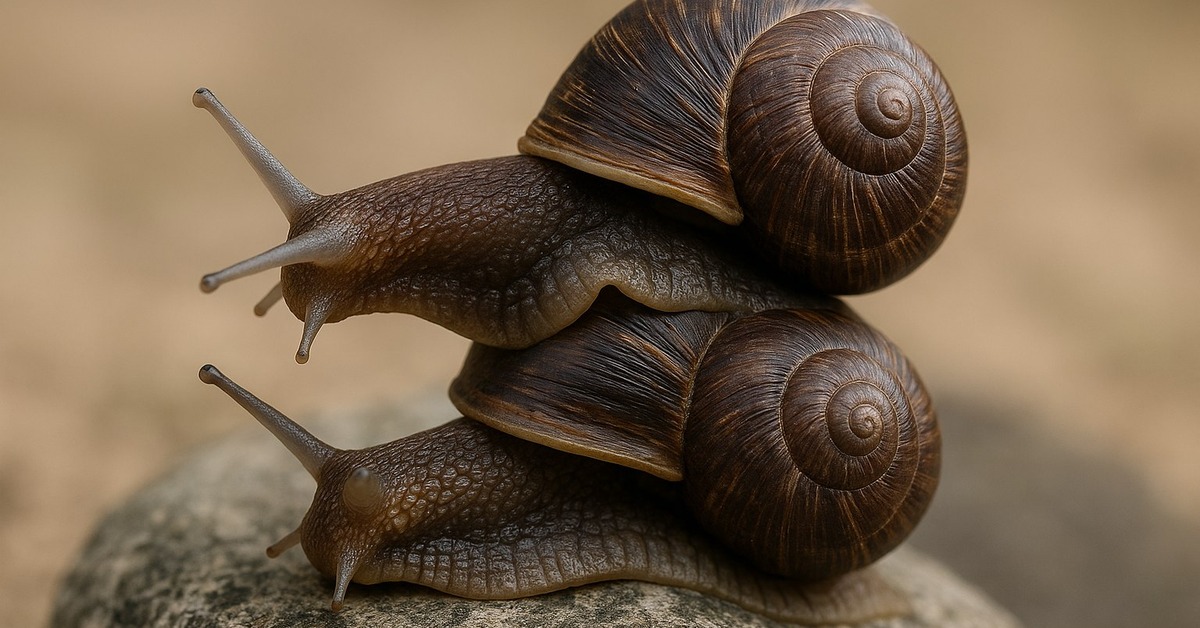
When the three snails were introduced, scientists expected some combination of Jeremy-plus-Lefty or Jeremy-plus-Tomeau. What they got was Lefty and Tomeau pairing with each other — and ignoring Jeremy entirely. The snail who’d started the whole search sat on the sidelines while his two potential mates chose each other instead.
Reportedly, the scientists watching this unfold laughed. What else do you do.
Eventually the situation resolved itself — snails are hermaphrodites, the pairings flexible — and Jeremy did mate with Tomeau, then later with Lefty as well. But the timing stung. His moment came late. It came second. Both Lefty and Tomeau produced clutches before Jeremy’s contributions arrived.
Then Came the Twist That Changed Everything
Fifty-six baby snails hatched from Jeremy’s successful matings. Researchers leaned in.
Every single one coiled clockwise. Not one inherited the left-handed trait. The left-handed snail Jeremy had successfully passed on his genes — and his most visible characteristic had completely vanished in the next generation. Which raises the obvious question: how does that even work?
Turns out it was the answer to something scientists had been puzzling over for decades.

What Jeremy’s Babies Actually Proved
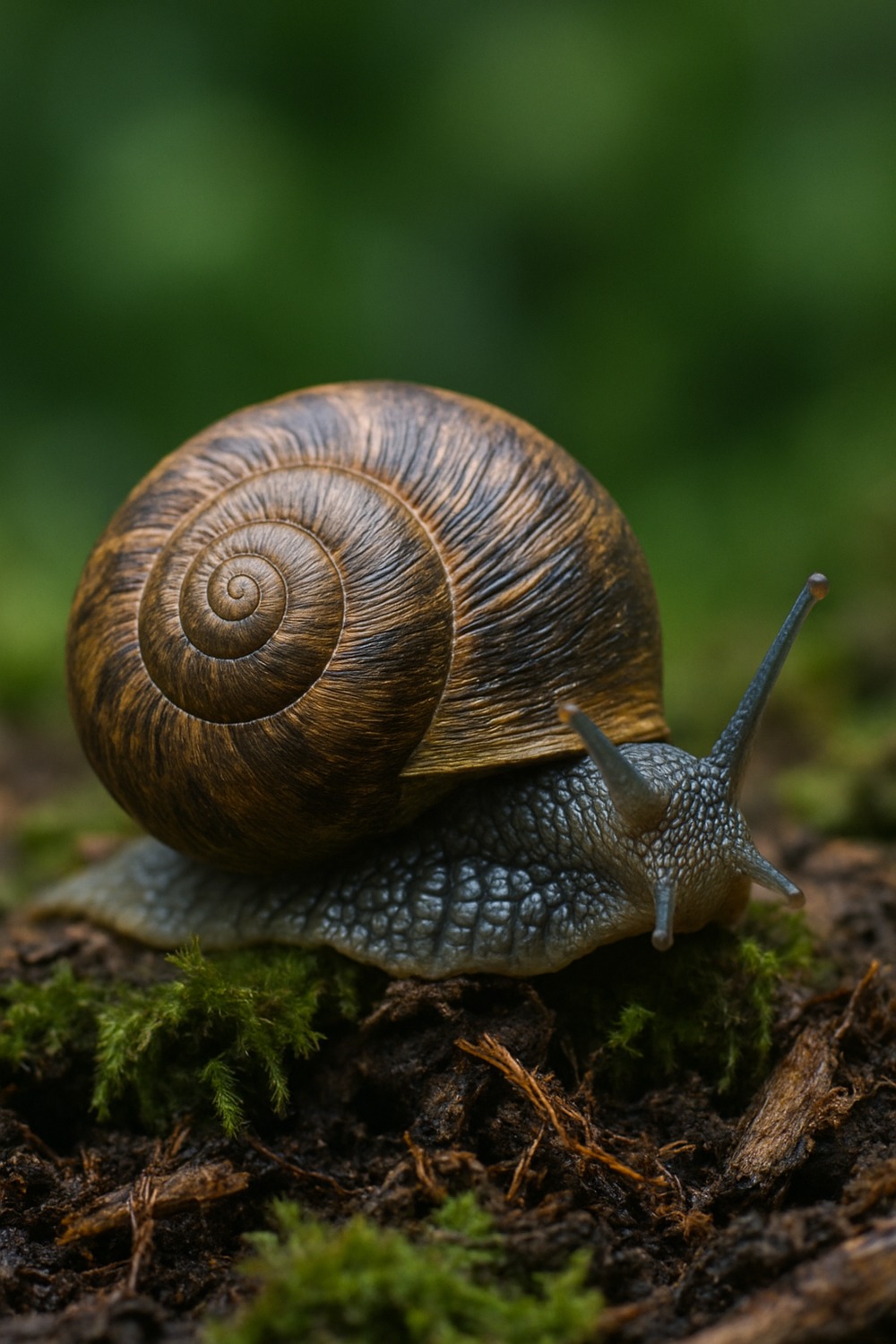
Shell coiling direction in snails isn’t determined by the snail’s own genes. It’s determined by the genes of its mother. That’s called maternal effect inheritance, and it’s genuinely strange when you sit with it — your physical form shaped not by what you carry, but by what your mother carried. Because Jeremy’s mother had been a standard right-coiling snail, all of Jeremy’s children coiled right, regardless of whatever mutation Jeremy himself had. The left-coiling trait could only re-emerge, if at all, in the generation after that.
Davison published the findings in Current Biology in 2017. The paper identified a single gene — Lsdia1 — as likely responsible for Jeremy’s condition. A genuine breakthrough, traced back to one snail in one compost heap.
Jeremy died in October 2017, shortly after the research concluded. He didn’t live to see the paper published.
By the Numbers
- Roughly 1 in 1,000,000 garden snails naturally displays left-coiling chirality — which makes the odds of Jeremy turning up in someone’s compost heap almost comically small (University of Nottingham, 2016).
- 56 offspring from Jeremy’s matings. Every one coiled clockwise, which confirmed the maternal effect inheritance hypothesis cleanly enough that the researchers didn’t need to hedge their conclusions.
- Lsdia1 — the candidate gene identified from Jeremy’s genome
- Body asymmetry disorders in humans, including situs inversus, where organs appear mirrored, affect approximately 1 in 10,000 people. The molecular mechanisms involved may share deep evolutionary roots with exactly what Jeremy’s case revealed about snail chirality.

Field Notes
- Garden snails are simultaneous hermaphrodites, meaning each individual carries both male and female reproductive organs. That’s why Jeremy could potentially mate with either Lefty or Tomeau, and why both were capable of laying eggs afterward.
- Formins — the gene family Lsdia1 belongs to — also play a role in heart development in vertebrates. Including humans.
- After Jeremy’s story went public, Davison received snail specimens mailed in from members of the public across multiple countries. Several turned out to have genuinely unusual coiling patterns worth investigating further.
Why One Snail’s Story Still Matters to Science
The question of why bodies are asymmetric — why your heart sits left, why your liver sits right, why a snail’s shell coils one way and not the other — is one of developmental biology’s most stubborn puzzles. It seems like it should have an obvious answer. It doesn’t. Jeremy gave researchers a clean, traceable thread: one mutation, one gene, one generation of offspring with a result that was unambiguous.
That kind of precision almost never comes from a planned experiment.
It came from a retired scientist who happened to look twice at something in a compost heap. It came from strangers on the internet genuinely caring, briefly but really, about something small and strange. And it came from a snail who spent his entire life slightly out of alignment with everything around him — and who, against considerable odds, still managed to leave something behind.
Jeremy died having mated, having contributed to real science, and having briefly made the world pay attention to something most people step over without a second glance. His offspring carry his genes even if they don’t carry his twist. The research he made possible is still being cited. Not a bad legacy for a garden snail found in a pile of rotting vegetable matter. If this kind of story keeps you up at night, there’s more at this-amazing-world.com — and the next one is even stranger.


