Judi Dench’s Secret Woodland: A Living Forest of Memory
Here’s the thing about Judi Dench’s secret woodland: it doesn’t exist on any map, has no signage, and you cannot simply turn up. On a quiet six-acre estate in Surrey, she has spent years planting trees — one for each person she has loved and lost — and the result is something that defies easy categorization. Not a cemetery. Not a garden. Something older and stranger than either.
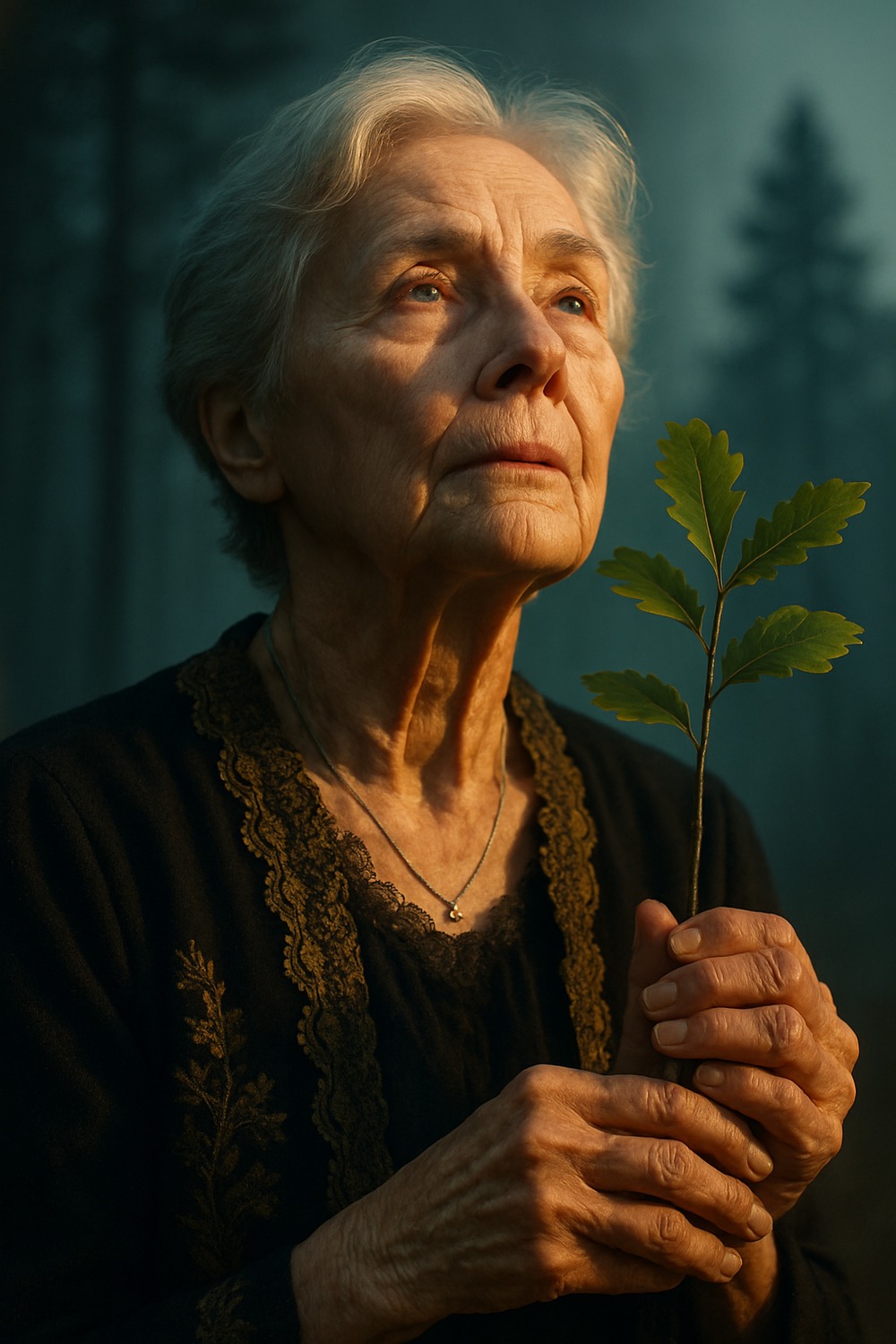
Roots of Remembrance: How the Woodland Began
It started with Michael Williams. When Dench lost her husband — the accomplished actor, dead of lung cancer in January 2001 — she needed somewhere to put it all. Flowers wilt. Photographs curl at the edges. A tree, though, does something different: it deepens, spreads, changes with the seasons, almost like it’s still in conversation with whoever it honors. So she planted one for Williams on her Surrey property, and something clicked.
The woodland grew from that single act.
More trees followed, each dedicated to a friend, a colleague, a family member gone. By the time of her 2017 BBC documentary — Judi Dench: My Passion for Trees — she was calling the grove her “extended family,” which is a deceptively simple phrase for what’s actually there. These aren’t cold stone monuments standing stiff against an English sky. Every tree in that woodland is simultaneously an elegy and a declaration — organisms with lifespans that’ll likely outlast anyone who remembers planting them, proof that love, like a root system, doesn’t stop at the surface.
A Universal Language: Tree Planting Across Cultures and Time
Personal as it is, Dench’s woodland drops her squarely into one of humanity’s oldest habits. Ancient Celtic sacred groves blurred the boundary between living and dead beneath their canopies. Japanese families plant cherry trees for ancestors, the brief blossoms functioning as a yearly meditation on impermanence. Jewish tradition has long tied tree planting in Israel to acts of memory and hope. Indigenous communities across the Americas, Africa, and the Pacific have understood trees as repositories of ancestral presence for generations. Across every continent and most of recorded history, people have turned to trees when language fails them. Dench didn’t invent this impulse. She just rediscovered it, quietly, in Surrey.
Why does this matter? Because science is now catching up to what those traditions always sensed. Research in environmental psychology and grief counseling increasingly supports the idea that tending a living memorial can meaningfully ease emotional suffering. Horticultural therapists call it “future anchoring” (and this matters more than it sounds) — planting a tree forces the grieving person to mentally project into a future where the tree will grow, gently interrupting the backward pull of rumination. There’s also the ongoing relationship a living tree provides: somewhere to return, something that keeps changing, a presence that feels — not mystically, but genuinely — like companionship.
The Ecological Dimension: Memory as Conservation
Grief, it turns out, is also good for beetles. A single mature broadleaf tree can support hundreds of species of insects, birds, fungi, and lichens — sequestering carbon, stabilizing soil, managing rainwater, moderating local temperatures. Scale that up to even a modest woodland and you’ve got a functioning ecosystem: birds nesting in branches planted for the dead, foxes denning under their root systems, beetles working the bark.
What grows on that Surrey estate isn’t purely personal anymore. Memorial planting, done at sufficient scale, isn’t merely symbolic — it’s conservation, full stop, whether or not anyone standing beneath those canopies ever thinks of it that way. The personal ripples outward, into soil layers and species counts and carbon tallies that no grief counselor would have thought to mention.
Watching someone turn private loss into living habitat, you stop calling it a coping mechanism and start calling it what it actually is: an act of ecological generosity that most conservation campaigns could only dream of inspiring.
How It Unfolded
- 2001 — Dench plants the first tree on her Surrey estate, dedicated to her husband Michael Williams, following his death from lung cancer in January
- Mid-2000s–2010s — The woodland expands steadily as Dench adds trees for friends, colleagues, and family members; the practice remains largely private
- 2017 — BBC documentary Judi Dench: My Passion for Trees brings the woodland to public attention; Dench describes the grove as her “extended family”
- Ongoing — The woodland continues to grow, functioning simultaneously as a personal memorial and a biodiverse ecosystem on the six-acre estate
By the Numbers
- 6 acres — approximate size of Dench’s Surrey estate where the woodland grows
- 2001 — year the first memorial tree was planted, for Michael Williams
- Hundreds of species — insects, birds, fungi, and lichens a single mature broadleaf tree can support
- 2017 — year the BBC documentary brought the woodland to wider public attention
Growing Into Loss: What Dench’s Woodland Teaches Us
Gaps remain. The long-term psychological effects of memorial woodland practices — across different cultures, income levels, and types of grief — are still poorly understood. Species selection matters enormously. So do soil health, forestry management, and a changing climate, variables that even devoted caretakers can’t fully control.
And nobody has studied what happens, psychologically, when a memorial tree fails and dies. That question sits at the center of the whole practice, and the research simply isn’t there yet. These aren’t trivial concerns.
Editor’s Take — Alex Morgan
I’ve spent time around formal memorials — plaques, benches, named hospital wings — and there’s always a faint staleness to them, the sense that the grief has been tidied away rather than honored. What Dench built in Surrey doesn’t do that. It stays alive, which means it stays uncomfortable, which means it stays true. The part that lingers for me: every beetle under that bark, every bird in those branches, owes its presence to someone’s absence. That trade-off strikes me as one of the more honest things a person can arrange.
But none of those open questions erase what’s already evident in what Dench has built. In planting a tree for Michael Williams, and then another, and another after that, she landed on something ancient and essential: the idea that love is more honestly expressed in the present continuous than in the past tense. Her woodland isn’t a cemetery. It’s not a monument, either. It’s memory that keeps growing — held not in stone but in living wood, sheltering birds and beetles and the occasional quiet visitor who grasps, without needing to be told, exactly what they’re standing in.