



Komodo dragon osteoderms shouldn’t exist — not by any logic that says armor is something you’re born with or you aren’t. These dragons hatch with smooth, flexible skin. Then decades pass, fights accumulate, and somewhere beneath the scales, bone begins to grow. Not from the skeleton outward. From the skin itself, inward, fragment by fragment, until what looked like leather is closer to chainmail. The mechanism still isn’t fully understood. The pattern, however, is impossible to miss.
On the Lesser Sunda Islands of Indonesia, adult Komodo dragons carry a secret inside their own skin: a self-assembling suit of chainmail made from bone. Scientists have known for years that crocodilians and some dinosaurs used the same trick. But the discovery that Komodo dragons — the world’s largest living lizards — do it too, and do it progressively across a lifetime of combat, raises a question nobody has fully answered yet. How does a living body know when to grow its own shield?

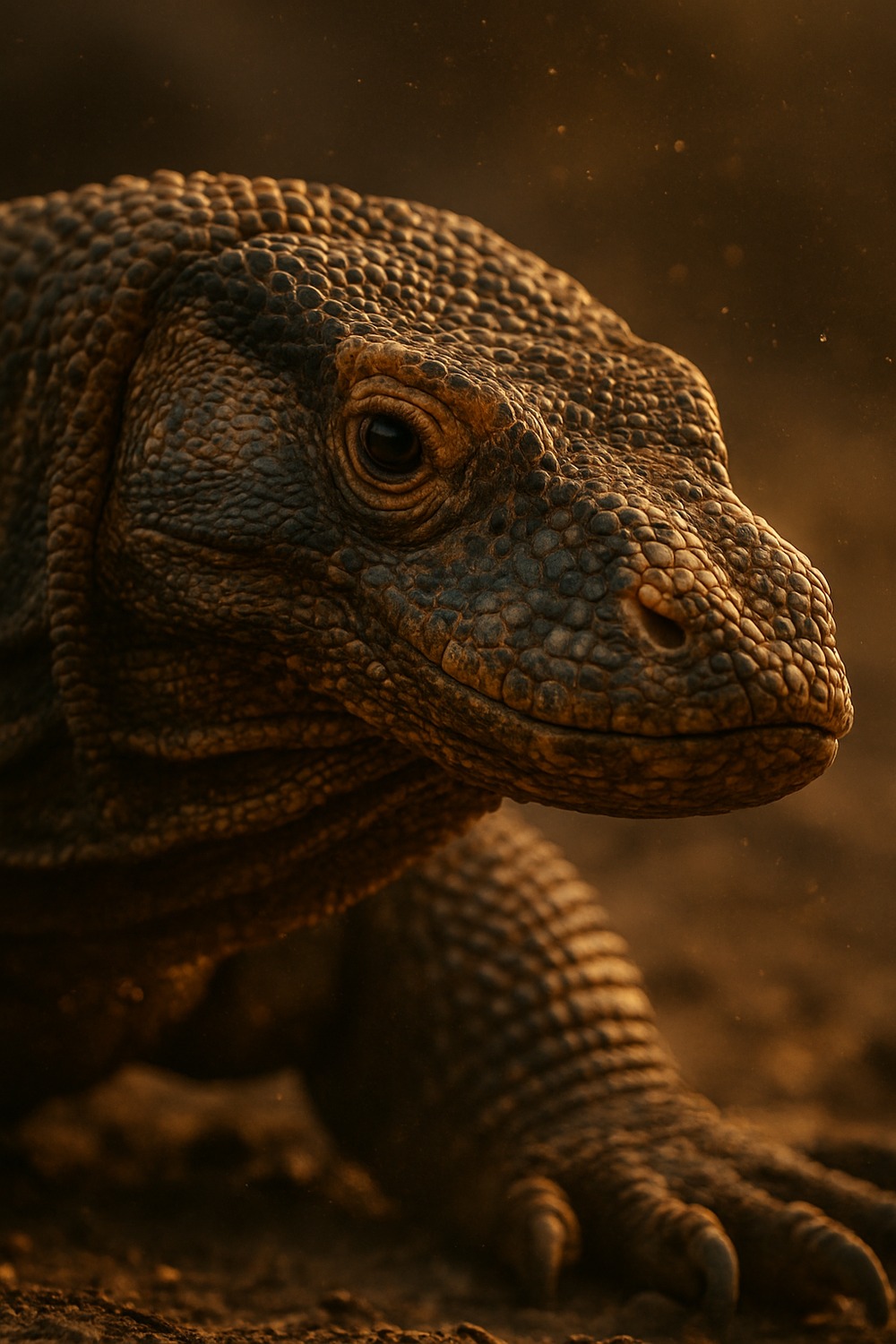
What Komodo Dragon Osteoderms Actually Are
Osteoderms — from the Greek for “bone skin” — are dermal bones that form directly within the dermis layer of an animal’s skin, independent of the skeleton beneath. They’re not extensions of ribs or vertebrae. They’re their own structures, nucleating in soft tissue and mineralizing over time into dense, interlocking fragments. In 2019, a research team at the Museums Victoria in Australia published CT scan analysis confirming that adult Komodo dragons possess a particularly dense and organized osteoderm network — one that differs dramatically from juveniles of the same species. The study used micro-CT imaging on specimens ranging from hatchlings to fully mature adults, mapping bone density across skin samples taken from multiple body regions.
What they found wasn’t uniform. The osteoderms clustered most thickly around the neck, flanks, and dorsal surface — precisely the zones most exposed during combat. For a deeper look at the biological definition of these structures, the Wikipedia entry on osteoderms traces their distribution across reptile lineages going back hundreds of millions of years.
Here’s the thing about the Komodo case: it’s categorically different from a crocodile’s. Crocodilians are born with osteoderms already forming — their armor is developmental, arrives early, refines over time. Komodo dragons hatch with essentially smooth skin, which means every fragment in an adult’s hide arrived after birth, in response to something. Growth hormones, mechanical stress, repeated trauma — the exact trigger isn’t fully resolved. But the pattern is unmistakable: the older and more battle-worn the animal, the denser the armor. Age and violence are written in bone, just not the bone you can see.
Field researchers on Komodo Island have noted the difference when handling juveniles versus adults. Young dragons feel almost supple — the skin moves freely, the scales flex easily. An adult male’s hide is something else entirely. Thick. Resistant. Almost like pressing against leather-covered tile. The difference isn’t just scale thickness. It’s the matrix of mineralized tissue underneath, built fragment by fragment over years of living dangerously.
A World That Demands This Kind of Defense
Why does this matter? Because without understanding the violence these animals absorb daily, the armor makes no sense at all.
To understand why Komodo dragon osteoderms exist, you have to understand what daily life looks like on Komodo, Rinca, Flores, and Gili Motang. Adult male Komodos engage in ritualized combat that looks nothing like the cautious sparring of most lizard species. They rear up on their hind legs — sometimes reaching well over a meter in height — and slash at each other with claws capable of opening deep parallel wounds in seconds. They bite. They wrestle. They drive competitors away from carcasses, mates, and territory with a directness that’s almost shocking given the usual slow pace of their existence. It’s a kind of violence that echoes something far older than this species — and in a way, it mirrors the ancient arms races we see in other lineages. When you read about how velvet worms have carried their predatory toolkit virtually unchanged for half a billion years, it reframes just how long biological “solutions” to the problem of survival can persist. Armor, venom, silk — these aren’t inventions. They’re answers to questions the environment keeps asking.
The Komodo dragon’s answer is living chainmail. But the armor doesn’t just stop wounds — it changes the economics of combat. A study published in 2023 by researchers at the University of Adelaide analyzed bite-force data and wound patterns across multiple adult Komodo specimens. Their analysis suggested that osteoderm density in older males made certain strikes effectively non-penetrating — the claws glanced rather than cut, the bites compressed without reaching muscle. An armored male could absorb attacks that would incapacitate a younger animal. The oldest, most armored males don’t just win fights — they can afford to engage in fights the younger ones can’t survive.
There’s a brutal elegance to this. The armor doesn’t appear until the animal needs it. It builds exactly where the damage accumulates. Evolution didn’t design this as a finished product. It built a system that finishes itself.
The Prehistoric Lineage Behind the Living Armor
Komodo dragons didn’t invent osteoderms. They inherited the genetic machinery to produce them — a capacity stretching back deep into the Mesozoic. Ankylosaurs carried osteoderms across their entire dorsal surface, fusing them into plates so thick that even the largest carnivores of the Cretaceous struggled to penetrate them. Stegosaurs had them. Titanosaur sauropods had them, apparently using them as calcium reserves during egg-laying seasons. Crocodilians still have them today, their osteoderm architecture changed remarkably little across 200 million years. What’s striking about the Komodo dragon’s version is that it represents a kind of evolutionary re-emphasis — a lineage that never fully abandoned the capacity, but also never made osteoderms a primary defense until adult life demanded it. Smithsonian Magazine’s deep-dive into ankylosaur armor development makes a compelling case that dermal bone in reptiles evolves rapidly in response to predation pressure, which maps directly onto what we see in Komodo dragons facing each other.
A species that retains the blueprint for armor across 40 million years of evolution and then deploys it precisely when intraspecific violence peaks — that is not coincidence, and treating it as one would be a mistake the data simply doesn’t support.
What Komodo dragon osteoderms share with their ancient predecessors is the formation mechanism: dermal ossification driven by osteoblasts migrating into the dermis and laying down mineralized matrix (researchers actually call this process intramembranous ossification, distinct from the endochondral bone formation of the internal skeleton). In juvenile Komodos, this process is essentially dormant. Something activates it as the animals mature — current hypotheses point to rising testosterone levels, which are known to stimulate bone-forming activity in other reptile groups. A 2021 paper from the Naturalis Biodiversity Center in Leiden tracked hormone profiles in captive Komodo dragons from hatching through adulthood and found a strong correlation between testosterone surges at sexual maturity and the first measurable osteoderm formation.
That feedback loop is remarkable. The same biochemical shift that sends a male Komodo into combat also begins building his protection against it. The body doesn’t wait to see whether he survives. It starts fortifying before the first serious fight begins.
Komodo Dragon Osteoderms Under the Scanner
Modern imaging technology has transformed what researchers can learn from Komodo dragon osteoderms without sacrificing an animal or removing a single scale. Micro-CT scanning — the same technology used to examine ancient fossils without destroying them — allows scientists to map the three-dimensional architecture of osteoderm networks in living or preserved specimens at sub-millimeter resolution. A landmark study published in the Journal of Morphology in 2020 by a joint team from the University of Southern California and the American Museum of Natural History created the first complete osteoderm maps for adult Komodo specimens held in museum collections. The maps revealed something unexpected: the osteoderms weren’t randomly distributed. They formed distinct regional clusters, with the densest concentrations forming a kind of collar around the neck and a double row down each flank — a layout corresponding almost precisely with the strike zones documented in combat footage of wild males on Rinca Island.
And that geometry is what separates functional armor from biological noise. A random scatter of bone fragments offers generalized resistance. An organized mosaic — fragments oriented and interlocked in specific directions — offers directional resistance, stronger against strikes arriving from predictable angles. Whether this organization is genetically pre-patterned or mechanically induced by the direction of repeated impacts, researchers still debate. Both mechanisms are biologically plausible. Either answer would be extraordinary.
Conservation teams working with the IUCN Komodo Dragon Species Survival Program have begun incorporating osteoderm density analysis into health assessments for captive animals. A dragon with poorly developed osteoderms for its age may indicate hormonal disruption, nutritional deficiency, or chronic stress — factors affecting both survival in the wild and breeding success in managed populations. The armor, it turns out, is also a health metric.

Where to See This
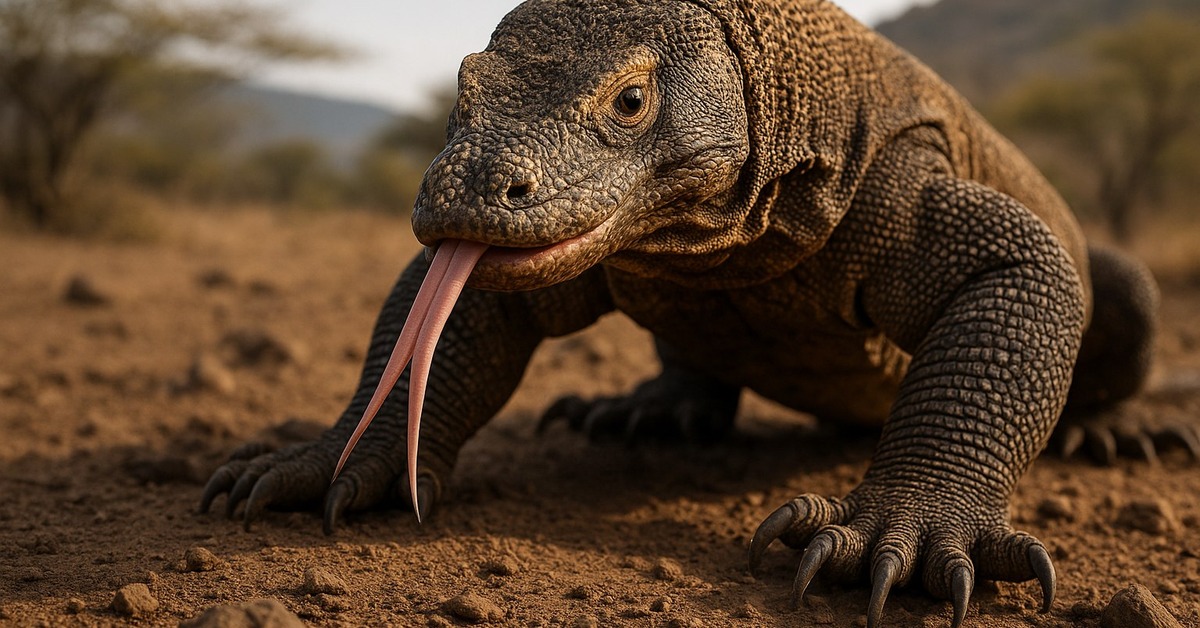
- Komodo National Park, Indonesia (UNESCO World Heritage Site, covering Komodo, Rinca, Padar, and surrounding islands) — the only place on Earth to observe wild Komodo dragons in their natural territory; dry season visits between April and August offer the best sighting conditions when dragons are most active around waterholes and open savannah.
- Naturalis Biodiversity Center in Leiden, Netherlands, maintains one of the most significant Komodo dragon research collections in the world, including preserved specimens used in osteoderm studies; their digital specimen library is partially accessible online at naturalis.nl.
- For readers wanting to go deeper: the 2019 Museums Victoria CT scan study and the 2020 Journal of Morphology osteoderm mapping paper are both accessible through Google Scholar and represent the clearest current picture of how this living armor actually develops.
By the Numbers
- Fewer than 1,400 Komodo dragons are estimated to remain in the wild (IUCN Red List, 2021 assessment — status: Endangered).
- Adult male Komodos can reach 3 meters in length and exceed 70 kilograms — making them the world’s largest living lizard species by mass.
- Osteoderm fragments in mature adult specimens measure between 0.5 and 4 millimeters in their longest dimension, with the densest regions containing over 70 individual fragments per square centimeter of skin surface.
- Testosterone levels in adult male Komodo dragons spike approximately 3–4 times baseline during breeding season, coinciding with the period of peak osteoderm formation activity (Naturalis Biodiversity Center, 2021).
- 40 million years ago, the Komodo dragon lineage diverged from its closest monitor lizard relatives — osteoderm development appears to be a trait that intensified in the genus as body size increased.
Field Notes
- In 2018, a wildlife ranger on Rinca Island observed a sub-adult male absorb a full-force bite from an adult during a feeding dispute near a buffalo carcass — the wound barely broke skin in the neck region, while the same attack delivered to the animal’s unarmored leg produced a deep laceration. The contrast was documented in the Komodo National Park ranger logs and later referenced in the 2020 morphology study.
- Komodo dragon osteoderms are not visible externally — the overlying scales look and feel similar to those of many large monitor lizards. The armor is entirely hidden, which is why it went unconfirmed in this species until CT imaging became routine in herpetological research.
- Female Komodo dragons also develop osteoderms, but studies consistently show lower overall density than age-matched males — consistent with reduced participation in high-intensity territorial combat, and with lower circulating testosterone levels throughout most of their adult life.
- Researchers still can’t fully explain why some individual Komodos develop significantly denser osteoderm networks than others of identical age and sex. Genetic variation, individual combat history, and local diet differences are all being investigated — but no single variable has yet predicted osteoderm density with any reliability.
Frequently Asked Questions
Q: What exactly are Komodo dragon osteoderms, and how do they form?
Komodo dragon osteoderms are small mineralized bone fragments that develop directly within the dermis — the deep layer of the skin — independent of the animal’s internal skeleton. They form through dermal ossification, where bone-forming cells called osteoblasts migrate into soft tissue and deposit calcium-rich matrix over time. In Komodo dragons, this process begins around sexual maturity and continues throughout the animal’s life. The fragments interlock gradually, building a subsurface mosaic that provides mechanical protection against strikes and bites.
Q: Do all Komodo dragons have this armor, or only adults?
Only adults develop significant osteoderm networks. Hatchlings and juveniles are born with essentially no osteoderms — their skin is comparatively soft and flexible. Development begins in earnest around the time animals reach sexual maturity, typically between five and seven years of age, closely tied to rising testosterone levels that stimulate bone-forming activity in the dermis. A very old, battle-experienced male carries a fundamentally different body than a two-year-old of the same species.
Q: Is it accurate to say Komodo dragons are immune to each other’s bites because of this armor?
Not entirely — and that’s an important distinction. Komodo dragon osteoderms provide meaningful mechanical resistance in heavily armored regions like the neck and flanks, making certain bites and claw strikes less penetrating than they would otherwise be. But the armor isn’t complete body coverage, and unarmored regions — legs, the underside, the face — remain vulnerable. The more accurate picture is one of selective protection that changes the dynamics of combat rather than eliminating risk entirely. Komodos can and do injure each other seriously, even in armored adults, when strikes land on unprotected areas.
Editor’s Take — Dr. James Carter
What strikes me most about this story isn’t the armor itself — it’s the timing. The same hormonal surge that makes a male Komodo aggressive enough to fight also starts building the protection he’ll need to survive those fights. That’s not a coincidence. That’s a system. And it makes you wonder how many other “passive” features in long-lived animals are actually dynamic responses to lived experience — body plans that write their own history in bone, not just behavior. We’ve barely started asking that question seriously.
A Komodo dragon’s armor isn’t decorative and it wasn’t designed. It’s a biological record — of fights picked and fights survived, of a body responding to a world that never stopped trying to kill it. Every heavily armored adult male moving through the dry scrub of Rinca Island carries decades of violence in his own skin, calcified, organized, and ready for the next encounter. What other records are animals writing in their bodies that we don’t yet have the technology to read?


