Ladybugs: Nature’s Tiny Warriors Defending Your Garden
Ladybugs and good luck have been tangled together for so long that most people forgot to ask the stranger question — why would something so small bother being poisonous? That spotted shell sitting in your garden right now isn’t charm. It’s a warning, and nearly every creature that’s ignored it has regretted the decision. The ladybug has spent roughly 80 million years perfecting a system of natural pest control, chemical defense, and ecological necessity that we’re still not fully mapping. Science keeps finding more than it expected.
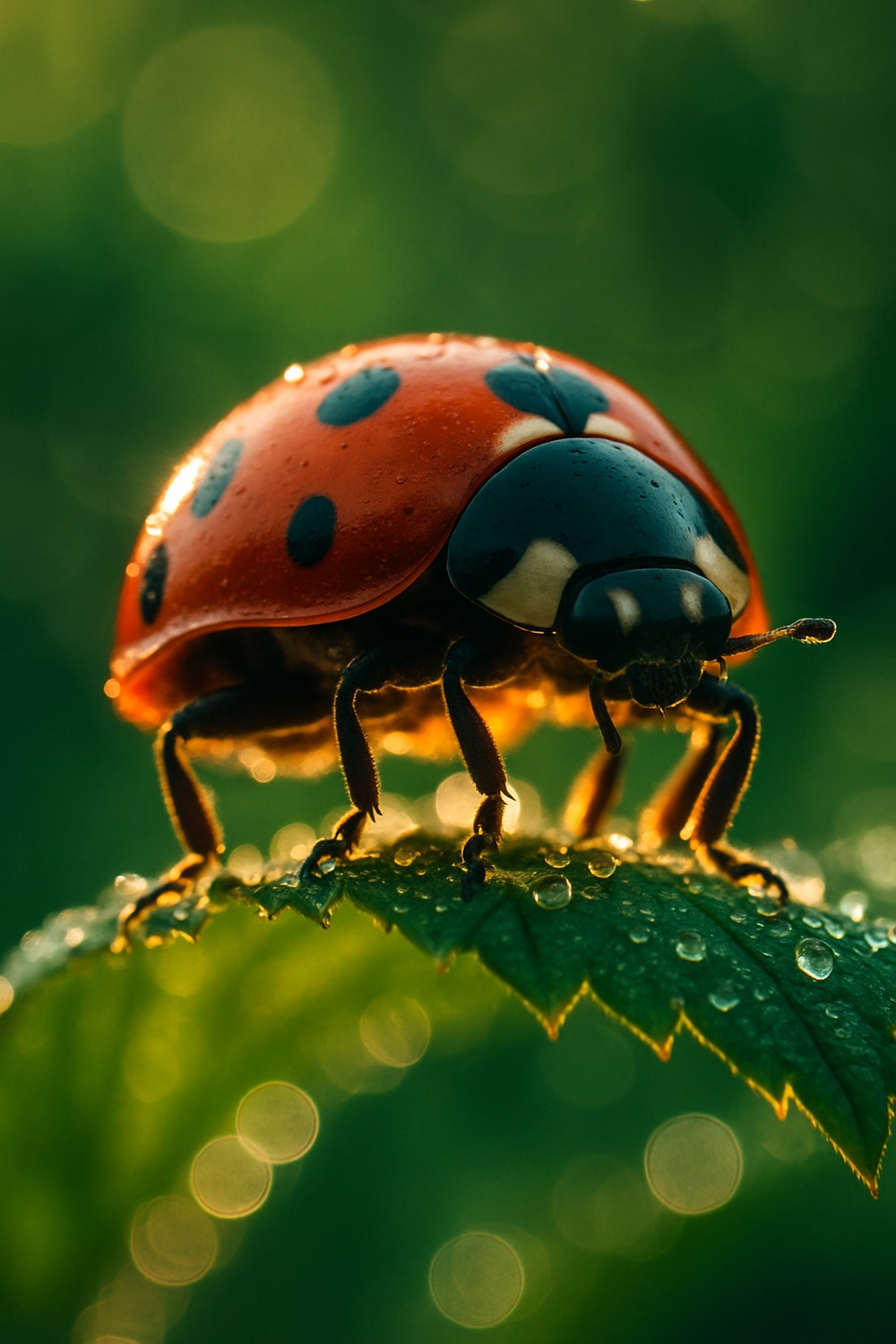
A Warning Painted in Red
That famous red shell isn’t decoration. It’s a threat. The vivid reds, oranges, and yellows ladybugs wear are a biological broadcast signal — an evolutionary language aimed directly at the nervous systems of anything that might consider eating them. Scientists call it aposematism: using conspicuous color to advertise that you will taste terrible, or worse. In the ladybug’s case, the warning is genuine. When threatened, the beetle releases hemolymph through its leg joints — a bitter, alkaloid-laced fluid in a behavior known as reflex bleeding. The compounds in that fluid, including toxic alkaloids such as coccinelline, are foul enough to stop birds and lizards mid-bite.
Experiments have shown repeatedly that a naive predator needs only one encounter with a ladybug to learn the lesson. Bright red means leave it alone. Some harmless insects have even evolved to mimic ladybug coloration, borrowing a toxic reputation they haven’t earned — a phenomenon called Batesian mimicry that speaks volumes about how well-established the signal has become. Ladybugs didn’t develop this coloration overnight. They refined it across millions of years in a constant arms race with predators simultaneously evolving sharper eyes. That red shell isn’t borrowed from folklore. It’s a shield forged by deep time, and it works.
Nature’s Pest Control Army
Gardeners who don’t recognize a ladybug larva — and most don’t — are missing half the story. The larvae look like tiny dark spiny alligators, nothing like their polished adult form, and they are arguably even more aggressive hunters. Both stages of life are built around one core activity: eating soft-bodied insects, aphids above all.
Why does this matter? Because aphids can produce dozens of offspring per week from a single individual, and without natural predators keeping pace, a modest problem becomes a crop-destroying catastrophe within a single growing season. A single ladybug can consume somewhere between 5,000 and 6,000 aphids across its lifetime, with some studies pushing that figure higher under optimal conditions. The numbers are not easy to brush off.
It’s why ladybugs have been put to deliberate work for well over a century. In the 1880s, the vedalia beetle — a ladybug species — was introduced to California citrus orchards to combat the cottony cushion scale insect, saving an industry that was otherwise heading for collapse. That intervention still stands as one of the earliest and most successful examples of biological pest management on record. Commercial ladybug releases are marketed to home gardeners today, though their effectiveness in open spaces is debated since released beetles tend to disperse. Naturally established populations, however, consistently deliver measurable reductions in aphid pressure. A garden that’s genuinely welcoming to ladybugs needs fewer synthetic pesticides — and that matters for everything downstream, from soil microbes to pollinators to the nearest waterway.
The Hidden Cost of Being Toxic
Here’s the thing about producing poison: it isn’t free. Every biological resource spent on toxin synthesis is a resource not spent on growth, reproduction, or fighting off disease. Scientists are actively asking whether toxin production scales with local predator density, whether it shifts across seasons, and whether the nutritional quality of prey changes a beetle’s chemical arsenal.
Preliminary evidence suggests it might — ladybugs fed on high-quality aphid populations may produce more potent defensive secretions (researchers actually call this diet-dependent chemical defense). If that holds, the beetle’s role as a pest controller and its survival strategy aren’t separate things at all. They’re the same loop. Eat well, defend better. Researchers are only beginning to map exactly how that works, but the elegance of it is hard to overstate — a creature this small, running this many systems at once, on a diet of garden pests.
The evidence for this kind of nutritional-to-chemical feedback, stacking up study by study, deserves far more attention than it gets outside specialist circles.
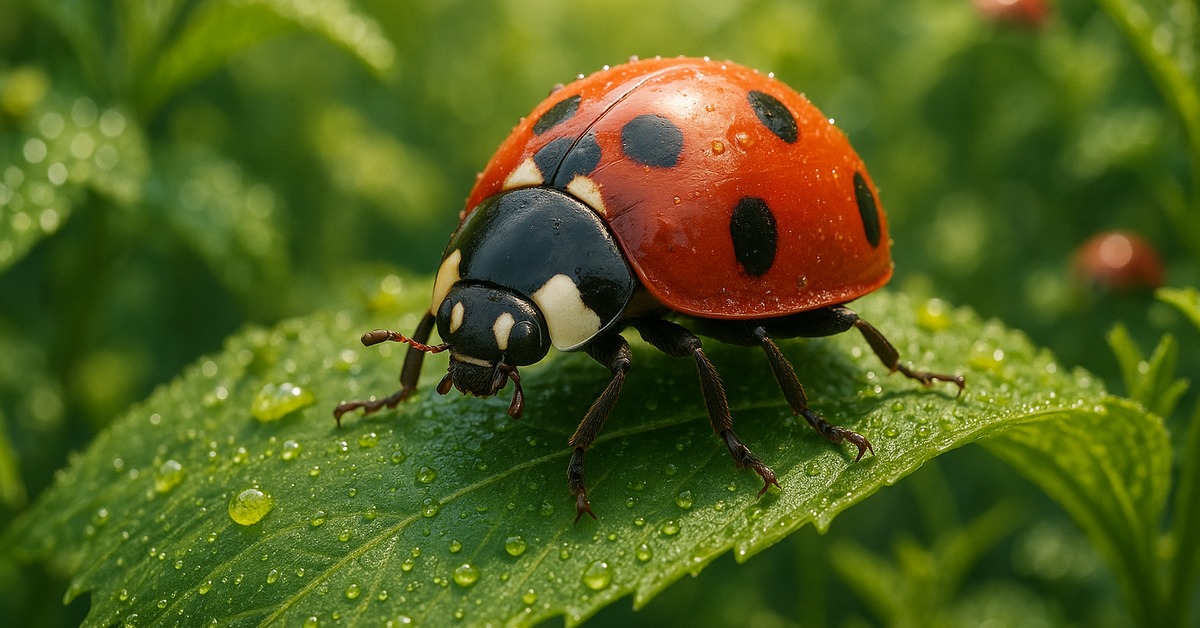
A World Without Ladybugs
Imagining a world without ladybugs isn’t a thought experiment — it’s a direction several ecosystems are already drifting. Aphid populations freed from one of their most reliable natural controls would surge across croplands. Farmers would face growing pressure to apply chemical pesticides, accelerating insecticide resistance and deepening contamination of soil and water.
And the absence would ripple upward too: ladybugs are prey for birds, spiders, and parasitic wasps, so their decline reshapes predator communities in ways that compound quickly. Several ladybug species are already in documented decline across North America and Europe, squeezed by habitat loss, pesticide exposure, climate disruption, and competition from invasive species like the harlequin ladybug, which has been outcompeting native species since it arrived on both continents. The warning signs have been accumulating for years. Anyone watching insect population data closely would not call what’s happening a surprise — they’d call it a slow emergency that we keep choosing not to treat like one.
How It Unfolded
- 1888 — The vedalia beetle (Rodolia cardinalis) is shipped from Australia to California; within two years it collapses a cottony cushion scale outbreak that had been devastating citrus crops, marking the first major deliberate use of a ladybug species in biological pest control.
- 1900s–1950s — Entomologists across Europe and North America begin cataloguing ladybug diversity and documenting the role of reflex bleeding; aposematism in beetles becomes a central case study in evolutionary biology.
- 1980s–1990s — The harlequin ladybug (Harmonia axyridis), originally introduced for pest control in North America, establishes invasive populations and begins spreading across Europe, triggering the first systematic monitoring of native ladybug decline.
- 2010s–present — Large-scale citizen science programs (including the UK Ladybird Survey) begin generating population trend data; research into diet-dependent chemical defense and the metabolic cost of toxin production opens a new front in ladybug ecology.
By the Numbers
- 5,000–6,000 — aphids a single ladybug can consume across its lifetime
- ~6,000 — known ladybug species worldwide
- 80 million years — approximate age of the ladybug lineage
- 1888 — year the vedalia beetle was first deployed as biocontrol in California
- dozens per week — reproductive rate of a single aphid individual under favorable conditions
Field Notes
- Reflex bleeding — releasing hemolymph through leg joints — can account for up to 10% of a ladybug’s body fluid volume in a single threat response
- The harlequin ladybug carries a microsporidian parasite, Nosema adaliae, that appears harmless to itself but can devastate native species it displaces
- Ladybug larvae are often more voracious aphid predators than adults, yet remain largely unrecognized by gardeners who would otherwise protect them
- Some species overwinter communally in aggregations of thousands, a behavior thought to reinforce the aposematic signal through sheer visual density
Frequently Asked Questions
Are ladybugs actually toxic to humans?
Not in any meaningful sense. The alkaloids in ladybug hemolymph are potent enough to deter birds and lizards, but handling a ladybug poses no risk to people. In rare cases, some individuals report mild skin irritation from the secretion — nothing more than that.
Do all ladybug species have the same bright warning colors?
No. While red-with-black-spots is the most familiar pattern, ladybugs come in yellow, orange, black, and even striped varieties. Most share the same underlying logic — conspicuous coloration signaling unpalatability — but the specific pattern varies widely across the roughly 6,000 known species.
Why don’t commercial ladybug releases always work?
Released ladybugs have no established territory and tend to disperse widely from the release site, often within hours. Naturally overwintering populations that emerge locally in spring behave differently — they’re already oriented to the habitat. Buying ladybugs at a garden center is less reliable than creating conditions that attract and retain wild populations.
What’s the biggest threat to ladybug populations right now?
It’s a combination of pressures rather than a single cause: habitat loss reduces overwintering sites and prey diversity; broad-spectrum pesticides kill ladybugs directly or eliminate the aphid populations they depend on; and invasive species like the harlequin ladybug outcompete native species for food and hibernation sites while spreading pathogens. Learn more about the Coccinellidae family on Wikipedia.
Can I attract more ladybugs to my garden?
Yes. Reducing or eliminating broad-spectrum pesticide use is the single most effective step. Beyond that, planting nectar-rich flowers (ladybugs feed on pollen as well as insects), leaving patches of leaf litter or hollow stems for overwintering, and tolerating low-level aphid populations — enough to serve as a reliable food source — all make a garden meaningfully more hospitable. More on garden insects that matter.
Editor’s Take — Alex Morgan
What stays with me isn’t the toxin data or the aphid counts — it’s the harlequin problem. We introduced a ladybug to fix a pest issue, watched it go rogue, and now it’s quietly dismantling the native species that were doing the job for free. That’s a pattern worth sitting with. Every time I see a ladybug on a garden wall now, I find myself wondering which species it is — native or invader — and what that small distinction is quietly costing the ecosystem around it.
For something measured in millimeters, the ladybug carries a disproportionate amount of ecological weight. It’s a toxicologist, a pest controller, a prey species, and an evolutionary achievement refined across roughly 80 million years of beetle history — all in a package small enough to sit on your thumbnail. Next time one lands on your arm in a summer garden, maybe don’t rush to blow it away. That spotted creature has earned its place in the world through genuine biological grit, not mythology. Protecting the conditions that let ladybugs survive isn’t sentiment. It’s the kind of ecological common sense we tend to appreciate only after we’ve lost the thing that needed protecting.