Laila Ali Went 24-0 — And Did It in Her Father’s Shadow
Laila Ali’s boxing record — 24 wins, zero losses — sits in the history books the way certain facts do: quietly, without needing to argue its case. But the number that still stops people isn’t the 24. It’s the zero. In a sport built to find what breaks you, nothing broke her.
She didn’t do either. From 1999 to 2007, she went 24 and 0. Twenty-one of those fights ended before the final bell. And at some point — nobody can pinpoint exactly when — the conversation stopped being about her father and started being about her.
Laila Ali Boxing Record: What 24-0 Actually Means
Perfect professional records are genuinely rare. Not “rare” in the way sports writers use the word loosely — actually rare. Boxing is a sport specifically designed to expose your weaknesses, to put you across from someone who has spent months studying exactly how to hurt you. Going undefeated across an entire career, in that environment, is almost a statistical anomaly. According to Wikipedia’s profile on Laila Ali, she competed across the super middleweight and light heavyweight divisions and collected world titles in both.
Sports historian Dr. Malissa Smith, who has spent years researching women’s combat sports, has noted that Ali’s combination of speed, power, and ring intelligence separated her from virtually every female fighter of her era. So what made her so difficult to solve? She wasn’t one-dimensional.
She could box from distance, cut off angles patiently, and then suddenly collapse the space and throw combinations that finished things fast. Most fighters have a gear. Laila had several, and she knew when to shift between them. That’s not a trainable skill, exactly — some of it is just wiring.
Growing Up Ali: The Weight She Carried
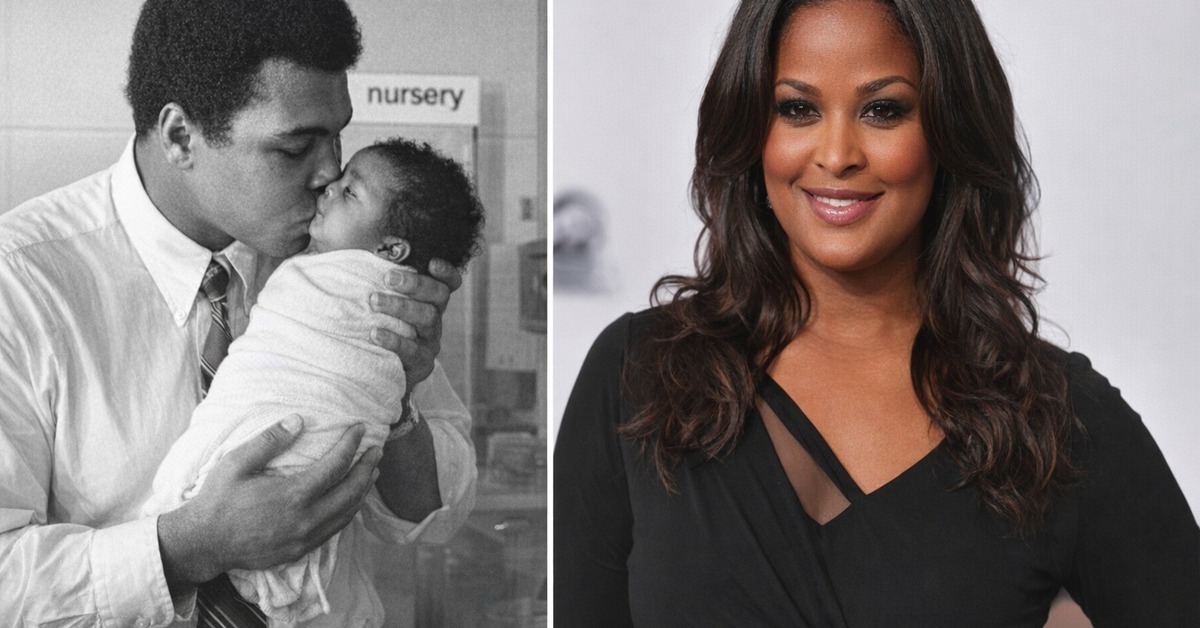
It is 1999. Laila Ali is 21 years old, stepping into a professional ring for the first time, with no amateur record behind her — zero amateur fights. The whole world is watching with a very specific kind of attention, the kind that’s half hoping, half skeptical. The footprints she’s walking in are the most famous in sports history. She turned pro anyway.
Dismantled her opponents anyway. With a confidence that looked almost inherited — which, maybe, some of it was. Her father was famously opposed to her boxing at first. Muhammad Ali, who once told the entire planet he was the greatest of all time, reportedly did not want his daughter in the ring.
She did it anyway.
Here’s the thing: there’s something in that particular act of defiance — against her father, against the comparisons, against everyone’s lowered expectations — that explains the rest of the career pretty efficiently. That stubbornness wasn’t a footnote. It was the engine. Explore more stories about athletes who rewrote what was possible at this-amazing-world.com.
The Knockout Rate That Demands Respect
87.5%. That’s what 21 knockouts in 24 fights works out to. Put Laila Ali’s boxing record next to celebrated male power punchers — fighters who built entire careers on their finishing ability — and a lot of them don’t touch that number over a full professional run. She wasn’t grinding out decisions. She was ending fights, repeatedly, against opponents who knew she was dangerous and prepared specifically for her.
Why does this matter? Because it reframes the whole record — this wasn’t survival, it was dominance, expressed in a language the sport has always understood.
She beat Christy Martin’s protégé. She beat Jacqui Frazier-Lyde — Joe Frazier’s daughter — which meant the bout carried about fifty years of history on both sides of the ring. That fight drew the largest pay-per-view audience women’s boxing had ever seen at that point (researchers actually call this a “crossover moment,” when a niche sport briefly colonizes the mainstream). The mainstream media showed up. The sport paid attention in a different way than it had before.
She stopped being introduced as Muhammad Ali’s daughter, at least in the ring. She became Laila Ali.
And something shifted, quietly, somewhere in there.
The Hall of Fame Moment Nobody Could Deny
Retirement came in 2007. Then came the years that follow a lot of great athletes — where the career is obviously finished and obviously significant, but the formal acknowledgment hasn’t caught up yet. Think of it as the gap between what everyone already knows and what institutions are willing to write down officially.
December 2020: the International Boxing Hall of Fame announced its Class of 2021. Her name was on it. Inducted alongside legends. Permanent.
A record that clean writes its own argument. The committee didn’t deliberate long.
But that induction wasn’t only personal — it was a statement about women’s boxing itself, a sport she’d spent eight years dragging toward legitimacy. The door she cracked open with that Hall of Fame plaque is one that fighters will walk through for generations.
How It Unfolded
- 1997 — Laila Ali takes her first boxing lesson at 18, reportedly without telling her father
- 1999 — Turns professional with zero amateur fights; debut generates international press coverage before she has thrown a punch in a real bout
- 2001 — Faces Jacqui Frazier-Lyde in a bout that sets the women’s boxing pay-per-view record and forces mainstream sports media to pay serious attention
- 2021 — Inducted into the International Boxing Hall of Fame, Class of 2021, making her induction permanent in the sport’s official record
By the Numbers
- 24-0 from 1999 to 2007 — one of the cleanest professional records in modern boxing, full stop (International Boxing Hall of Fame, 2021)
- 87.5% knockout rate: 21 finishes in 24 bouts, which puts her among the most efficient power punchers of her competitive era, men or women
- World titles in two divisions simultaneously — super middleweight and light heavyweight — a physically demanding achievement that required her to be effective across genuinely different weight classes
- Zero amateur fights before turning professional. And she never lost. Boxing analysts still don’t have a clean explanation for that particular career arc.
Field Notes
- Two years elapsed between that first secret boxing lesson and her professional debut — already generating international press coverage before she’d thrown a punch in a real bout.
- Jacqui Frazier-Lyde fight: biggest women’s boxing pay-per-view audience to that point. A cultural moment, not just a sports one.
- After retiring, Laila built a second career as a television host, author, and wellness advocate — a version of life after sport that most athletes spend years chasing without ever finding solid ground.
Why Laila Ali’s Legacy Still Echoes Today
Women’s boxing reached the Olympics in 2012. Laila retired in 2007. That five-year gap isn’t really a coincidence — it’s closer to a sequence. The fighters who came of age watching Laila Ali’s boxing record unfold grew up with proof that women could headline cards, move pay-per-view numbers, and finish fights with genuine authority.
Claressa Shields. Katie Taylor. The entire generation currently making women’s boxing one of the sharpest things happening in combat sports right now. Ask any of them who they watched growing up, and Laila’s name surfaces again and again.
Legacy, it turns out, isn’t always statistical. Sometimes it’s about permission — the demonstrated fact that something is possible, because someone already did it, completely, without apology. History tends to be unkind to the people who needed convincing that this was ever worth watching.
Twenty-four times. Without losing once.
Editor’s Take — Sarah Blake
What doesn’t get said often enough: Laila Ali built a perfect record in a sport that had almost no infrastructure for women when she started. No deep talent pool, no real promotional machine behind her, no template for what this career was supposed to look like. She was essentially inventing the blueprint as she went, fight by fight — and she never dropped a round she couldn’t afford to lose. The fighters competing in women’s boxing today inherited something real. Most of them know it.
Laila Ali walked into one of the longest shadows in sports history and came out the other side with a perfect record, a Hall of Fame plaque, and a generation of fighters who learned what was possible by watching her. She didn’t escape her father’s legacy. She built her own right next to it — same name, different story, equally undeniable. More like this at this-amazing-world.com.