The Last Male Died in 2018. Two Females Remain.
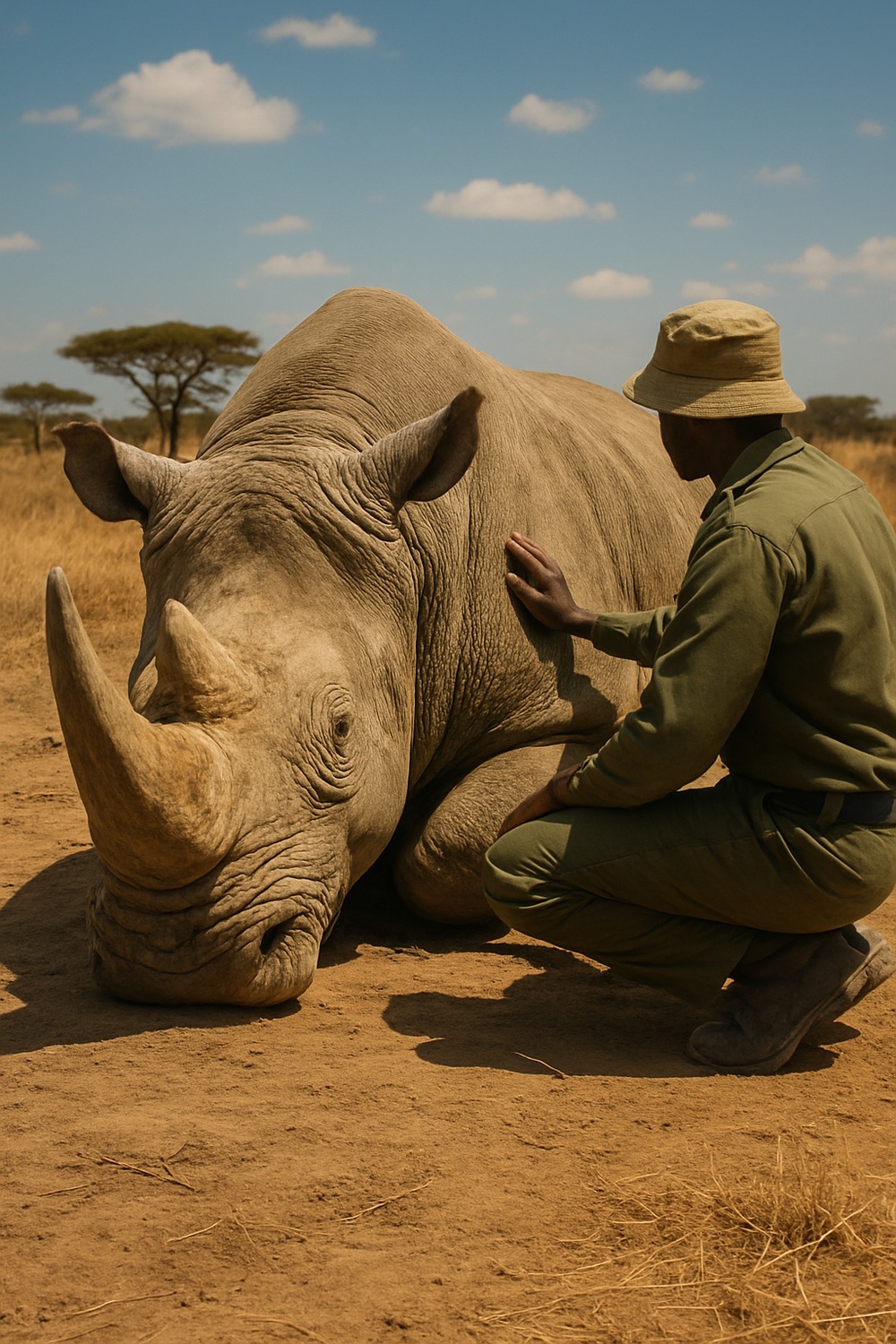
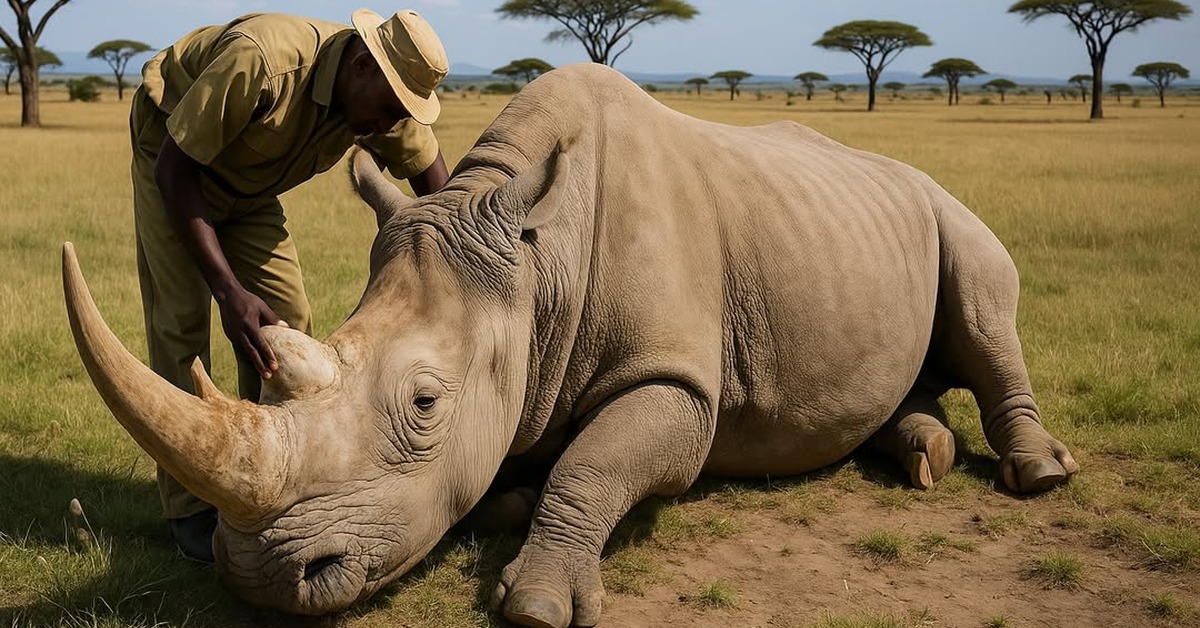
Nobody was looking for a funeral. But on March 19, 2018, a 45-year-old rhino named Sudan lay down in the grass at Ol Pejeta Conservancy in Kenya and didn’t get back up.
He was the last male northern white rhino on Earth. Armed rangers had watched over him around the clock, rifles ready, because even in his final months the threat was real. When he died, he didn’t just leave a gap in an ecosystem. He closed something that had been open for millions of years. And now two animals — a mother and her daughter — are all that’s left.
Northern White Rhino Extinction: How We Got Here
The northern white rhino once ranged freely across central Africa — Uganda, Chad, Sudan, the Democratic Republic of Congo, the Central African Republic. Thousands of them. At the turn of the 20th century, they were simply part of the landscape. By 1984, poaching and habitat loss had hammered that number down to around 15. Conservation groups scrambled, but the math was already brutal. According to the Wikipedia entry on the northern white rhinoceros, the wild population was declared functionally extinct by 2008. Researcher Jan Stejskal of the Safari Park Dvůr Králové in the Czech Republic spent years tracking individuals in captivity, watching a species disappear animal by animal. Which raises the obvious question — how do you save something when there’s almost nothing left to save?
The answer, for decades, was: you try anyway.
Four individuals were transferred to Ol Pejeta in 2009, hoping the African climate would trigger natural reproduction. It didn’t. Then there were three. Then Sudan died. Then two.
Two Females, Armed Guards, and a Shrinking Clock
Najin and Fatu — mother and daughter — are the last two northern white rhinos alive. They live together at Ol Pejeta under 24-hour armed protection, because even now, even as a species stands at the absolute edge of oblivion, the threat of poaching hasn’t gone away. Their horns are still worth money to someone. Rangers carry rifles so that two animals can simply exist.
Say that sentence out loud. It takes a second to land.
If you want to understand what’s at stake in modern conservation, this-amazing-world.com has been covering stories like this one — species clinging on at the margins while the world moves fast around them. You can hear Najin and Fatu before you see them. That deep, resonant huff. The sound of breath carrying the weight of a lineage that survived ice ages, continental droughts, and tens of thousands of years of upheaval — only to arrive here, in this fenced sanctuary, watched by humans with guns.
What Millions of Years of Survival Actually Looks Like
Here’s the thing that reframes everything. Northern white rhinos are ancient. Their lineage stretches back millions of years. They outlasted sabertooth cats. They survived the Pleistocene — the era of ice sheets and megafaunal collapse that erased woolly mammoths, giant ground sloths, and dozens of other species that never made it to the other side. They endured repeated cycles of drought and flood across central Africa without blinking.
The northern white rhino extinction story isn’t about biological weakness. It’s about one specific, targeted pressure: human demand for a single body part.
Rhino horn is made of keratin. Same protein as your fingernails. No verified medical benefit. None. And yet that demand was enough to collapse a species that had held on for millions of years.
That last part kept me reading for another hour.
But the story doesn’t end at Sudan’s death. Because scientists weren’t waiting around.
The Lab Is the Last Habitat
Turns out, the plan to save the northern white rhino was already underway before Sudan died. Researchers at BioRescue — a consortium led by the Leibniz Institute for Zoo and Wildlife Research in Berlin — had been quietly collecting genetic material from Sudan and other rhinos for years. The goal was to use stored sperm from Sudan and other deceased males, fertilize eggs harvested from Najin and Fatu, and implant the resulting embryos into southern white rhino surrogates.
It’s an IVF program unlike anything ever attempted with a large mammal.
The margins are razor-thin. Each egg retrieval is a full medical procedure on a two-ton animal. Each embryo is irreplaceable. There’s no “let’s try again next month” — there’s just this embryo, this animal, this attempt. As of 2023, the BioRescue team had successfully created northern white rhino embryos and stored them. Implantation into a surrogate hadn’t been completed yet, but they were closer than anyone had ever been. The alternative to trying is permanent silence. And apparently that’s not something the people doing this work are willing to accept.
By the Numbers
- In 1960, an estimated 2,000+ northern white rhinos existed across central Africa — by 2015, only 3 remained (WWF, 2023)
- Rhino poaching in Africa increased by over 9,000% between 2007 and 2014, driven almost entirely by demand from Asian markets (TRAFFIC wildlife trade monitoring network)
- Sudan’s preserved sperm — collected before his death — is one of the last viable genetic contributions from a male of the subspecies; BioRescue has created at least 30 embryos from this material as of 2023
- Southern white rhinos, the likely surrogates, now number around 20,000. They were down to fewer than 50 in the late 1800s, which makes them one of conservation’s genuinely remarkable turnaround stories — and proof that the math can, occasionally, go the other way.
Field Notes
- Fatu cannot carry a pregnancy herself — a degenerative hip condition means any embryo must go into a southern white rhino surrogate, adding another layer of complexity to an already unprecedented procedure
- Sudan wasn’t wild-caught. He spent years at Safari Park Dvůr Králové in the Czech Republic before being moved to Kenya. His final years in an African landscape were, in some strange way, a homecoming for a subspecies that had been displaced from its entire range.
- The San Diego Zoo’s Frozen Zoo biobank holds genetic material from 10,000+ individual animals across more than 1,000 species
- That biobank includes northern white rhino samples — and it’s considered one of the most critical conservation resources on the planet for exactly this kind of scenario, where the living population can no longer save itself alone.
What We Lose When We Lose a Species Forever
The northern white rhino extinction conversation tends to focus on the how — the poaching, the politics, the failed breeding programs. But the what is worth sitting with a little longer.
These animals shaped ecosystems. They grazed in patterns that maintained grasslands. They moved through landscapes in ways that other species quietly depended on. When a large megaherbivore disappears, the effects ripple outward in ways that take decades to fully understand. Ecologists call this a trophic cascade — and we’re living through dozens of them simultaneously without always connecting cause to effect.
There’s also something harder to quantify. We don’t fully understand what we lose when we lose a genome. Northern white rhinos carry genetic information honed over millions of years of adaptation. What resistances are encoded in there. What biological responses. What information we haven’t even thought to look for yet. The honest answer is we won’t know what we’ve lost until long after it’s gone.
Sudan lay down in the grass and the world barely paused. But Najin and Fatu are still there — breathing, eating, being watched over by people who’ve decided that two animals are worth protecting with their lives. The BioRescue team is still working. The embryos are still viable. Nothing is certain. But the effort itself says something about what humans are capable of when they decide something matters. If this kind of story keeps you up at night, there’s more at this-amazing-world.com — and the next one is even stranger.