


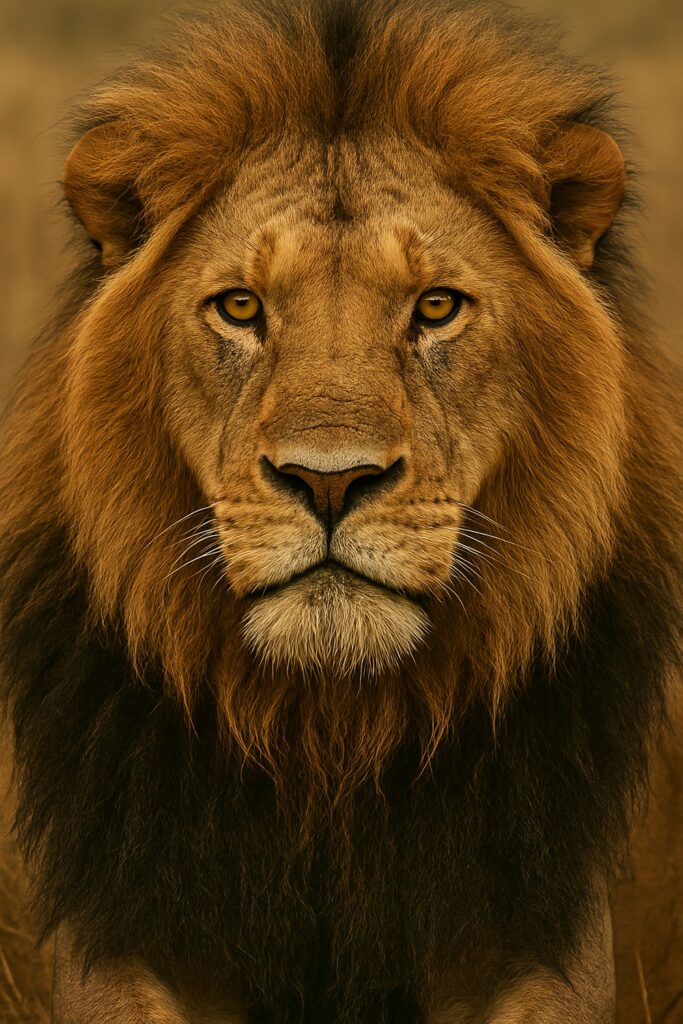
Lions have vanished from more than 80 percent of their historic range in roughly a century — and most people have no idea it happened that fast. Not a slow fade. A collapse. The sound that defines the Serengeti at dusk, that low chest-deep roar that seems to come from the ground itself, is broadcasting from fewer and fewer places each decade. What’s disappearing isn’t just an animal. It’s the thing that held an entire continent’s ecology together.

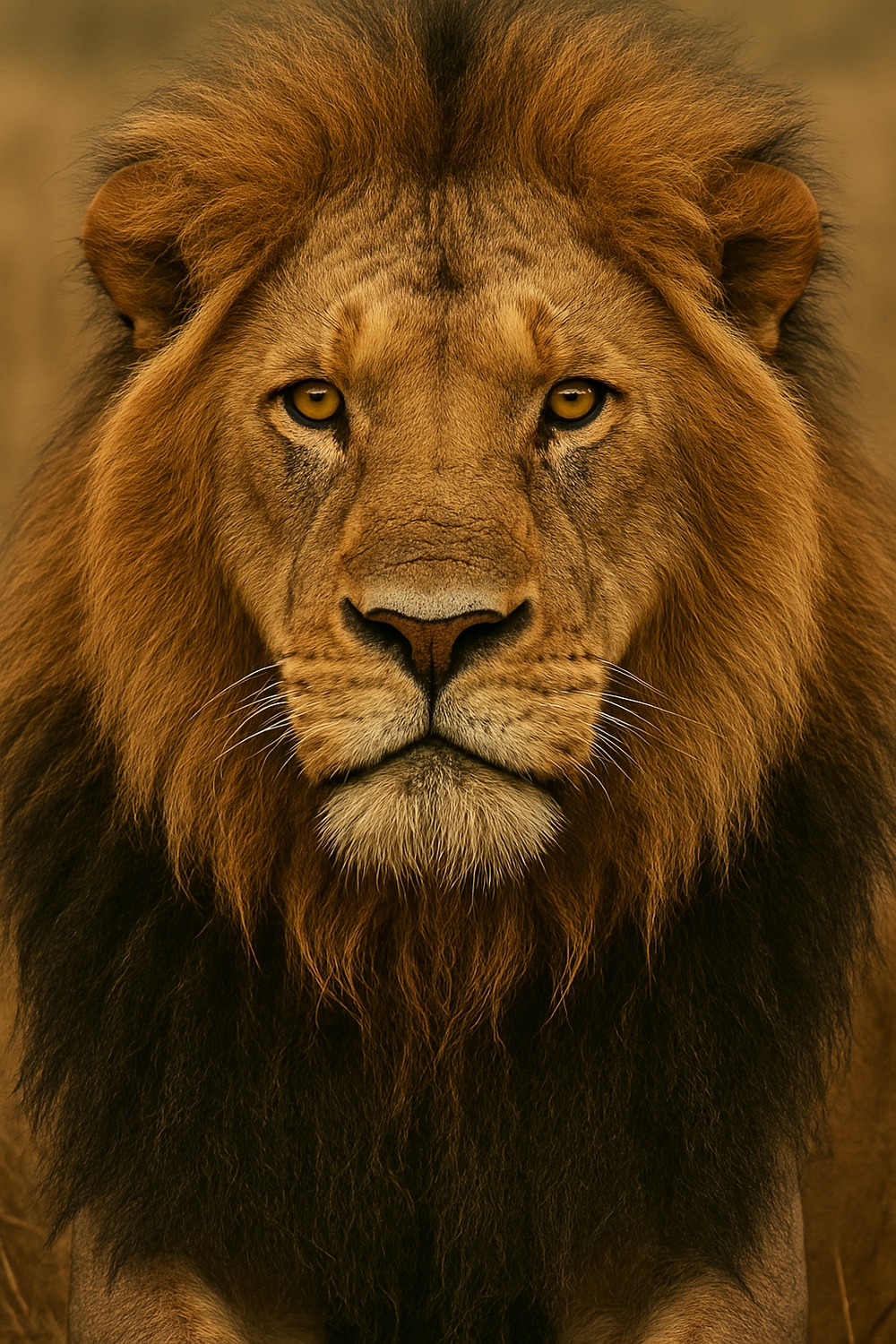
An Empire in Retreat
Ten thousand years ago, lions ranged from Africa through southern Europe, the Middle East, and deep into Asia — one of the most geographically successful large mammals that ever lived. Today, that range has collapsed into a patchwork of reserves and national parks, most of them in sub-Saharan Africa. Current estimates put the wild African lion population somewhere between 20,000 and 25,000 animals. That number sounds almost reasonable until you hold it against the early twentieth century, when populations likely exceeded 200,000.
The math is brutal. Habitat destruction, retaliatory killings by farmers protecting livestock, and the steady depletion of prey species have driven a collapse that’s staggering in both its speed and completeness.
Some subspecies didn’t decline. They disappeared. The Barbary lion — a heavily maned animal that once prowled the forests and mountains of North Africa — was hunted to extinction in the wild during the twentieth century. Roman emperors paraded them through the Colosseum. Medieval monarchs kept them in royal menageries. Now a handful of genetic descendants survive in captivity, living reminders of a wild lineage that exists nowhere outside a cage. Their erasure is one of the cleaner illustrations of what human ambition does when it isn’t paying attention — millions of years of evolution, gone within a few generations of serious effort.
Asia’s Last Lions
Roughly 5,000 miles from the Serengeti, in the dry deciduous forests of Gujarat state in western India, something remarkable and precarious is happening. Fewer than 700 Asiatic lions survive in and around Gir Forest National Park, a protected area roughly the size of Los Angeles. These animals are genetically distinct from their African relatives — leaner, with a characteristic fold of skin running along the belly and noticeably less dramatic manes on the males. For decades, their recovery from a low of barely two dozen individuals in the early twentieth century has been held up as proof that conservation can work.
It can. But the story doesn’t end with the good news.
Every single one of those lions lives within one geographic location. One serious disease outbreak, one severe drought, one infrastructure disaster — and the Asiatic lion could be gone from the wild within weeks. Indian conservationists have pushed for years to establish a second wild population elsewhere in the country, a straightforward insurance policy against exactly that scenario. State-level politics have repeatedly killed the idea. Meanwhile, the lions themselves are doing what animals do when habitat shrinks: moving into agricultural land and village outskirts, where communities that encounter them tend not to experience the encounter as a privilege. Bridging that gap — between the genuine needs of people and the survival requirements of a wild predator — is the central problem of lion conservation, in both Asia and Africa.
Architects of the Ecosystem
Why does this matter beyond the lions themselves? Because their absence reshapes everything downstream.
Losing lions isn’t just a matter of losing lions. As apex predators, they hold enormous leverage over entire food webs — leverage that operates in ways scientists are still working to fully map. By consistently targeting the weakest and most vulnerable animals in herbivore herds, lions continuously sharpen the genetic resilience of prey populations. No wildlife management program humans have designed comes close to replicating that function.
Their influence on behavior is equally significant. When lions are active in a landscape, large herbivores don’t linger in exposed areas. Vegetation recovers. Over-grazing retreats. Grassland that might otherwise erode into degraded scrub stays productive. Researchers call this the “landscape of fear” (and this matters more than it sounds) — the ecological ripple that flows outward from the mere presence of a predator. Anyone who’s watched a wildebeest herd move through lion country would have trouble arguing with it.
Turns out, the silence that follows a lion’s disappearance is louder than anyone expected.
{{IMAGE_1}}

The Road Ahead
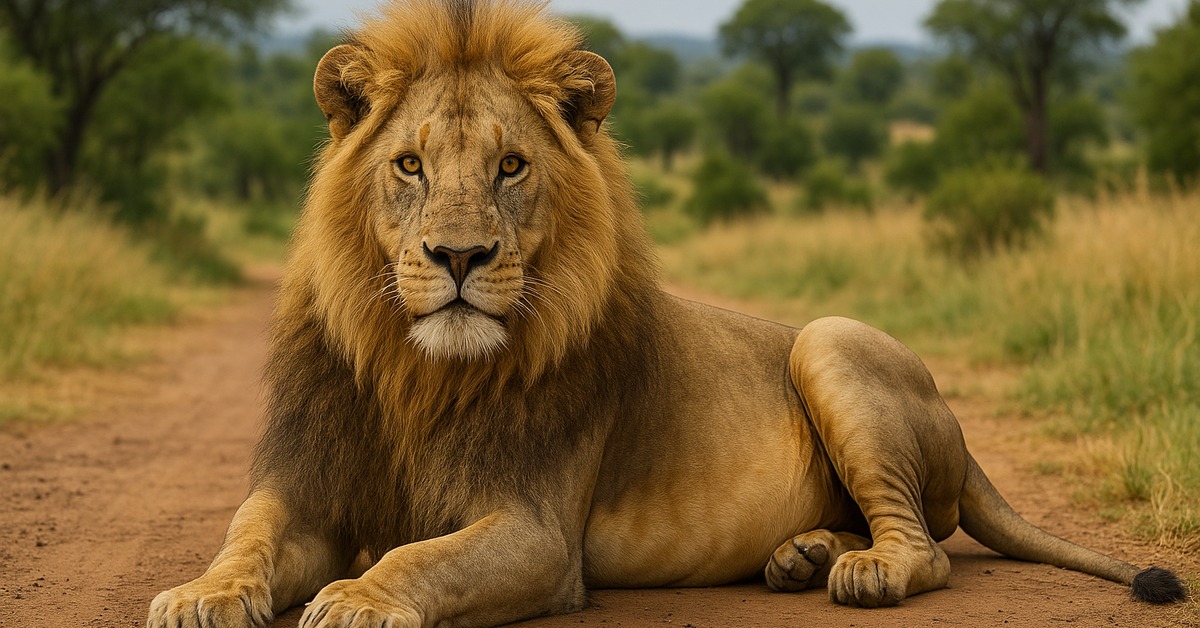
Conservation organizations, African governments, and local communities are increasingly working from the same starting assumption: human livelihoods and lion survival don’t have to be competing interests. Community programs that compensate farmers for livestock losses, that build economic value through lion tourism, and that train local guides have shown genuine results in Kenya, Botswana, and Zimbabwe. Protected corridors connecting fragmented reserves allow genetic exchange between isolated populations, blunting the inbreeding that slowly weakens small groups over generations.
A conservation model that treats local communities as obstacles rather than partners has never worked — and at this point, the evidence for that is overwhelming.
And yet these programs remain underfunded, inconsistently applied, and constantly working against the momentum of population growth and land conversion that isn’t slowing down for anyone. Anti-poaching patrols and targeted efforts to reduce bushmeat hunting — which hollows out the prey base lions depend on — are producing measurable gains in key areas. Whether those gains compound fast enough is the question nobody can answer cleanly.
{{IMAGE_2}}
How It Unfolded
- Early 20th century — African lion population estimated above 200,000; Asiatic lions reduced to fewer than 25 individuals in Gir Forest, India
- 1965 — Gir Forest declared a wildlife sanctuary, providing the first formal protection for the last Asiatic lion population
- 2010 — African lion listed as Vulnerable on the IUCN Red List; range loss confirmed at over 75 percent from historic levels
- 2020s — Asiatic lion population surpasses 670 individuals; African population stabilizes near 20,000–25,000, but range fragmentation continues
By the Numbers
- 80%+ — share of historic lion range now empty of lions
- 20,000–25,000 — estimated wild African lion population today
- 200,000+ — estimated African lion population in the early twentieth century
- ~670 — Asiatic lions surviving in Gir Forest National Park and surrounding areas
- 1 — number of wild populations the Asiatic lion currently has
Field Notes
- The Barbary lion, last recorded in the wild in Morocco in 1942, survives only in captivity — some descendants are held at Rabat Zoo
- Lions are the only truly social wild cats; pride structure is central to hunting efficiency and territory defense
- A lion’s roar can carry up to five miles under the right atmospheric conditions
- Gir Forest National Park covers approximately 1,412 square kilometers — smaller than the city of Los Angeles
- The “landscape of fear” effect has been documented across multiple continents wherever apex predators persist
Frequently Asked Questions
- How many lions are left in the wild? Estimates range between 20,000 and 25,000 African lions, plus roughly 670 Asiatic lions confined to a single population in Gujarat, India.
- Why are lions disappearing? Habitat loss, retaliatory killing by farmers protecting livestock, depletion of prey through bushmeat hunting, and increasing human encroachment on wild land are the primary drivers.
- What is the Asiatic lion? A genetically distinct subspecies of lion — leaner than African lions, with less prominent manes — surviving only in Gir Forest National Park in India. Learn more at the Asiatic lion Wikipedia page.
- What is being done to protect lions? Community compensation programs, protected wildlife corridors, anti-poaching enforcement, and ecotourism initiatives are all active approaches. See related coverage on wildlife conservation.
- Could lions go extinct? Regionally, they already have. The Barbary lion is extinct in the wild. Without sustained intervention, further local extinctions across West and Central Africa are considered likely within decades.
Editor’s Take — Alex Morgan
What stays with me isn’t the population numbers — it’s the single-population problem in India. Six hundred and seventy lions, every last one of them within a single park boundary, and the political will to create a backup simply hasn’t materialized. We’ve watched this exact scenario play out with other species, and we know how it ends when something goes wrong. The Asiatic lion’s survival story is genuinely impressive. The insurance policy it still doesn’t have keeps me from calling it a success.
Hanging over all of it is climate change, whose effects on African savannas remain genuinely difficult to predict. Shifting rainfall, longer droughts, and unpredictable changes in vegetation could redraw the map of viable lion habitat within decades, making today’s protected areas tomorrow’s ecological dead zones. Whether conservation can adapt fast enough — and whether the money and political will materialize at the necessary scale — nobody knows. What isn’t uncertain is what failure costs. A world without wild lions would be ecologically diminished in ways science is only beginning to quantify, and impoverished in ways no budget spreadsheet captures cleanly. That roar at dusk has been echoing for millennia. It deserves a few more centuries at least.


