


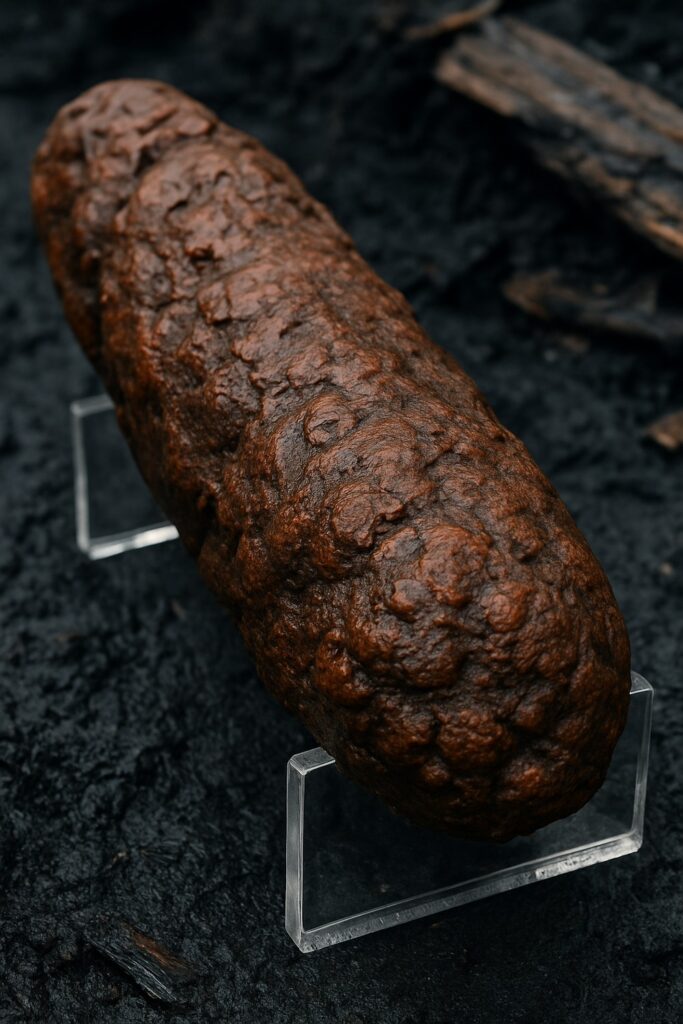
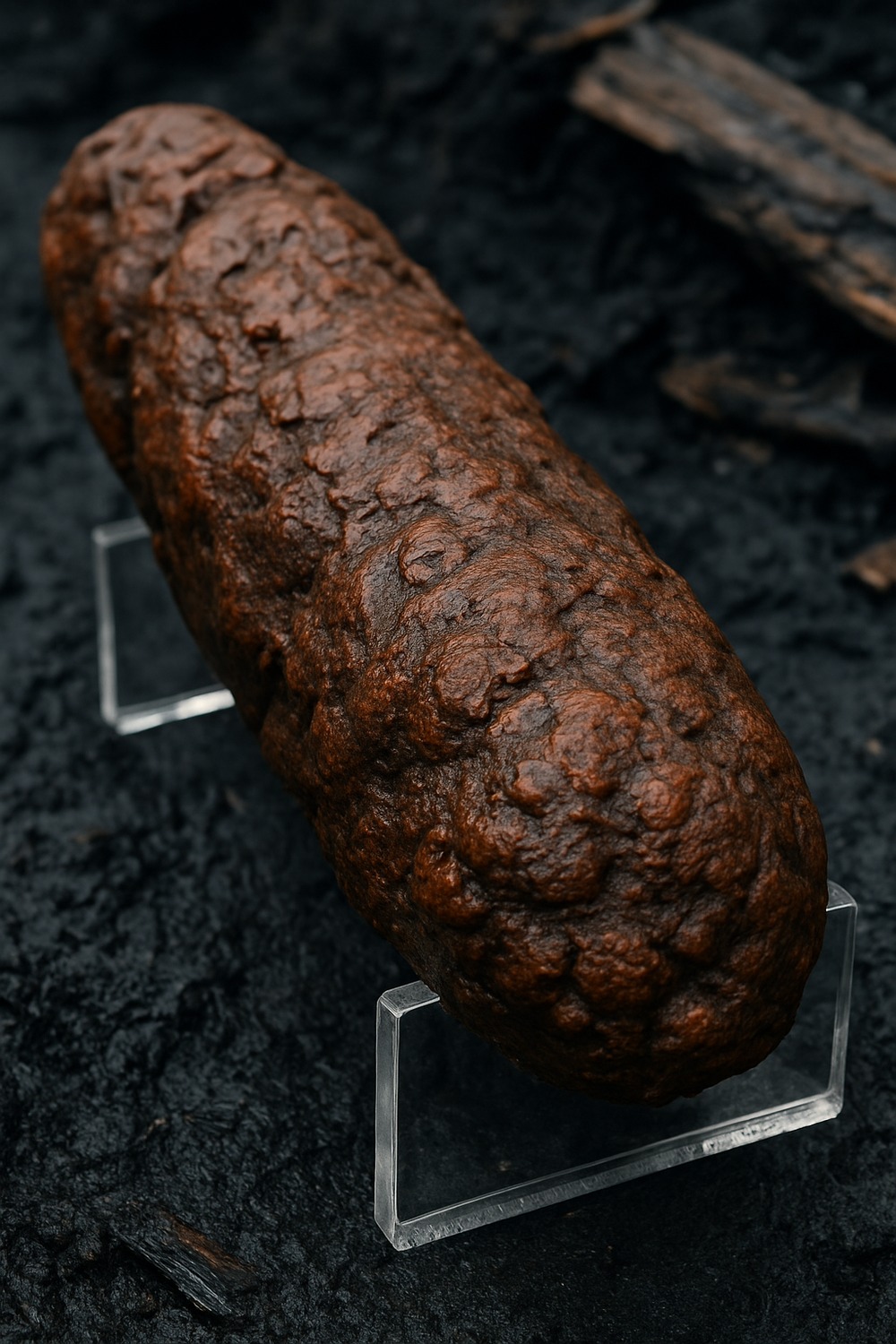
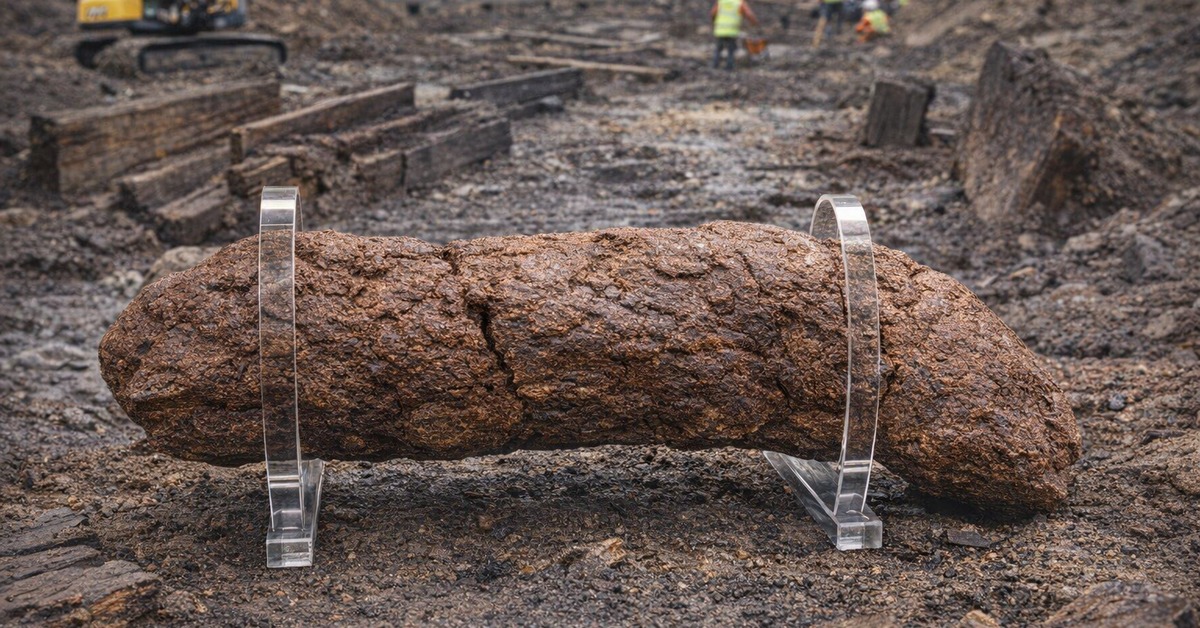
Nobody expected the Lloyds Bank coprolite to become famous. Construction workers gutting the floor of a bank branch on Pavement Street in York in 1972 were not looking for history — yet what came up from the earth was a fossilized human stool, roughly 20 centimeters long, roughly a thousand years old, and dense with biological evidence that would eventually redirect how scientists read the Viking world. No sword. No silver. Just this.

A City Built on Conquest and Commerce
York doesn’t become Jórvík overnight. Scandinavian forces seize the city in 866 CE, and what had been a Roman-engineered settlement begins its transformation into one of the most strategically vital trading hubs in Viking-Age Britain. Norse settlers repave old streets, bring new languages and customs, and introduce culinary traditions that will leave their mark — quite literally — on the ground beneath the city. The Coppergate excavations, running through the 1970s and 1980s, peel back these layers to find extraordinary deposits of preserved organic material: wood, leather, textiles, food waste. A bustling medieval metropolis assembles itself from the evidence. Merchants. Artisans. Families. Ordinary people navigating the relentless demands of survival.
What makes York so remarkable is the soil itself. Waterlogged, anaerobic, starved of oxygen — conditions that would make any above-ground archaeologist slightly envious — the ground here slows decomposition almost to a standstill. Organic material that would dissolve to nothing elsewhere is instead sealed intact across the centuries. The Lloyds Bank coprolite survives precisely because of this geological quirk, preserved alongside the microscopic biological evidence locked inside it.
That evidence, it turns out, has a great deal to say.
What the Science Revealed
Run the specimen through laboratory analysis and a portrait emerges. The coprolite’s chemical and physical composition points to a diet built on meat — most likely pork or beef — alongside substantial quantities of bread made from cereal grains. Bran and plant fiber round out the picture. Not the feasting-hall excess of popular imagination. Something more practical, more workmanlike — consistent with what archaeological and historical records tell us about Norse eating habits across the broader Viking world, where animal husbandry and grain cultivation were the twin pillars of daily sustenance.
But the microscopic findings are where the story turns genuinely uncomfortable. Embedded in the dense fossilized material, scientists identify hundreds of eggs from two species of intestinal parasite: Trichuris trichiura — whipworm — and Ascaris lumbricoides, a large parasitic roundworm (researchers actually call this a “heavy burden” infection when egg counts reach these densities). Both spread through contact with contaminated soil or food. Their presence here suggests that parasitic infection wasn’t some rare affliction in Viking-Age York — it was almost certainly a quiet, persistent feature of daily life for much of the population. Whoever left this particular relic behind was likely managing abdominal pain, fatigue, and malnutrition while going about their ordinary routines.
History rarely glamorizes its digestive complaints, but the science insists we pay attention.
The Gaps That Keep Scientists Searching
Why does this matter beyond the single specimen? Because the distance between one vivid data point and a genuine public health picture is exactly where archaeology gets hard.
One coprolite, however extraordinary, can only do so much. Researchers are candid about this. It doesn’t tell us how infection rates varied across social classes, or whether a prosperous merchant with access to cleaner water faced meaningfully different health risks than a laborer crowded into a damp workshop nearby. These aren’t trivial questions — they’re the difference between a story about individual misfortune and a story about systemic disease. The broader biological and social landscape of Jórvík remains, for now, frustratingly incomplete. A single vivid data point is still just one point.
And yet the field keeps moving. Advances in ancient DNA analysis are beginning to sharpen the questions researchers can ask — even when definitive answers stay out of reach. Ongoing excavations across the city add new fragments to the picture year by year. Science being science, certainty arrives slowly and always with conditions attached.

A Relic That Changed the Way We Tell History
At the Jorvik Viking Centre in York today, the Lloyds Bank coprolite sits in quiet celebrity, one of the museum’s most photographed exhibits. Ailsa Mainman, former curator of the Centre, once called it “the most exciting piece of excrement” she had ever encountered — a description that captures, with some economy, the strange alchemy of science and storytelling that makes archaeology so compulsive. Here’s the thing: the coprolite hasn’t just appeared in documentaries and classrooms across several continents — it has genuinely shifted how popular science writing approaches the Viking world. An object that began as a construction site inconvenience became an unlikely ambassador for a more grounded approach to the past.
Watching a specimen this mundane displace gleaming helmets and carved runes as the defining image of Norse daily life, you stop calling the public’s appetite for archaeology predictable. It turns out people want the real thing — even when the real thing is a fossilized stool from beneath a bank.
How It Unfolded
- 866 CE — Scandinavian forces seize York, beginning the city’s transformation into the Viking trading hub known as Jórvík
- 1972 — Construction workers at a Lloyds Bank branch on Pavement Street unearth the fossilized stool during groundwork, triggering formal archaeological recovery
- 1970s–1980s — The wider Coppergate excavations systematically expose layers of preserved organic material, placing the coprolite within its broader urban context
- Post-excavation analysis — Laboratory examination of the Lloyds Bank coprolite identifies parasitic eggs from Trichuris trichiura and Ascaris lumbricoides, reshaping understanding of Viking-Age public health
By the Numbers
- ~20 cm — Length of the Lloyds Bank coprolite
- ~1,000 years — Approximate age of the specimen
- 2 species — Intestinal parasites identified: whipworm and roundworm
- Hundreds — Parasite eggs recovered from a single specimen
- 866 CE — Year Scandinavian forces took York, beginning the Jórvík period
Field Notes
- Anaerobic, waterlogged soil conditions in York are responsible for the exceptional preservation of organic material across the Coppergate site
- Trichuris trichiura and Ascaris lumbricoides remain among the most common intestinal parasites in the world today, transmitted through contaminated soil and food
- The Lloyds Bank coprolite is considered one of the largest and best-preserved examples of its kind from the Viking Age
- Ancient DNA techniques now being applied to similar specimens may eventually allow researchers to identify specific individuals or trace migration patterns through biological material
Frequently Asked Questions
What exactly is the Lloyds Bank coprolite?
A fossilized human stool, approximately 20 centimeters long and around a thousand years old, recovered during construction work at a Lloyds Bank branch in York in 1972. It is now housed at the Jorvik Viking Centre.
What does the coprolite reveal about Viking diet?
Chemical and physical analysis indicates a diet centered on meat — likely pork or beef — combined with cereal grain bread and plant fiber. Consistent with broader Norse dietary patterns, it suggests practical, sustaining food rather than exceptional variety.
Which parasites were found in the specimen?
Researchers identified eggs from two intestinal parasites: Trichuris trichiura (whipworm) and Ascaris lumbricoides (roundworm). Both cause significant gastrointestinal illness and point to widespread parasitic infection in Viking-Age York.
Why is this coprolite considered historically significant?
It provides direct biological evidence of Viking-Age diet and disease in a single preserved specimen. Combined with the broader Coppergate excavation findings, it offers an unusually intimate window into daily life in Jórvík.
Where can the Lloyds Bank coprolite be seen today?
At the Jorvik Viking Centre in York, England, where it remains one of the museum’s most visited and discussed exhibits. You can also read more about Viking-Age archaeology at this-amazing-world.com.
Editor’s Take — Sarah Blake
What strikes me most about the Lloyds Bank coprolite isn’t the parasites or the diet analysis — it’s the stubborn persistence of the ordinary. For centuries, the Viking world was constructed almost entirely from its exceptional moments: raids, conquests, heroic deaths. Then a piece of ground gets broken open in a Yorkshire street and what history actually preserved was someone’s Tuesday. That’s not a curiosity. That’s a corrective. The specimen doesn’t romanticize the past — and that, quietly, is what makes it one of the most honest things ever pulled from British soil.
Across a thousand years, a single biological act manages to tell us something irreplaceable about what it means to be human in Viking-Age York — to eat ordinary food, to carry illness without knowing its name, to live inside the messy and unglamorous realities of an ancient world that isn’t, when you look closely, entirely foreign. The Vikings leave behind longships and sagas, runes carved in stone and hoards of buried silver. But their most honest legacy might be this small, unassuming fragment of lived experience, sealed beneath a bank on a cobbled English street, waiting patiently for someone to start asking the right questions.


