He Shoved His Arm Down a Grizzly’s Throat to Survive
Nobody was looking at the brush. That’s the part that makes the whole thing strange — Chase Dellwo didn’t walk into a grizzly attack so much as he walked through one before he even understood what was happening.
October 2015. Montana, near Dupuyer, during a sudden snowstorm that dropped visibility fast enough to make the familiar terrain feel wrong. Dellwo was bow hunting for elk, pushing through thick brush, and he essentially stepped on a 360-kilogram male grizzly that had been sleeping in it. The bear came up fast — not hunting, not stalking, just startled and enormous and suddenly very close. Twenty seconds of chaos followed. Jaws. Frozen ground. Blood. And somewhere in the back of his mind, a piece of advice from his grandfather that he probably hadn’t thought about in years.
How a Grizzly Bear Attack Survival Moment Unfolded
The terrain did most of the damage before the bear even moved. Dellwo was already off-balance when the grizzly erupted from the brush — as documented in grizzly behavioral studies, a surprised bear at close range doesn’t pause to recalculate. It reacts. The bear’s jaws caught his right elbow on the way down. He hit frozen ground with 700 pounds of apex predator on top of him, and at that point the options were essentially: nothing, nothing, and one very strange thing his grandfather once said at a dinner table.
No running. No weapon. No one within earshot.
What he did next shouldn’t have worked. Except it did, and he drove himself to the hospital afterward, which is the detail people can never quite get past.
The Grandfather’s Advice That Changed Everything
At some point — no one knows exactly when, probably years before that morning — Dellwo’s grandfather told him something odd. If you’re ever in a bear’s mouth with nothing left to try, shove your arm down its throat. Trigger the gag reflex. Make the bear’s own body betray it. It sounds like folklore. The kind of thing you half-hear and file away under “interesting, will never apply to me.” You can read more about strange animal survival encounters at this-amazing-world.com.
Dellwo filed it somewhere more accessible than most people do.
He shoved his arm as far down the grizzly’s throat as he could reach. Not a hesitant push. Not a tap. All the way in — deep enough to hit soft palate, deep enough to trigger an involuntary gag. The bear recoiled. That one reflexive second of biological confusion, that tiny malfunction in an otherwise overwhelming predator, gave him enough separation to move.
To regroup.
To survive.
What Grizzly Bear Attacks Actually Look Like Up Close
Most people picture a mauling as prolonged and deliberate. It’s usually neither. In defensive encounters like Dellwo’s, the attack is fast and chaotic, and grizzlies frequently disengage once they no longer feel threatened — because the whole point was never to kill, it was to neutralize whatever startled them. Wildlife biologist Stephen Herrero, whose research on bear attacks remains the most comprehensive body of work in North America, found that the majority of grizzly attacks on humans in wild settings are defensive rather than predatory. The grizzly bear attack survival rate in those defensive encounters is actually considerably higher than most people assume, especially when victims play dead — or, apparently, cause the bear to gag.
Dellwo needed stitches across his scalp, a lacerated ear, and treatment for deep puncture wounds in his arm.
He did not need a eulogy. That last fact kept me reading about this for another hour.
More Bears in the Wild Means More Encounters
Montana’s grizzly population has climbed from fewer than 200 animals in the lower 48 states in the late 1970s to roughly 1,000 in and around the Greater Yellowstone Ecosystem and Northern Continental Divide today. That’s a real conservation win — genuinely one of the most successful large predator recoveries in American history. But grizzly bear attack survival stories like Dellwo’s are also becoming more statistically likely, not because bears have changed, but because there are more of them, more hunters and hikers moving through the same terrain, and increasingly less wilderness between the two.
More grizzlies means more moments where a human and a bear occupy the same dense brush during a snowstorm.
That tension isn’t going anywhere.
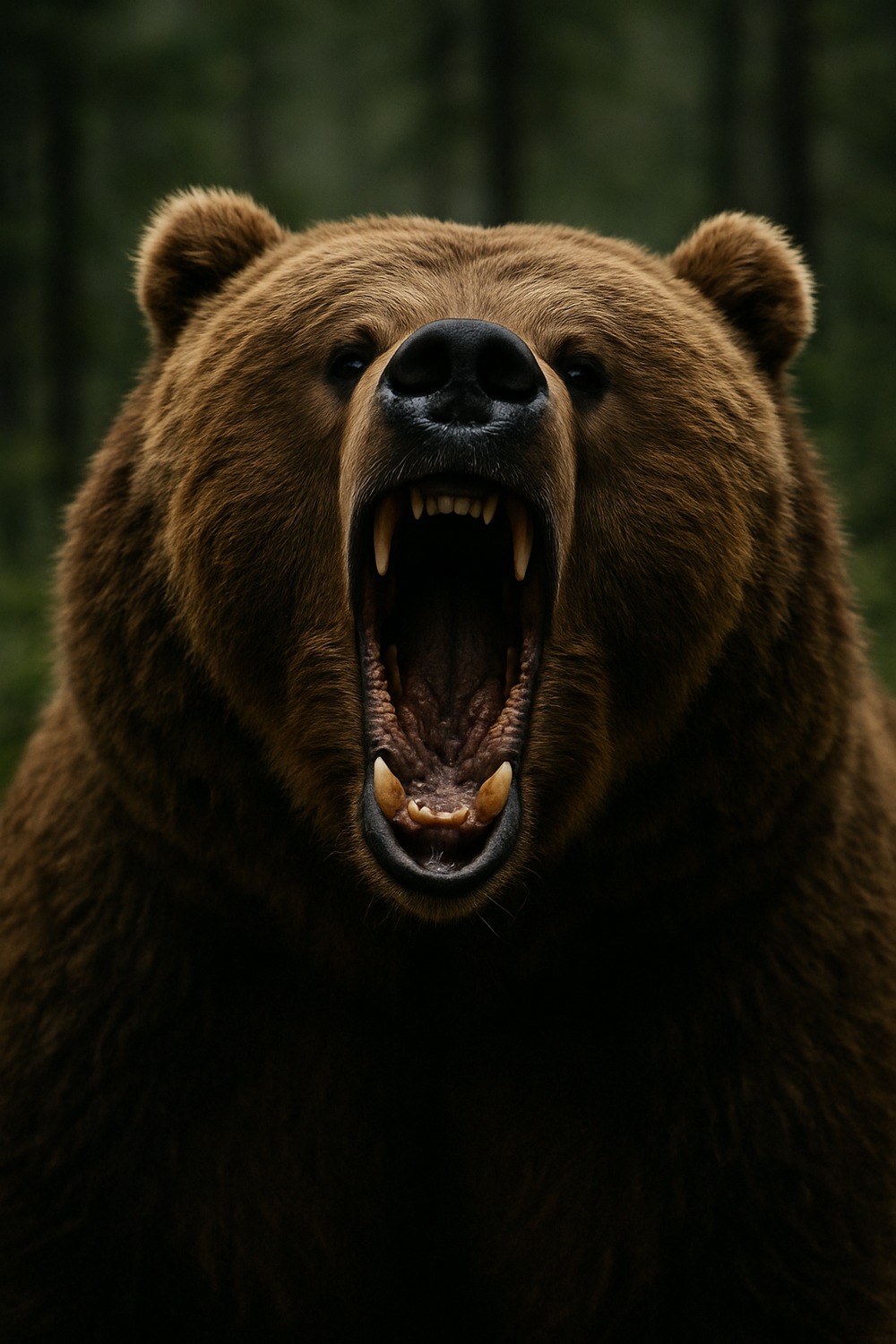
The Gag Reflex Trick Is Stranger Than You Think
Turns out, the physiology behind what Dellwo did is actually well-documented — even if almost no one discusses it as any kind of strategy. Large carnivores including bears have a sensitive gag reflex, partly because swallowing the wrong thing in the wild can be fatal. A foreign object pushed deep enough into the soft palate triggers an involuntary retraction response that momentarily overrides everything else. It’s not a magic switch. It’s a single small biological vulnerability buried inside an otherwise overwhelming animal.
And it works on exactly one condition: you have to actually do it. All the way. No flinching at the last second.
Most people don’t get a chance to try. Dellwo got to try because his grandfather said something at a dinner table, and some part of his brain held onto it across years of not needing it. That’s the detail that won’t let go — not the bear, but the way knowledge travels between people who love each other, specific and strange and usually unnecessary, arriving exactly when it matters.
By the Numbers
- Fewer than 200 grizzlies remained in the contiguous U.S. by 1975, triggering federal protection under the Endangered Species Act
- Montana’s Northern Continental Divide grizzly population has grown roughly 3% per year since recovery efforts began — reaching approximately 1,000 bears in recent surveys
- A 360-kilogram male grizzly can sprint at 56 kilometers per hour. Over a short distance, that’s faster than every human who has ever lived, without exception
- Stephen Herrero’s landmark study found that playing dead reduced fatality risk in surprise defensive attacks by over 75% compared to fighting back — though in predatory night attacks, the calculus reverses entirely, and fighting back becomes the better option
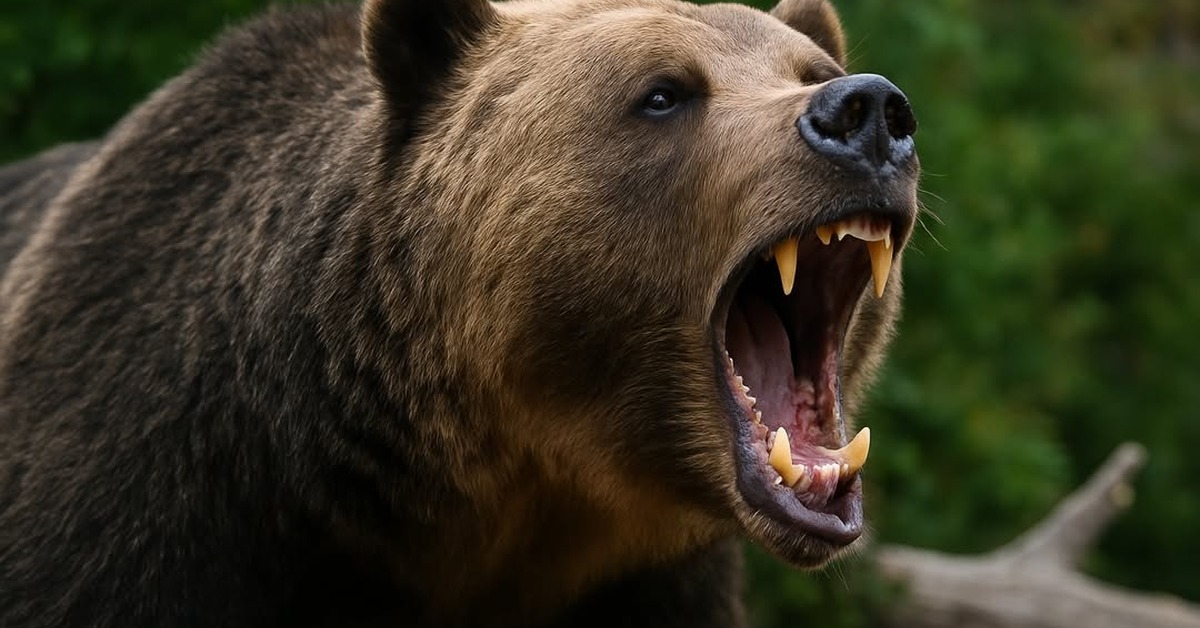
Field Notes
- Grizzly bite force: approximately 8,000,000 pascals. Enough to crush a bowling ball. Dellwo’s arm still worked afterward.
- The scientific name Ursus arctos horribilis was coined by naturalist George Ord in 1815. It translates, roughly, to “horrible northern bear” — a name Ord apparently felt needed no further justification, and which a sleeping grizzly in a Montana snowstorm did nothing to undermine.
- Keystone species status, earned
- Grizzlies drag salmon carcasses deep into forests, distributing marine nutrients across ecosystems in ways that reshape the entire environment around them. They’re not just living in the wilderness — they’re building it.
Why This Grizzly Bear Survival Story Still Matters
The recovery of grizzly bears in the American West is one of conservation’s genuine success stories. It’s also an ongoing negotiation — between human activity and wild space, between the places we want to move through and the animals that were already there. Every grizzly bear attack survival account, whether it ends in tragedy or in a man stitching himself back together and driving to an ER, is part of that negotiation. These animals are dangerous. They’re also essential. Holding both of those things at once is what responsible coexistence with apex predators actually requires. Dellwo’s encounter didn’t happen because bears are malicious. It happened because wilderness is unpredictable and proximity, eventually, is inevitable.
The deeper question his story raises isn’t really about bears. It’s about inherited knowledge — the quiet, specific, strange information passed between people across years and dinner tables, most of which we’ll never need. And some of which, one cold October morning in thick Montana brush, turns out to be the only thing standing between you and a very different ending.
What piece of knowledge are you carrying around, hoping you’ll never have to use?
Chase Dellwo walked out of the Montana wilderness with stitches, a story, and his grandfather’s voice still somewhere in his head. The bear walked back into the brush. Neither of them were the villain — and that’s what makes it worth sitting with. Wild places are getting wilder again, the gap between humans and apex predators is measurably closing, and the stories coming out of that overlap are only getting stranger. There’s more at this-amazing-world.com, and the next one is even harder to explain.