


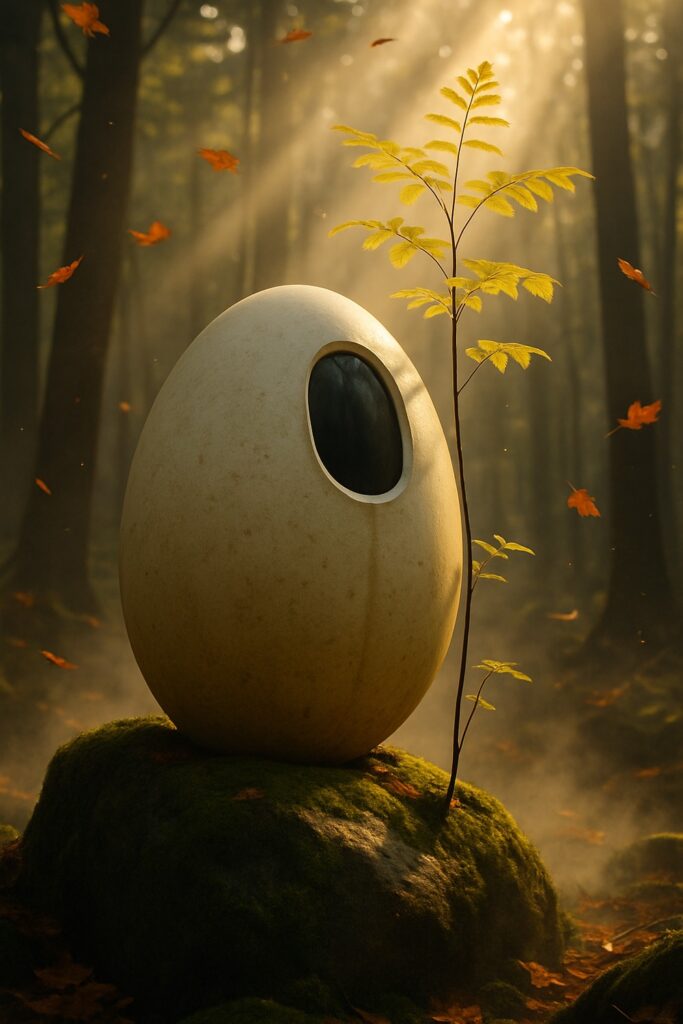
Here’s the thing about a memorial tree from ashes — the headstone is already gone. A family in Spain planted a sapling in its place. And somewhere in the root zone, the person they loved is becoming a forest. Not metaphorically. Literally.
This isn’t a concept. It isn’t a crowdfunding campaign waiting to launch. Thousands of families across Europe and North America have already chosen biodegradable burial capsules that convert cremated remains into the living root systems of oaks, maples, and pines. The scale is still modest. But the implications — for land use, for grief, for the carbon locked inside a growing forest — are quietly enormous. What happens when entire communities start thinking of their dead not as buried, but as planted?

The Capsule That Started a Forest Movement
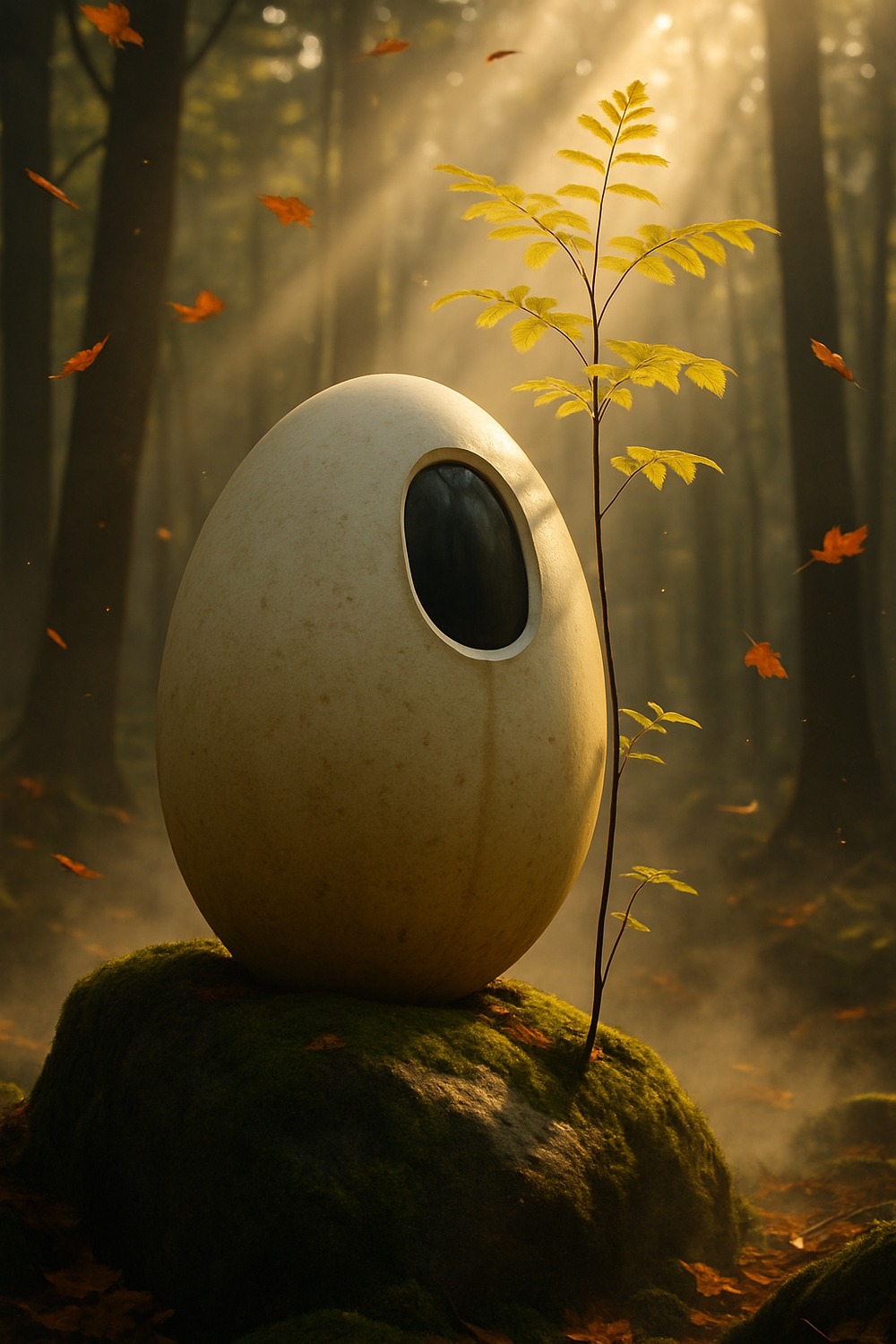
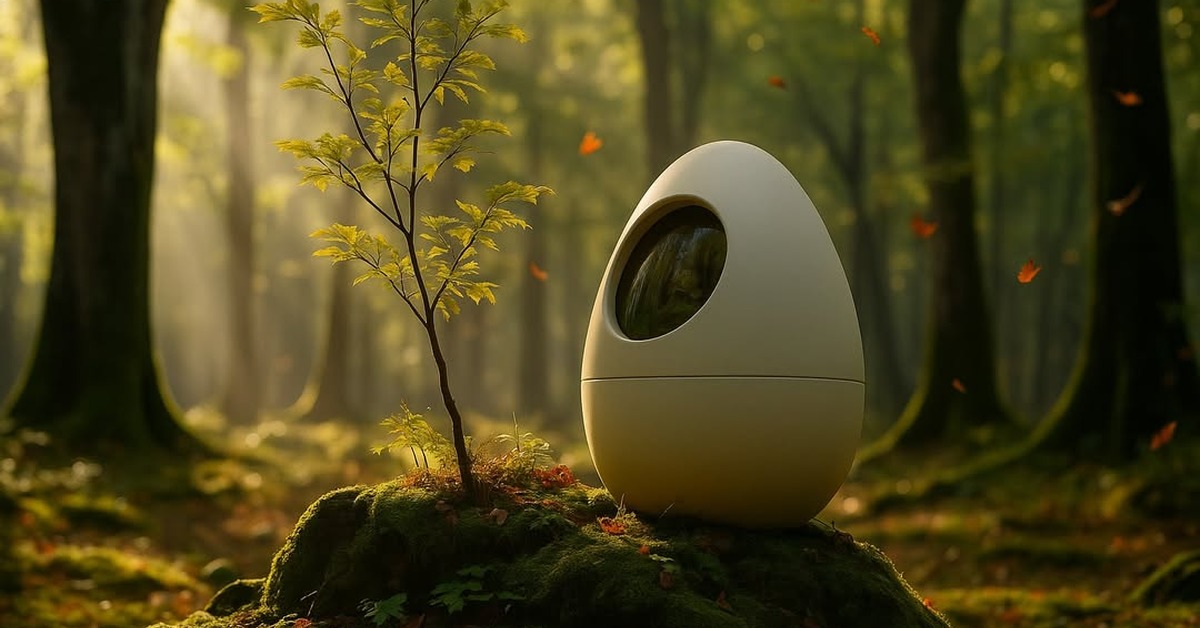
Barcelona-based designers Gerard Moline and Roger Moliné launched the Bios Urn in 2013 — a two-chamber biodegradable capsule built from coconut shell, compacted peat, and cellulose. Oak, maple, ginkgo, pine, or a species of the family’s choosing goes in the lower chamber as a seed. Cremated remains go in the upper chamber. When buried and watered, the capsule’s shell breaks down within months, and nutrients from both chambers migrate into the soil together, feeding germination at exactly the moment the seed needs fuel. By 2019, the company had shipped capsules to over 55 countries. Similar products — including the Capsula Mundi in Italy — had entered the same niche, signaling not a novelty but a genuine shift in how people conceptualize what death can leave behind.
Cremated remains — or “cremains” — are largely calcium phosphate (researchers actually call this the same mineral compound that fertilizes plant growth). They’re alkaline, and in high concentration they can actually inhibit germination, which is exactly why the two-chamber system matters: it dilutes and stages the release. The seed sprouts first in neutral peat. The ashes integrate slowly into surrounding soil as roots expand outward. It’s a timed relationship, not a simultaneous flood — the chemistry is deliberate, and it works. Families who’ve used the Bios Urn describe a particular kind of comfort in the waiting. There’s a grief ritual built into watching a tree grow, one that gives mourning a shape that doesn’t end at the funeral.
What These Trees Replace — And Why That Matters
Why does this matter? Because what conventional burial requires, looked at honestly, is staggering.
Traditional interments in the United States alone consume more than 30 million board feet of hardwood casings every year — wood typically treated with varnishes and lacquers that resist decomposition for decades. Roughly 800,000 gallons of embalming fluid follow annually, a mixture dominated by formaldehyde, which the World Health Organization classified as a known human carcinogen in 2004. That fluid doesn’t stay in the coffin. It leaches slowly into the groundwater beneath cemetery land — land that, in the US alone, covers more than one million acres.
There’s a brutal irony in the fact that the places we set aside to honor the dead are, chemically speaking, some of the most persistently toxic patches of earth we’ve created. Sealing the dead away from nature isn’t reverence — it’s damage we’ve agreed not to look at.
Cremation reduces these chemical burdens considerably. It doesn’t eliminate them — the process requires natural gas and releases carbon dioxide and fine particulates — but it produces no embalming runoff and requires no sealed hardwood vault. A 2017 analysis by the Green Burial Council estimated that a single cremation releases approximately 534 pounds of CO₂. A single traditional burial, accounting for the full production and decomposition chain, contributes roughly equivalent or greater emissions over time, plus the chemical legacy. Neither is neutral. But one of them can, immediately after the process, begin pulling carbon back out of the atmosphere.
That reversal is the whole point. The ashes become the soil. The soil feeds the seed. The seed becomes a tree that spends the next century doing atmospheric repair work. It’s not a perfect equation, but it’s a real one.
Forests Are Forming Where Cemeteries Once Stood Silent
Something unexpected was documented near Girona and the Basque Country by 2021. Ecologists from the University of Barcelona, tracking clustered memorial plantings at green burial sites in northern Spain, found measurable increases in local canopy cover, soil microbial diversity, and invertebrate activity compared to adjacent conventional cemetery plots. Small woodlands were forming where, a decade earlier, only stone and clipped grass had stood. The findings, highlighted in reporting by National Geographic, suggested that the benefit wasn’t just symbolic — it was ecological, accumulating plot by plot. Birdsong was returning. Shade was building.
And the math compounds in ways nobody mentions at the funeral home.
A memorial tree from ashes doesn’t just sequester carbon on its own merits — it changes what the land around it becomes. A mature oak sequesters roughly 48 pounds of carbon per year and can live for 500 years. Its bark supports beetle larvae and lichen. Acorns feed jays, squirrels, and woodpeckers. Its canopy intercepts rainfall, slowing runoff into streams. When 50 oaks grow in a cluster over the course of two generations, you don’t have 50 trees — you have the beginning of a forest, with all the cascading biodiversity that follows. Stone holds memory. A tree holds memory and keeps working.
Growing a Memorial Tree From Ashes: The Real Process
Soil pH, moisture level, and the species selected all significantly affected germination success — that finding came from a 2022 study by researchers at Wageningen University in the Netherlands, who examined integration rates across five biodegradable urn designs. Oak and pine performed most reliably across varied conditions. Fruit trees and some deciduous species showed higher failure rates in alkaline or compacted soils, precisely the conditions common in former conventional cemetery plots where the ground has been disturbed and chemically altered over decades. The researchers recommended soil amendment with compost prior to planting — a step most memorial services now include as standard. Tree selection isn’t sentimental. It’s ecological.
The capsule itself takes roughly three to five years to fully integrate into the surrounding soil, depending on rainfall and ground temperature. Roots are still establishing during that window, and the tree can actually be transplanted during the first year if the burial site shifts — something several memorial forest companies now offer as a service, with GPS-tagged trees maintained in dedicated woodland preserves. Families can visit. Some programs measure the tree’s diameter annually and report back to the family — a growth chart instead of a death certificate.
By year five, most trees are self-sustaining. After that, they don’t need anyone. They just grow.
What Comes Next: Community Forests and Changing Land Ethics
Germany got there first. FriedWald — the name translates roughly as “peace forest” — has operated dedicated memorial woodland burial sites since 2001, and by 2023 managed over 70 forest sites covering thousands of acres across the country. These aren’t cemetery plots with trees added. They’re working forests, certified under forestry management guidelines, where burial rights are attached to specific trees. No grid of identical markers. Trees of different ages, different species, different sizes — the oldest now thick-trunked and canopied and alive in every visible sense.
In the United States, the Green Burial Council had certified over 300 green burial sites by 2023, a number that had tripled in a decade. Cultural resistance remains — particularly in communities where religious tradition or family expectation ties identity to a marked grave. But a 2022 survey by the National Funeral Directors Association found that 60% of respondents aged 40 and under were considering green burial options, up from 43% in 2017. The trajectory is steep, and the funeral industry’s slow response to it is starting to look less like caution and more like avoidance.
Stand in a FriedWald forest on a November morning and you can feel what’s being proposed here. Light filters through oak canopy onto moss-covered roots. A jay moves through the understory. The air is cold and smells like wet bark. Somewhere below, in the slow chemistry of root and soil, people are still, in some real sense, present — not as stone, but as growth.

How It Unfolded
- 2001 — FriedWald launches the first commercial memorial forest burial program in Germany, attaching burial rights to individual standing trees in certified woodland.
- 2013 — Barcelona designers Gerard Moline and Roger Moliné introduce the Bios Urn, bringing the biodegradable ash capsule to a global consumer market for the first time.
- 2017 — The Green Burial Council publishes its lifecycle emissions analysis, providing the first standardized carbon comparison between traditional burial, cremation, and green burial alternatives.
- 2023 — Green burial certified sites in the US surpass 300 locations; FriedWald manages over 70 woodland burial forests across Germany, marking the point at which memorial forest burial shifts from niche to mainstream option.
By the Numbers
- 30 million board feet of hardwood consumed annually by traditional US burials (Green Burial Council, 2017)
- 800,000 gallons of embalming fluid — primarily formaldehyde — used in US burials per year
- 48 pounds of CO₂ sequestered per year by a mature oak tree, across a potential lifespan of 500 years
- 60% of US adults under 40 were considering green burial options in 2022, up from 43% in 2017 (National Funeral Directors Association)
- 534 pounds of CO₂ released per single cremation — compared to the longer-term chemical and material burden of conventional burial (Green Burial Council, 2017)
Field Notes
- Near Girona, Spain in 2021, ecologists from the University of Barcelona documented measurable increases in soil microbial diversity and invertebrate activity in clustered Bios Urn planting zones — the first field evidence that memorial tree installations can trigger genuine local reforestation effects rather than simply adding isolated plantings.
- Cremated remains are roughly 95% calcium phosphate — the same mineral base as bone meal fertilizer — but their alkalinity means direct contact with seeds can inhibit germination, which is why the Bios Urn’s two-chamber staging system isn’t decorative: it’s agronomically essential.
- FriedWald in Germany assigns each memorial tree a GPS coordinate and a legal burial certificate, meaning the woodland plots carry the same legal standing as traditional cemetery plots under German law — a regulatory precedent that other countries have not yet matched.
- Researchers at Wageningen University are still working to establish which tree species integrate most successfully with human cremains across different soil types globally — the dataset is growing but incomplete, and no universal planting protocol has yet been published.
Frequently Asked Questions
Q: How does a memorial tree from ashes actually grow — does the tree really use the cremated remains as nutrients?
Yes, but not immediately and not directly. Cremated remains are largely calcium phosphate, which is a useful mineral nutrient for plants. Capsules like the Bios Urn stage the release — the seed germinates in neutral peat first, then roots expand outward into the ash-enriched soil over several years. A 2022 Wageningen University study confirmed that gradual integration significantly outperforms direct seed-to-ash contact in germination success rates.
Q: Can you choose any tree species for a memorial planting, or are options limited?
Most memorial urn companies offer between five and fifteen species, typically including oak, pine, maple, ginkgo, and various fruit trees. Not every species thrives in every soil — oak and pine perform most consistently across varied ground conditions, including the alkaline soils common in former conventional cemetery land. Fruit trees and some ornamental species show higher failure rates in compacted or chemically altered soil. Matching species to local ecology improves survival significantly, which is why reputable programs recommend a soil test before selecting a tree.
Q: Is a memorial tree from ashes legal everywhere, and does it have the same status as a traditional burial?
Legality varies significantly by country and, within the US, by state. Germany is furthest along legally — FriedWald burial trees carry the same legal standing as traditional cemetery plots under German federal law. In the United States, green burial regulations are governed at the state level, and the legal status of ash-integrated plantings outside designated cemetery land remains inconsistent. Some states permit home burial of ashes with a tree; others require a licensed cemetery. The Green Burial Council maintains an updated state-by-state guide and certified site directory for families navigating this.
Editor’s Take — Alex Morgan
What strikes me about this story isn’t the technology — the capsule itself is almost disarmingly simple. It’s the cultural weight it’s carrying. For centuries, we’ve built permanence into death: stone, sealed vaults, chemically preserved bodies, land set aside and held frozen. The memorial tree from ashes inverts every one of those instincts. It says permanence is the wrong goal. Growth is the goal. That’s not just a burial method. It’s a different philosophy of what we owe the world after we’ve used it.
The funeral industry is a $20 billion sector built on assumptions most of us have never questioned — that the dead should be preserved, marked, and held in place. Memorial trees propose something older and stranger: that the dead should keep moving, upward, outward, through root and bark and leaf. A forest made of people is, in the end, just a forest. It photosynthesizes. It shelters birds. It pulls carbon from the air. The question worth sitting with isn’t whether this will grow — it already is. It’s whether we waited too long to let it.


