


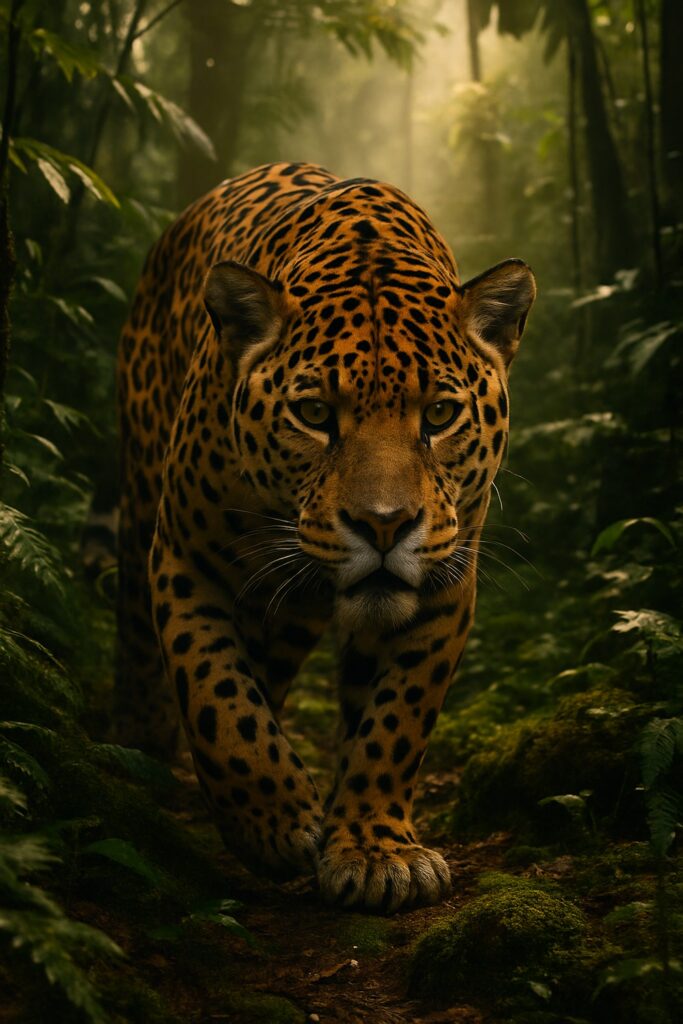
The number is 5,326. And the genuinely strange part isn’t that it’s high — it’s that anyone counted them at all.
A century ago, jaguars ran from Arizona to Argentina. Then hunting, ranching, and deforestation chopped that range into disconnected scraps. By the late 1990s, Mexico’s jaguars were declining so fast that some researchers had quietly stopped using the word “recovery” in their papers. Not pessimism — just accuracy. So what actually changed? And why are conservation biologists who’ve spent twenty years being cautiously grim suddenly willing to call 2024 a turning point?
How the Mexico Jaguar Population Came Back From the Edge
The 2024 national wildlife census put the Mexico jaguar population at 5,326 individuals — nearly 30% higher than the 2010 estimate. That number didn’t come from a model or a satellite projection. It came from camera trap images, DNA extracted from scat, and physical track surveys run across some of the most remote terrain in the country. Dr. Rodrigo Núñez, one of Mexico’s leading jaguar researchers, called it “the clearest signal yet that corridor-based conservation actually works at scale.”
But here’s what the headline figure doesn’t tell you: the recovery isn’t happening everywhere. It’s concentrated in specific places, for reasons that took researchers a while to fully understand.
The Yucatán Peninsula and the Sierra Madre are doing most of the work. And those aren’t random patches of surviving forest — they’re regions where jaguar habitat overlaps directly with lands managed by Indigenous communities. That overlap turned out to be one of the most important variables in the entire story.
Indigenous Land Stewardship Changed Everything for Jaguars
When Mexico’s conservation planners started mapping jaguar corridors seriously in the early 2010s, they kept hitting the same pattern. The healthiest jaguar zones were almost always adjacent to Indigenous community lands. These communities had been protecting their forests for generations — not specifically for jaguars, but because healthy forests meant clean water, stable soil, and livelihoods that didn’t collapse every decade. Read more about how human communities are shaping endangered species recovery around the world, and you’ll see this pattern repeat across entirely different ecosystems and continents.
The Mexican government eventually formalized dozens of these zones as protected buffer areas. Rangers from local communities got trained in camera trap deployment and GPS tagging.
What they built together was a monitoring network no government agency could have assembled alone. Too vast. Too expensive. Too dependent on knowing exactly where a jaguar trail crosses a river at 2 a.m. — the kind of knowledge that doesn’t live in a database.
The Science Behind Counting Cats You Can’t See
Counting jaguars is genuinely hard, in ways that don’t fully register until you think about it. They’re solitary. They move mostly at night. A single animal can cover 50 to 100 kilometers in a week. So how do you arrive at a specific number like 5,326 with any real confidence?
The Mexico jaguar population survey combined camera trap grids — thousands of cameras placed across millions of hectares — with non-invasive DNA sampling. Researchers collect scat, scrapes, and hair from natural marking sites, then extract individual genetic profiles. Jaguars also have unique rosette patterns on their coats, which lets analysts cross-reference camera images the way forensic teams use fingerprints. One good photo of a flank, and you’ve got an ID.
It took years. The heat in the Yucatán lowlands alone makes fieldwork brutal — some survey teams worked in areas with zero road access, arriving by boat or on foot with equipment strapped to their backs. That last detail kept me reading for another hour, honestly. The data didn’t come from a satellite. It came from people walking.
The Threats That Didn’t Go Away
The Mexico jaguar population is growing. But the pressures that nearly destroyed it are still running in the background.
Cattle ranching continues expanding into jaguar territory in Chiapas and Sonora. Retaliatory killings — ranchers shooting jaguars that prey on their livestock — remain one of the leading causes of adult mortality across the range. And the corridor connecting Mexico’s jaguars to populations in Guatemala and Belize is still narrow in places, fragile in others, and vulnerable to a single poorly-routed highway or one agricultural expansion project approved by the wrong ministry on a slow Tuesday.
The jaguar is currently listed as Near Threatened on the IUCN Red List — not Endangered. Some conservationists argue that classification is dangerously optimistic, given how geographically concentrated the remaining population actually is.
5,326 sounds like a big number. Until you remember that the Amazon basin alone used to hold tens of thousands.

What a Jaguar Corridor Actually Looks Like on the Ground
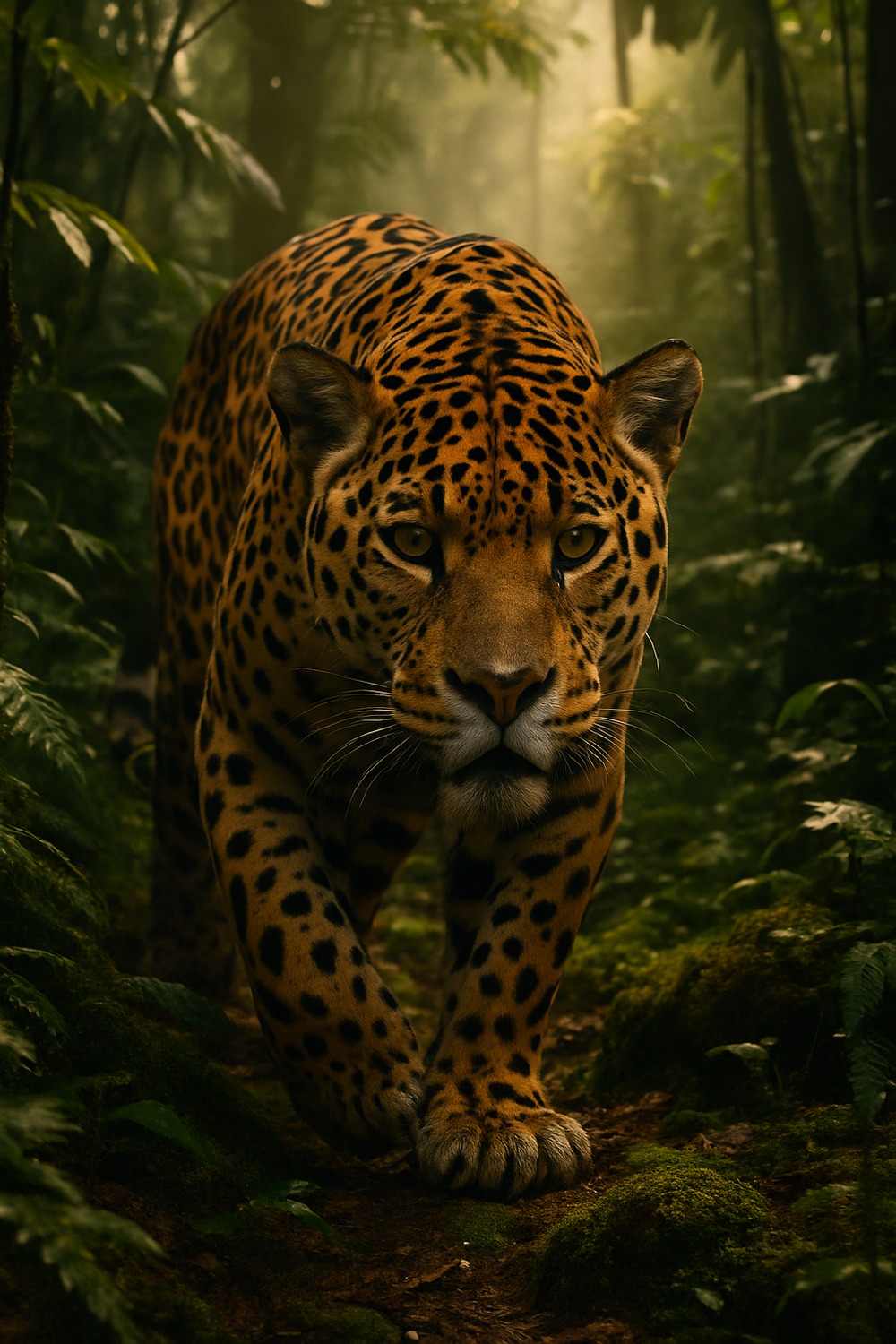
A “wildlife corridor” isn’t a fence or a tunnel or a marked trail. Turns out it’s more like a slowly negotiated agreement between governments, communities, landowners, and the land itself — an agreement that has to be renewed, informally, every few years just by people choosing not to clear the next patch of trees.
In the Selva Maya — the Maya Forest shared by Mexico, Guatemala, and Belize — the corridor functions because enough people on enough land have agreed, formally or otherwise, not to develop it. Camera traps along this route have documented the same individual jaguars crossing between countries. One adult male, nicknamed “El Señor” by the research team tracking him, covered over 800 kilometers in a single season.
That kind of movement matters more than it might seem. Isolated jaguar populations lose genetic diversity fast, which makes them more vulnerable to disease, reproductive failure, and local extinction events that can cascade quickly once they start. The corridor isn’t just nice habitat. It’s the thing connecting gene pools that would otherwise drift apart and quietly collapse over a few generations.
By the Numbers
- 5,326 jaguars confirmed in Mexico’s 2024 national wildlife census — highest count since systematic tracking began in the 1990s.
- Nearly 30% increase in the Mexico jaguar population since 2010, driven largely by corridor protections in the Yucatán and Sierra Madre regions.
- “El Señor,” one tracked adult male, covered more than 800 kilometers in a single season across the Selva Maya — crossing two international borders without anyone’s permission.
- Mexico now hosts an estimated 40% of the remaining jaguar population in Mesoamerica, which makes it the single most critical country for the species’ regional survival. That’s not a comfortable position for one country to be in.

Field Notes
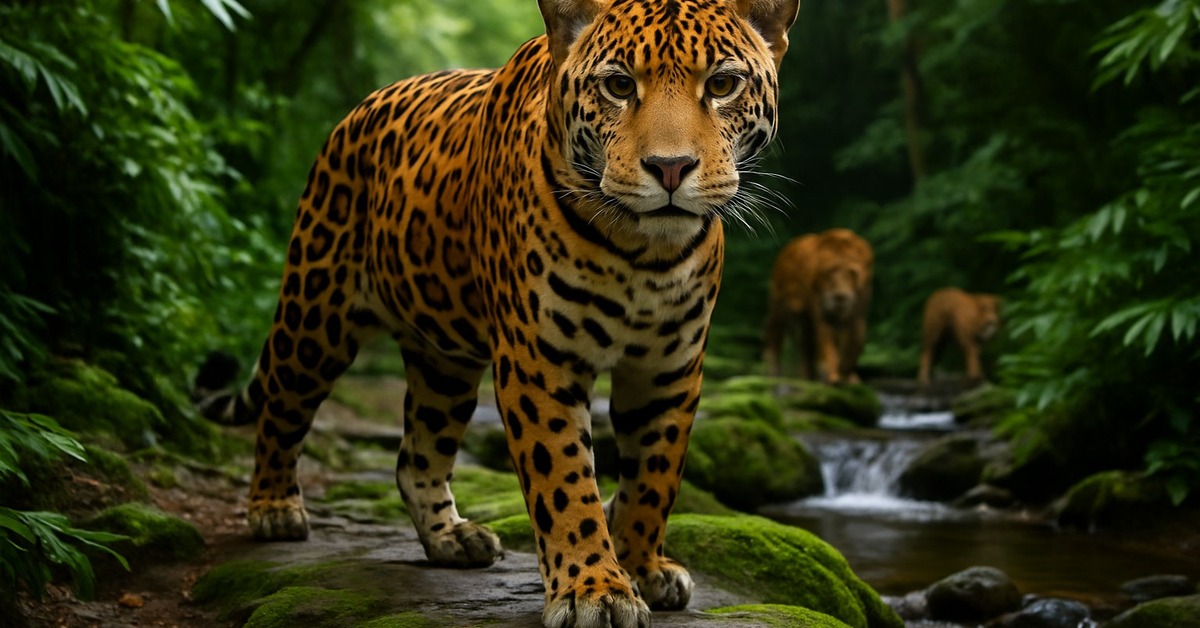
- Jaguars kill by biting directly through the skull — the only big cats in the Americas that hunt this way. Powerful enough to pierce a caiman’s armored hide.
- Unlike most large cats, jaguars actively seek out water and swim well. Camera traps along Mexican rivers have captured them hunting fish and river turtles, behavior that was rarely documented before systematic monitoring made it possible to watch what they actually do when nobody’s around.
- Unique rosette patterns on each jaguar’s coat. One good camera trap photo can identify a specific individual and track it across years of data — no capture, no collar, no contact required.
Why This Recovery Is Bigger Than One Species
The Mexico jaguar population story isn’t really just about jaguars. Jaguars are what ecologists call an apex predator and an umbrella species — when they’re thriving, it usually means the ecosystem beneath them is functional. Healthy deer populations, intact forest structure, clean rivers, intact prey chains. Where jaguars come back, broader biodiversity tends to follow. The Yucatán’s recovery zones have shown measurable increases in peccary, tapir, and bird species diversity since corridor protections went into effect.
The jaguar is essentially a diagnostic tool for ecosystem health.
And that’s why this matters outside conservation circles. Forests capable of supporting jaguars also sequester carbon, regulate rainfall, and buffer against the kind of flooding and drought cycles that are getting worse. The communities living inside these corridors are measurably more water-secure and economically stable than those just outside them. Protecting a predator isn’t sentiment — it’s infrastructure, just infrastructure that took us a long time to recognize as such.
The model Mexico built — community-based monitoring, Indigenous land stewardship, cross-border corridor agreements — is already being studied for application in Colombia, Brazil, and Belize. One country’s hard-won recovery is becoming somebody else’s starting point.
Mexico’s jaguars didn’t come back because the problem got easier. They came back because enough people decided it was worth solving — and then did the slow, unglamorous work of actually solving it. Camera traps in 100-degree heat. DNA from footprints. Long conversations with ranchers who’d genuinely rather not have a jaguar anywhere near their herd. That’s what 5,326 animals looks like from the inside. If that kind of story is your thing, there’s more at this-amazing-world.com — and the next one is even stranger.


