


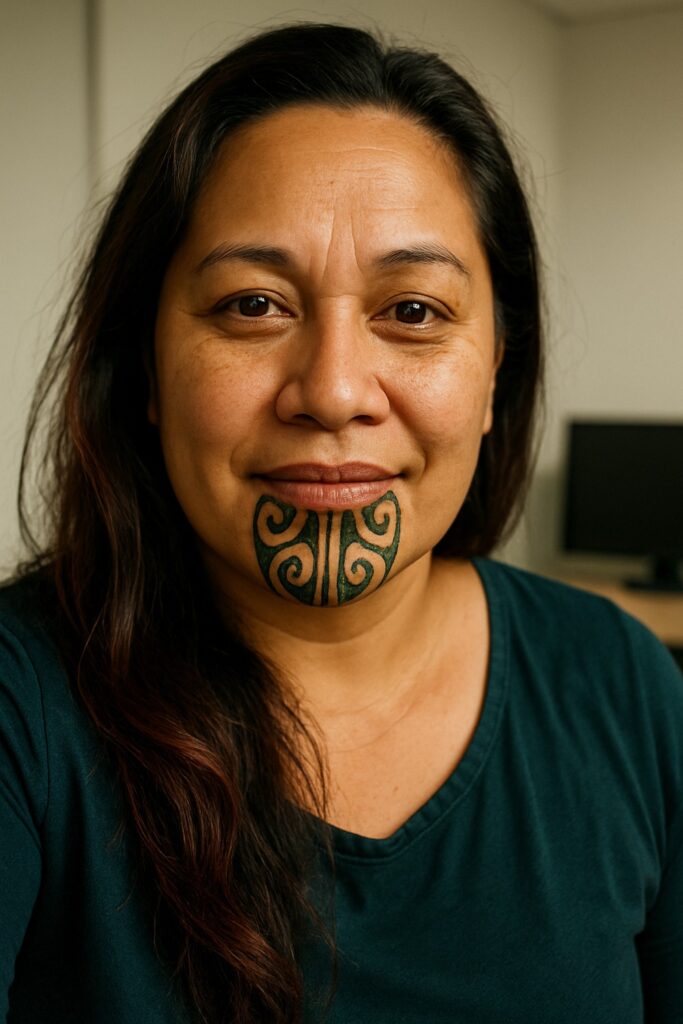
Christmas night. A news desk. A woman sits down to read the headlines, and somewhere in Auckland, phones start lighting up before she’s even finished the first story.
December 25, 2021. The studio is quiet in the way only holiday shifts are quiet. Oriini Kaipara lifts her chin to the camera and does her job. No preamble. No explanation. Just the news. But the markings across her chin — a traditional Māori moko kauae worn by fewer than 2% of Māori women — carry something no script had prepared viewers for. Centuries of compressed lineage, broadcast in primetime, on the highest-viewership night of the year.
What a Moko Kauae Actually Means on Camera
The moko kauae is not decorative. It never was.
Māori scholar Dr. Te Ahukaramū Charles Royal has described traditional tā moko as a living archive — a map of whakapapa, of lineage, of a person’s place in the world. Each curve and line encodes ancestry. For Māori women specifically, the chin tattoo signals wisdom, community standing, and spiritual identity. So when Oriini appeared on primetime television, she wasn’t just wearing ink. She was wearing a story that predates the studio, the network, and the entire colonial framework that built both.
And there was no announcement. No press release. No explainer segment. She simply sat down and read the news. That restraint — that’s what made it disarming.
Oriini Kaipara Carried Two Decades to That Desk
She didn’t arrive there by accident. Nearly eighteen years in journalism before that Christmas broadcast — reporting, presenting, building credibility in a competitive industry that has never been especially generous with space for Māori voices. She received her moko kauae in 2019 from renowned tohunga tā moko Te Rangitu Netana, after a deeply personal process of tracing her whakapapa back to her ancestral tribes: Tūhoe, Ngāti Awa, and Ngāti Tūwharetoa.
The tattoo wasn’t a career move. It was a homecoming.
What’s worth sitting with is the gap between 2019 and 2021. She wore her moko kauae for two full years before that broadcast. Showed up in public. Built toward that desk quietly, on her own terms, in her own time. You can find more on moments of cultural identity and belonging at this-amazing-world.com. But this particular story has a patience to it that most “milestone” narratives don’t bother to mention.
The History Behind the Moko Kauae Is Complicated
Here’s where it gets heavier.
Tā moko — traditional Māori tattooing — was actively suppressed for much of New Zealand’s colonial history. As Christian missionaries and colonial authorities pushed assimilation policies through the 19th and into the early 20th century, traditional practices including tā moko were stigmatized, discouraged, and in some contexts punished outright. The 2021 moko kauae news anchor broadcast wasn’t simply a media milestone. It was the visible end point of a long, painful arc toward reclamation.
Less than 2% of Māori women wear the moko kauae today. That figure reflects centuries of deliberate cultural erasure.
That number is growing, though. Slowly. And the direction of that growth matters more than the size of it.

The Audience Response Nobody Predicted
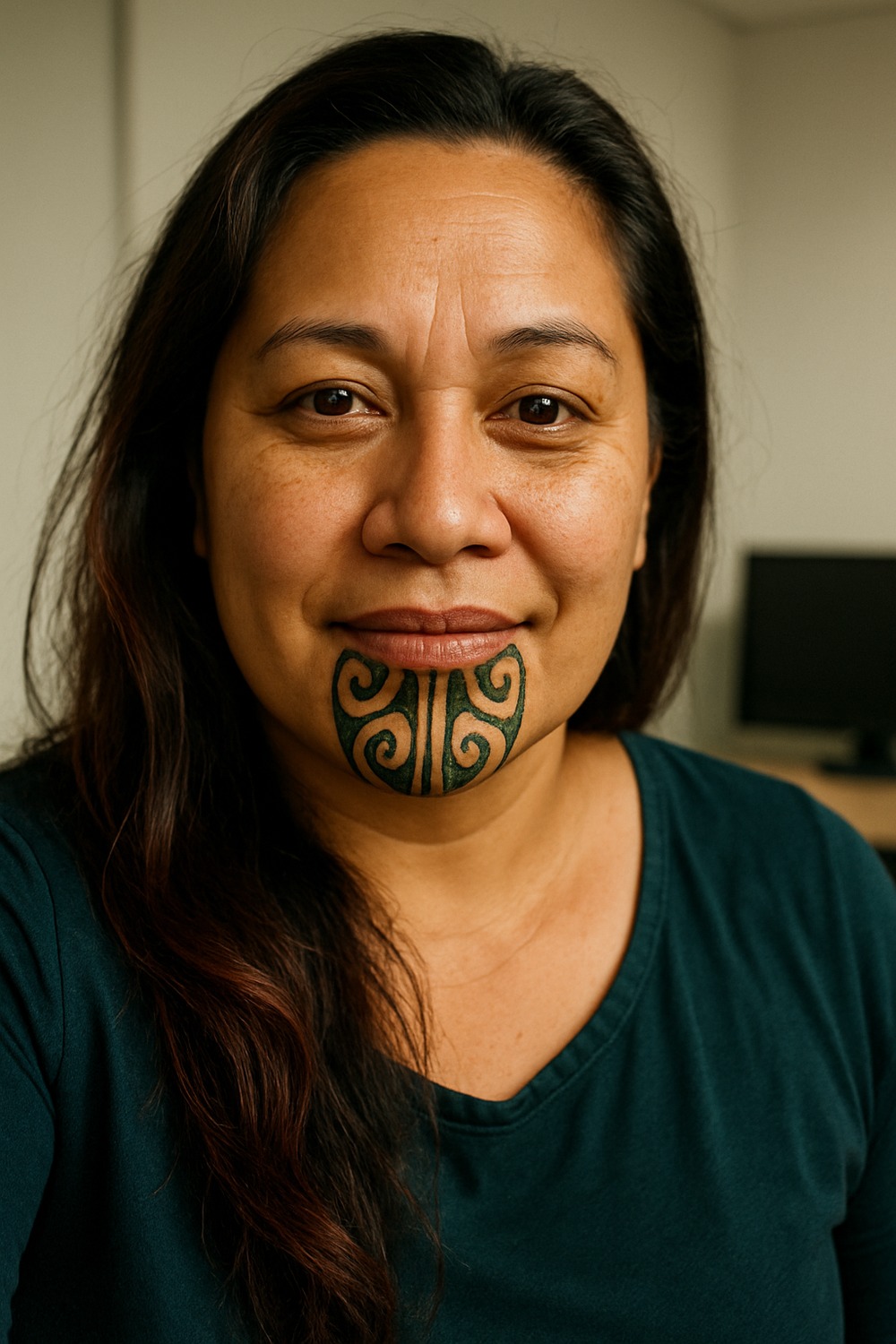
Turns out, New Zealand was ready in a way that even the people watching couldn’t have anticipated. In the hours after the broadcast, Oriini received messages not just from Māori communities but from across the country — parents whose children had pointed at the screen and asked questions, young Māori women saying it was the first time they’d seen themselves reflected in a national news anchor, teachers who’d already decided to show the clip in classrooms. Some messages came from elderly Māori who said they’d waited their entire lives for exactly this.
That last detail kept me reading about this for another hour.
The response wasn’t warm in a generic, feel-good way. It was overwhelming and specific and deeply personal — the kind of reaction that cuts through the usual noise of “representation moments” because it wasn’t about spectacle. There was a difference operating here between being tolerated on screen and being centered. Oriini wasn’t the story. She was the anchor. The news was the news. And that radical, deliberate normalcy — that was the whole point.
When identity stops being the story and just becomes the person telling the story, something has fundamentally shifted.
By the Numbers
- Less than 2% of Māori women in New Zealand wore a moko kauae as of the early 2020s, according to cultural researchers at Te Papa Tongarewa, New Zealand’s national museum.
- ~18 years of journalism before that Christmas desk.
- Māori make up roughly 17% of New Zealand’s total population — yet representation in national mainstream media has historically sat well below that figure, and the gap has been documented across decades of broadcasting research.
- Te Rangitu Netana, who gave Oriini her moko kauae, is one of only a small number of practicing tohunga tā moko keeping the traditional form of the art alive. The number of fully trained traditional practitioners is estimated in the dozens. Not hundreds. Dozens.

Field Notes
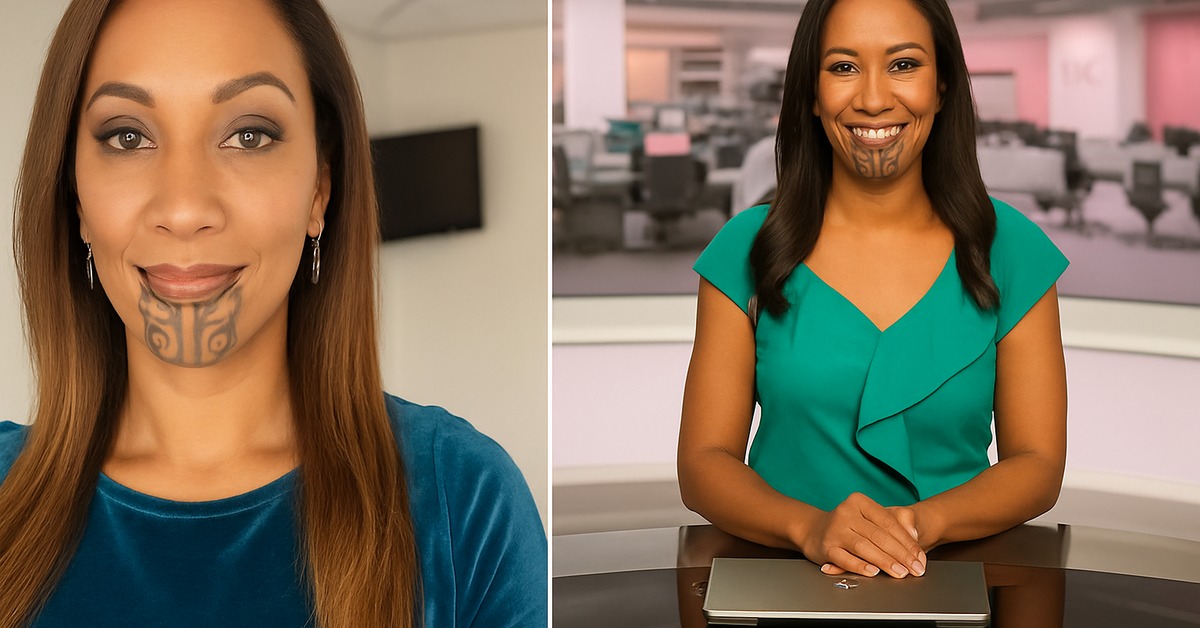
- The moko kauae belongs specifically to wāhine Māori — Māori women. Its placement on the chin and lips is tied to the understanding that these are the sites of breath, speech, and song, all considered tapu (sacred) in Māori culture. Wearing it is understood as an act of spiritual responsibility, not aesthetic choice.
- Historically applied using chisels made from albatross bone — creating grooved rather than flat tattoos, a texture that distinguished tā moko from virtually every other tattooing tradition in the world.
- New Zealand’s broadcasting landscape has seen milestones for Māori representation before, including the founding of Māori Television in 2004. But media commentators were consistent in describing Oriini’s broadcast as qualitatively different: not a Māori-specific platform, but the mainstream national news desk, on the single highest-viewership night of the year. The platform wasn’t carved out for her. She was simply there, doing the job.
Why One Face on a Screen Can Rewrite a Future
It is, on paper, a single shift at a single desk.
But representation research has documented something consistent across decades of study: children form their sense of what’s possible by what they see normalized around them — not celebrated as exceptional, but simply present. When a young Māori girl sees a woman with a moko kauae reading the national news, the lesson isn’t “this is unusual.” It’s something quieter and more durable than that. This is possible. This is normal. This is mine.
That’s a different inheritance than the one usually passed down through colonial history.
Oriini Kaipara didn’t give a speech that night. She didn’t need to. The act of showing up — composed, professional, wearing her ancestry openly on the highest-viewership night of the year — was its own complete argument. For every institution that has historically asked people to sand themselves down to fit, that broadcast said something different.
You don’t have to choose.
Some moments change things without fanfare. No announcement, no ceremony, no segment explaining what you just witnessed. Oriini Kaipara sat down, faced the camera, and read the news. But the story written in centuries of lineage across her chin — that one lasted. Identity, carried publicly and with dignity, can quietly rewrite what the next generation thinks is possible. That’s not a minor thing. There’s more where this came from at this-amazing-world.com, and some of it is even stranger than this.


