


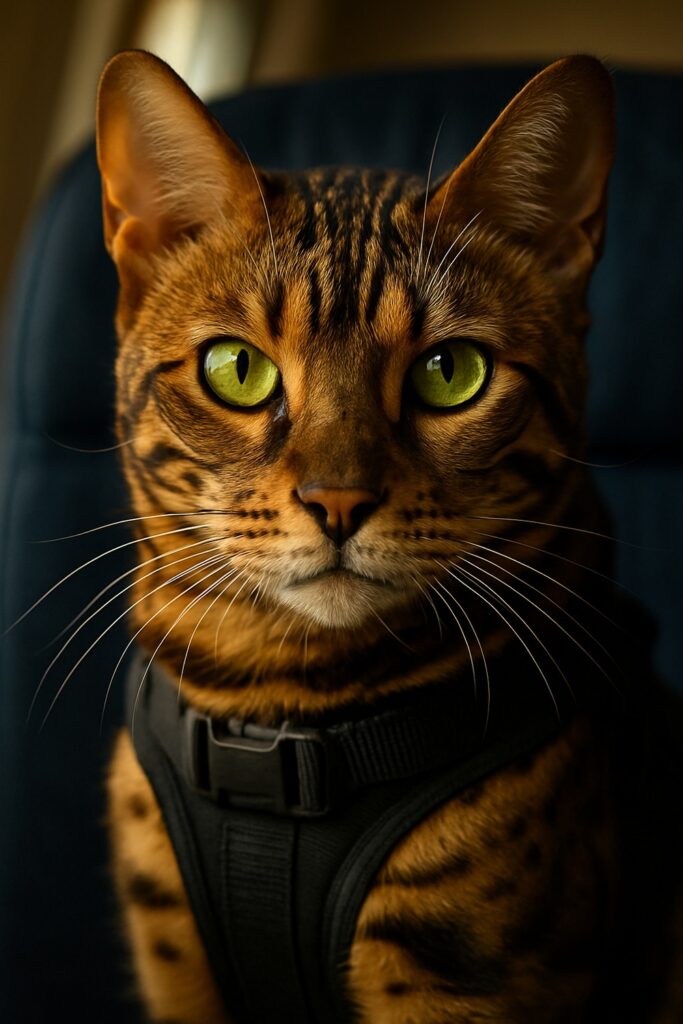
Pet air travel safety has a visibility problem — not a shortage of incidents, but a surplus of forgetting. Five million animals move through U.S. airspace every year, sealed into cargo holds beside luggage, managed by workers with no veterinary training and no institutional pressure to treat a living creature differently than a checked bag. The stories surface when an animal dies in a way that photographs well. Then the news cycle moves. The cargo door closes again.
A significant fraction of those five million animals ride not in the cabin beside their owners, but pressurized into cargo holds alongside suitcases and freight. The rules governing their welfare vary wildly between airlines, between countries, and sometimes between flights on the same carrier. So what, exactly, happens to an animal once the cargo door closes — and who is responsible when it goes wrong?
The Hidden Dangers Animals Face When Flying
Cargo holds on commercial aircraft are, in engineering terms, pressurized and temperature-controlled. In practice, that reassurance frays quickly under scrutiny. Dr. Barry Kellogg of the Humane Society Veterinary Medical Association has documented cases where temperature fluctuations during tarmac delays — sometimes exceeding 90°F (32°C) in summer — expose animals to heat stress severe enough to cause organ failure within minutes. Between 2015 and 2021, the U.S. Department of Transportation recorded 278 animal deaths aboard commercial flights — a figure widely considered an undercount, since reporting requirements apply only to certain carriers and incident types.
Aviation animal incidents have been catalogued by aviation authorities for decades, yet a standardized global protocol for cargo animal welfare still doesn’t exist. That gap is not an oversight. It’s a choice nobody has been forced to reverse.
Stress compounds every physical risk. Heart rate increases. Immune response drops. When animals are confined in unfamiliar spaces, flooded with engine noise and strange smells, their cortisol levels spike dramatically. Short-nosed animals account for a disproportionate share of in-flight deaths, which is why many airlines have quietly banned them from cargo altogether. For brachycephalic breeds — bulldogs, pugs, Persian cats — airways already compromised by anatomy become dangerously restrictive under stress.
A cargo handler at a major U.S. hub, speaking anonymously, described seeing live animal crates stacked beside heavy freight during a ground delay on a summer afternoon. Nobody had flagged the animals for priority offloading. The dog inside was still alive — barely. That image doesn’t leave you.
How Airline Policies Became a Patchwork of Risk
Here’s the thing: in an industry governed by some of the most meticulous safety regulations on earth — checklists for every mechanical contingency, protocols for every weather scenario — the rules protecting living cargo can feel almost improvised. Different airlines set their own temperature windows, their own crate specifications, their own breed restrictions. There’s no equivalent of the FAA’s airworthiness standards for an animal traveling in cargo. It’s a gap that consumer advocates have compared to other overlooked dangers hiding in plain sight — much like the surprising vulnerabilities that emerge when determined individuals exploit systems nobody thought to fully secure, a dynamic that surfaces in unexpected places from cargo holds to, remarkably, high-stakes heists where the same weakness is exploited twice over. Gaps in oversight rarely close themselves.
IATA publishes Live Animals Regulations — a 500-page document updated annually — that sets container dimensions, ventilation requirements, and handling guidelines. In 2022, the document’s 44th edition introduced stricter specifications for crate construction. But IATA’s standards are voluntary. Airlines choose whether to adopt them.
In 2019, United Airlines suspended its PetSafe cargo program entirely after a string of high-profile animal deaths, including an incident in which a flight attendant directed a passenger’s dog into an overhead bin, where it suffocated. United’s suspension affected roughly 9,000 animal shipments annually on that carrier alone.
Amelia Navarro, a veterinarian in Miami who counsels clients on pet travel, puts it plainly: “I’ve had clients call me from airports in tears because gate agents gave them completely different information than what the airline’s website said. The inconsistency isn’t a glitch — it’s the system.”
What Science Says About Animal Stress at Altitude
Why does this matter beyond individual heartbreaking cases? Because the physiological evidence suggests cargo transport isn’t stressful in the way a vet visit is stressful — it’s stressful in the way a medical emergency is.
Research into the physiological effects of air travel on companion animals is thinner than you’d expect for such a widespread practice. A 2018 study published by researchers at the University of Queensland examined cortisol levels in dogs before, during, and after cargo transport. Animals showed cortisol spikes averaging 207% above baseline during loading and takeoff — levels comparable to those recorded in clinical pain studies (researchers actually call this a “physiological crisis response,” not merely elevated stress). Those findings aligned with broader National Geographic reporting on the physiological toll of pet air travel, which confirmed that even in-cabin travel produces measurable anxiety responses in most dogs and cats. The Queensland team’s conclusion was stark: for many animals, especially older ones or those with underlying conditions, cargo transport represents a genuine medical event.
What surprises most people is that pet air travel safety risks don’t scale neatly with flight length. Temperature swings of 30°F within twenty minutes have been recorded during busy hub operations. The loading and offloading windows — not the cruising altitude — are when most deaths and injuries occur. A two-hour domestic flight with a ninety-minute tarmac delay in summer heat can be more dangerous than a twelve-hour international flight on a well-managed carrier with live animal oversight protocols.
That reframes the entire conversation.
The airplane itself may be the safest part of the journey. What happens on the ground, in the minutes animals spend waiting in crates near jet exhaust and summer tarmac heat, is where the real danger lives.

Pet Air Travel Safety: Who Is Actually Watching?
Three separate agencies officially share oversight of pet air travel safety in the United States: the U.S. Department of Transportation, which mandates incident reporting for carriers with more than 60 seats; the USDA’s Animal and Plant Health Inspection Service (APHIS), which enforces the Animal Welfare Act for commercial shippers; and the FAA, which governs aircraft operations but not passenger or cargo animal welfare specifically. A 2020 audit by the DOT’s Office of Inspector General found that APHIS conducted live animal inspections on fewer than 8% of applicable airline operations in the prior fiscal year. For a system handling millions of living creatures annually, that number isn’t just striking — it’s a policy verdict disguised as a statistic.
Signed into law in 1966 and amended several times since, the Animal Welfare Act covers animals in commerce — including those transported by air. Fines issued to airlines for animal welfare violations between 2010 and 2020 totaled less than $1.5 million across all carriers combined — a negligible deterrent for an industry generating hundreds of billions in annual revenue. When the cost of non-compliance is that low, the incentive structure points in one direction. A legal framework that costs less to violate than to follow is not a framework — it’s a formality.
And some airlines are responding — not because of regulation, but because of public pressure. Alaska Airlines updated its live animal temperature protocols in 2023, narrowing the acceptable ground temperature window and adding mandatory shade requirements for animal crates during tarmac holds. JetBlue launched a pilot program the same year allowing more medium-sized dogs in cabins. Small steps. But they exist because passengers started asking — loudly.
The Future of Flying With Animals Looks Different
A handful of companies are building what they describe as the first airline experience designed entirely around pets. Pet Airways, which operated briefly between 2009 and 2011, carried animals as the sole passengers on its flights, with attendants monitoring them throughout. The model didn’t survive financially, but it proved the concept was viable and that pet owners would pay a premium for it.
In Europe, where animal welfare legislation is generally stricter, carriers like Lufthansa and KLM have invested in dedicated live animal facilities at major hubs — climate-controlled holding areas with trained handlers and veterinary access. That standard doesn’t yet exist at most U.S. airports, and the gap between what’s technically possible and what American carriers currently offer isn’t an engineering problem. It’s a priorities problem.
Americans spend more than $150 billion annually on their pets, according to the American Pet Products Association’s 2023 survey. As remote work expands geographic flexibility, people are moving across the country — and across borders — with their animals in tow. Companion animals are increasingly central to how people structure their lives, including their travel. If pet air travel safety standards don’t evolve alongside that behavioral shift, more animals will die in transit. The math is straightforward.
Think of a seven-year-old Labrador named Scout, riding in cargo from Dallas to Seattle on a July afternoon. His owner checked every policy. Filed every form. Chose an airline with a good track record. Turns out none of that protected him from forty minutes on the tarmac in 96°F heat while ground crews managed a gate conflict. Scout survived. Many animals in identical circumstances haven’t. That specific, ordinary fragility is what makes this story matter.

How It Unfolded
- 1966 — The Animal Welfare Act is signed into law, establishing the first federal protections for animals in commerce, including air transport
- 2009–2011 — Pet Airways operates briefly, carrying animals as sole passengers with onboard attendants, demonstrating that a pet-first flight model is technically viable
- 2018 — University of Queensland study records 207% average cortisol spikes in cargo dogs during loading and takeoff, reframing cargo transport as a medical event
- 2019 — United Airlines suspends its PetSafe cargo program following multiple high-profile animal deaths, affecting approximately 9,000 annual shipments
- 2023 — Alaska Airlines tightens live animal temperature protocols; JetBlue expands cabin access for medium-sized dogs — both changes driven by passenger pressure, not new regulation
By the Numbers
- 278 animal deaths recorded on U.S. commercial flights between 2015 and 2021 (U.S. Department of Transportation) — considered a significant undercount due to incomplete reporting requirements
- Approximately 5 million pets travel by air in the United States each year, with cargo transport accounting for a substantial share (American Veterinary Medical Association, 2022)
- 207% average cortisol spike above baseline recorded in dogs during cargo loading and takeoff phases (University of Queensland, 2018)
- Fewer than 8% of applicable airline operations received USDA APHIS live animal inspections in the fiscal year reviewed by the DOT’s 2020 audit
- Total airline fines for animal welfare violations 2010–2020: less than $1.5 million combined across all U.S. carriers — against an industry generating hundreds of billions annually
Field Notes
- Brachycephalic breeds — including bulldogs, pugs, and Persian cats — account for a disproportionate share of in-flight animal deaths; their compressed airways, already under physiological strain at rest, can fail rapidly under the combined stress of confinement, noise, and temperature change. Several major carriers now prohibit them from cargo entirely.
- IATA’s Live Animals Regulations manual runs to more than 500 pages and is updated annually — but its standards are entirely voluntary, meaning airlines can legally ignore every recommendation without consequence.
- Ground windows during loading and offloading — not cruising altitude — represent the highest-risk periods for animals in cargo, a fact that surprises most pet owners who assume pressurization is the primary danger.
- Researchers still can’t reliably predict which individual animals will experience fatal stress responses during cargo transport; no screening protocol currently exists that identifies high-risk animals before they board.
Frequently Asked Questions
Q: What is the actual risk level for pet air travel safety, and is cargo really dangerous?
Pet air travel safety risks in cargo are real but statistically variable. The U.S. DOT recorded 278 animal deaths on commercial flights between 2015 and 2021, but experts believe the true figure is higher due to inconsistent reporting. Risk is highest during ground delays in extreme temperatures, and for brachycephalic or elderly animals. A healthy, young, non-flat-faced dog traveling on a temperature-appropriate day with a well-managed carrier faces considerably lower risk than those statistics suggest overall.
Q: Is it safer to have my pet travel in the cabin rather than cargo?
In-cabin travel eliminates most of the temperature and handling risks associated with cargo, but it’s only available for small animals — typically those under 20 pounds including the carrier. Cabin pets still experience stress responses, but owners can monitor them directly and intervene if something seems wrong. The mechanism of danger changes: in cargo, the primary threats are environmental and logistical; in cabin, stress and unfamiliarity dominate. If your pet qualifies for cabin travel, most veterinarians recommend it over cargo without hesitation.
Q: Don’t airlines already have strict rules that keep pets safe in cargo?
Many people assume that because aviation is heavily regulated, pet welfare rules must be equally rigorous — but they’re not. Airline pet policies are largely self-regulated, with voluntary IATA guidelines and inconsistent government oversight. Reporting requirements don’t apply to smaller carriers. Fines for violations are minimal. Pet air travel safety standards in the U.S. look very different from those in Germany or Australia, meaning the rules that do exist vary significantly between airlines and countries. Checking your specific carrier’s live animal policy — and calling to confirm it before booking — is essential, not optional.
Editor’s Take — Alex Morgan
What stays with me isn’t the aggregate number — 278 deaths, plus whatever the undercount hides. It’s Scout on the tarmac in Dallas, owner having done everything right, animal nearly dead anyway. The system functioned exactly as designed. No rule was broken. That’s the part most coverage misses: the worst outcomes here don’t require negligence or malice — they only require the status quo to continue. Until fines cost more than compliance, and inspection rates climb above single digits, every reassuring airline policy is just language on a website.
Every time a flight takes off with an animal in its belly, someone made a decision based on incomplete information, voluntary guidelines, and a fair amount of hope. That’s not good enough for a five-pound rabbit or a fourteen-year-old cat. As pets become more central to how we live and move through the world, the question isn’t whether air travel should get kinder to animals. It’s why we’ve waited this long — and whose voice finally has to be loud enough to make it change.


