


He’d had the cough for years. Put it down to the cigarettes, mostly — and so did his doctors, right up until the moment a camera went into his lung and found a child’s toy that had been living there since roughly 1977.
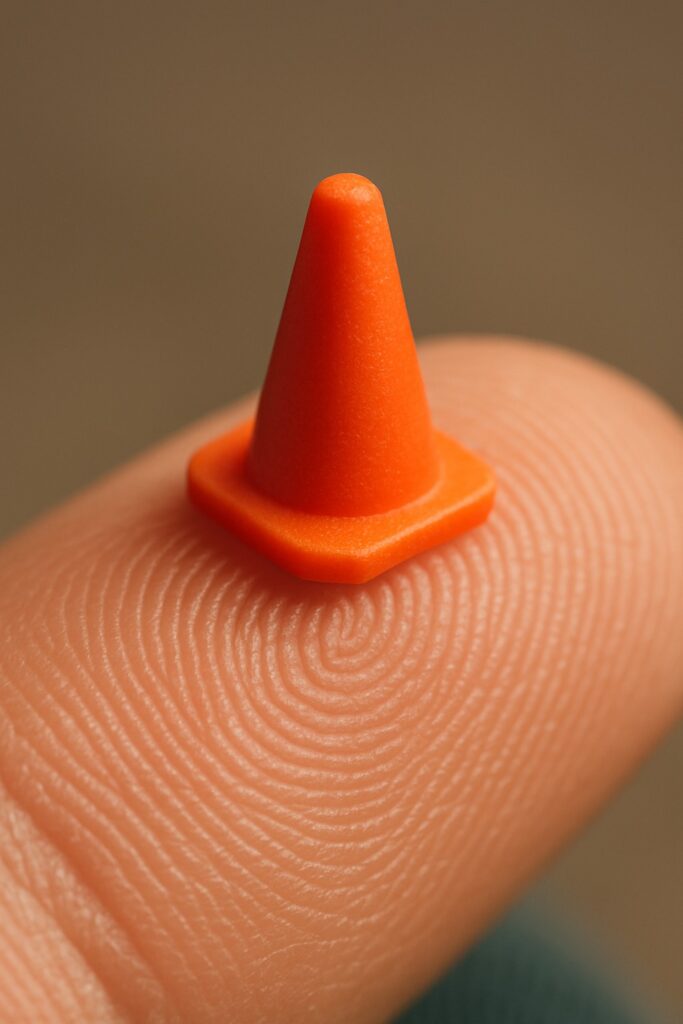
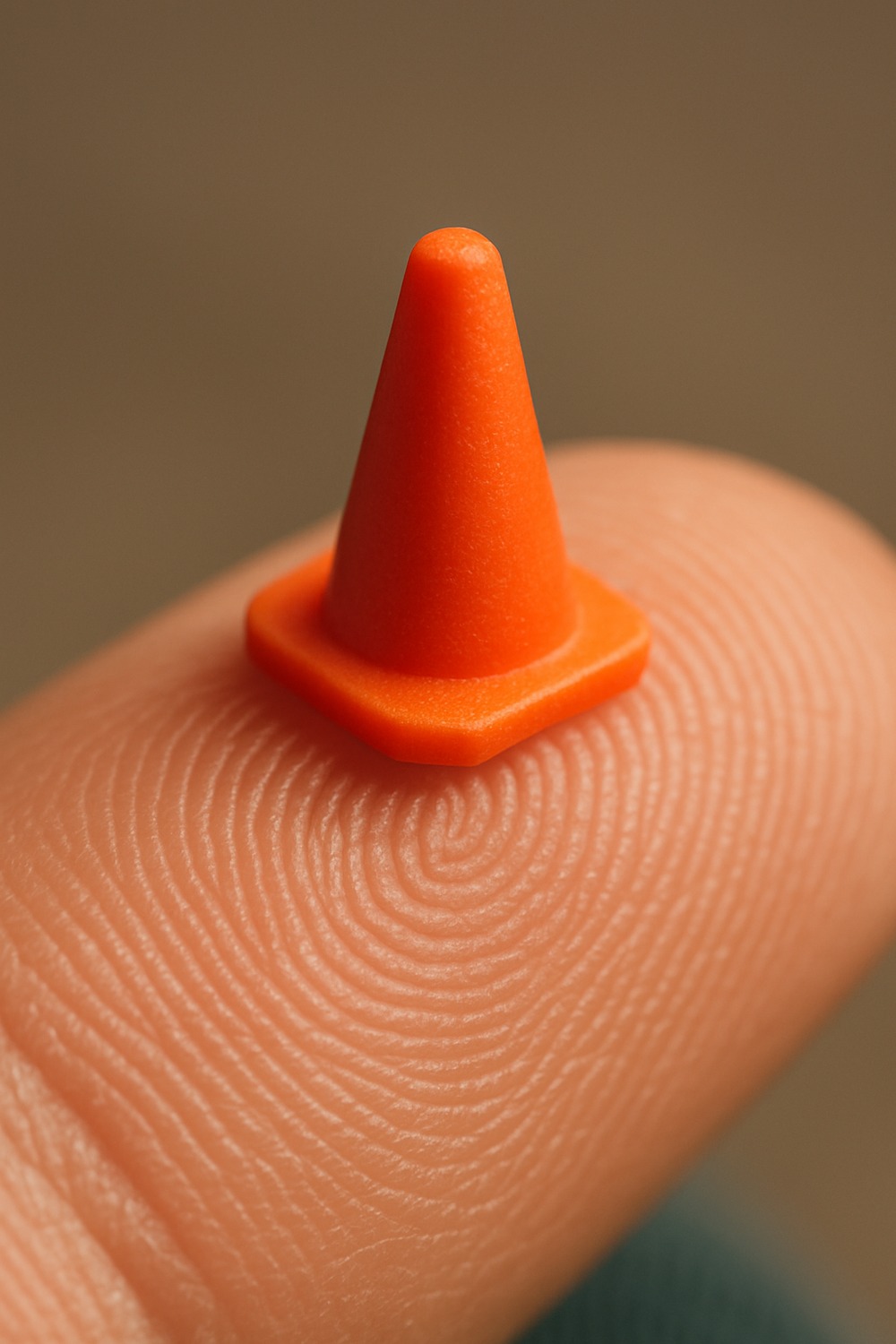
The man was 47, from Preston, England. He walked into his doctor’s office in 2017 with what seemed like a textbook smoker’s complaint: persistent cough, a shadow on the chest X-ray, a clinical picture that pointed fairly convincingly toward cancer. So they escalated. They sent a bronchoscope down — that’s a thin, flexible camera threaded into the airway — and what they found instead of a tumor was a tiny Playmobil traffic cone. Orange. Intact. Approximately four decades old.
Foreign Body Aspiration Lung Cases Most Doctors Never See
Foreign body aspiration — when an object gets inhaled into the airway — shows up regularly in medical literature, but cases that go undetected for decades are a different category entirely. According to a review of aspiration cases on Wikipedia, most incidents get identified quickly, particularly in children. The airway reacts. There’s coughing, wheezing, distress. Somebody notices.
In this case, nobody noticed for forty years.
Dr. Marcus Kennedy, the pulmonologist involved in the Preston case, noted that the lung had essentially restructured itself around the object over time. Which raises the obvious question: how does a body accommodate a foreign plastic object for four decades without ever really protesting?
Turns out the answer is stranger than you’d expect. Airway tissue can gradually form a kind of biological buffer around a lodged object — walling it off, remodeling the surrounding mucosa, rerouting airflow around the obstruction. The immune system takes a look, decides this isn’t an active threat, and quietly files the problem under “deal with later.” Then never does. The object becomes part of the lung’s new normal. Not tolerated exactly, just… absorbed into the architecture.
It’s a bit like finding a pebble in your shoe and walking differently for the rest of your life without consciously deciding to. Until one day, everything aches.
A Childhood Toy Hidden Inside an Adult Lung
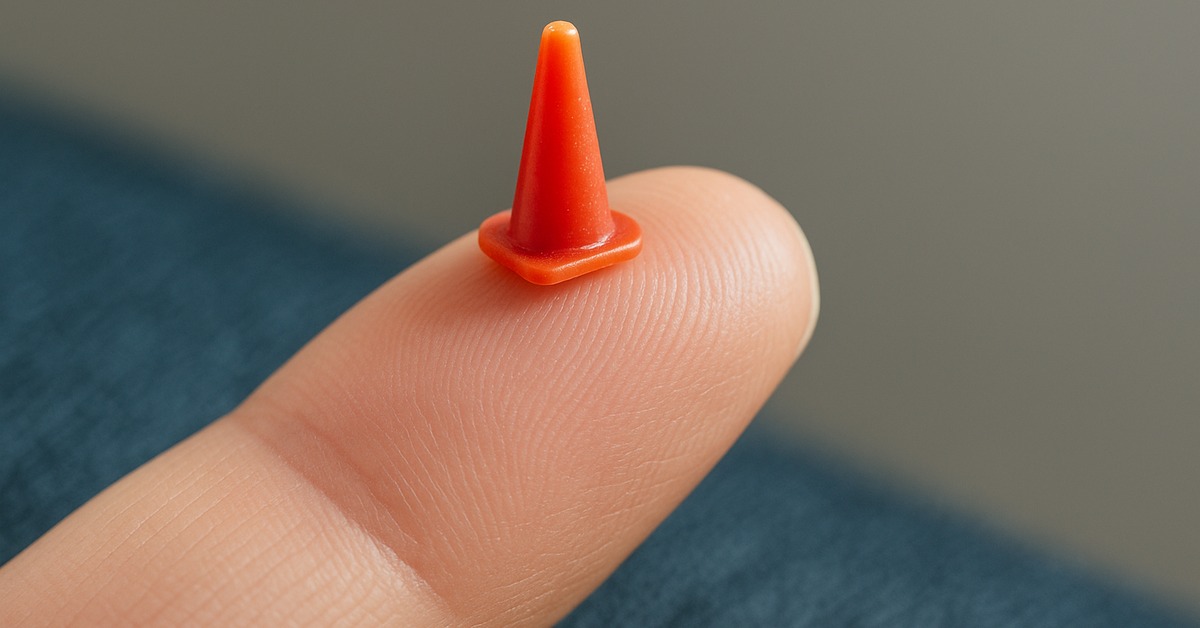
When the bronchoscope reached the obstruction, surgeons found the Playmobil cone lodged deep in the airway — the kind of tiny accessory piece from those little construction sets, a few millimeters across. The airway had partially grown around it, which is why early imaging made it look like organic tissue rather than plastic. The man immediately recognized it. He’d had that exact toy as a seven-year-old. Forty years of birthdays, meals, illnesses, life — and a piece of a child’s playset had been sitting in his chest the entire time, doing almost nothing.
That last detail is the part that kept me reading for another hour.
If you find cases like this fascinating, there’s a whole rabbit hole waiting at this-amazing-world.com — strange medical stories, even stranger science.
Why the Lung Didn’t Sound the Alarm Sooner
Most people assume they’d know. A violent coughing fit. A choking scare. Some memorable moment. But foreign body aspiration in the lung doesn’t always announce itself — and in adults, especially when the object is small and smooth, the airway sometimes compensates so effectively that the event leaves no lasting impression at all.
Studies estimate that up to 40% of adult foreign body aspiration cases involve no clearly remembered aspiration event. The patient genuinely has no recollection of inhaling anything.
A seven-year-old playing with a Playmobil set almost certainly didn’t register swallowing a traffic cone as a medical event. It probably felt like nothing. Or maybe like a brief, weird cough that passed. And then forty years of silence.
The cough in 2017 was the first real signal in four decades. And it nearly got coded as lung cancer.

The Cancer Scare That Led to an Astonishing Discovery
Here’s the thing — without the smoking history, this case might never have escalated to bronchoscopy. A persistent cough in a non-smoker gets a different workup. The suspicious shadow on the imaging, combined with years of cigarette use, made a cancerous mass the obvious clinical suspect. Doctors followed the evidence they had. The evidence pointed wrong.
When the camera went in, there was no tumor. There was an orange plastic cone. Surgeons removed it. Biopsies came back clean. Within four months, the chronic cough had almost completely resolved.
The irony is worth sitting with for a second. A habit that genuinely raises cancer risk accidentally fast-tracked the investigation that found something entirely unrelated to cancer. Without that smoking history sharpening everyone’s concern, the case might have been written off as a minor respiratory infection. The cone might have stayed put for another decade.
By the Numbers
- Documented in a 2019 BMJ Case Reports publication as one of the longest-known undetected foreign body aspirations in an adult — roughly 40 years from aspiration to discovery.
- Around 80% of foreign body aspiration cases occur in children under 15, with toddlers aged 1–3 at highest risk. Exploratory mouthing behavior, basically — they put things in their mouths because that’s how they learn what things are, and sometimes those things go somewhere they shouldn’t.
- Smallest successfully retrieved objects via bronchoscopy: under 2mm.
- Even objects that tiny can cause recurrent pneumonia, chronic cough, and progressive airway obstruction if they go unidentified for years — the lung’s patience is not the same as the lung being fine.
- Up to 40% of adult foreign body aspiration cases have no remembered aspiration event at all.

Field Notes
- The Playmobil cone had been partially overgrown by airway tissue — in early scans, it genuinely looked like part of the lung’s own structure. That’s not unusual for objects that have been present for years; the body doesn’t leave foreign material untouched, it incorporates it.
- Bronchoscopy is both the diagnostic tool and the fix. The same camera that found the cone carried tiny forceps that removed it — no surgical incision required.
- Other documented cases of long-term aspirated objects include a dental crown, a piece of chicken bone, a push-pin. Years passed before symptoms prompted investigation in each case. The lung’s tolerance for foreign material is genuinely strange, and not entirely understood.
What This Story Really Tells Us About Our Bodies
The Preston Playmobil case gets passed around as a curiosity — and it is one, genuinely — but it’s also a window into something less comfortable. Foreign body aspiration in the lung is usually caught fast, especially in children. The airway reacts, someone intervenes, the object comes out. That’s the normal story. The Preston case is what happens when the body’s adaptive capacity works almost too well, quietly papering over a problem until decades later when a different problem finally forces someone to look.
The body keeps secrets better than we think. Not through malice, but through mechanism — through the same adaptive intelligence that heals wounds and compensates for lost function and reroutes around damage. Sometimes that process works so smoothly it buries the original problem entirely.
And doctors are only as good as the questions they think to ask.
Which raises something worth sitting with: how many people walking around right now have a mystery inside them that hasn’t made enough noise yet? Not necessarily plastic toys. A small structural anomaly. A calcified node. A childhood incident recorded nowhere except the tissue itself. The imaging that catches it might come decades later, prompted by something else entirely — a different complaint, a different scare, a different reason to look.
A seven-year-old boy inhaled a tiny traffic cone — at a playdate, at a birthday party, during some ordinary afternoon — and then just kept living his life. Forty years later, what looked like a cancer scare turned into one of the stranger case reports in recent pulmonary medicine. The lung adapted. The toy stayed. The body, as always, had its own plan. There’s more at this-amazing-world.com — and the next one is even stranger.


