Polar Bear Encounters: Calm vs. Control Explained
Polar bear encounters keep getting misread — and the misreading has a cost. A fully grown male can cover thirty meters before most people finish their first decision, and the survival accounts that actually hold up don’t involve connection or recognition. They involve composure used correctly and luck that nobody wants to calculate. The problem is that one famous story — a Canadian trainer raising an orphaned bear from a cub, swimming with her, sharing space that would stop most people’s legs cold — keeps getting recycled in ways that quietly erase the most important part of what made it possible.
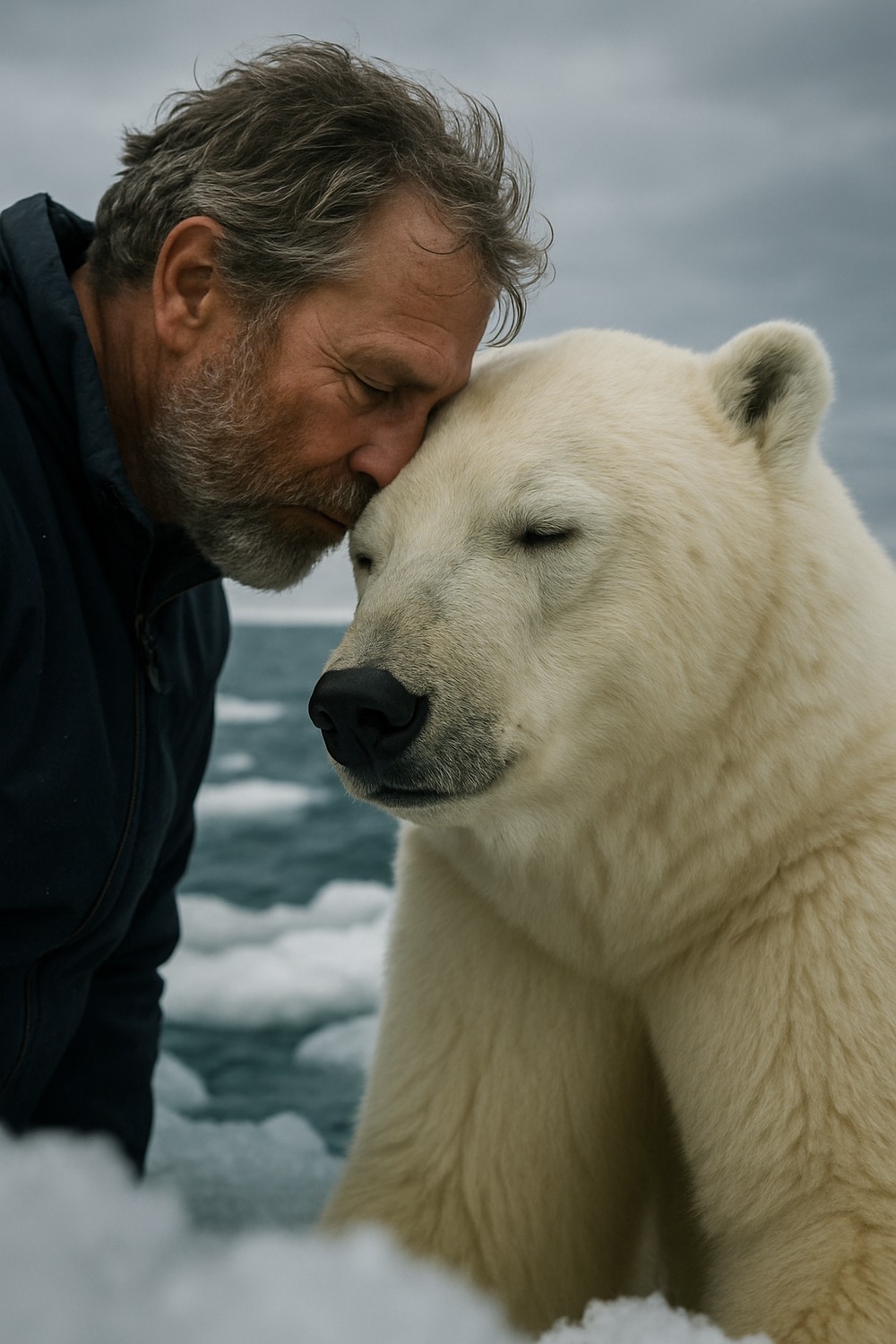
The Legend of Agee and What It Actually Means
Mark Dumas, a Canadian animal trainer, became internationally famous for his relationship with Agee, a female polar bear he raised from a cub after she was orphaned. They swam together. They played. The footage is stunning, genuinely — I’ve watched it multiple times and it still doesn’t quite register as real. But here’s the thing: popular media keeps presenting this story in a way that quietly drops the most important part of it.
Agee wasn’t a wild bear. She was raised from infancy in a controlled environment, imprinted on human presence through professional training methods, and managed under strict government permits that took Dumas years to obtain. (Wildlife authorities call this kind of bond “imprint conditioning,” and it requires regulatory frameworks most people will never access.) She had no Arctic survival pressures shaping her behavior. No hunger seasons. No sea ice. What Dumas built with her required decades of consistent professional effort — and it tells us almost nothing reliable about what a wild polar bear does when it spots you on a frozen tundra.
The leap from admiring that bond to assuming calm behavior might produce something similar in a wild bear isn’t just misguided. It could get you killed. Wild polar bears don’t read humans as caregivers. They read us as prey, competitors, or curiosities, and which of those categories applies can shift in seconds. Agee’s story shows what’s possible under extraordinary circumstances. It’s not a survival template.
Calm as Survival Strategy: The Science Behind the Stillness
Wildlife biologists and Arctic guides broadly agree that projecting calm, assertive energy during a polar bear encounter gives you better odds than running. The reasoning isn’t mystical. A human sprinting away triggers pursuit instincts built over millions of years of predatory evolution, and there’s no version of that footrace you win — bears are acutely sensitive to movement and body language for exactly this reason. Standing firm, maintaining eye contact, speaking in a low steady voice, and backing away slowly without turning: these behaviors signal awareness and potential resistance. In some documented encounters, particularly with curious younger bears or animals not under serious nutritional stress, this approach has bought enough time for people to reach safety.
Why does this matter? Because composure isn’t communication — it’s a biological reprieve, and that distinction changes everything about how you use it.
Wildlife experts are careful about what they claim calm actually achieves. The bear isn’t interpreting your stillness as friendship or social recognition. What researchers believe may be happening is simpler and less flattering to us: you fail to trigger the chase response, the encounter loses momentum, and the bear moves on. (This matters more than it sounds — it means composure buys time, not goodwill.) Every professional who works in polar bear territory — researchers at Churchill, Manitoba, guides in Svalbard, expedition leaders — carries flares and firearms, because they understand calm is one limited tool, not a guarantee of anything.
The Uncertain Territory: What We Still Don’t Know
Here’s the part that gets strange. Among the most honest admissions in polar bear behavioral research is how incomplete the picture still is. What nobody can reliably predict is what tips a specific bear from investigation to aggression in a specific moment — the equation has too many variables running at once. Scientists have documented curiosity-driven encounters that ended without incident and nutritionally stressed bears that charged with no observable warning sequence at all.
Hunger is a significant factor. A bear that hasn’t eaten for weeks in a warming Arctic, where disappearing sea ice keeps shrinking its hunting range, is operating under completely different pressure than a bear that fed recently. Age, sex, whether there are cubs present, prior exposure to humans, individual temperament — researchers are still working to untangle how all of this interacts with any confidence. In 2019, a team studying bear-human interactions in Svalbard noted that even bears with previous non-aggressive contact with humans couldn’t be reliably categorized as lower-risk. And that’s just one variable among many that remain stubbornly unresolved.
Nobody has cracked this yet. That’s not a failure of the science so much as a reflection of how complex a large predator’s decision-making actually is.
Respect, Not Romance: Living Alongside Apex Predators
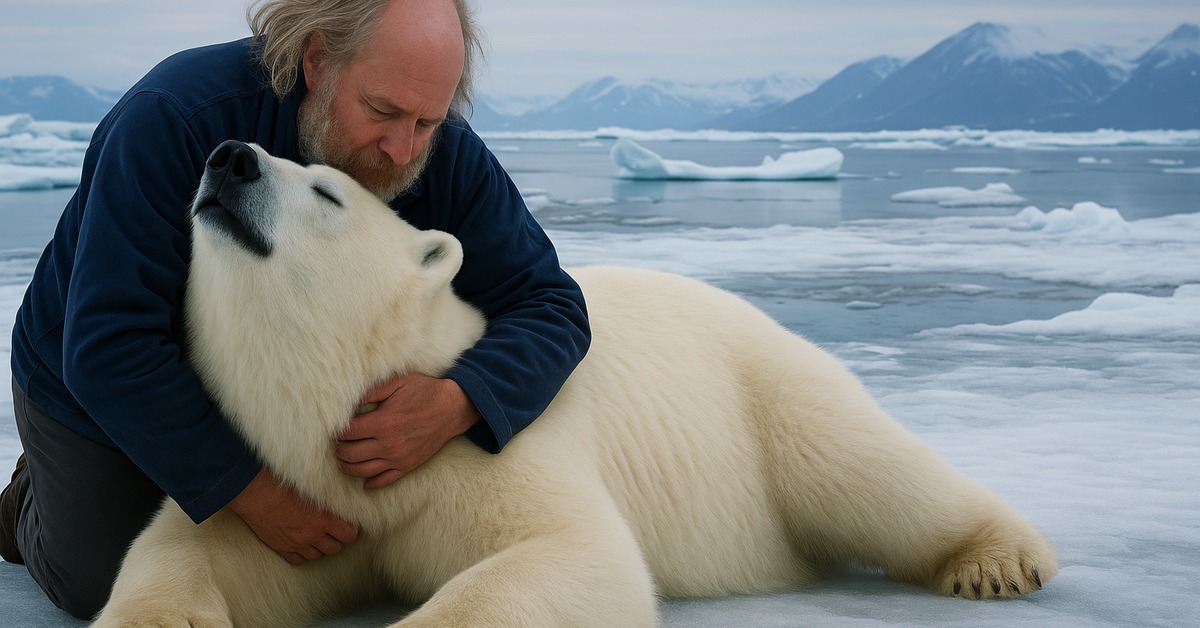
Conservation advocates have started pushing back on the cultural pull toward romanticizing these encounters — reading survival as connection, composure as communication, proximity as some kind of mutual recognition between species. Social media accelerates this badly: dramatic footage surfaces with captions that blur the line between luck and skill, between an extraordinary case like Agee’s and the ordinary, unambiguous danger of a wild bear on sea ice. Romanticizing an apex predator, even when well-intentioned, breeds a casual familiarity that substitutes projection for the genuine respect these animals require.
The data on bear-human conflict deaths left no comfortable room for the “peaceful coexistence” narrative that circulates online — and the researchers publishing it know their findings won’t trend.
And polar bears aren’t hostile by malice. That framing misses the point entirely. They’re supremely adapted predators navigating a rapidly changing ecosystem, filtering every human interaction through a biological lens that has nothing to do with our feelings about the encounter. (Researchers who study apex predator cognition sometimes describe this as “motivational transparency” — the bear isn’t complicated about what it wants.) But the Agee story does mean something real: it shows what extraordinary patience and professional expertise can build with an individual bear over years of consistent work. That’s worth knowing, as long as it stays in its proper context.
How It Unfolded
- 1986 — Mark Dumas acquires Agee as an orphaned polar bear cub, beginning a professional training relationship under Canadian wildlife permits.
- 2003 — Early documentation of Dumas and Agee’s bond surfaces in wildlife and film industry circles; imprint conditioning protocols draw academic attention.
- 2013 — Video footage of Dumas swimming with Agee circulates globally, triggering widespread misinterpretation about wild polar bear behavior.
- 2019 — A Svalbard research team publishes findings confirming that prior non-aggressive contact with humans cannot reliably reduce bear risk classification.
By the Numbers
- 700 kg — maximum recorded weight of a male polar bear
- 30 meters — distance a charging polar bear can cover before most humans process a response decision
- 20,000–25,000 — estimated global wild polar bear population
- 2/3 — proportion of polar bear subpopulations currently in decline due to sea ice loss
- Decades — time Dumas spent building the professional relationship with Agee under regulated conditions
Field Notes
- Churchill, Manitoba is considered the polar bear encounter capital of the world — tundra buggies allow researchers and tourists to observe bears at close range without exiting vehicles
- Svalbard, Norway requires all expedition members outside settled areas to carry firearms as a legal requirement
- Flares remain the first line of deterrent recommended by most Arctic guides before any physical defense measure
- Orphaned bears raised in captivity under imprint conditioning represent an extreme statistical outlier — they cannot be used to model wild bear behavior
- Sea ice loss is directly altering polar bear stress levels and nutritional cycles, making behavioral prediction increasingly unreliable year over year
Where to See This
- Churchill, Manitoba, Canada — the most accessible site for wild polar bear observation in the world; peak season is October–November when bears congregate near Hudson Bay before freeze-up
- Norwegian Polar Institute, Tromsø, Norway — actively researches bear-human conflict dynamics in Svalbard and publishes open-access findings on encounter risk factors
- For a grounded starting point: seek out peer-reviewed research from the IUCN Polar Bear Specialist Group rather than social media compilations — the gap between those two sources is larger than most people expect
Frequently Asked Questions
Can a human ever be safe around a wild polar bear?
Relative safety is possible with the right protocols — distance, deterrents, trained guides, and situational awareness. Absolute safety isn’t a concept that applies. Even experienced researchers operating in polar bear habitat maintain that the margin of error is always narrow.
What made Mark Dumas’s relationship with Agee possible?
Agee was raised from early infancy in a controlled environment, imprinted on human presence through professional methods, and managed under government permits. Decades of consistent expert handling created that bond. None of those conditions exist in a wild encounter.
Does staying calm actually work during a polar bear encounter?
It improves your odds in specific circumstances — particularly with younger bears or animals not under severe hunger stress. It works by failing to trigger pursuit instincts, not by creating any form of mutual understanding. Calm is one tool among several, and professionals always carry additional deterrents.
Why are wild polar bears more dangerous now than in previous decades?
Sea ice loss is compressing their hunting season and increasing nutritional stress across populations. A hungrier bear operating in a degraded habitat is a less predictable bear. Research from Svalbard and Hudson Bay consistently links declining ice coverage to elevated human-bear conflict incidents.
What should you actually do if you encounter a polar bear in the wild?
Stand your ground, maintain eye contact, speak in a low steady voice, and back away slowly without turning. Deploy flares if you have them. Do not run. If you’re in genuine polar bear habitat, you should already have deterrents and an experienced guide — this isn’t a scenario where improvisation serves you well.
Editor’s Take — Alex Morgan
What stays with me about the Agee story isn’t the swimming footage — it’s how quickly it gets stripped of context the moment it travels. Decades of regulated professional work become a caption that says something like “proof bears can sense kindness.” The gap between those two things is where people get hurt. Polar bear habitat is shrinking, stressed animals are ranging closer to human settlements, and the content ecosystem keeps circulating the one story that points in exactly the wrong direction. The bears don’t change. The myth does.
The survival accounts that hold up — researchers who stood their ground, guides who deployed flares at exactly the right second, expeditioners who backed away slowly while their hearts were doing something unreasonable — share a common thread. Not romance. Disciplined, unsentimental respect. Calm bought time. Knowledge shaped the decision. Luck, let’s be honest, almost certainly played a role nobody wants to calculate. If you ever find yourself in that white silence with a polar bear coming through the cold air toward you, remember what composure actually is: a tool. A limited one. Not a bridge to something the bear doesn’t feel. Stay measured, stay aware, and don’t confuse what you see in Agee’s story with what’s standing in front of you.