



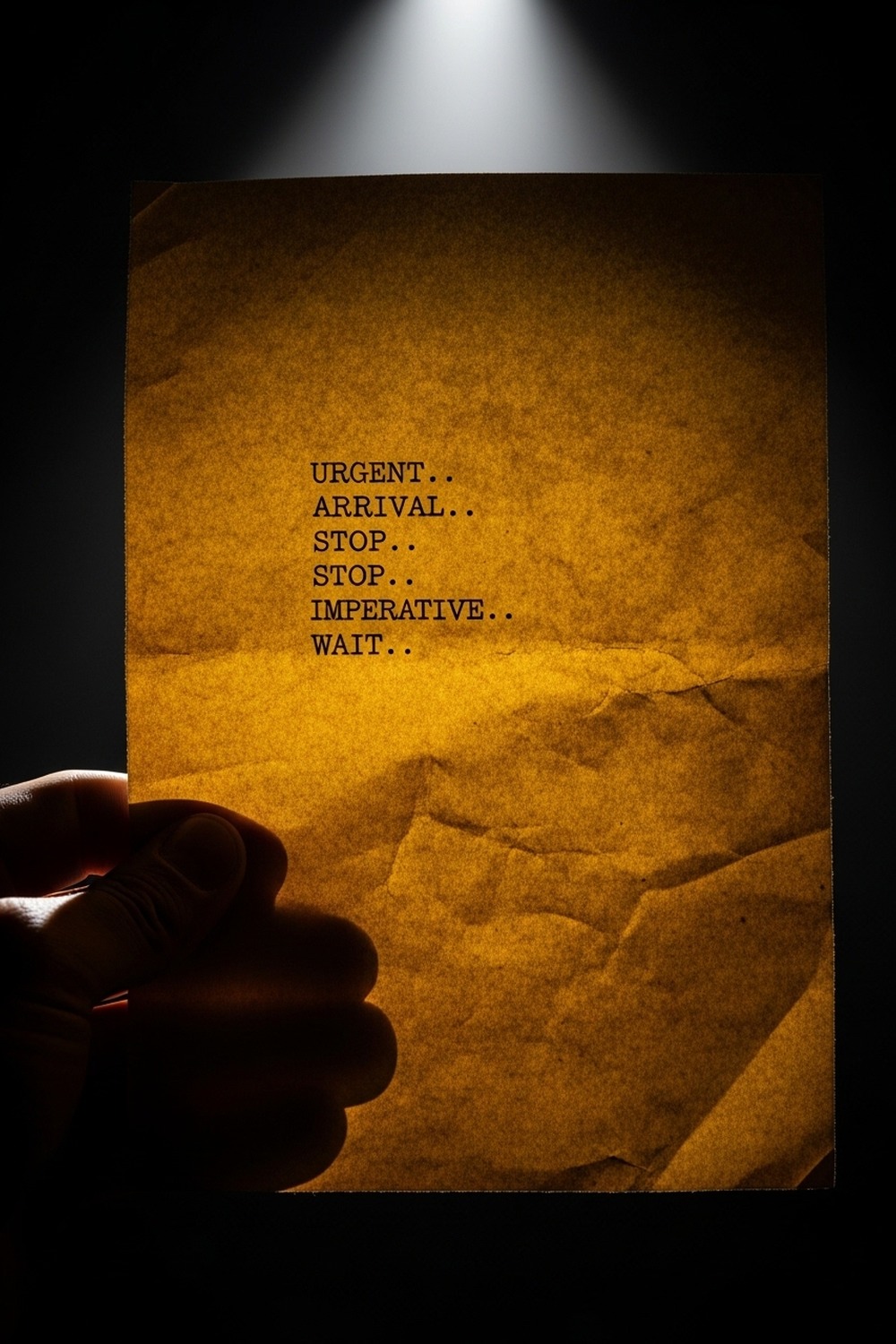
Here’s the thing about Prince Weird Al Yankovic parody permission: the most revealing document in this whole story isn’t a court filing, a contract, or even a refusal letter. It’s a telegram. Sent backstage. At an awards show. In an era when almost nobody sent telegrams anymore — and its message had nothing to do with music rights at all.
Weird Al Yankovic has spent four decades building a career out of other people’s songs, rewriting them with surgical precision and a kind of giddy sincerity that somehow made even the most protective artists say yes. Michael Jackson said yes. Madonna said yes. But Prince — Prince never did. And the telegram he sent before their shared appearance at the American Music Awards became one of the most talked-about stories in the history of music industry courtesy, or the lack of it.



The Artist Who Always Asked Permission First
Long before parody law became a topic of mainstream legal debate, Weird Al Yankovic — born Alfred Matthew Yankovic in 1959 in Downey, California — made a personal decision that would define his career. He would always ask. Not because he legally had to. Under the fair use doctrine enshrined in United States copyright law, parody has long occupied a legally protected space, a principle the Supreme Court affirmed in 1994’s landmark Campbell v. Acuff-Rose Music case. Yankovic didn’t need permission to parody anyone’s song. But he asked anyway, as a matter of professional respect and personal ethics — a practice he began cementing in the early 1980s when his career was still finding its shape.
This one choice — optional, deliberate, slightly old-fashioned — turned out to be one of the smartest professional decisions any musician of his era made. It built goodwill. It built relationships. And occasionally, it built legends — because what artists said in response to those requests became as interesting as the parodies themselves.

Michael Jackson didn’t just say yes to “Eat It” in 1984; he reportedly offered Yankovic the same set used in the “Beat It” video. Madonna approved “Like a Surgeon.” Even Eminem, whose label initially hesitated, eventually gave the green light. The pattern was consistent enough that when an artist said no, it stood out. And no one said no quite as definitively, or quite as memorably, as Prince.
There’s something almost poignant about Yankovic’s insistence on asking. In an industry built on leverage, he kept choosing courtesy. It cost him nothing legally. It cost him everything creatively, at least when it came to one purple-clad genius from Minneapolis. And yet he kept doing it.
What Prince’s Refusals Really Meant
Why does this matter? Because Prince’s refusals weren’t arbitrary — they were the most coherent thing about him.
Prince Rogers Nelson was, by any reasonable measure, one of the most control-focused artists in the history of popular music. His relationship with his own catalog was famously combative — he changed his name to an unpronounceable symbol in 1993 partly as an act of rebellion against Warner Bros. Records, a battle over ownership and creative autonomy that lasted years. He pulled his music from streaming platforms. He sued fans for posting homemade videos of his songs. There’s a certain consistency in his refusals to Yankovic — if Prince wouldn’t let his own label control his music without a fight, he certainly wasn’t going to let someone rewrite his lyrics for laughs.
What’s worth exploring, though, is the texture of that consistency (researchers actually call this “psychological ownership” — the feeling that creative work is an extension of identity rather than a transferable commodity). Research into how music activates the brain’s reward systems helps explain why some artists experience parody as violation rather than flattery. Prince wasn’t being difficult. He was being exactly himself, which was the most Prince thing he could possibly do.
Yankovic reportedly pitched multiple parody concepts to Prince’s management over the years, and each time the answer came back the same: no. Not a maybe. Not a counter-offer. The concepts Yankovic had in mind remain mostly private — he has discussed the refusals in interviews but kept the specific song ideas largely to himself, a discretion that feels characteristic of the man. Prince’s no was absolute, delivered through intermediaries, never directly. That distance was itself a message.
The refusals weren’t personal, exactly. Or maybe they were entirely personal. With Prince, the line between artistic identity and personal identity was never clear. His music wasn’t product. It was self. And you don’t parody someone’s self without asking them to participate in their own diminishment — at least, that’s one way to read it.
The Telegram That Changed the Story
Here’s where the story becomes genuinely strange. Before a shared appearance at the American Music Awards — the year is not precisely documented in all accounts, but the story has been told by Yankovic himself in multiple interviews and is referenced in depth in his 2022 biographical film — Prince’s management sent Weird Al a formal communication. Not an email. Not a phone call. A telegram. In an era when telegrams had already become archaic, this choice of medium was itself a statement: this is serious, this is formal, and it comes from someone who operates by different rules than the rest of you.
The telegram’s message was brief and specific: do not make eye contact with Prince.
Yankovic has recalled this with characteristic good humor, framing it as one of the more surreal moments in a career full of surreal moments. But stripped of the laughter, the instruction is extraordinary. Don’t look at him. Not don’t approach him, or don’t speak to him, or don’t mention the parody requests — don’t look at him. The Smithsonian Magazine’s deep reporting on Prince’s battles for artistic control captures the broader context: this was an artist who had spent decades constructing a wall between himself and any force he didn’t control. Yankovic, cheerful and collaborative by nature, represented something Prince’s instincts couldn’t accommodate — someone who wanted to play in his world without his blessing.
And yet Yankovic tells the story without a trace of resentment. That, maybe, says as much as the telegram itself.
Two genuinely extraordinary musicians, both meticulous craftsmen in their very different ways, standing in the same building — and one of them has issued instructions that they never have to acknowledge the other exists. That’s not a professional disagreement. That’s something closer to myth-making — Prince as a figure so elevated, so separate, that eye contact becomes a kind of trespass.

How Prince Weird Al Yankovic Parody Permission Became a Cultural Touchstone
New life arrived in 2022 with the release of *WEIRD: The Al Yankovic Story*, the biographical film starring Daniel Radcliffe, which leaned into the absurdist energy of Yankovic’s life while touching on the real history of his permission-seeking process. The film took enormous creative liberties — Madonna, Coolio, and other artists appear in wildly fictionalized versions of events — but the underlying reality of Prince Weird Al Yankovic parody permission dynamics was well-documented long before Hollywood arrived. Yankovic had discussed the Prince refusals in interviews stretching back years, including a detailed 2014 conversation with *Rolling Stone* in which he confirmed the repeated nos and his genuine respect for Prince’s right to refuse.
The telegram detail, in particular, circulated widely online and became one of those music industry stories that spreads because it perfectly captures something true about both people involved. Some stories survive because they’re dramatic. This one survives because it’s precise — every detail reveals character, and none of it needed exaggeration. History has a way of treating the people who dismissed this kind of story as mere gossip unkindly; it turns out the small moments are often where the real portrait lives.
What the story reveals about the parody permission landscape more broadly is this: Yankovic’s insistence on asking created a kind of informal ledger of artist personalities. Artists who said yes tended to be those who understood that parody was a form of cultural arrival — if Al Yankovic wants to rewrite your song, you’ve made it. Artists who said no tended to be those for whom artistic ownership was existential rather than commercial. Prince belonged emphatically to the second category. His no wasn’t about money or legal risk. It was about something that couldn’t be negotiated.
Yankovic never made a Prince parody. He’s still never made one. Prince died in April 2016 at the age of 57, leaving that chapter permanently closed. There is no version of this story with a reconciliation scene. The telegram was, in its way, the final word.
How It Unfolded
- 1976 — Weird Al Yankovic begins experimenting with song parodies as a teenager, recording material on an accordion given to him by his parents, establishing the DIY ethic that would define his career.
- 1984 — Michael Jackson approves “Eat It,” Yankovic’s parody of “Beat It,” and the resulting hit goes to number 12 on the Billboard Hot 100, establishing Yankovic’s commercial legitimacy and his reputation as an artist who asks before he parodies.
- 1992–2000s — Multiple parody concepts pitched to Prince’s management are declined, each refusal delivered through intermediaries; the telegram instruction not to make eye contact circulates in music industry circles as a piece of legend.
- 2022 — *WEIRD: The Al Yankovic Story* premieres on Peacock, starring Daniel Radcliffe, bringing the story of parody permission — and Prince’s notable absence from it — to a new generation of audiences.
By the Numbers
- 5 Grammy Awards won by Weird Al Yankovic across his career, making him the best-selling comedy recording artist in history (Recording Academy, various years)
- 40+ years of active recording career, from 1979 to the present day, across 14 studio albums
- 0 — the number of official Prince parodies Yankovic ever released, despite multiple attempts to secure permission
- 1994 — the year the U.S. Supreme Court ruled in Campbell v. Acuff-Rose Music that parody qualifies as fair use, meaning Yankovic never legally needed permission from anyone
- 57 — Prince’s age at his death in April 2016, leaving the parody permission question permanently unresolved
Field Notes
- Yankovic’s parody of Coolio’s “Gangsta’s Paradise” — retitled “Amish Paradise” in 1996 — became one of his biggest hits, but the permission story turned complicated: Coolio later said he hadn’t actually approved it and felt disrespected. Yankovic maintained he’d received clearance through Coolio’s label. The misunderstanding haunted both artists for years before Coolio publicly forgave Yankovic shortly before Coolio’s death in 2022.
- Prince was so protective of his catalog that he successfully had a 29-second home video of a baby dancing to “Let’s Go Crazy” removed from YouTube in 2007 — a case that became a landmark in the debate over overzealous copyright enforcement.
- Yankovic’s decision to always ask permission, despite having no legal obligation to do so, has been cited by music law academics as an interesting case study in professional ethics operating independently of legal requirement.
- Researchers still can’t fully explain why some artists experience parody as tribute while others experience it as violation — the psychology of creative ownership remains genuinely contested, and no study has cleanly mapped personality type to permission behavior.
Frequently Asked Questions
Q: Did Prince Weird Al Yankovic parody permission disputes ever involve legal action?
No legal action was ever taken between Prince and Yankovic over parody permission. Yankovic’s practice of asking first — despite having no legal obligation under fair use — meant the disagreement stayed at the level of personal refusal rather than litigation. Prince said no, Yankovic respected that, and no parodies were made. The story is notable precisely because it never escalated beyond a series of polite rejections and one extremely formal telegram.
Q: Why did Weird Al Yankovic ask for permission if he didn’t have to?
Yankovic has explained in multiple interviews that asking was a personal ethical choice, not a legal one. The 1994 Supreme Court ruling in Campbell v. Acuff-Rose Music confirmed that parody qualifies as fair use under U.S. copyright law, which means artists can legally parody songs without the original creator’s approval. Yankovic chose to ask anyway as a professional courtesy, reasoning that working with an artist’s blessing — rather than against their wishes — made for better relationships and a cleaner conscience. It’s a distinction between what’s legal and what’s kind.
Q: What most people get wrong about the Prince telegram story
Most people assume the “no eye contact” instruction was bizarre or hostile. In context, it was consistent with Prince’s entire public persona — he maintained an almost theatrical distance from the ordinary mechanics of celebrity interaction. What’s actually surprising is that Yankovic has never told the story with bitterness. He tells it the way you’d describe an encounter with a very rare, very particular animal: with wonder, and a kind of fond bewilderment. The real emotional weight isn’t the telegram. It’s that the conversation they might have had never happened at all.
Editor’s Take — Sarah Blake
What stays with me isn’t the telegram. It’s the fact that Yankovic kept asking Prince, again and again, knowing the answer would be no. That’s not naivety — that’s a man who understood that the asking itself was part of the relationship, even a relationship built entirely on refusal. There’s something almost more respectful in that than in the artists who said yes without a second thought. Prince’s wall was real. But so was Yankovic’s willingness to keep knocking on it anyway.
Music history is littered with feuds, lawsuits, and public beefs. This one never became any of those things. It stayed private, strange, and oddly dignified — a comedian who made a career out of irreverence choosing to be scrupulously respectful, and a genius who made a career out of control choosing to enforce it with a telegram. Two men in the same building, navigating the same weird territory of art and ownership, and never once making eye contact. What would they have seen, if they had?


