The Seahorse Smaller Than Your Thumbnail That Hid for Decades
Nobody found them by looking. The first confirmed pygmy seahorse turned up because a marine biologist brought a chunk of coral into a lab and something on it moved.
Two centimeters. Tip to tail, that’s the full length of a pygmy seahorse — smaller than your thumbnail, smaller than a grape. They’ve been clinging to coral reefs across the Indo-Pacific for millions of years. And until a single accidental lab discovery in 1969, the scientific world had absolutely no idea they existed.
Key Facts
- The first pygmy seahorse species, Hippocampus bargibanti, was discovered accidentally in 1969 by marine biologist Georges Bargibant in a lab specimen.
- Pygmy seahorses measure roughly 2 centimeters tip to tail, with Hippocampus satomiae the smallest at just 13.8 millimeters (described 2008).
- At least 9 species are now recognized, with the majority of them described after the year 2000.
- Nearly all species live in the Coral Triangle, a region of about 6 million square kilometers spanning Indonesia, the Philippines, and Papua New Guinea.
- The Coral Triangle hosts approximately 76% of all known coral species and over 2,000 species of reef fish.
In short: The pygmy seahorse camouflage is so precise that the first species went undiscovered until an accidental 1969 lab find. These 2-centimeter fish match their host coral’s color and tubercle texture exactly, living their entire lives on a single sea fan. At least 9 species exist, most named after 2000.
How Pygmy Seahorse Camouflage Defeated Science for Decades
In 1969, marine biologist George Bargibant was collecting specimens for a New Zealand museum — routine work, the kind of fieldwork that generates paperwork more than discoveries. He pulled a chunk of sea fan coral and brought it back to the lab. Only under examination did two tiny seahorses appear, fused so completely in color and texture to the coral that nobody had spotted them in the field. Bargibant described the first species, Hippocampus bargibanti, named in his honor. Until that moment, the species had simply been invisible.
But how does an animal actually pull that off?
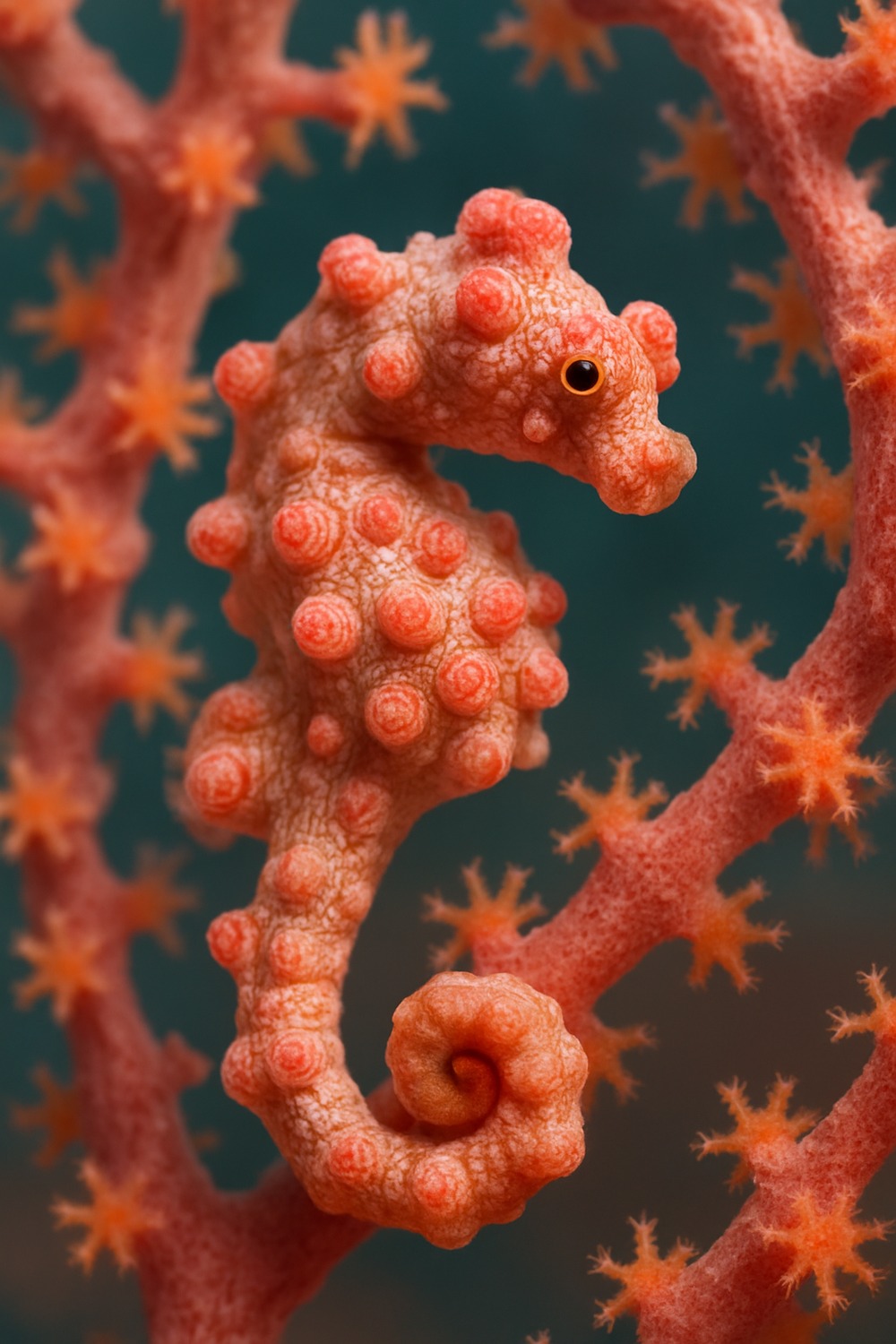
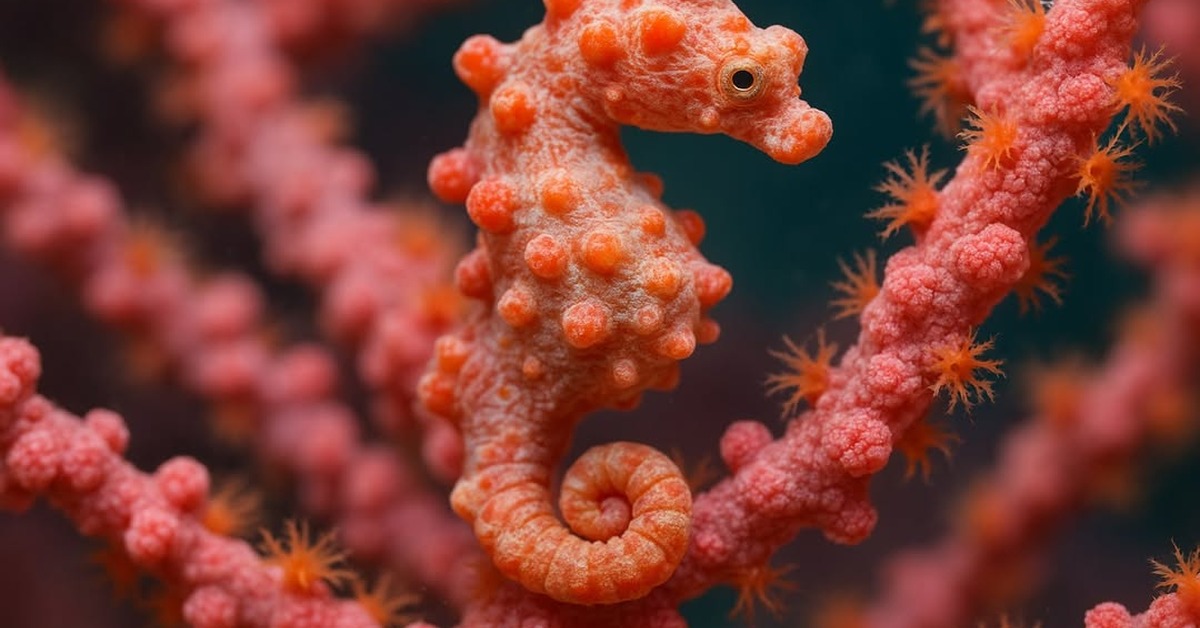
It’s not just color. The tubercles — those bumpy nodules covering a pygmy seahorse’s skin — mirror the individual polyps on its host coral almost exactly. Pink host? Pink seahorse. Yellow host? Yellow seahorse. The match is so specific that each species tends to live on only one or two coral species. Not by preference. By design.
One Coral Branch Is Their Entire Universe
A pygmy seahorse finds a single sea fan coral — sometimes a branch no wider than your open hand — and that’s it. That becomes the hunting ground, the bedroom, the nursery, and the social scene, all at once. Some individuals spend their entire lives on a single coral structure without ever leaving.
For a creature that can swim, that level of commitment is almost startling.
Think about what that means ecologically. The health of that one coral isn’t just habitat — it’s survival. Lose the coral and you lose the seahorse. There’s no backup plan, no Plan B reef two meters away. That’s not a lifestyle choice. That’s a bet with nothing held in reserve. You can read more about extraordinary animal adaptations like this at this-amazing-world.com.
The Father Who Carries Everything — Literally
Like all seahorses, it’s the males who carry the young. The female deposits eggs into a brood pouch on the male’s body, and he fertilizes, carries, and births them. In most seahorse species, this is already remarkable. But in pygmy seahorses — where your entire world fits on one coral branch — that reproductive devotion takes on a different weight. It’s not sentimental. It’s survival geometry. Every pregnancy is a commitment to one specific piece of reef.
The males give birth in small batches, releasing juveniles directly onto the same coral structure. The young are born fully formed and almost immediately begin developing their own camouflage to match the host. They’re locked into their inherited world from the very first days of life — which, when you sit with that for a second, is either poetic or claustrophobic depending on your mood.
Nine Species, Most Discovered in the Last Twenty Years
When Bargibant found that first pair in 1969, scientists assumed it was a curiosity. A single unusual species tucked into a niche. Then a second species turned up. Then a third. At least nine species of pygmy seahorse are now recognized, and the majority were identified after the year 2000. Nearly all of them live in the Coral Triangle — the dense marine biodiversity zone spanning Indonesia, the Philippines, and Papua New Guinea — a region researcher David Bellwood has called “the Amazon of the seas.”
If nine species went undescribed for this long, how many more are still hiding? Scientists genuinely don’t know. That’s not a rhetorical flourish — that’s the actual state of the research.
That last detail kept me reading for another hour. Because the pygmy seahorse camouflage problem isn’t just about these animals specifically. It reveals something uncomfortable about marine biology as a field: even in relatively well-studied reef systems, we can miss vertebrates. Not microbes. Not plankton. Vertebrates with spines and eyes and babies.
We weren’t missing something microscopic. We were missing fish.
The Coral Triangle Holds Secrets We Haven’t Named Yet
The Coral Triangle covers roughly 6 million square kilometers of ocean and contains more marine species per unit area than anywhere else on Earth. Some reefs in this region haven’t been surveyed at all. Pygmy seahorses live in the shallows — typically between 16 and 40 meters depth — which means they’re technically accessible to recreational divers. And yet they keep surprising us.
New species continue to be formally described as scientists revisit old museum collections and apply modern genetic analysis to specimens that looked identical by eye. Turns out “looks the same” and “is the same” are very different things when you’re working at 14 millimeters long.
The 2008 discovery of Hippocampus satomiae — the smallest known seahorse species on record at just 13.8 millimeters — came from exactly this kind of re-examination. Someone thought they had a juvenile specimen. They had a new species. It just never got bigger.
By the Numbers
- The first pygmy seahorse species was formally described in 1969 by ichthyologist Georges Bargibant — more than 100 years after seahorses were first systematically studied as a genus.
- At least 7 of the 9 recognized species were described after 2000. Roughly 78% of everything we know about pygmy seahorses has been discovered within the last 25 years.
- Hippocampus satomiae: 13.8 mm. World record. Smaller than your fingernail at any age.
- The Coral Triangle hosts approximately 76% of all known coral species and over 2,000 species of reef fish — the single most biodiverse marine region on the planet, and the primary range of nearly all pygmy seahorse species.
Field Notes
- Pygmy seahorses can change their coloration and tubercle texture to match a new host coral after being transferred — but the process takes time, which suggests the camouflage isn’t purely genetic. There’s some degree of active physiological adaptation happening, tuned to the specific host coral.
- Birth window: 9 to 45 days after fertilization.
- Litter sizes run from 7 to 34 offspring — far smaller than larger seahorse species, which can release hundreds of young at once.
- Some pygmy seahorse species are so cryptic that dedicated researchers studying them in situ report losing track of individuals mid-dive — not because the animal moved, but because the observer’s eye simply resets and can no longer locate it against the coral background. The seahorse didn’t go anywhere. The human brain just stopped seeing it.
Why These Tiny Animals Change What We Think We Know
Pygmy seahorse camouflage isn’t just a neat biological trick. It’s evidence that our maps of biodiversity are riddled with gaps we haven’t accounted for. These animals exist on reefs that are under active threat from warming oceans, bleaching events, and coastal development. We’re losing ecosystems we’ve never properly inventoried. Species are almost certainly going extinct before we’ve had the chance to name them, let alone understand what role they were playing.
The stakes aren’t abstract. When a sea fan disappears — to bleaching, to collection, to a single careless anchor drop — a pygmy seahorse doesn’t relocate. It’s gone. Because these animals live at such low densities on such specific hosts, localized reef damage can quietly erase entire local populations without a single person noticing.
No alarm. No record. Just an empty branch where something used to be.
One accidental lab discovery rewrote what we thought was hiding on reefs. And that was just the beginning. There are still species out there — on coral structures that haven’t been named, in water that hasn’t been dived — waiting for someone to look closely enough. The world under the surface is still being written. If this kind of story keeps you up at night, there’s more at this-amazing-world.com, and the next one is even stranger.
Frequently Asked Questions
Q: When was the first pygmy seahorse discovered?
The first pygmy seahorse species, Hippocampus bargibanti, was discovered by accident in 1969. Marine biologist Georges Bargibant collected a chunk of sea fan coral for a New Zealand museum, and only under lab examination did two tiny seahorses appear, fused so completely in color and texture to the coral that nobody had spotted them in the field. Until that moment, the species was effectively invisible to science.
Q: How small is the smallest pygmy seahorse?
The smallest known pygmy seahorse is Hippocampus satomiae, described in 2008 at just 13.8 millimeters long, making it the smallest seahorse species on record. It is smaller than a human fingernail at any age. The discovery came from re-examining a specimen originally mistaken for a juvenile of another species, which never grew larger because it was already an adult of a new species.
Q: Where do pygmy seahorses live?
Nearly all pygmy seahorse species live in the Coral Triangle, a marine biodiversity zone of roughly 6 million square kilometers spanning Indonesia, the Philippines, and Papua New Guinea. They typically inhabit shallow reefs between 16 and 40 meters deep, clinging to single sea fan coral structures. This region hosts approximately 76% of all known coral species and over 2,000 species of reef fish, the most biodiverse marine area on Earth.
Q: How does pygmy seahorse camouflage actually work?
Pygmy seahorse camouflage relies on more than color. The tubercles, the bumpy nodules covering the skin, mirror the individual polyps of the host coral almost exactly, matching both pink and yellow host species. Each species tends to live on only one or two coral types. Studies show that when transferred to a new coral, the seahorse can slowly change coloration and texture, suggesting active physiological adaptation rather than purely genetic camouflage.
Illustrations are AI-generated. Article fact-checked and human-edited. Our editorial standards.