


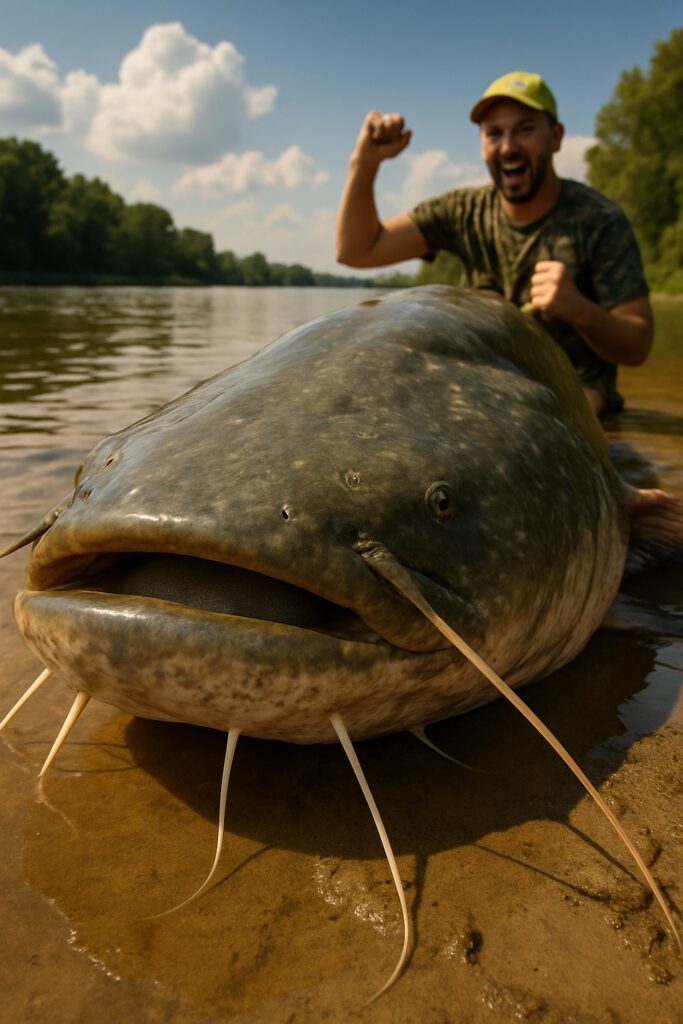
A wels catfish measuring 2.85 meters — 9.4 feet — doesn’t just break a record. It makes you rethink what you thought you knew about how large a freshwater fish can actually get. Alessandro Biancardi pulled this one from the River Po on a warm afternoon, and the people standing nearby reportedly went quiet. Not cheering. Just quiet. The fish went back in alive — catch-and-release, the way it’s supposed to go — which is at least part of why the Po keeps producing animals like this in the first place.

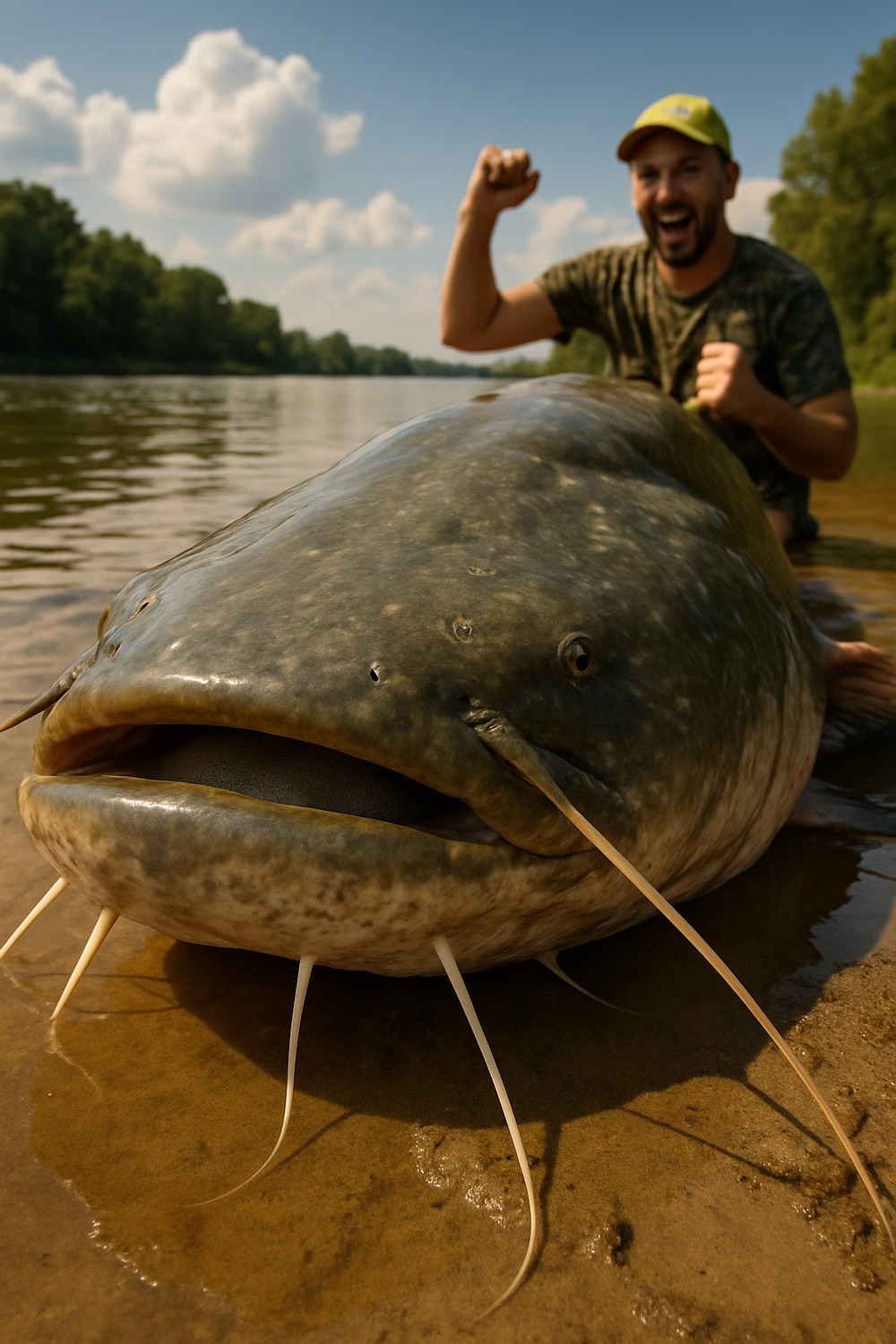
A River Built for Giants
Here’s the thing about the Po: it’s 405 miles of slow, nutrient-heavy water draining the Pianura Padana plains before reaching the Adriatic, and it functions like a near-perfect machine for growing large things. Warm water. Abundant prey. No serious predators above the wels catfish — Silurus glanis, scientifically — in the food chain. Decades of reduced commercial fishing pressure in certain stretches, combined with agricultural runoff that accidentally supercharges the river’s productivity (researchers call this “eutrophic enrichment”), have turned specific sections into something close to a sanctuary. Local guides have known this for years.
Biancardi’s catch just reminded the rest of the world.
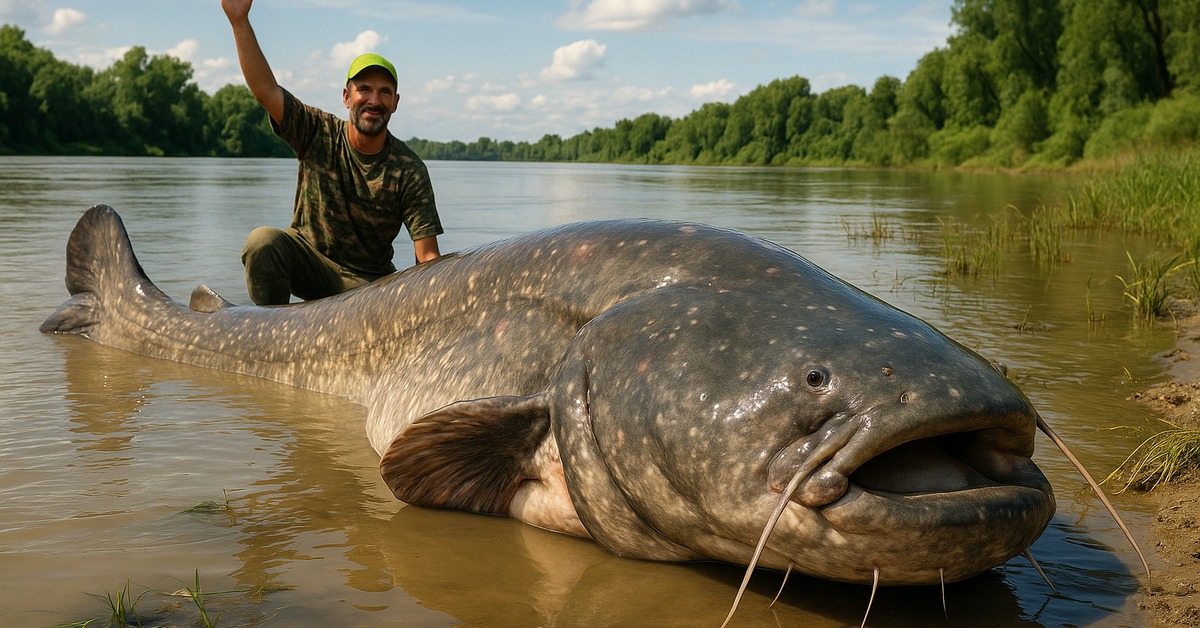
Wels catfish range natively from the Rhine all the way east through Central Asia, so they’re not strangers to big European rivers. But something about the Po seems to push individual fish beyond what biologists see almost anywhere else in their range. Scaleless, slate-grey bodies, wide flat heads, long barbels dragging along the riverbed like sensors — which they essentially are. These fish can lie motionless for hours, then strike at whatever crosses their path: other fish, amphibians, waterfowl, occasionally small mammals. Their sensory systems detect vibrations and faint electrical signals with an accuracy that makes low visibility completely irrelevant. Records of genuinely large specimens from the Po go back generations. But not like this.
Breaking Records on the Banks of the Po
What does it actually mean when a river produces record fish back to back? Because that’s what happened here — a previous Po record-holder was documented only a few months before Biancardi’s catch, which means the river isn’t generating freak one-off specimens. It’s sustaining a population of exceptional individuals, sequentially. That detail has lit up European sport-fishing forums in a way I haven’t seen in years, with anglers from France, Germany, and Spain now looking seriously at the Po as a destination rather than a rumor.
Record verification in freshwater fishing involves witness testimony, certified measurements, and photographic documentation — Biancardi reportedly followed the full procedure before releasing the fish. Official recognition is still pending that review process. But the raw number alone, 2.85 meters, has already done its work.
Wels catfish are indeterminate growers — they don’t hit a ceiling and stop the way most vertebrates do, they just keep adding size as long as food holds out and conditions cooperate. In a river with warm summers, dense prey populations, and a relatively long active-feeding season, the theoretical upper limit of their size is, turns out, genuinely poorly understood. The rapid succession of records raises a question nobody’s cleanly answered yet: are these fish genetic outliers, or is there something systemic about the Po that pushes catfish toward record dimensions? The Po may simply be providing a convergence of factors that exists almost nowhere else in Europe. A handful of individual fish, in the right place, just keep going.
The Science Behind Extraordinary Size
But food availability alone doesn’t explain it. Researchers studying European catfish populations have identified several overlapping variables that seem to determine maximum size: water temperature, prey density, genetic lineage, competition pressure, and in some populations, a surprisingly low parasitic load (and this matters more than it sounds — parasites can significantly suppress growth rates in fish). Water temperatures in the main channel stay favorable for active feeding across a longer window than most northern European rivers. Weeks more of growth per year, compounded across decades of a long-lived animal’s life. It adds up.
The Po’s agricultural watershed is an environmental mess in a lot of ways — genuinely controversial for its pollution burden. And yet that same watershed inadvertently creates enormous biological productivity in the river’s lower reaches, supporting dense populations of bream, carp, and roach that give apex predators like the wels catfish the caloric base they need to keep growing. A river can be degraded and still dangerous, ecologically speaking. That’s the uncomfortable truth the Po keeps demonstrating.

Conservation, Controversy, and the Future of Giant Catfish
And not everyone is celebrating. Ecologists have spent years debating what an apex predator of this size actually does to a river’s native species composition — particularly the smaller indigenous fish that now share space with an animal that eats almost anything it can fit in its mouth. Wels catfish were introduced to many Western European river systems deliberately, stocked by sport fishermen through the twentieth century. Their establishment as top predators has shifted ecological dynamics in ways researchers are still trying to quantify.
Nobody disputes that they’re here to stay. The argument is about what that means long-term — and the honest answer is that the science hasn’t caught up with the fish yet. A species that keeps growing past what the models predicted has a way of outpacing the conclusions drawn about it.
How It Unfolded
- 1856 — Wels catfish first formally described in scientific literature by naturalist Jakob Heckel; native range documented across Eastern and Central European river systems
- 1970s–1980s — Deliberate stocking of wels catfish into Western European rivers, including tributaries of the Po, by sport fishing communities seeking large-quarry game fish
- 2010s — Po River specimens begin appearing in freshwater fishing records, with multiple fish exceeding 2.5 meters reported by local guides and documented anglers
- Early 2026 — Back-to-back Po records confirmed within months of each other, with Biancardi’s 2.85-meter wels catfish setting a new benchmark for the river
Editor’s Take — Alex Morgan
What stays with me about this catch isn’t the number — it’s the silence Biancardi described from the people watching. I’ve stood at riverbanks when something genuinely outsized surfaces, and that quiet is real. What the Po is doing right now, producing record fish in near-consecutive order, should be unsettling to anyone paying attention to freshwater ecosystems. Not because the catfish are a problem, but because a polluted, agricultural-runoff-heavy river is apparently still capable of growing apex predators past what the biology textbooks projected. That’s not a fishing story. That’s a signal.
Biancardi’s 9.4-foot fish is a fishing story, sure. It’s also a snapshot of a river system carrying a heavy load — pollution, agricultural pressure, climate-driven changes to water levels and temperature — and still producing animals of this scale. Whether the Po keeps delivering record fish, or whether this is a rare convergence of circumstances that won’t repeat cleanly, probably won’t be clear for years. But somewhere down in those deep channels scoured by centuries of current, other individuals are still feeding, still growing — in no particular hurry, completely indifferent to the scientific literature accumulating above them and the records they haven’t broken yet.


