The Fox Who Earned Her Place on a British Farm
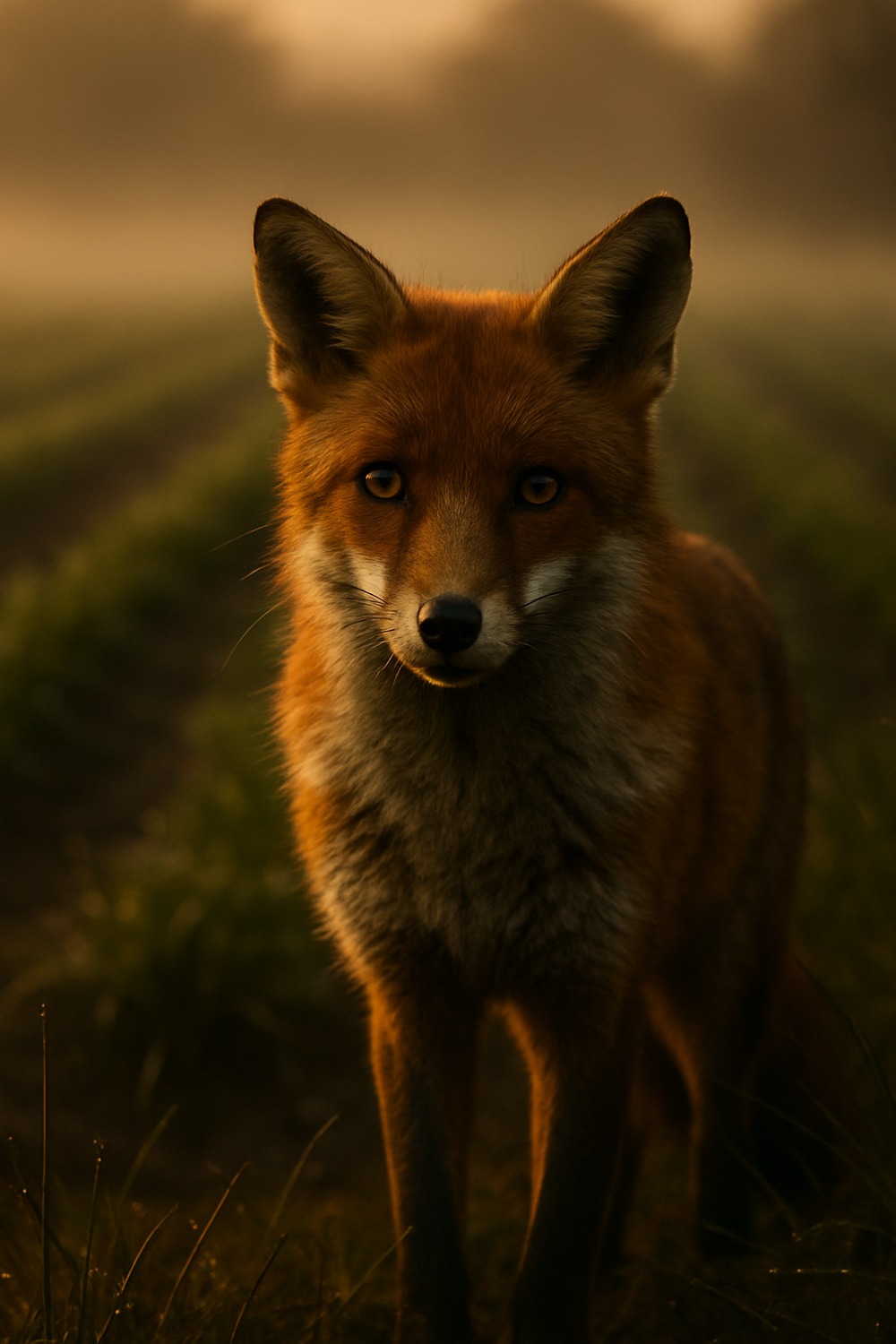
Here’s the thing about commensalism — the textbook version makes it sound passive. One species benefits, the other barely notices. But the red fox commensal relationship that took hold on a British farm a few years ago started with hunger, not biology. A vixen with kits in the hedgerow, weeks behind in weight, doing what any good mother does. She took what was there. The farmer didn’t reach for a trap. That decision, quiet and unremarkable at the time, changed everything that followed.
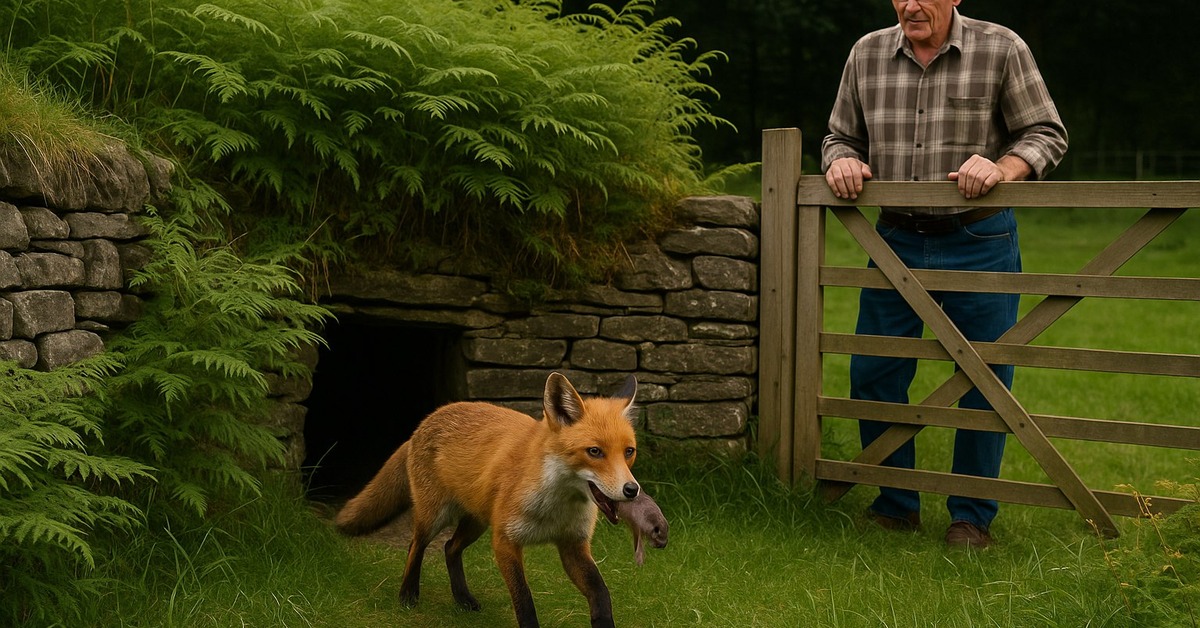
What he noticed first was the missing vegetables — root crops disturbed, but no rabbit prints, no deer slots pressed into the mud. Just a faint russet shape at the field’s edge when the light dropped low. He waited, watched, and eventually left food near the hedgerow. What followed became one of those quietly remarkable arrangements that wildlife biologists spend careers trying to explain — and farmers stumble into by accident.
How the Red Fox Commensal Relationship Actually Works
The term commensalism describes a biological interaction where one species benefits and the other is neither helped nor harmed — but in practice, the line between commensalism and mutualism is frequently blurred in the field. The red fox (Vulpes vulpes) is among the most studied examples of this sliding scale. Research published in 2019 by the University of Bristol’s Mammal Research Unit found that foxes living in proximity to farmland showed measurably different foraging patterns compared to fully wild populations — spending up to 34% more time hunting in crop-adjacent zones and demonstrating a clear preference for the rodent-dense edges of cultivated fields.
That’s not random. That’s learned behaviour, passed from vixen to kit across generations. The countryside has been quietly shaping foxes — and foxes have been quietly shaping the countryside — for a very long time.
What makes the arrangement so difficult to categorise is precisely what makes it interesting. The fox doesn’t sign a contract. She doesn’t know she’s removing the voles that would otherwise tunnel through a farmer’s potato bed, or consuming the beetles whose larvae destroy root crops from below. She’s hunting because she’s hungry. The benefit to the farmer is incidental — or it appears incidental, until you count the numbers. A single red fox in active territory can suppress small rodent populations by an estimated 30 to 40% over a single growing season, according to data collected by the Game & Wildlife Conservation Trust between 2015 and 2021.
This particular vixen was estimated to be three to four years old — mature, experienced, efficient. She knew where the field margins ran. She knew the gap in the stone wall. She’d been working this landscape longer than the farmer had been watching it.
What Wild Animals Do When Nobody’s Watching
Wild animals operating on the edge of human-managed land don’t announce themselves. They move in the narrow hours, exploit the margins, and vanish before the light changes. What’s strange about the fox in this story is that she kept coming back — even after the farmer started watching. That comfort around humans, called habituation, is more nuanced than it sounds. It doesn’t mean the animal is tame. It means she calculated the risk and decided it was acceptable.
Why does that matter? Because it’s the same kind of risk assessment that drives some of the more extraordinary animal behaviours documented in recent years — the way a crow will deliberately expose itself to formic acid from an anthill in a behaviour called anting, using insects as a form of self-medication for feather parasites. Wild animals are solving problems constantly. We just rarely sit still long enough to notice.
Behavioural ecologists call the vixen’s warming to human presence neophobia reduction — a gradual erosion of fear toward novel stimuli through repeated, non-threatening exposure. Research from the University of Exeter published in 2017 documented this process in urban fox populations, tracking GPS-collared individuals over 18-month periods and finding that foxes habituated to human presence within four to eight weeks of consistent, non-threatening contact. The rural vixen followed the same timeline almost precisely.
By the sixth week, she was arriving before full dark. By the eighth, she brought two of her kits. They tumbled at the field’s edge while she hunted the long grass nearby. The farmer watched through a kitchen window and didn’t move.
The Science Behind Foxes as Pest Controllers
Predators regulate prey populations — that’s foundational ecology. But the practical application of that principle on working farms took decades to gain serious traction. For much of the 20th century, the dominant model was elimination: foxes as threats to livestock and poultry, to be controlled by any means available. A National Geographic investigation into predator-prey dynamics across European agricultural landscapes found that removing mid-level predators — foxes, stoats, weasels — consistently correlated with increased rodent pressure on crops, higher fungal damage from rodent burrowing, and reduced soil integrity in field margins.
The fox, in other words, wasn’t the problem. In many cases, it was the solution nobody had considered properly.
Decades of elimination policy produced significant ecological costs, and the data that’s now accumulated makes that cost difficult to argue away. Studies from Wageningen University in the Netherlands in 2020 quantified the economic value of fox predation on farmland rodents at between €200 and €400 per hectare per year in crop protection terms — figures that would change the calculus of pest management significantly if they entered mainstream agricultural policy. That this research hasn’t yet reshaped policy at scale is, frankly, a failure of institutional will more than evidence.
The red fox commensal relationship with farmland isn’t new — it’s been unfolding for thousands of years, since the first humans began clearing land and inadvertently creating the ideal rodent habitat. What’s new is the willingness to document it rigorously.
A fox isn’t just a fox on your land. She’s a working animal who asks for almost nothing in return.
The Red Fox Commensal Relationship and British Farming History
Britain has a complicated history with its foxes — hunted, persecuted, romanticised, protected, and endlessly debated in a way that says more about British culture than it does about the animal itself. The Hunting Act of 2004 banned the use of dogs to hunt foxes in England and Wales, a genuinely contentious legal shift that restructured the relationship between rural communities and wildlife management in ways still being negotiated today. What that history often obscures is the longer, quieter story: foxes and farmers sharing the same fields for millennia, each adapting to the other’s presence without anyone writing it down. The Mammal Society estimated the British red fox population at approximately 357,000 individuals in 2023 — a figure that has remained relatively stable despite sustained pressure from farming communities, road mortality, and disease cycles including sarcoptic mange.
And what’s particularly striking about the red fox commensal relationship in agricultural settings is how rapidly it can establish. The Game & Wildlife Conservation Trust’s ongoing Lowland Farmland Bird Initiative, running since 2006, has documented multiple instances of individual foxes becoming what researchers carefully describe as “tolerated residents” on farms where the landowner had made a deliberate decision to observe rather than intervene. The pattern is consistent: initial wariness, habituation, a shift in hunting behaviour toward the agricultural margin, measurable reduction in rodent pressure, and a gradual informal coexistence that neither party formally agreed to. The vixen in our farmer’s hedgerow was repeating something that has played out in fields across England for centuries.
What made this instance notable was simply that someone was paying attention.
Where to See This
- Somerset Levels and Moors (Somerset, England) offer excellent opportunities to observe wild red foxes at field margins, particularly in late spring and early summer when vixens are actively hunting for kits — dusk and early dawn offer the best visibility from public footpaths along the rhyne network.
- The Game & Wildlife Conservation Trust (GWCT), based in Fordingbridge, Hampshire, runs long-term research projects on farmland mammal ecology and welcomes public engagement through their open days and Farmland Bird Initiative reports — accessible at gwct.org.uk.
- For readers wanting to go deeper on fox behaviour and ecology, Stephen Harris and Phil Baker’s Urban Foxes (2001) remains the most comprehensive English-language account of Vulpes vulpes behavioural ecology across habitat types — and it reads far more like a field diary than a textbook.
By the Numbers
- 357,000 — estimated population of wild red foxes (Vulpes vulpes) across the British Isles in 2023, according to the Mammal Society.
- 1,000+ small rodents — the estimated number a single red fox can consume per season, based on prey density studies by the Game & Wildlife Conservation Trust (2021).
- €200–€400 per hectare per year — the estimated economic value of fox predation on crop-damaging rodents, quantified by Wageningen University research in 2020.
- 34% — the increased proportion of time farmland-adjacent foxes spend hunting crop-margin zones, compared to fully wild populations (University of Bristol, 2019).
- 4 to 8 weeks — the average habituation window for foxes to significantly reduce fear responses to consistent, non-threatening human presence (University of Exeter, 2017).
Field Notes
- Researchers at the University of Brighton in 2021 tracked a vixen on the South Downs whose core territory during kit-rearing season measured just 1.2 square kilometres — far smaller than the standard 4–5 km² range typically cited in population surveys — suggesting that proximity to a reliable food source had fundamentally compressed her movement patterns.
- Red foxes cache surplus food by burying it, often returning days or weeks later with extraordinary spatial precision. They locate buried caches using Earth’s magnetic field as a directional reference (researchers actually call this magnetoreception-assisted caching), a navigational ability confirmed by researchers at Charles University, Prague, in 2011.
- Archaeological evidence from Bronze Age settlements in Wiltshire includes fox bones found in association with grain storage pits — suggesting opportunistic fox presence around stored food attracting rodents as far back as 1500 BCE. The relationship between foxes and British farms almost certainly pre-dates the Norman Conquest.
- Researchers still can’t fully explain why some individual foxes habituate rapidly to human presence while genetically similar siblings in the same litter never do. Personality variation in wild carnivores — distinct, repeatable behavioural differences between individuals — is increasingly studied but not yet well understood at the mechanistic level.
Frequently Asked Questions
Q: What exactly is a red fox commensal relationship with farmland, and how does it differ from a mutualistic one?
A commensal relationship describes an arrangement where one species benefits and the other is largely unaffected. In the red fox commensal relationship with farms, the fox benefits from reliable food resources and reduced predation pressure near human activity. The farmer benefits from reduced rodent damage — but because the fox doesn’t rely on that outcome, ecologists typically classify it as commensal rather than mutualistic. In practice, many researchers now describe it as “facultative mutualism” — beneficial to both, but not dependent on the partnership to function.
Q: Do foxes actually reduce crop damage meaningfully, or is this overstated?
Wageningen University’s 2020 analysis found measurable reduction in rodent-related crop losses on farms with established fox territories compared to farms where foxes had been excluded. Field voles, wood mice, and common shrews — all significant agricultural pests — form the core of a farmland fox’s diet during the spring and summer growing season. Where fox density is stable and territory boundaries are established, rodent population peaks are consistently lower. It’s not a silver bullet, but it’s a genuine, quantifiable effect.
Q: Aren’t foxes a threat to livestock? Isn’t tolerating them on a farm risky?
Foxes do take poultry when given access — this is documented and not disputed. The key variable is husbandry, not the fox. Securely housed poultry with proper fencing and enclosed runs is not at meaningful risk from a fox operating in open field margins. The Game & Wildlife Conservation Trust has consistently found that fox predation on properly secured livestock is negligible. The threat is real only when enclosures are inadequate — which is a farm management issue, not a wildlife one.
Editor’s Take — Alex Morgan
What stays with me about this story isn’t the fox. It’s the farmer’s decision not to reach for a trap. That pause — that willingness to watch rather than act — is rarer than it should be, and it’s the actual engine of everything that followed. We’ve built an entire agricultural system around the instinct to eliminate uncertainty, and a fox in the hedgerow reads as uncertainty. The data from Wageningen and Bristol suggests that instinct has been costing us, quietly, for decades. The vixen was never the problem. She was, by almost every measurable standard, the answer.
Roughly 357,000 red foxes are moving through the British countryside right now — along field margins, through hedgerows, beneath the notice of most people who live beside them. Some are already in the kind of quiet, unspoken arrangement described here, hunting the pests that farming inadvertently creates, asking nothing except to be left alone to do it. The question worth sitting with isn’t whether the fox deserves a place on the farm. She’s already there. The question is whether we’re finally ready to stop treating that as a problem and start asking what we’ve been losing every time we reached for the trap instead.