


Nobody thought to document it until after the storm passed. That’s usually how these things go.
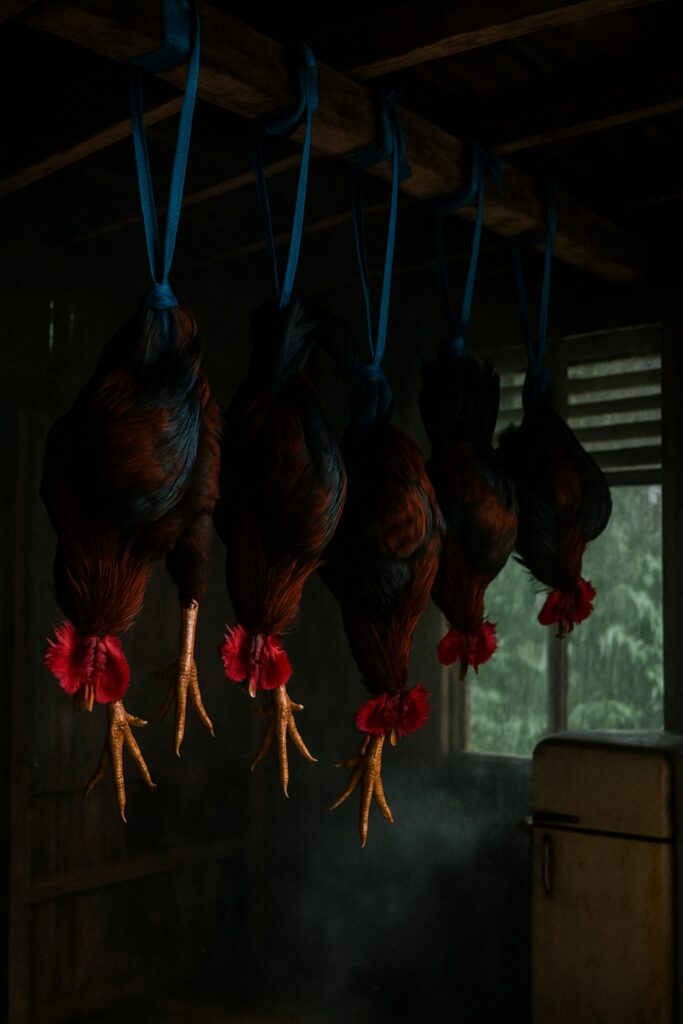
In a small home in Alaminos City, Pangasinan, the wind was screaming and the water was rising and forty fighting cocks were about to drown in their own yard cages. So their owners did something that made complete sense in the moment and sounds completely unhinged in the retelling — they carried every single bird inside, one by one, and rigged up a wooden perch near the ceiling. What happened next is a quiet story about what people risk, what they protect, and exactly how far they’ll go when the typhoon hits.
Why Roosters Typhoon Philippines Stories Hit Different
The Philippines sits squarely inside the typhoon belt, absorbing an average of 20 tropical cyclones per year — more than almost any nation on Earth. According to climate records compiled on Wikipedia, the country has absorbed some of the most powerful storms ever measured. Meteorologist Dr. Flaviana Hilario of the Philippine Atmospheric, Geophysical and Astronomical Services Administration has spent decades tracking how communities adapt. Her research keeps circling back to a question most of us haven’t thought to ask: what survival behaviors get quietly invented every single storm season that nobody ever writes down?
For every Typhoon Haiyan that makes global news, there are dozens of smaller storms — Uwan, Queenie, Basyang — where ordinary families make extraordinary decisions in ordinary living rooms. No cameras. No press. Just people and the things they love most.
That last fact kept me reading for another hour.
What Fighting Cocks Mean to Filipino Families
To outsiders, a rooster might look like livestock. In Filipino culture, a prized fighting cock — a manok panabong — is something else entirely. It’s a long-term investment, sometimes worth thousands of pesos, bred across multiple generations with careful attention to bloodline, strength, and temperament. Status symbol. Conversation starter at the market. And for many families, a financial safety net that walks around on two legs crowing at 4am.
If you want to understand what drives someone to climb toward a ceiling during a typhoon with a furious bird under each arm, start there. You can explore more about how animals intersect with Filipino daily life and culture at this-amazing-world.com.
These birds are also genuinely difficult to handle. A spooked rooster has claws designed to do damage, and a beak that doesn’t ask questions first. Moving forty of them — calmly, quickly, in howling wind — required coordination, trust, and probably a few deep scratches nobody’s talking about.
The Moment the Cages Started Filling With Water
On a normal afternoon in Alaminos City, each rooster has his own wire cage, spaced apart in the yard, each bird lord of his small patch of grass. That separation matters — fighting cocks are notoriously territorial, and putting them together is usually a recipe for blood. But when Typhoon Uwan hit and the water started rising, those individual cages became traps. The corrugated metal roof rattled and bent. Palm fronds cartwheeled past the windows.
The owners faced a choice that had no good answer. The roosters typhoon Philippines coverage rarely captures moments like this — the split-second judgment calls made before anyone thinks to reach for a phone.
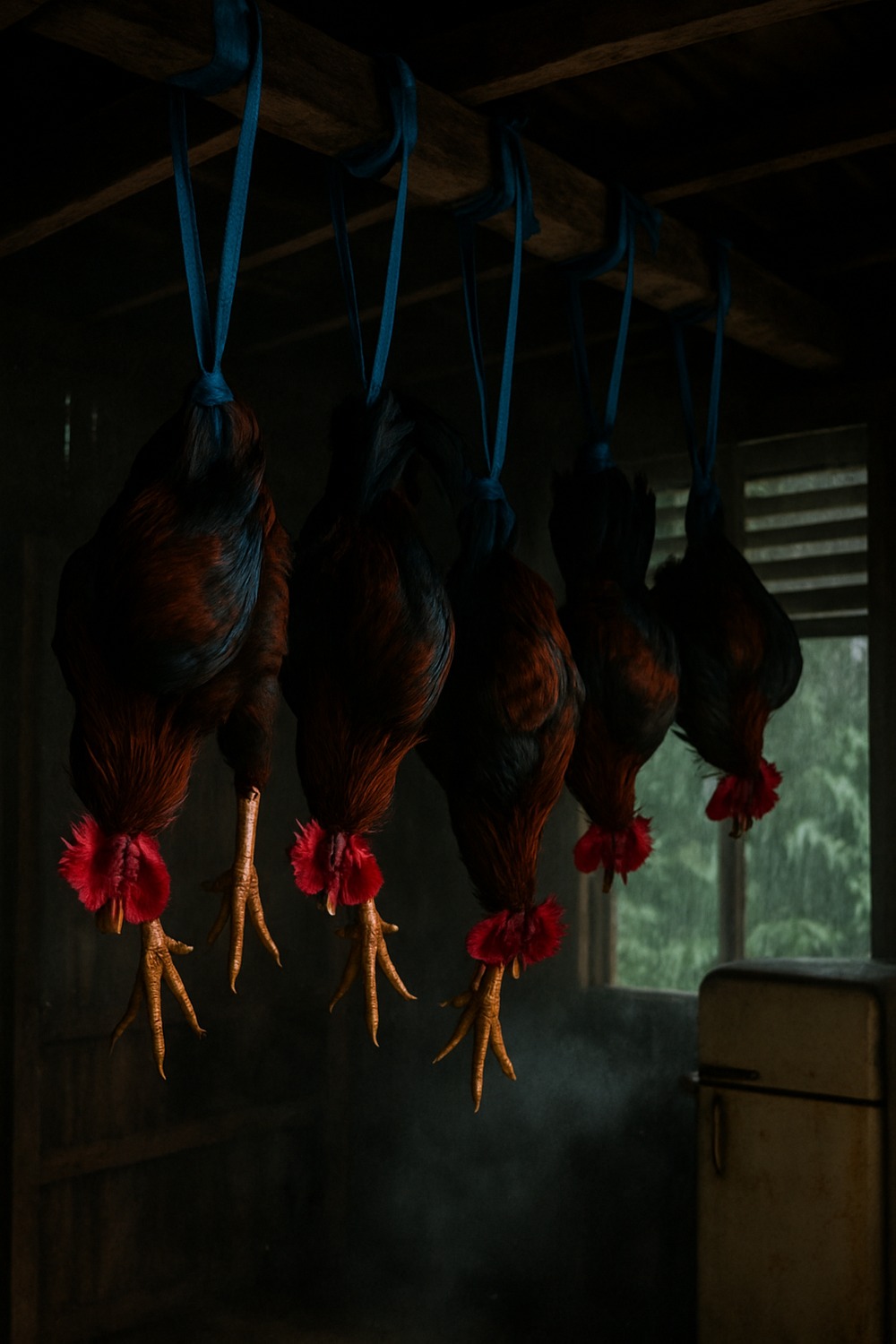
So they acted. Cage to cage. Bird by bird. An improvised perch rigged near the ceiling where the air was hot and churning but the rising floor couldn’t reach.
And this is the part that stays with you.

Forty Birds, One Ledge, Zero Casualties
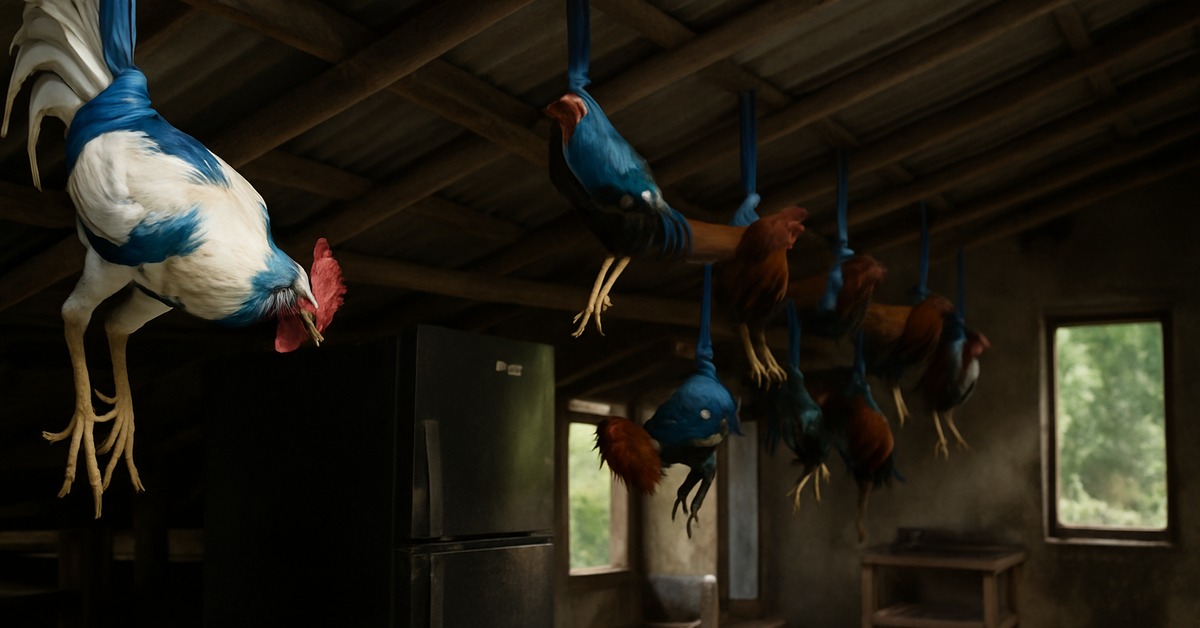
Here’s the thing about that makeshift ceiling perch: it shouldn’t have worked. Forty roosters packed onto a single ledge, feathers touching, pressed together — these are animals bred specifically to fight each other on sight. But turns out extreme stress can temporarily override territorial instinct in birds. Animal behaviorists studying communal stress responses in avian species have noted similar patterns in wild flocks during storms, where natural competitors roost together in tight spaces without conflict.
The birds seem to understand, on some level, that the threat outside is bigger than the threat beside them.
The owners crouched below, watching. The roosters peered down with those unreadable, bright-eyed expressions — suspicious, but still. Outside, the typhoon did what typhoons do. Inside, something strange and almost peaceful held.
By the Numbers
- The Philippines records an average of 20 typhoons per year, with roughly 8-9 making landfall — the highest national exposure rate in the world (PAGASA, 2022).
- Typhoon Haiyan in 2013: 6,300 people killed, over 1 million livestock and animals lost across the Visayas region (FAO damage assessment).
- A single champion-bloodline fighting cock in the Philippines can be valued at ₱50,000 to ₱500,000 — roughly $900 to $9,000 USD — making them among the most valuable animals kept by rural households.
- Roosters grip a perch with approximately 3x more force per body weight than most domesticated bird species. Which is partly why the improvised ceiling ledge held through the storm’s worst hours and not just luck.

Field Notes
- Fighting cocks in the Philippines are often given individual names, fed specialized diets including vitamins and protein supplements, and handled daily — creating bonds that genuinely blur the line between livestock and companion animal.
- Automatic grip. Roosters have a specialized tendon in their legs called the digital flexor that tightens automatically when they perch, meaning they can hold on even while asleep or unconscious. The ceiling perch works in a crisis without requiring the birds to concentrate on staying put.
- Alaminos City sits in a typhoon corridor that funnels storms off the South China Sea — one of the more frequently hit regions in Luzon, and a place where storm improvisation has become a deeply local skill passed between generations without anyone calling it a skill.
What This Storm Quietly Teaches the Rest of Us
The roosters typhoon Philippines story doesn’t end with the storm passing. It ends with the men climbing down from the ceiling, laughing a little — because what else do you do — and carrying each bird back outside one at a time as the sky clears. The cages are waterlogged and bent. The grass is plastered flat. Every single rooster is alive.
That improvised perch — some planks, some rope, some desperate ingenuity thought up in about thirty seconds — turned a potential wipeout into a story they’ll tell for years. That’s what adaptation looks like up close. Not heroic. Not planned. Just human.
What this moment really captures is the specific texture of loss that typhoon communities live with constantly — not just property damage or displacement, but the threatened erasure of things that carry meaning, lineage, and livelihood all at once.
When you protect a rooster in a typhoon, you’re protecting a lot more than a bird.
The next storm is already forming somewhere out there in the Pacific. And somewhere in the Philippines, someone is already scanning their ceiling and measuring their ledge. These are the stories that don’t make the disaster reports but live in families for decades — the improvised, the unglamorous, the quietly brilliant. There’s more at this-amazing-world.com, and the next one is even stranger.


