The Daytime Owl That Eats 1,600 Lemmings a Year
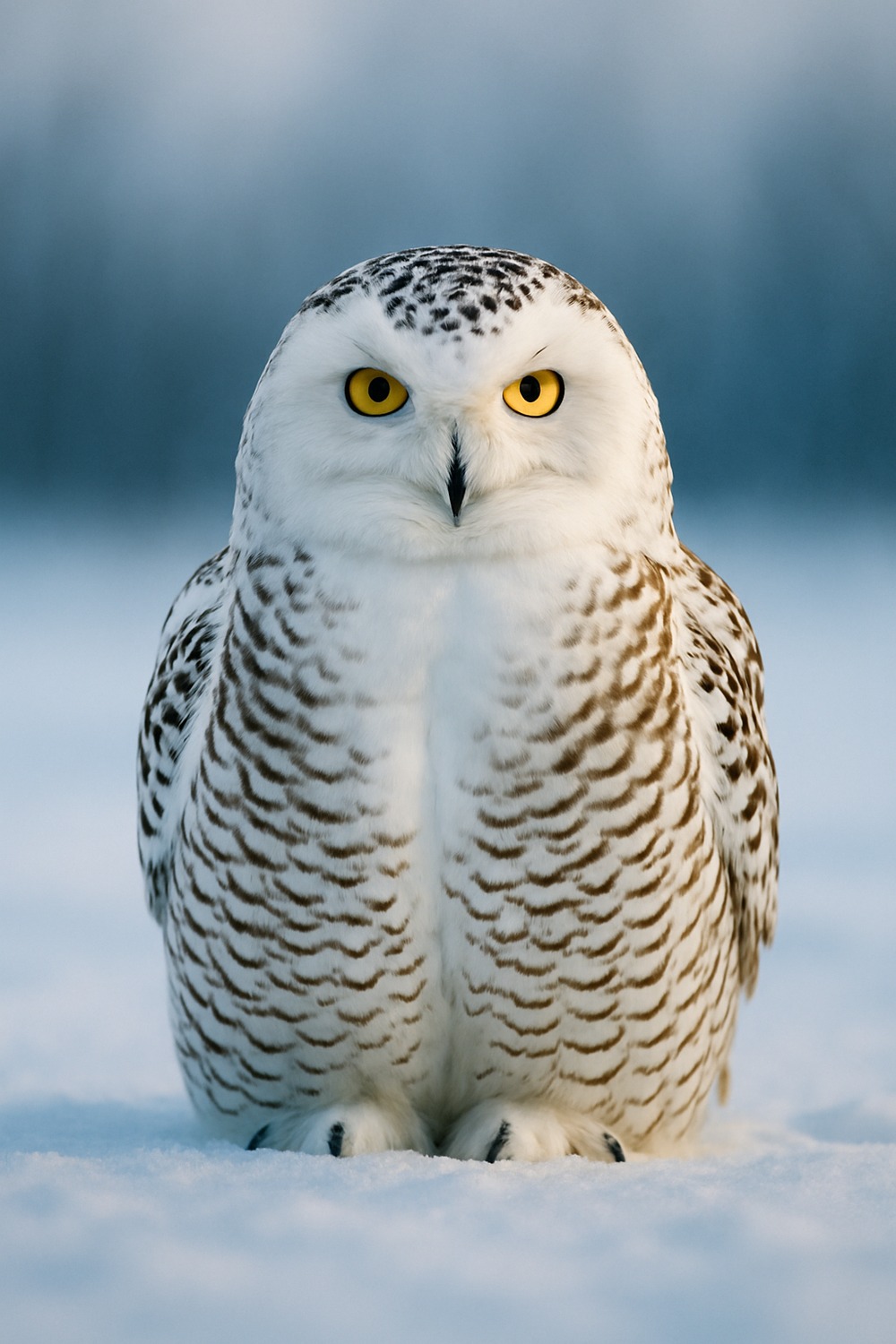
Here’s a paradox worth sitting with: the snowy owl hunting strategy that scientists still argue about runs entirely on daylight — the one resource every other owl on Earth avoids. One bird. One year. Roughly 1,600 lemmings. And it catches all of them in plain sight, under open Arctic sky, while its cousins wait for dark.
Most owls are shadow animals — built for darkness, invisible by design. The Snowy Owl just completely ignored that evolutionary memo. It patrols open Arctic tundra under full sun, those yellow eyes cutting across frozen ground like something that genuinely enjoys being watched. And occasionally, without much warning, one shows up in Texas.
Why Snowy Owl Hunting Defies Everything You Know
Above the Arctic Circle, the sun doesn’t set for months at a stretch. An owl that refused to hunt during daylight would simply starve. So the Snowy Owl evolved differently from every other owl species on Earth — built for round-the-clock activity in ways its cousins never developed. Ornithologist Denver Holt, who’s spent decades studying these birds in Alaska, has documented how they’re uniquely adapted to that non-stop Arctic summer in ways that go well beyond just keeping their eyes open at noon.
Which means you can watch one at noon, sitting on a fence post, completely unbothered, watching you right back.
It’s one of those wildlife encounters that feels almost too easy — like the animal decided to cooperate. Most owls are gone before sunrise. This one just sits there in full daylight, doing exactly what it was doing at midnight.
The Lemming Math Is Staggering
Here’s the number that stopped me cold: a single adult Snowy Owl can eat more than 1,600 lemmings in a year. Not across a lifetime. Per year. That’s three to five lemmings every single day, all year. These small rodents are the engine of the whole system, and when lemming populations surge — which they do on dramatic three-to-five-year cycles — Snowy Owls respond by breeding harder, sometimes raising twice as many chicks as they would in a lean year. In a good lemming year, a pair might raise ten or more owlets. Explore how other Arctic predators respond to prey cycles at this-amazing-world.com.
When lemmings crash? The owls barely breed at all. The relationship is so tightly locked that the owls’ reproductive success functions as a real-time index of lemming population health (researchers actually call this a trophic coupling effect). One animal’s boom is the other’s boom. One animal’s collapse is the other’s silence.
Snowy Owl Hunting Range Stretches Farther Than Expected
Why does this matter? Because “irruption” sounds like a weather event — something that just happens — but the tracking data tells a more deliberate story.
Most people picture these owls as strictly Arctic residents. And they are, until they aren’t. In years when food gets scarce or populations push past what the tundra can support, Snowy Owls move south in what researchers call an “irruption” — not random wandering, but what looks increasingly like strategic relocation. Their snowy owl hunting behavior shifts to accommodate new prey: voles, rabbits, ducks, whatever’s available. Some birds have been tracked flying thousands of miles, eventually ending up in Florida and along the Gulf Coast of Texas.
Scientists watched her route play out in real-time. One GPS-tagged female nicknamed “Baltimore” logged over 2,000 miles in a single winter. She wasn’t lost or panicking.
She was hunting.
And she wasn’t alone. During major irruption years, birding hotlines light up across the entire eastern United States — hundreds of sightings stacking up in counties where the birds had never been recorded in living memory.
The Migration Mystery Scientists Still Can’t Fully Crack
Researchers still can’t agree on what actually triggers these southern movements. The obvious answer is food shortage, but it’s messier than that.
Some of the owls heading south during irruptions are fat, healthy juveniles who’ve never experienced a real food shortage. Canadian researcher Jean-François Therrien has argued that irruptions might be driven as much by population pressure as by hunger — too many owls competing for space, even when food is technically still available.
That reframes everything.
Turns out we’ve been picturing desperate birds fleeing a failing ecosystem. But some of these animals might be thriving explorers, well-fed and simply spreading out because home got crowded. That’s a genuinely different story, and it raises uncomfortable questions about what happens to a species built around this kind of flexibility when the Arctic itself starts shifting in unpredictable ways.
A species this behaviorally elastic, adapting in real time to conditions no other owl ever encounters — the research community has been underestimating what that actually implies.
More Facts You Didn’t Know About Snowy Owl Arctic Hunter
The more scientists study these birds, the stranger the details get. A few that tend to stop people mid-scroll:
- Female Snowy Owls are larger than males — a rare reversal in raptors — with some females reaching nearly 6.5 pounds, making them the heaviest owl in North America by weight.
- Ears positioned asymmetrically under the feathers, which lets them pinpoint prey sounds through 12 inches of compacted snow.
- Their feathers are dense enough to handle minus 40 degrees Fahrenheit without the bird showing any behavioral signs of cold stress at all.
- During the 2013-2014 irruption — one of the largest on record — over 300 Snowy Owls were documented in a single Vermont county. Wildlife officials hadn’t seen numbers like that before.
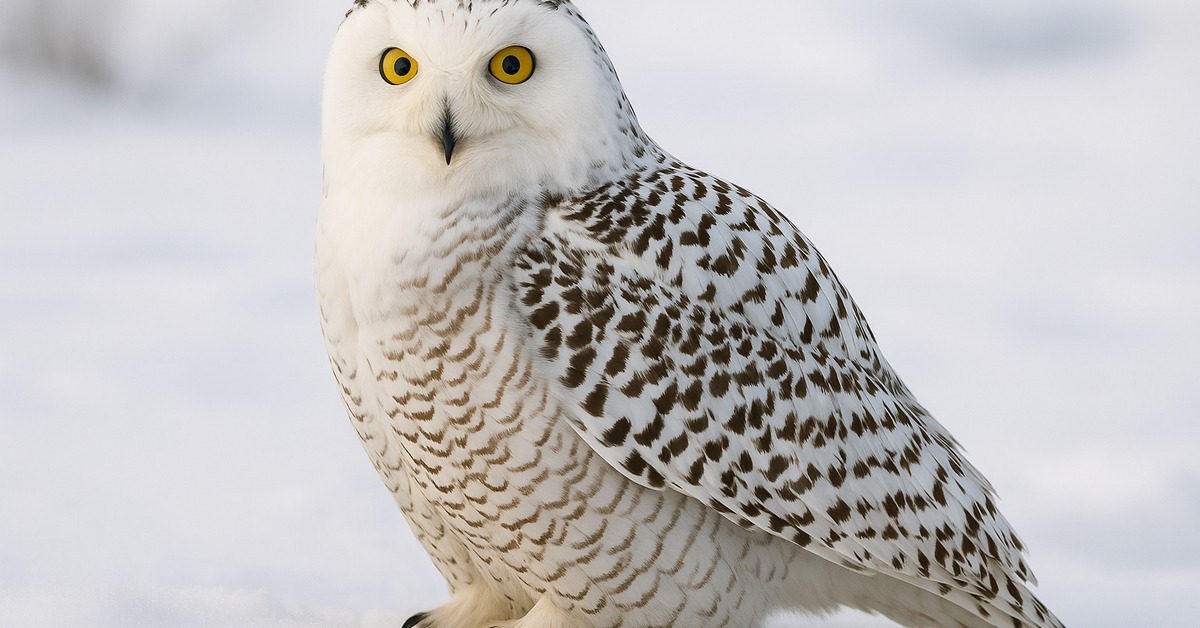
- Young males start almost entirely dark brown with white spots and gradually lighten over years; that iconic all-white owl is typically an older male near the peak of his life.
Did You Know?
- Snowy Owls were once spotted at JFK Airport in New York and had to be carefully relocated by wildlife officials worried about bird strikes with aircraft.
- Their Latin name, Bubo scandiacus, points to Scandinavia — where early European naturalists first formally documented the species in the 18th century.
- Talon grip pressure strong enough to crush bone — used the same way whether the target is a lemming or a large seabird.
- Unlike most migratory birds, Snowy Owls don’t run on a fixed annual schedule. Some individuals stay in the Arctic for several consecutive winters without ever heading south.
How It Unfolded
- 1761 — Swedish naturalist Linnaeus formally describes Bubo scandiacus, based on specimens collected from Scandinavian field records.
- 1980s–1990s — Denver Holt begins long-term field studies on the North Slope of Alaska, producing the first systematic data on snowy owl hunting rates and lemming dependency.
- 2013–2014 — One of the largest irruptions ever recorded floods the eastern United States; over 300 birds documented in a single Vermont county, prompting the launch of Project SNOWstorm.
- 2021 — GPS telemetry data from Project SNOWstorm confirms that some irrupting birds are healthy, well-fed juveniles — not food-stressed refugees — upending the prevailing starvation model.
What Climate Change Could Mean for These Hunters
Snowy owl hunting depends on a system that’s been stable for a very long time: intact tundra, predictable lemming cycles, reliable snow cover that lemmings tunnel through all winter. Climate change is pulling at all three of those threads simultaneously. Arctic temperatures are rising faster than anywhere else on the planet, vegetation patterns are shifting, and the boom-and-bust prey cycles these owls have calibrated themselves around for thousands of years are becoming less predictable.
Researchers at the Arctic Boreal Vulnerability Experiment have flagged the species as one to watch closely over the next two decades. A disrupted lemming cycle doesn’t just affect owls — it moves outward to foxes, weasels, hawks, every predator running on the same prey base.
But here’s what doesn’t get said enough: the Snowy Owl is, in a very real sense, a signal species. Its health tells us something about the health of one of the last truly wild ecosystems left on Earth. When the signal starts to flicker, it’s worth paying attention.
Editor’s Take — Alex Morgan
What gets me about this bird isn’t the lemming count or the irruption distances — it’s the fat, healthy juvenile showing up in Vermont having never gone hungry once. That detail quietly dismantles every “fleeing disaster” narrative we’ve built around wildlife movement. These owls aren’t refugees. Some of them are explorers. And if we keep managing their appearances as crisis events rather than behavioral choices, we’re going to misread what the Arctic is actually telling us — right up until the signal goes quiet for good.
The Snowy Owl isn’t just a beautiful bird. It’s a precision predator capable of eating 1,600 animals a year, a long-distance traveler that crosses entire continents without getting lost, and sensitive enough to a few degrees of warming that researchers are genuinely uncertain what the next fifty years look like for it. It hunts in daylight. It moves thousands of miles. It knows things about the Arctic that scientists are still working out. If that kind of story keeps you up at night, there’s more at this-amazing-world.com — and the next one is even stranger.