



Nobody sent for the sunflowers. That’s the part that gets me every time — after one of the worst nuclear disasters in recorded history, the cleanup crew turned out to be something people grow along fence lines for the birds.
The disaster at Chernobyl left behind a poisoned landscape that industrial machinery struggled to touch. Water near Reactor No. 4 was saturated with radioactive cesium-137 and strontium-90. Scientists needed something that could pull those radionuclides out without costing billions or leaving the land looking like a strip mine. Botanist Ilya Raskin at Rutgers University had an idea that sounded almost absurd. Floating rafts. Sunflowers. Roots dangling in contaminated water like the world’s most dangerous fishing experiment.
How Sunflowers Phytoremediation Saved Chernobyl’s Water
The process has a name: phytoremediation. Using plants to extract contaminants from soil or water. Raskin and his colleagues deployed it at Chernobyl in the mid-1990s, anchoring sunflower rafts directly in the contaminated ponds near Reactor No. 4. Within days, measurable concentrations of cesium-137 and strontium-90 were showing up inside the plant tissue itself.
So how much were they actually pulling out?
Sunflower roots were concentrating radionuclides at levels up to 10,000 times higher than the surrounding water. Ten thousand times. The plant was doing in days what natural dilution might take decades to accomplish — and it did it through nothing more sophisticated than the way roots are built: dense, fibrous, with enormous surface area, engineered by evolution to reach and absorb and hold. Nature had designed the perfect sponge long before anyone knew they’d need one for this particular problem.
That last fact kept me reading for another hour.
Reactor No. 4’s Ponds Became Floating Gardens
Picture the scene. A landscape still scarred from catastrophe, the air carrying invisible threat, Geiger counters clicking near the waterline — and rows of bright yellow sunflowers bobbing on makeshift rafts above it all. Scientists from the Phytotech Foundation worked alongside Ukrainian researchers to run the study. The results quietly reshuffled how environmental scientists thought about contaminated water systems. Turns out the biology was already there. Someone just had to ask.
If you want to go further down the rabbit hole of what plants can do that sounds physiologically impossible, there’s a deep dive worth your time over at this-amazing-world.com. Fair warning: it doesn’t get less strange.
Fukushima Tried It Too — With Mixed Results
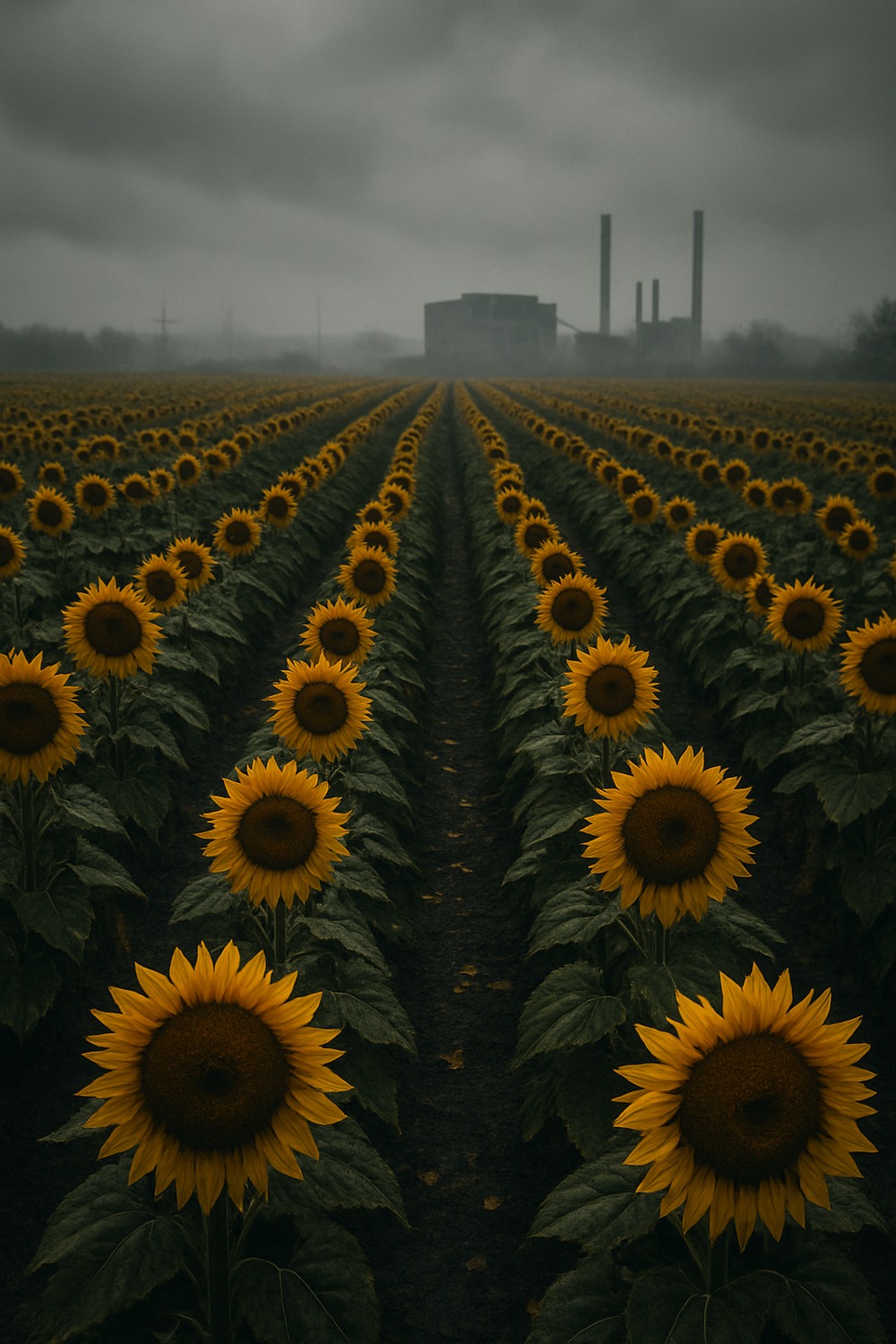
After the 2011 Fukushima Daiichi meltdown, Japanese volunteers planted somewhere between 200,000 and 800,000 sunflower seeds across Fukushima Prefecture. The sunflowers phytoremediation effort was partly scientific, partly something harder to quantify — a way for communities to feel like they were fighting back against something invisible and terrifying. Researchers hoped to replicate what had worked in Chernobyl’s water, but this time in soil.
The soil didn’t cooperate.
Dense clay around Fukushima bound cesium tightly to its particles, making it far harder for root systems to access than open water had been. Some studies found the sunflowers were absorbing only a small fraction of the contamination compared to aquatic applications. The plants were trying. The chemistry just wasn’t on their side. Researchers later found that adding ammonium nitrate fertilizer to the clay-heavy soil increased cesium uptake significantly — a small, promising adjustment that nobody had thought to test at first, which is either encouraging or a little frustrating depending on how you look at it.

The Harvested Plants Became Radioactive Waste
Here’s the thing — the sunflowers didn’t destroy the radiation. They concentrated it. Once the plants had done their work, absorbing radionuclides into their tissue, they couldn’t be composted or burned in a field. They were classified as low-level radioactive waste and had to be carefully harvested, dried down to reduce volume, and transported to licensed disposal facilities.
The contamination didn’t vanish. It moved.
From a sprawling, diffuse, nearly impossible-to-manage problem into a smaller, concentrated, containable one. In nuclear cleanup terms, that’s actually a significant win. But it requires infrastructure, planning, and long-term storage commitments that not every affected region can realistically provide. Phytoremediation isn’t magic. It’s a trade — and whether that trade is worth making depends heavily on what’s available on the other end.
By the Numbers
- 10,000x — the concentration ratio of cesium-137 in sunflower roots versus surrounding water, per the 1994 Phytotech Foundation field study. The research team called it stunning. That word choice seems justified.
- 200,000–800,000 sunflower plants across Fukushima Prefecture in 2011
- Cesium-137 has a half-life of roughly 30 years, which means land contaminated at Chernobyl in 1986 won’t reach half its original radiation level until around 2016 — and won’t approach baseline for well over a century after that.
- Cost comparison: mechanical soil removal in highly contaminated zones can run $1 million or more per acre. Sunflowers cost a fraction of that.

Field Notes
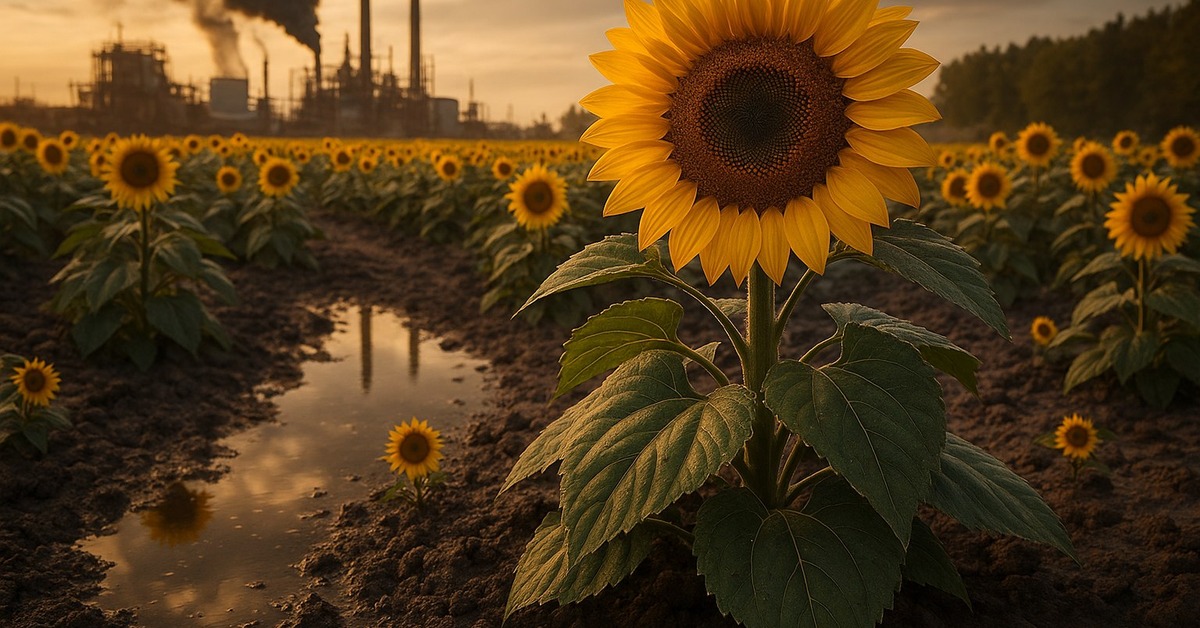
- Sunflowers aren’t the only option — mustard greens and hemp have shown strong uptake of heavy metals like lead and cadmium, and researchers are still mapping which species work best for which specific contaminants.
- Helianthus annuus — Latin for, roughly, “annual sun-flower” — turns out to be better named for what it pulls up from darkness underground than for what it reaches toward in the sky.
- The Fukushima citizen-planting effort is one of the largest community-led phytoremediation projects ever attempted anywhere.
- Adding ammonium nitrate fertilizer to contaminated clay soil significantly increased cesium uptake in sunflower roots — a finding that arrived after the largest deployment, which is the kind of timing that haunts researchers.
Why This Changes How We Think About Disasters
The story of sunflowers phytoremediation at Chernobyl and Fukushima isn’t a feel-good footnote. It’s a structural shift in how cleanup gets designed. Before these trials, the default assumption was that nuclear contamination required industrial-scale mechanical intervention — excavation, chemical processing, water treatment systems that cost billions and left the land looking like construction zones for decades. The sunflower experiments showed that biology itself could be recruited as infrastructure.
Which raises the obvious question: why didn’t anyone think of this sooner?
Part of the answer is that phytoremediation as a formal discipline was still young in the early 1990s. Part of it is that the scale of Chernobyl forced researchers into creative territory they wouldn’t have otherwise explored. And part of it — honestly — is that nobody was looking at a sunflower and thinking “nuclear cleanup tool.”
The implications stretch well past nuclear disasters. Low-income regions dealing with industrial contamination now have remediation options that don’t require massive capital. Recovery can look like a field of flowers instead of a sea of excavation equipment. Botanists are sitting at the same table as nuclear engineers when disaster response gets planned. That’s new. That matters.
Plants have always been doing things we weren’t watching — cycling nutrients, cleaning water, building soil from almost nothing. What Chernobyl revealed is that we can ask them to do more. And sometimes, quietly, they already are.
A sunflower doesn’t know it’s cleaning up a nuclear disaster. It’s just doing what roots do — reaching, absorbing, holding on. The fact that something this ordinary can be deployed against a problem this extreme is worth sitting with for a while. There’s more at this-amazing-world.com, and fair warning: the next one is stranger still.


