


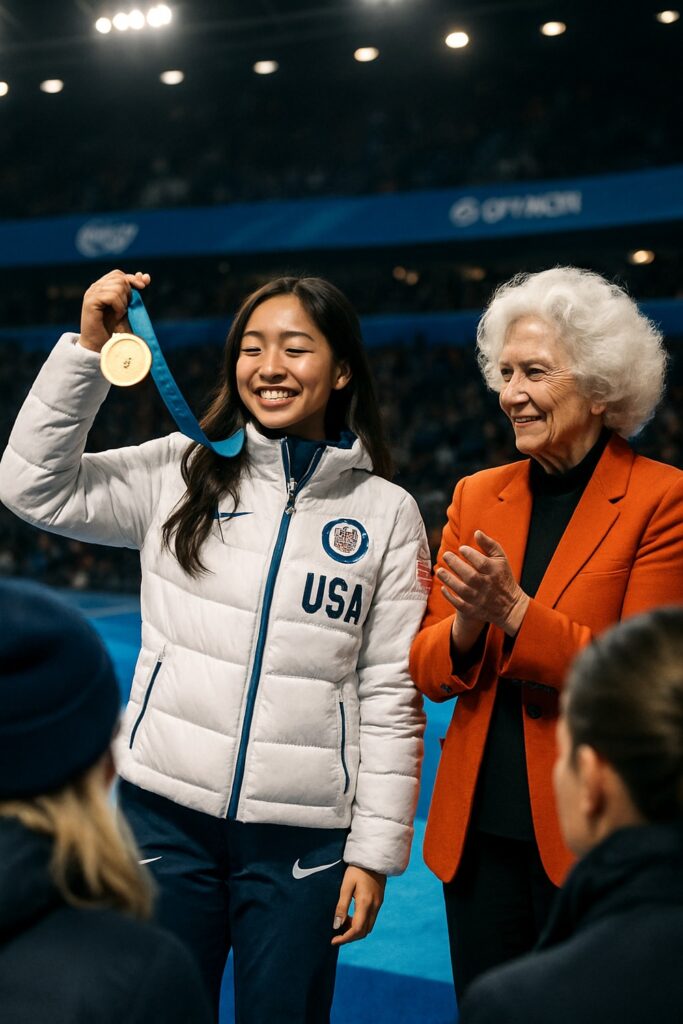
Seventy years is a strange unit of measurement for Olympic figure skating legacy — long enough for a sport to completely reinvent itself, short enough that the woman who started it all is still in the building to watch.
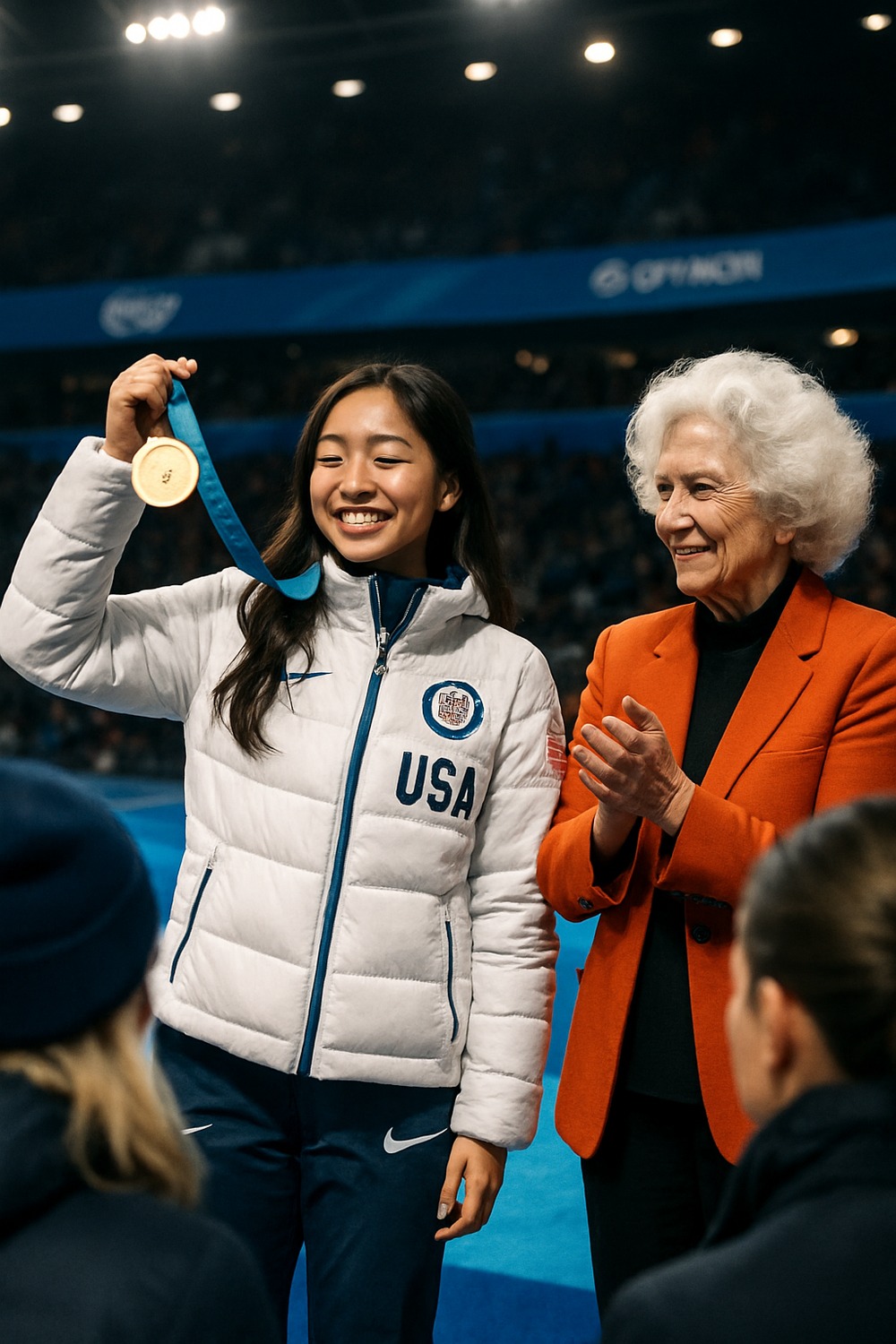
Tenley Albright — first American woman to win Olympic gold in figure skating, 1956 Cortina d’Ampezzo Games — sat just feet from the ice as 18-year-old Alysa Liu claimed the top spot on the podium. Two champions. Seven decades of Olympic figure skating legacy folded into one handshake, one arena, one afternoon.
How Olympic Figure Skating Legacy Skips Generations
Albright was 20 years old when she traced herself into the record books. The 1956 Winter Olympics were soaked in Cold War pressure — every score felt like a diplomatic incident, every podium placement read as geopolitical signal. It wasn’t just a gold medal. It was a statement. Sports historian Dr. Karen Christensen has written about how much weight Albright’s victory carried beyond the rink.
But here’s the thing: the sport Albright competed in barely resembles what you watch today.
She competed under the “compulsory figures” system — skaters tracing precise, repeating patterns directly into the ice surface, which judges then evaluated for technical perfection alone. Methodical. Almost meditative. No jumps scoring points. No crowd-pleasing spins earning bonus grades. Just a blade and a pattern and an examiner crouching down to inspect the mark you left.
That discipline defined the sport for over a century. And then, in 1990, it vanished from Olympic competition entirely. One generation. Gone.
Alysa Liu Rewrote What’s Possible on Ice
What she does on ice would be almost unrecognizable to Albright’s era. Triple axels. Quad attempts. Footwork sequences that blur the line between athletic competition and contemporary dance. The technical requirements have escalated so dramatically that today’s training loads — 20 to 25 hours of on-ice work per week, according to sports science researchers tracking Olympic training evolution — would have seemed extreme compared to the 8 to 10 hours competitive skaters logged in the 1950s.
Liu started skating competitively when she was barely steady on her feet off the ice. By 13, she was the youngest U.S. national champion in the sport’s history. By 18, she’d been at elite levels for over a decade — which is a strange sentence to write about a teenager, but that’s the reality of what modern figure skating demands. The sport didn’t just change. It rebuilt itself from the ice up.
You can read more about how young athletes are reshaping Olympic sports at this-amazing-world.com, where stories like this one are just the beginning.
The Moment Two Eras of Skating Finally Collided
What makes the 2026 meeting strange — quietly, persistently strange — isn’t the symmetry of it. Two American gold medalists, bookending seven decades of Olympic figure skating legacy: that’s a neat narrative. But what actually stops you is simpler than that.
Albright showed up.
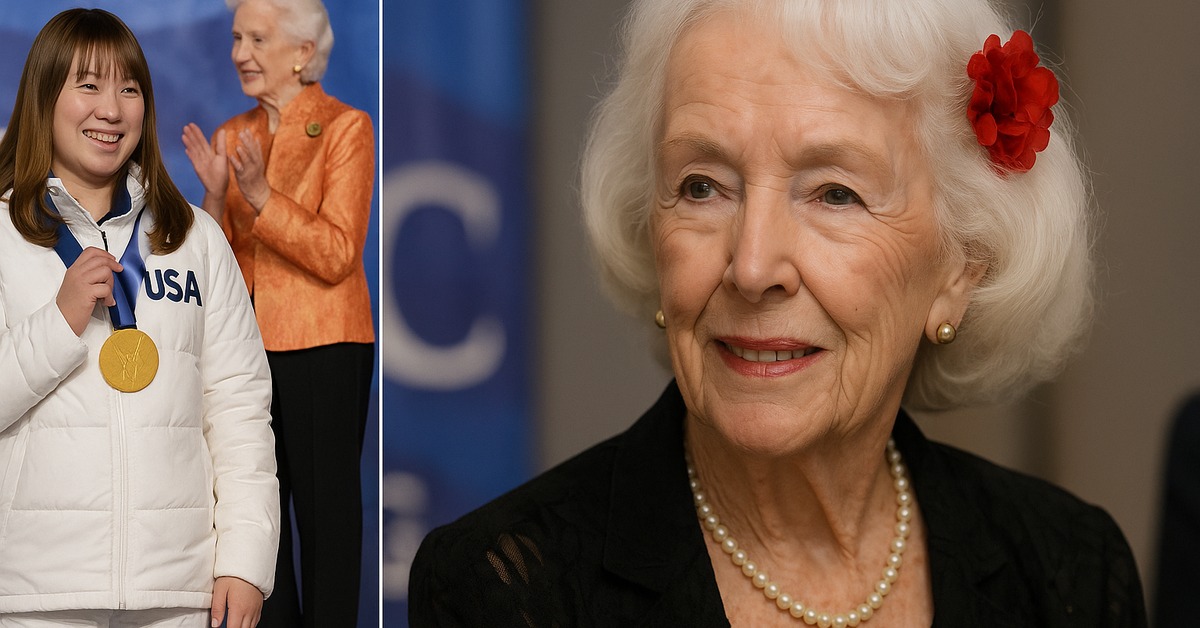
At 90, she’s been connected to the skating world for decades — quietly mentoring young athletes, advocating for the sport, staying embedded in a community that has transformed almost beyond recognition around her. She didn’t retire into memory after 1956. Still present. Still watching. Still tracking the sport she gave her early life to with the same focused attention she brought to her own competition. That changes the story entirely.

Here’s What Most People Miss About This Story
It’s not a feel-good reunion piece. Or it’s not only that.
Why does this matter? Because it’s actually a revealing lens into how much — and how little — the sport has changed.
High-tech training centers with cryo-recovery suites and motion-capture software replaced the wooden rinks of the 1950s. The scoring system was completely overhauled. Social media turned skaters into global personalities before they’ve even made their first Olympic team. And yet the core of what both women did hasn’t shifted an inch. Both trained obsessively from childhood. Both competed under enormous national pressure. Both carried the specific, exhausting weight of representing American excellence on an international stage.
The tools changed. The spirit didn’t.
History has a way of treating the people who ignored this kind of continuity unkindly — as if the sport’s transformation somehow erased what came before, rather than building on it.
Sitting together in that arena — ninety years old and eighteen years old, seven decades between them — they probably both felt it. That last detail kept me reading about this for another hour.
How It Unfolded
- 1956 — Tenley Albright wins gold at Cortina d’Ampezzo, becoming the first American woman to claim Olympic figure skating gold under the compulsory figures system.
- 1990 — Compulsory figures are eliminated from Olympic competition entirely, ending a discipline that had defined the sport for over a century.
- 2019 — Alysa Liu, age 13, becomes the youngest U.S. national champion in figure skating history, signaling a new era of technical intensity.
- 2026 — Liu wins Olympic gold at 18; Albright, now 90, watches rinkside — closing a 70-year loop in U.S. Olympic figure skating legacy.
By the Numbers
- Albright’s 1956 gold at Cortina d’Ampezzo made her the first American woman to win Olympic figure skating gold — a title carrying historic weight that’s barely been matched since (International Olympic Committee, 1956).
- Liu became the youngest U.S. national champion in skating history in 2019. She was 13.
- Separating Albright’s gold from Liu’s: exactly 70 years — one of the longest documented torch-passing moments in U.S. Olympic figure skating history.
- Elite skaters today train 20–25 hours per week on ice alone. In the 1950s, competitive skaters were logging roughly 8–10 hours. Same sport. Completely different demands.
- Compulsory figures — the entire discipline Albright mastered — were eliminated from Olympic competition in 1990, after defining the sport for over a century.

Field Notes
- After 1956, Albright earned a medical degree from Harvard Medical School and became a practicing surgeon. Her story off the ice is arguably stranger and more impressive than what she did on it.
- Liu stepped away from competitive skating briefly in her early teens — burnout questions circulated, and most casual fans assumed she was done. She came back. Then she won the Olympics. Most people don’t know she almost didn’t return.
- Compulsory figures (researchers actually call this discipline the sport’s “lost art”) required skaters to trace specific patterns into the ice repeatedly, with judges literally crouching down to inspect the tracings for symmetry. Completely absent from the modern sport — and most viewers under 40 have never seen footage of it.
Why This Moment Matters Beyond the Medal Stand
1956. A 20-year-old woman in Cortina traces a perfect pattern into the ice and wins gold. 2026. That same woman sits rinkside at 90 and watches a teenager land combinations she couldn’t have imagined. Between those two moments, the sport became almost unrecognizable. And somehow the thread connecting them held.
And that’s what Olympic figure skating legacy actually is — not a trophy in a cabinet, not a Wikipedia entry. It’s a living thing. Albright’s gold didn’t end when she stepped off the ice. It moved through every American skater who came after, through the culture she helped shape, and eventually to that arena in 2026 where she sat watching history complete a loop she started.
Alysa Liu is part of that thread now. Someday — decades from now, another generation forward — she might be the one in the front row. Watching someone skate something she couldn’t have imagined. Carrying it forward again.
That’s not sports history. That’s how cultures survive.
Editor’s Take — Sarah Blake
What stays with you isn’t the symmetry — two gold medalists, seventy years apart, same flag. It’s Albright still being present. Still in the building. The discipline she mastered no longer exists in Olympic competition, the rinks look nothing like the ones she trained in, and yet there she is, rinkside, watching with what every account describes as genuine attention. That’s not nostalgia. That’s something harder to name — a refusal to let the thing she loved become only a memory. Liu may or may not realize what she inherited in that handshake.
Seventy years is long enough for technology to rebuild a sport from scratch, for a 20-year-old champion to become a 90-year-old witness, for the ice to hold two entirely different worlds and treat them like the same story. If this kind of thing keeps you up at night, there’s more at this-amazing-world.com — and the next one is even stranger.


