Tigers in Korean Folklore: Myth, Symbol, and Lost Wild
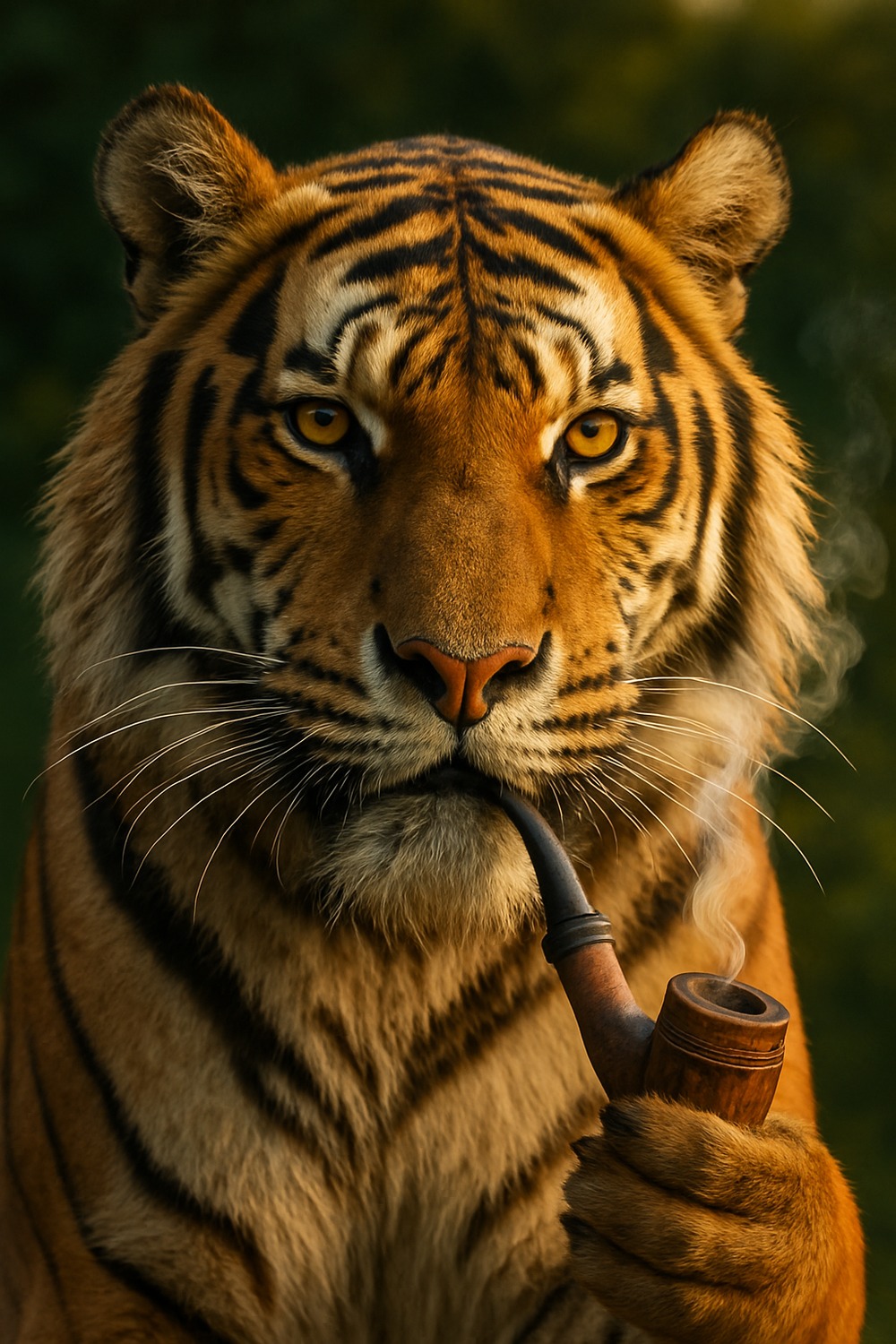
Something strange happens when tigers in Korean folklore appear at the edge of a story — the tale doesn’t just begin, it opens like a door onto mountains that still remember teeth. The horangi was real once. It paced those ridgelines, left tracks in mountain snow, watched villages from the treeline. That fact is what the old phrase “Tigers still live in Korea” actually carries inside it: not fantasy, but a memory so close to living that nobody thought to call it loss. Now the mountains are quiet. The phrase outlasted the animal by roughly a century, and what that means for the people who still say it is more complicated than nostalgia has words for.
The Tiger That Shaped a Nation
Few animals anywhere in the world have burrowed as deeply into a culture as the tiger has into Korea’s. The horangi turns up in shamanic ritual and royal insignia, Buddhist temple paintings and children’s bedtime stories — all with equal and unsettling force. It’s both terrifying and faintly comic, divine and oddly domestic. One tale has a tiger laying waste to a mountain village; the very next has it weeping at the grave of a scholar who once gave it shelter from a storm. That duality isn’t contradiction. It’s a cultural argument, carefully sustained across centuries: nature is raw and unpredictable, yes, but even its most dangerous expressions might yield to compassion, cleverness, or simple moral decency.
Korean mountains were traditionally sacred — spaces where spirits lingered and ancestors kept watch — and the tiger, ruling those heights, absorbed something of that supernatural authority into itself. The Joseon Dynasty, which governed the peninsula from 1392 to 1897, worked tiger imagery into military insignia and court ceremonial objects. Seoul’s 1988 Olympics gave the world Hodori, a grinning cartoon tiger in a traditional hat — charming enough to merchandise, potent enough to mean something. The Korean national football team carries the tiger’s shadow still. Here is a country that has absorbed invasion, occupation, division, and catastrophic war, and has kept returning to the same animal as its shorthand for resilient spirit. That’s not nostalgia repackaged as tradition. It’s closer to a wager: that what a people love fiercely enough, they carry forward even after the living thing is gone.
The Extinction No One Announced
No single dramatic moment marks the tiger’s disappearance from the Korean peninsula. It simply… stopped being there. The process was incremental and brutally efficient, playing out across the first half of the twentieth century through forces that reinforced each other with grim precision. Japanese colonial authorities, who controlled Korea from 1910 to 1945, organized systematic tiger hunts — framed as agricultural safety measures but functioning, at least partly, as performances of imperial dominance over the land itself. Hunters collected rewards. Tigers were threats to be eliminated, not populations to be managed.
By the time Korea emerged from colonial rule and then endured the Korean War in the early 1950s, habitat fragmentation and relentless encroachment on mountain territory had finished what the hunters started. The last confirmed wild tiger sighting in South Korea dates to the 1920s. That statistic has a way of stopping people cold — as if they’d assumed the extinction of an apex predator would have generated more ceremony, more grief, more noise. The silence of the record is its own kind of verdict.
North Korea is murkier. Some conservationists and wildlife researchers have raised the possibility that remote, heavily forested mountains along the North Korean border with China and Russia — territory adjacent to the Amur tiger’s Siberian range — may shelter a small, unconfirmed population. Camera trap studies in Chinese border regions have occasionally logged individual tigers apparently crossing political boundaries, and the scientific logic is plausible enough to take seriously. But North Korea’s opacity makes systematic wildlife surveys essentially impossible, and no verified evidence of a breeding population exists within the country.
It’s hope, not fact.
That gap between what people want to be true and what can actually be confirmed mirrors, with an irony that feels almost designed, the folkloric phrase this story started with.
Storytelling Hooks and the Wildlife We Remember
Why does the tiger keep appearing at the opening of Korean folktales, specifically? Because the stories needed something real. “Tigers still live in Korea” does in Korean folklore exactly what “once upon a time” does in European fairy tales: it suspends the normal rules. Folklorists call these temporal anchors (researchers actually call this the “plausibility bridge”) — phrases that plant a story in a recognizable but deliberately blurred past, where magic and danger share space with ordinary village life. The tiger invokes a real animal with a documented historical presence on the peninsula, lending what follows a texture of authenticity that a purely invented beast could never provide. Rooting the fantastic in natural fact is one of folklore’s oldest and most sophisticated moves — and arguably its most honest one.
How It Unfolded
- 1392 — The Joseon Dynasty begins; tiger imagery is formalized in military insignia and court ceremonial objects across the peninsula.
- 1910–1945 — Japanese colonial authorities organize systematic tiger hunts, accelerating the collapse of Korea’s wild tiger population under the guise of agricultural safety.
- 1920s — The last confirmed wild tiger sighting in South Korea is recorded; the species effectively vanishes from the southern peninsula without ceremony or announcement.
- 1988 — Seoul’s Summer Olympics introduces Hodori, a cartoon tiger mascot, to a global audience — the horangi’s cultural presence fully intact, decades after the living animal’s disappearance.
What the Ghost Tiger Tells Us
Underneath all of this — the tales, the masks, the Olympic mascots — sits a question with real urgency. When a species vanishes from a landscape but stays intensely alive in cultural memory, what does that persistence actually do to public understanding of the animal’s real-world status? Some researchers working on Korean conservation have noted an uncomfortable possibility: the folkloric tiger’s vitality may paradoxically obscure the ecological reality of its absence, making it harder to rally meaningful concern around the Amur tiger populations that do survive, precariously, in the Russian Far East and northern China.
And here’s the thing — culture can preserve a species in amber while the living animal slips away unnoticed. Korea’s tiger isn’t a charming footnote to natural history. It’s a case study in the uneasy, sometimes uncomfortable relationship between the stories a community tells about the natural world and its actual willingness to fight for what survives of that world. Anyone who’s tried explaining extinction risk to a crowd raised on triumphant horangi stories might find that dynamic painfully familiar.
History has a way of treating the people who ignored this kind of evidence unkindly — and the evidence here is that cultural love, however genuine, is not the same thing as conservation.
Editor’s Take — Sarah Blake
What stays with me is the silence around the disappearance itself — no announcement, no national mourning, no moment of reckoning. Korea lost its tiger not in a catastrophe but in a drift, distracted by occupation and war and survival. The folktale kept the door open. But an open door isn’t the same as an animal coming through it. The real question isn’t whether Koreans love their tiger. It’s whether that love can be redirected — toward the living populations that still hold the line in Siberia and northern China, before those doors close too.
Korea’s tiger didn’t vanish cleanly. It left its silhouette in festival masks and temple murals, its voice in grandmothers’ stories told to wide-eyed children on winter nights, its spirit pressed into the identity of a people who’ve never quite agreed to let it go. Whether that cultural memory can translate into real action for living tigers elsewhere in Asia remains one of conservation’s most genuinely open questions. The folktale invites us into the wilder world. The harder challenge — the one that doesn’t resolve in a single story — is whether we still have the imagination, and the will, to help that world survive.